




Elm Coffer Chest
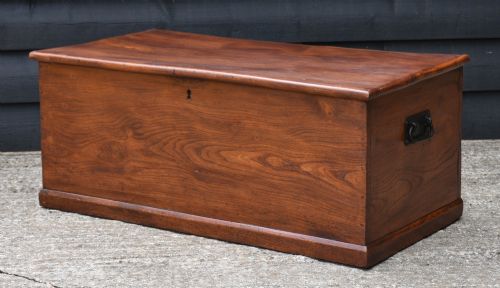
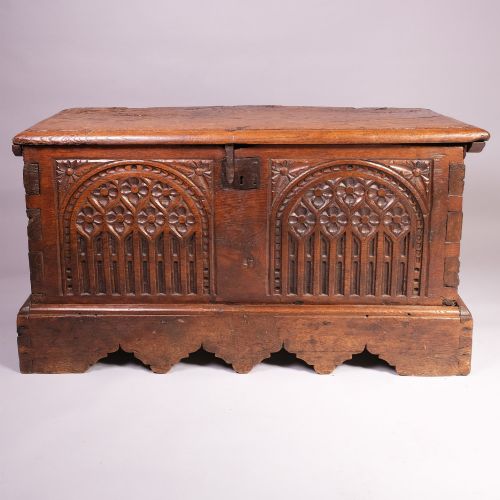
An elm coffer chest is a sturdy timber storage piece built to hold household textiles, valuables or documents.
Elm Coffer Chest
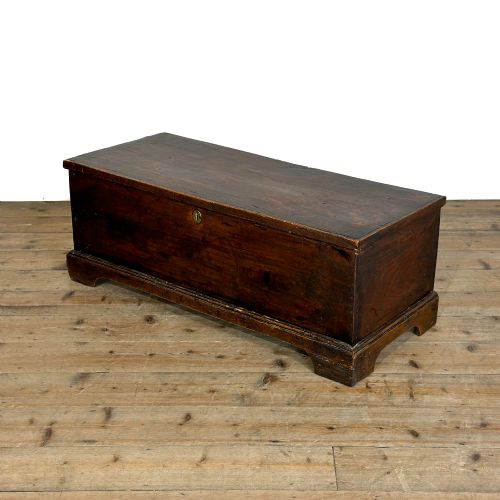
An elm coffer chest provides deep storage within a solid wood carcass, commonly encountered in formats ranging from simple rustic boxes to refined Georgian blanket chests. These items date primarily from the seventeenth, eighteenth, and nineteenth centuries, reflecting domestic and utilitarian storage needs across different regions.
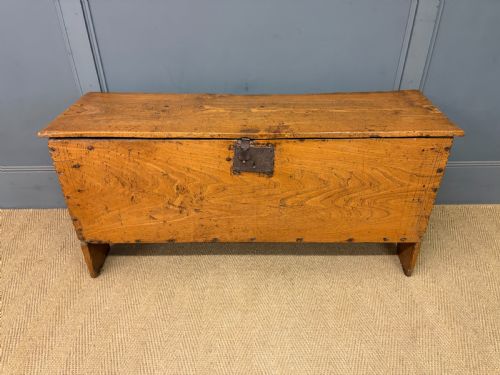
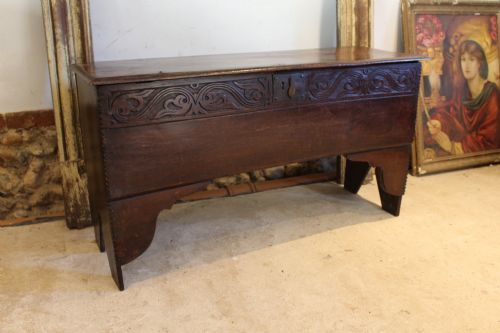
The version most frequently met on this page is the six-plank chest, constructed from vertical and horizontal boards joined simply at the edges. Buyers also encounter mule chests featuring base drawers, alongside dough bins and travelling strongboxes.
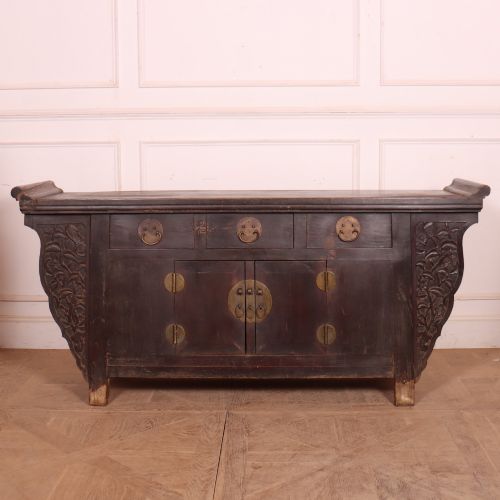
Origins span British vernacular workshops as well as continental and Chinese traditions, incorporating elm alongside companion timbers like oak and pine.
How they were made
Makers utilised native elm for its tough, interlocking grain, which resisted splitting under heavy use but required careful handling during construction. Boards were joined using simple butt joints pinned with wooden pegs, or integrated into six-plank assemblies nailed and edged for rigidity.
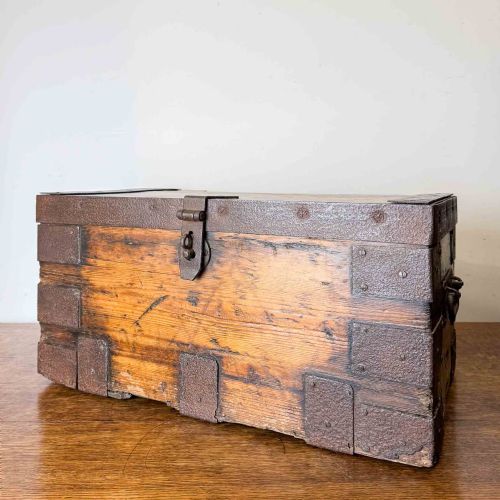
Hardware played a structural role, with blacksmiths forging iron hinges, straps, and hasps, while brass mounts appeared on more formal travelling chests and gentleman's boxes.
Finishes relied on natural wax, oil, or historical polish, allowing the dense figure and rich colour of the elm to show through decades of handling.
One French elm box arrived equipped with carrying hoops designed explicitly for cannonballs.
What varies in quality
The quality of an elm coffer chest rests on the selection of the timber, particularly where figured burr elm panels or exceptionally wide single boards demonstrate the maker's ambition. Superior examples retain their original hinges, locks, and floor boards without extensive timber replacement.
Joinery execution distinguishes fine workshop output from basic rustic utility, with neatly cut dovetails on drawer additions and well-fitted lids indicating higher craftsmanship. Proportion and restraint in any carved or applied detail further separate standard regional pieces from exceptional survivals.
The Elm Coffer Chest Glossary
- Six-plank
- A primitive box construction method utilising six individual boards nailed or pegged at the edges. This technique represents an early form of chest building.
- Mule chest
- A storage chest fitted with one or more drawers beneath the main compartment. This form bridges the traditional blanket box and the chest of drawers.
- Strongbox
- A heavily reinforced chest utilising iron straps, bands, and complex locking mechanisms to secure valuables. These pieces were built for transit or safe keeping.
- Dough bin
- A specialised domestic trough with a lid used for bread making and rising dough. They share construction traits with standard regional coffers.
- Burr elm
- A woody growth formation on the elm tree yielding highly swirled, decorative grain patterns. Cabinet makers utilised these panels for decorative focal points.
Elm Coffer Chest: Frequently Asked Questions
What were elm coffer chests used for?
These chests primarily stored textiles, linens, blankets, and woollens to protect them from household pests and damp conditions.
Secondary uses included holding valuable documents, silver, or personal belongings, often secured with heavy iron locks and hasps.
How do I tell an 18th-century chest from a 19th-century one?
Eighteenth-century examples often display hand-wrought ironwork, pegged joinery, and simpler board construction associated with vernacular country workshops.
Nineteenth-century pieces frequently incorporate machine-sawn timber, secondary woods like pine, and more uniform brass hardware or fitted interior tills.
Where should I place an elm coffer in my home?
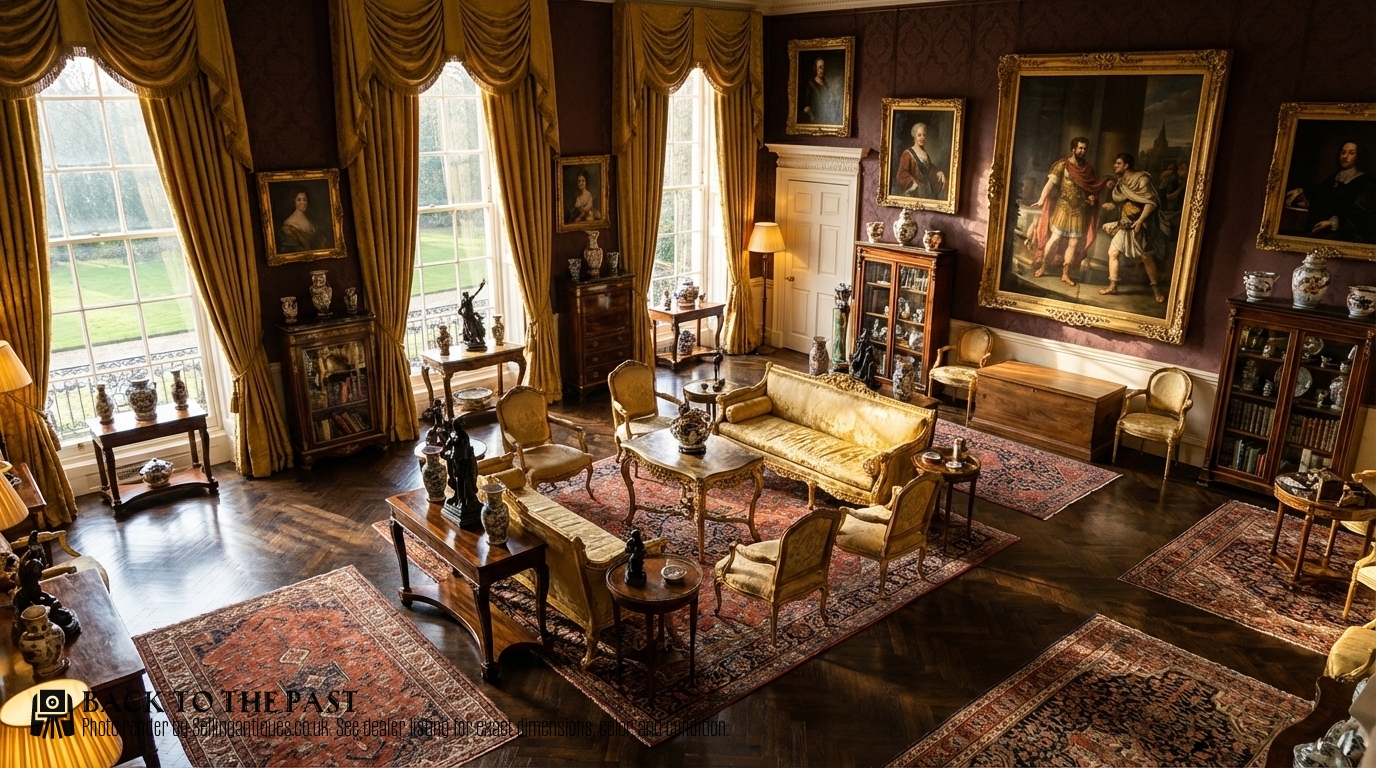
An elm coffer functions effectively as a blanket box at the foot of a bed or as a functional storage table in a hallway or living space.
Keep wooden chests away from direct heat sources and dramatic humidity fluctuations to protect the historical timber.
What is a six-plank coffer?
A six-plank coffer is constructed from individual boards forming the front, back, sides, bottom, and lid.
This straightforward method relies on sturdy edge-to-edge joining and represents one of the oldest chest forms found in domestic interiors.