



Eighteenth Century Oak Storage
Eighteenth century oak storage brings solidity and warmth to a room, offering practical utility through chests, dressers and cupboards built to endure.
Eighteenth Century Oak Storage
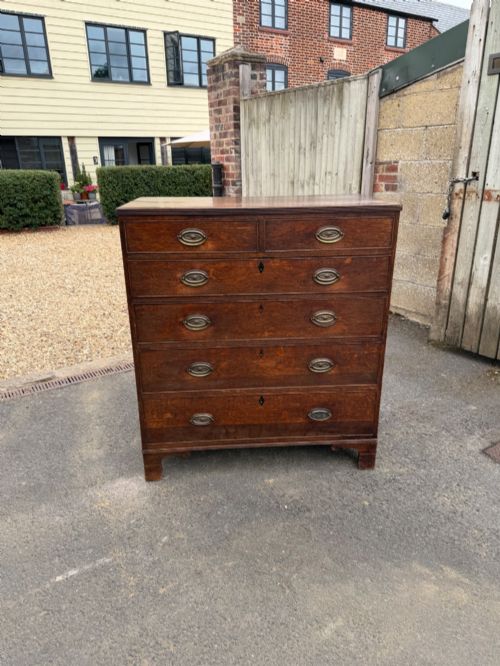
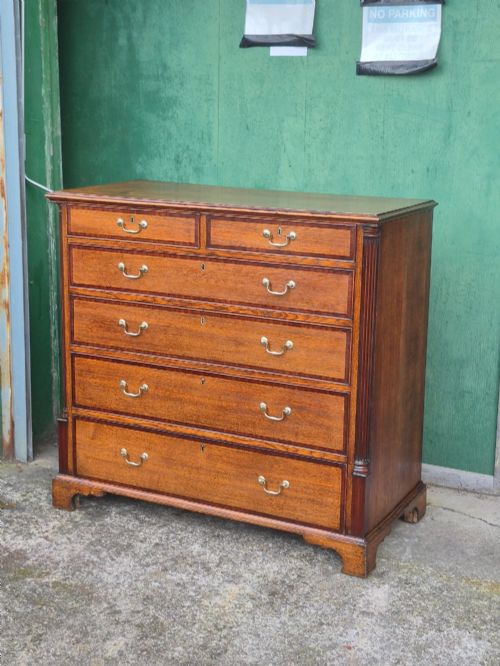
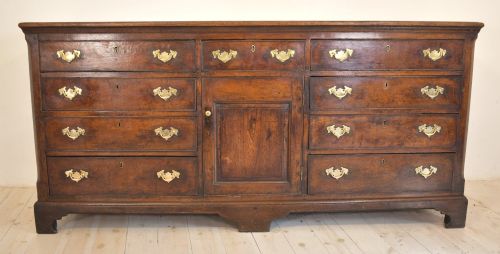
Eighteenth century oak storage encompasses robust chests of drawers, dressers, and cupboards designed for domestic utility. Pieces originating from this period reflect the heavy reliance on timber for household organisation before the era of fitted interiors.
The selections available here range from provincial low dressers and Lancashire dresser bases to Georgian chests of drawers and corner cupboards. Buyers most frequently encounter straightforward oak chests and dressers, though occasional Continental or painted variations appear.
Origins span English country workshops, French provincial regions, and Scandinavian centres. This variety provides distinct regional interpretations of storage furniture while maintaining a reliance on durable construction.
Materials and construction methods
Construction relies heavily on solid oak, complemented by secondary woods such as fruitwood, walnut, and chestnut in regional or Continental pieces. Timber selection dictated the strength of panels and the longevity of load-bearing frames.
Hardware such as brass handles and iron hinges served an essential functional purpose while marking the aesthetic of the period. Surface finishes range from natural golden timber to painted mottled blue and distressed treatments.
Eighteenth Century Oak Storage Retail Price Guide 2026
Typical asking prices for eighteenth century oak storage among the pieces listed under this phrase on Sellingantiques today, from the lower quarter to the upper quarter. They describe what is for sale here now, not the wider market.
One chest arrives finished in a mottled blue that refuses to take itself too seriously.
Distinctions in quality and execution
Quality reveals itself in the integrity of the timber selection and the precision of structural joinery. Finer examples display carefully chosen grain patterns and balanced proportions across drawers and cornices.
The character of the hardware and the retention of original surface finishes significantly influence the standing of a piece. Original brasses and untouched patination elevate the visual harmony of the timber.
The Eighteenth Century Oak Storage Glossary
- Dresser base
- The lower section of a dresser featuring cupboards or drawers without the upper plate rack. It functions as a substantial sideboard or serving surface.
- Corner cupboard
- A storage piece specifically built with an angled footprint to fit neatly into the corner of a room. These units maximise floor space while offering enclosed shelving.
- Chest on stand
- A tall drawer unit raised upon a separate supporting frame with legs. This form lifts the storage mass visually and practically from the floor.
- Batchelors chest
- A compact chest of drawers featuring a fold-over top or sliding shelf intended for writing or dressing. They combine surface utility with efficient drawer storage.
- Commode
- A low French chest of drawers or cabinet designed for domestic chambers. They often exhibit serpentine fronts and refined regional decorative details.
Eighteenth Century Oak Storage: Frequently Asked Questions
How do I use a low dresser in a modern room?
A low dresser provides a stable surface for lamps or display while keeping tableware or linens hidden within its drawers and cupboards. Its substantial height suits dining rooms or living spaces as a sideboard alternative.
The deep proportions accommodate modern media equipment or everyday items without overwhelming the surrounding floor plan.
What is the difference between a chest of drawers and a press?
A standard chest of drawers offers horizontal tiers of storage for folded textiles and personal garments. These units rely purely on drawer configuration for organisation.
A press incorporates enclosed cupboard doors above or beside the drawer section, traditionally designed for hanging or storing linens on shelves.
Where were provincial French cupboards made?
Provincial pieces originated in regional workshops outside major urban design centres, utilising local hardwoods like walnut, chestnut, and fruitwood. Makers adapted metropolitan styles to suit rural domestic requirements.
This regional independence resulted in varied panel treatments and distinctive local hardware choices.
How do I care for antique oak furniture?
Maintain oak surfaces by keeping them away from direct heat sources and dramatic humidity fluctuations that cause timber to move. Regular dusting with a dry cloth preserves the natural finish without trapping moisture.
Occasional waxing protects the patinated surface and nourishes the dry wood fibres.