




Period Oak Standing Cupboard
A period oak standing cupboard brings honest timber and centuries of utility into a room, offering both display and storage.
Period Oak Standing Cupboard
A period oak standing cupboard is a robust storage piece designed to stand directly on the floor rather than hang upon a wall, often taking a tall corner or upright rectangular form. These items span eras from the 17th century through the Georgian period and into the 19th century, reflecting centuries of domestic utility.
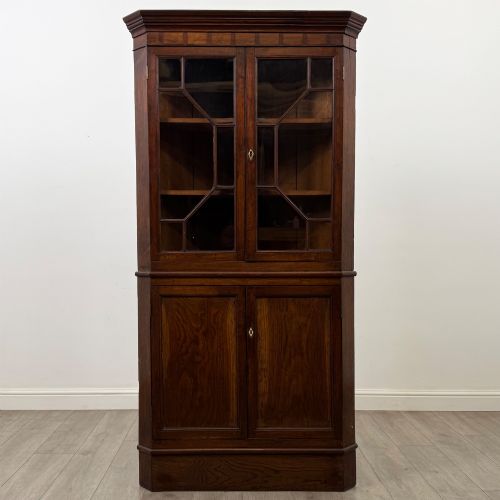
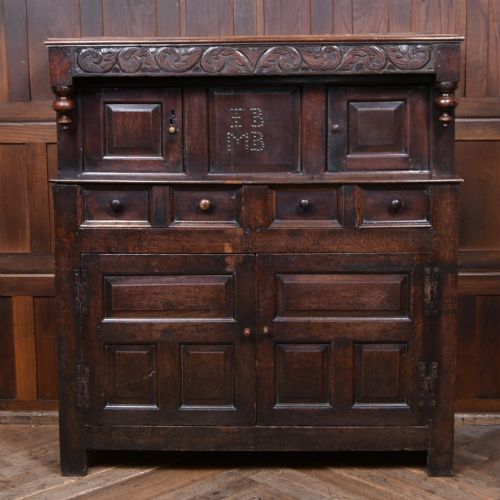
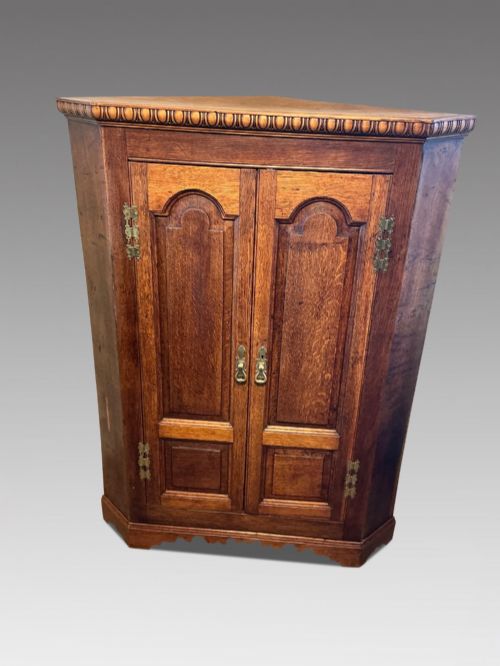
The versions most frequently met on this page include corner cupboards, court cupboards, and two-part standing corner cabinets made of solid timber. They emerge from English and French provincial traditions, serving as dependable furniture that grounds a room.
Buyers seek these forms to introduce historical character and practical shelving into a modern interior. The selection ranges from panelled early designs to bow-fronted Georgian standing cabinets.
How they were made
Makers built these pieces primarily using solid oak, shaped with hand tools and held together with pegged joints, panels, and traditional framing techniques. The natural grain of the wood provides the primary surface texture, often shaped into raised panels or curved fronts.
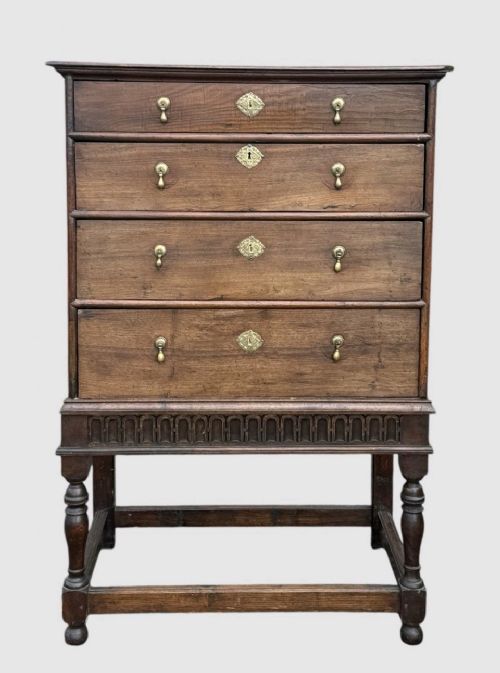
Metalwork played a structural and decorative role, with brass and iron hinges, escutcheons, and latches securing doors and drawers. Glass appears in later corner cabinet iterations to allow the display of contents.
Period Oak Standing Cupboard Retail Price Guide 2026
Typical asking prices for period oak standing cupboard among the pieces listed under this phrase on Sellingantiques today, from the lower quarter to the upper quarter. They describe what is for sale here now, not the wider market.
Listings span four distinct periods: 17th Century, Georgian, 1800, and 19th Century, constructed primarily in oak with brass, iron, and glass.
What varies in quality
Quality in these standing cupboards rests upon the integrity of the timber selection and the restraint of the proportions. Finer examples display carefully matched grain, crisp moulding work, and original hardware that integrates harmoniously with the body.
The distinction between ordinary and superior pieces often lies in the depth of the carving, the subtlety of the panel bevelling, and the survival of early surfaces. Heavier, later adaptations or poorly proportioned country pieces lack the balance found in the better Georgian and 17th-century survivals.
The Period Oak Standing Cupboard Glossary
- Court cupboard
- A traditional standing cupboard featuring an upper recessed section supported by pillars, typically dating to the 17th century. This form provided secure storage for household valuables and plate.
- Bow front
- A convex curved cabinet front that projects outward in a smooth arc. This shape appears on select Georgian standing corner cabinets.
- Panelled
- Construction method where flat boards are fitted into grooved stiles and rails to allow for natural wood movement. This technique prevents warping in large oak doors.
- Escutcheon
- A protective plate surrounding a keyhole, usually made of brass or iron. It prevents the wood around the lock from wearing down through repeated use.
- Two-part
- A cabinet constructed in separate upper and lower sections stacked together for transport and placement. This configuration eases movement through narrow doorways.
Period Oak Standing Cupboard: Frequently Asked Questions
What is a standing cupboard?
A standing cupboard is a self-supporting piece of furniture designed to rest directly on the floor rather than hang on a wall or sit on a table. These units provide substantial vertical storage space for household goods.
They appear in various room layouts, frequently utilising corners or standing flat against a wall. Their height makes them dominant architectural elements within a room.
How were corner cupboards used?
Corner cupboards were designed to fit neatly into domestic room angles, maximising floor space while offering secure storage. They often held glassware, ceramics, or dried foodstuffs.
In Georgian homes, tall standing versions acted as display furniture for prized tableware. The enclosed lower sections hid bulkier items from view.
How do I date an oak cupboard?
Dating relies on observing construction methods, hardware types, and stylistic details such as moulding profiles and panel arrangements. Early pieces from the 17th century often feature heavy peg construction and geometric mouldings.
Later Georgian examples show more refined proportions, sometimes incorporating bow fronts or glazed doors. The presence of brass hinges and specific lock styles further helps narrow the period.
How do I live with oak furniture?
Living with historic oak involves placing pieces away from direct heat sources and rapid temperature fluctuations to protect the timber. Regular dusting and occasional waxing help maintain the finish of the wood.
These sturdy cabinets tolerate daily use well, provided heavy loads are distributed evenly across the internal shelves. Their neutral tone allows them to integrate easily with diverse interior styles.