


Eighteenth Century Dining Table
An eighteenth century dining table brings genuine period proportion and timber warmth to a room, offering sturdy hospitality built to last generations.
Eighteenth Century Dining Table
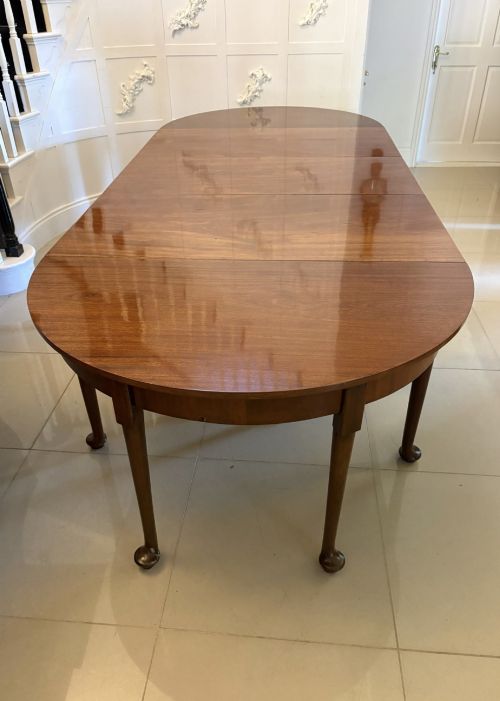
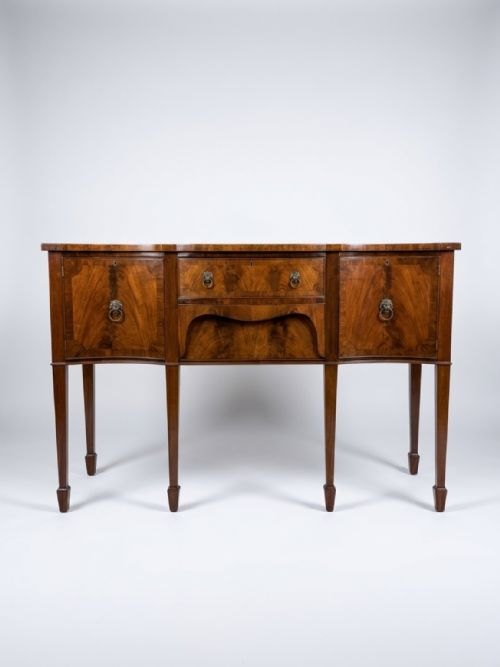
When you search for an eighteenth century dining table, you encounter substantial timber furniture designed for family meals and gatherings. The selection spans sturdy oak gateleg designs from earlier decades alongside mahogany drop-leaf and pedestal formats from the Georgian era.
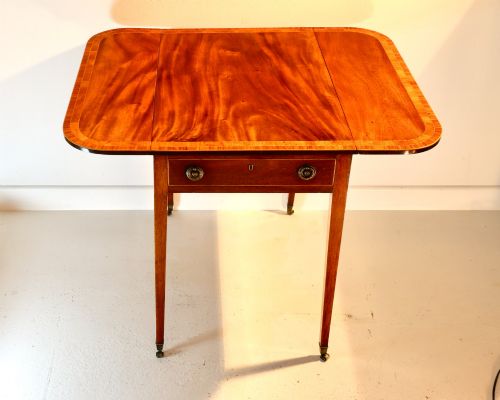
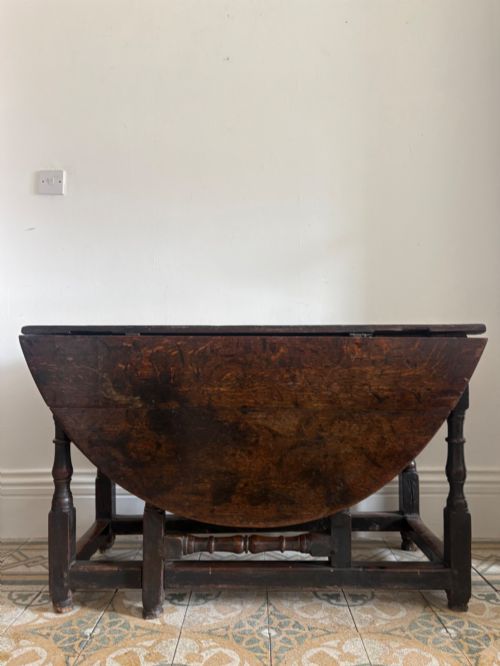
You are most likely to meet mahogany drop-leaf tables and oak gateleg variants on this page. These pieces reflect the shift from heavy refectory seating towards adaptable furniture that could fold away when not in use.
The materials and forms match the domestic needs of their original period. Walnut and oak appear alongside mahogany, forming dining surfaces supported by turned baluster legs, twin pillars, or three pedestal bases.
How they were made
Cabinet makers utilised solid mahogany, oak, and walnut, often applying flame mahogany veneer to prominent surfaces. Timber selection governed the strength of drop-leaf actions and the stability of pedestal supports.
Construction relied on traditional joinery techniques such as pegged tenons for gateleg frames and stable pivoting mechanisms for drop leaves. Brass castors and hinges appear on finer examples to assist movement.
Eighteenth Century Dining Table Retail Price Guide 2026
Typical asking prices for eighteenth century dining table among the pieces listed under this phrase on Sellingantiques today, from the lower quarter to the upper quarter. They describe what is for sale here now, not the wider market.
Some tables brought their own small helpers, such as the revolving lazy susan designed to pass condiments without stretching.
What varies in quality
Quality rests in the choice of timber grain, particularly the depth of figure in mahogany or the maturity of the oak planks. Superior pieces exhibit well-matched timber boards across the top leaves rather than mismatched grain.
The execution of the framework and leg turning dictates the overall elegance. Crisp detail on turned baluster legs and solid pillar supports separates standard utility furniture from finer workshops.
The Eighteenth Century Dining Table Glossary
- Gateleg table
- A table with hinged flaps and legs that swing out on gates to support them. This design allowed large dining surfaces to fold compactly against a wall.
- Drop-leaf table
- A table featuring a fixed centre section and two hinged flaps that drop down. It provided flexible seating capacity for dining rooms of varying sizes.
- Pedestal table
- A table supported by one or more central columns standing on a splayed foot base. This format gained popularity in the Georgian period for grand dining tables.
- Refectory table
- A long, narrow dining table traditionally used in communal halls and large country houses. They feature thick timber planks and sturdy stretcher frames.
- Flame mahogany veneer
- A decorative wood slicing method showing a distinctive flame-like pattern. It was applied to prominent surfaces of high-status furniture to catch the light.
Eighteenth Century Dining Table: Frequently Asked Questions
How do I seat guests comfortably around an antique dining table?
Consider the leg placement and overall height of the table frame before arranging chairs. Drop-leaf and gateleg versions require careful positioning of legs to ensure knee clearance.
Measure the width of your dining chairs against the apron clearance beneath the table top. Pedestal tables often offer the most flexible seating arrangements because the central columns sit away from the corners.
What is the difference between oak and mahogany dining tables?
Oak tables generally belong to the earlier decades of the period, displaying a dense grain and heavy construction. They suit rustic or traditional interiors with a robust character.
Mahogany tables emerged later in the Georgian era, offering a smoother reddish-brown surface and finer cabinet work. They reflect a shift towards more refined dining room decoration.
Can I use a drop-leaf table every day?
Drop-leaf tables are engineered for regular domestic use and fold easily to save space. The folding action relies on hinged wooden flaps supported by swinging legs or brackets.
Ensure the hinges and swing joints remain stable when lifting the leaves into place. Regular use requires treating the timber surface with care to protect the antique polish from moisture.
How do I identify a Georgian dining table?
Georgian dining tables often feature characteristic mahogany timber, delicate proportions, and refined leg styles such as tapered or turned supports. Many examples incorporate drop leaves or pillar and claw bases.
Look for construction methods typical of the eighteenth century, including hand-cut joinery and aged patination on the timber. The presence of brass castors or subtle inlay work also points towards the Georgian aesthetic.