


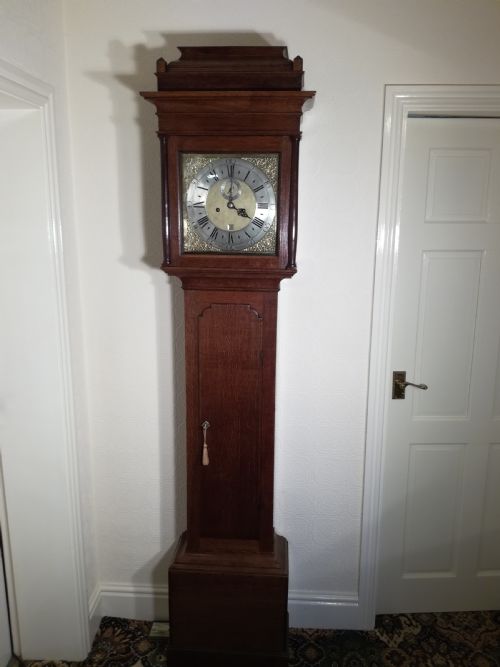


Eighteenth Century Dial Clock
An eighteenth century dial clock brings the steady rhythm of the Georgian era directly into your home.
Eighteenth Century Dial Clock
When you search for an eighteenth century dial clock, you are looking at substantial timepieces created during the Georgian, George III, George II, and Regency periods, spanning dates from around 1750 to 1800 and the wider eighteenth century. These pieces record the passage of time through traditional mechanisms housed in upright wooden floor cases and wall mounts.
The most common form you will meet on this page is the longcase clock, frequently referred to as a grandfather clock, alongside specialised wall clocks. These examples originate from workshops across London, regional English towns like Hereford, Romsey, and Nantwich, as well as Scottish centres such as Melrose.
Regional variations appear regularly, showing distinctive local dial painting and cabinet work. Makers ranging from provincial craftsmen to prominent London names signed their work directly onto the brass or painted faces.
Materials and construction
Cabinet makers utilised solid timbers including oak, mahogany, red walnut, and ebonised wood to build the tall protective cases. Decorative finishes such as dark green paint and Chinoiserie artwork appear on select specialised pieces.
Metalwork forms the working heart and visible face of each clock, combining brass, steel, and iron within the movement. Dials incorporate engraved brass, silvered chapter rings, and painted wooden surfaces behind protective glass.
Eighteenth Century Dial Clock Retail Price Guide 2026
Typical asking prices for eighteenth century dial clock among the pieces listed under this phrase on Sellingantiques today, from the lower quarter to the upper quarter. They describe what is for sale here now, not the wider market.
A painted Father Time rocks back and forth above the hours, reminding everyone present that time waits for no one.
Distinctions in craftsmanship
The sophistication of the movement dictates the standing of a piece, with quarter striking mechanisms, rocking ship automata, and rolling moon phases representing higher levels of horological ambition. Simpler time-only gear trains occupy a different tier of complexity.
Cabinet timber selection and secondary decorative details set examples apart from one another. Finely figured mahogany and substantial brass arched dials reflect greater investment by the original patron compared to plain regional oak cases.
JOHN WITHERSTON OF HEREFORD·RICHARD BIGGS·STANYER NANTWICH·Dwerrihouse & Carter·Samuel Buxton·FRANCIS PERIGAL·James Rayner·John Jackson·ROBERT DARLING·ARCHIBALD COLLIER
The Eighteenth Century Dial Clock Glossary
- Longcase clock
- A tall wooden enclosure standing on the floor, designed to protect the hanging weights and pendulum. This form is widely known by the colloquial term grandfather clock.
- Chapter ring
- The circular ring on the clock face that bears the numeral markings for the hours. These rings are often fashioned from silvered brass to stand out against the dial background.
- Quarter striking
- A mechanical capability that sounds the bells or gongs at each quarter hour as well as the full hour. This feature required advanced gear trains within the movement.
- Automata
- Mechanical moving figures integrated into the dial face, such as rocking ships or allegorical figures. They animate the dial while the clock operates.
Eighteenth Century Dial Clock: Frequently Asked Questions
What is an eighteenth century dial clock?
These are mechanical timepieces housed primarily in tall wooden floor cases, dating from the Georgian and Regency eras. They combine heavy brass and iron movements with timber cabinetry.
Craftsmen across London and provincial towns built them to serve as both reliable household timekeepers and prominent architectural furniture.
How do I identify a Georgian clock?
Look to the materials, proportions, and dial design to place a piece within the eighteenth century or Regency period. Oak and mahogany dominate the cabinetry, while brass or painted arched dials display regional naming.
Maker signatures inscribed on the face often provide a direct link to recorded clockmakers of the era.
Where were these clocks made?
Makers worked in major urban centres like London as well as smaller provincial towns across England and Scotland. Regional workshops developed distinct local styles in dial painting and case construction.
Names inscribed on the clock faces frequently record the specific town of origin alongside the maker.
How do I care for a longcase clock?
Ensure the case stands level on a solid floor to keep the pendulum swinging evenly. Regular professional servicing keeps the brass and steel movement functioning correctly.
Avoid placing the timber case near direct heat sources or in damp environments to protect the wood and glass.