
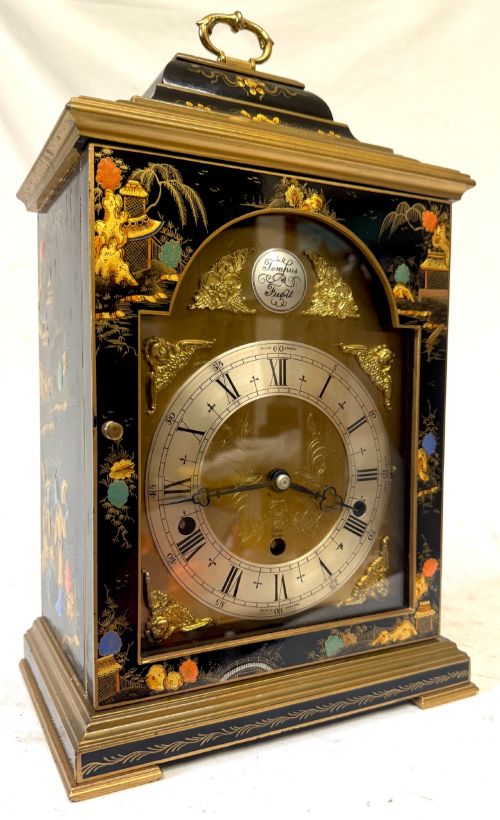
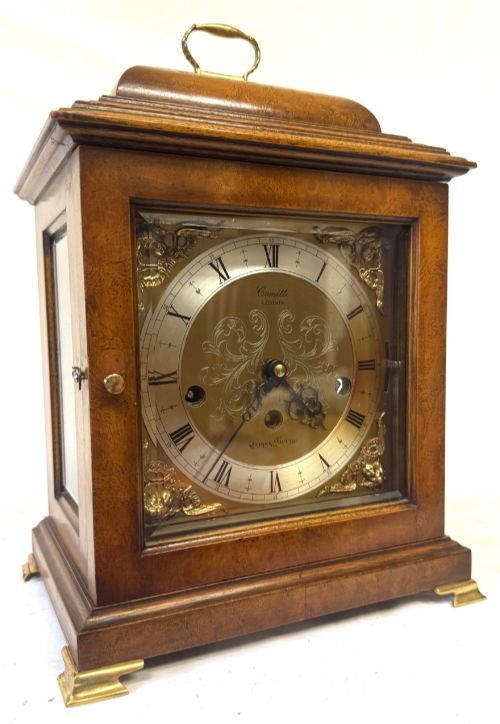
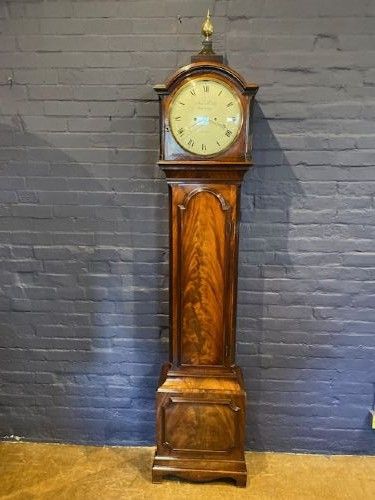
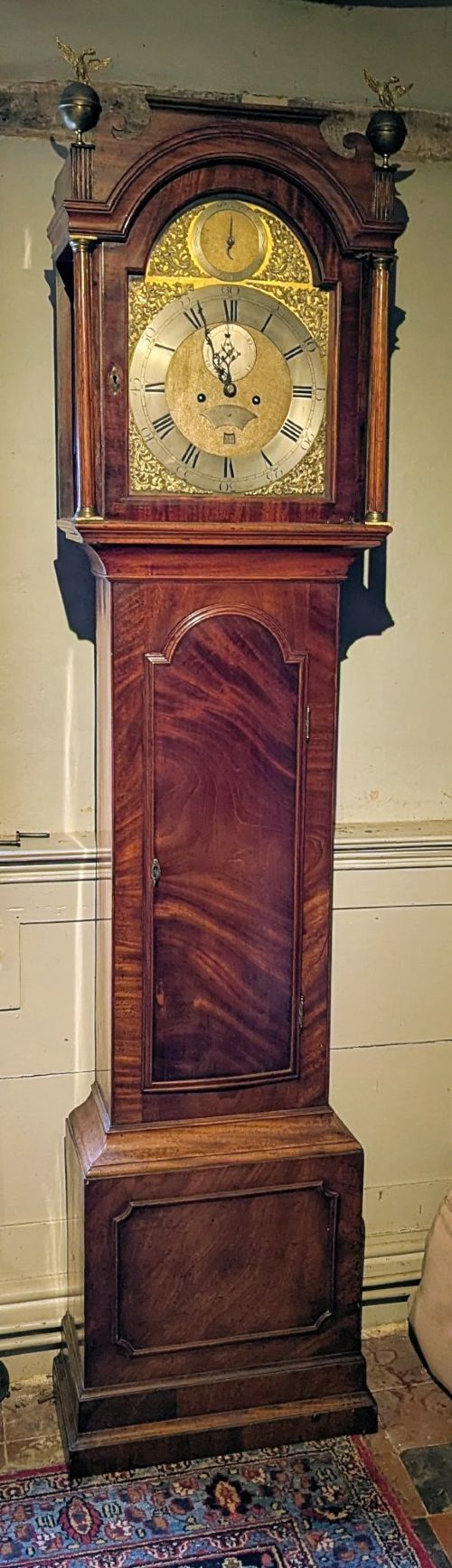

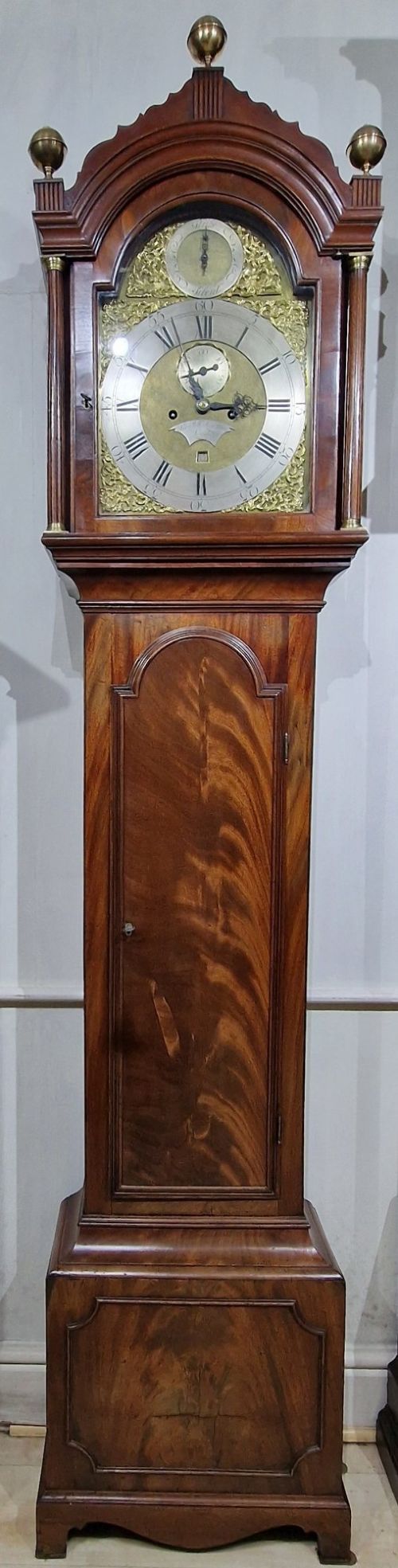


Georgian Dial Clock London
A georgian dial clock london balances precision mechanics with understated domestic presence.
Georgian Dial Clock London
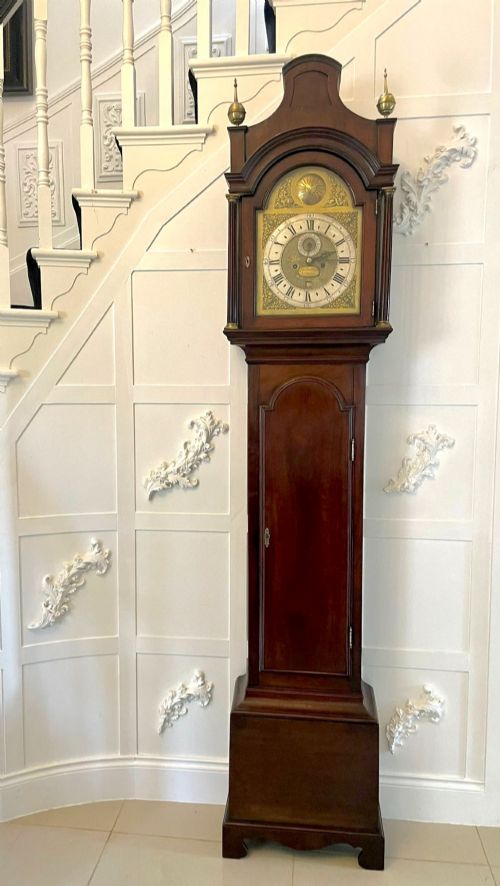
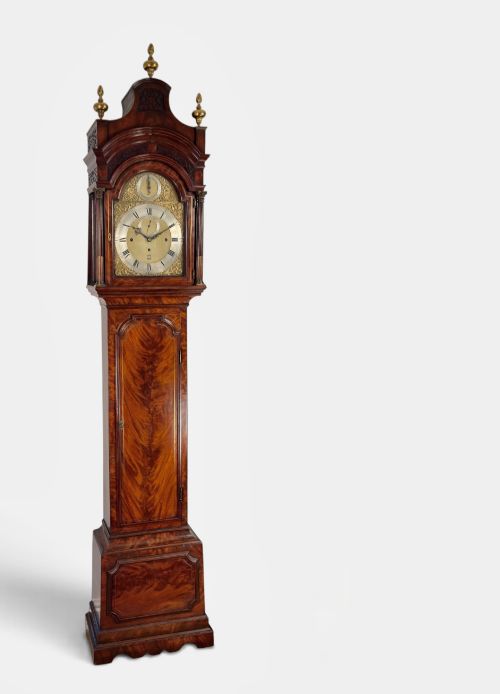
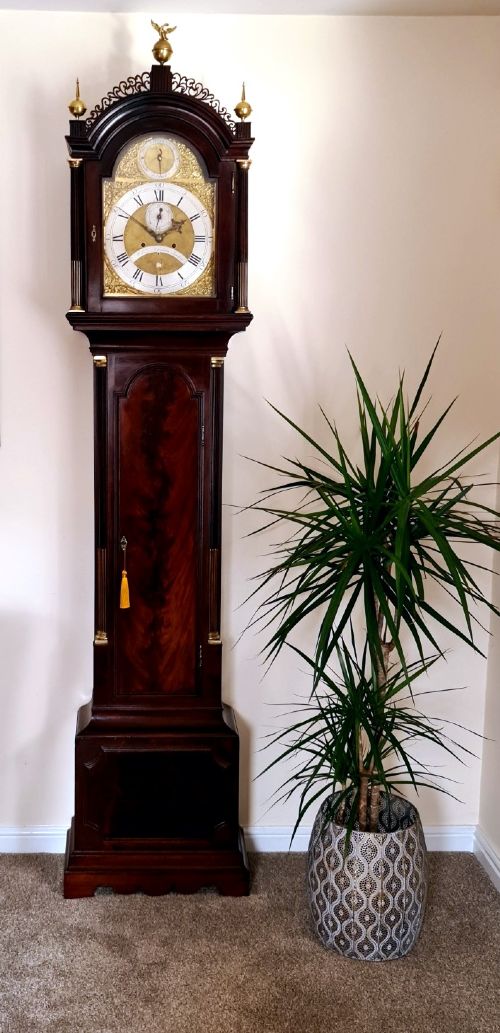
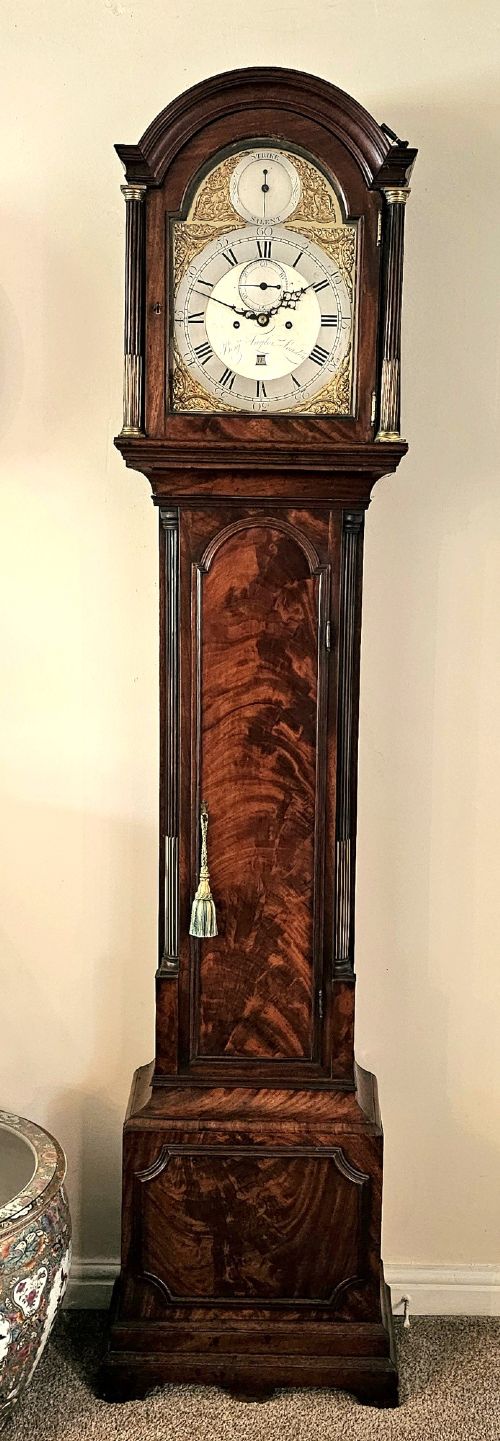
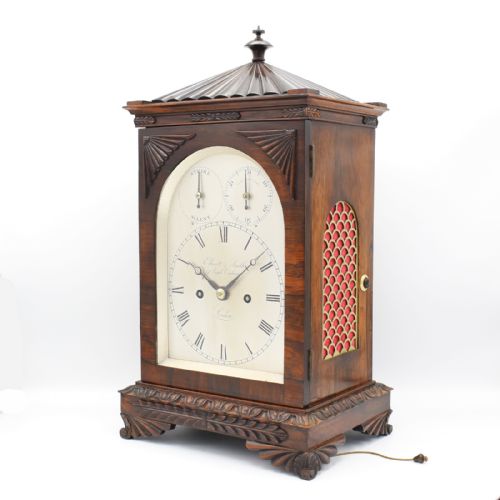
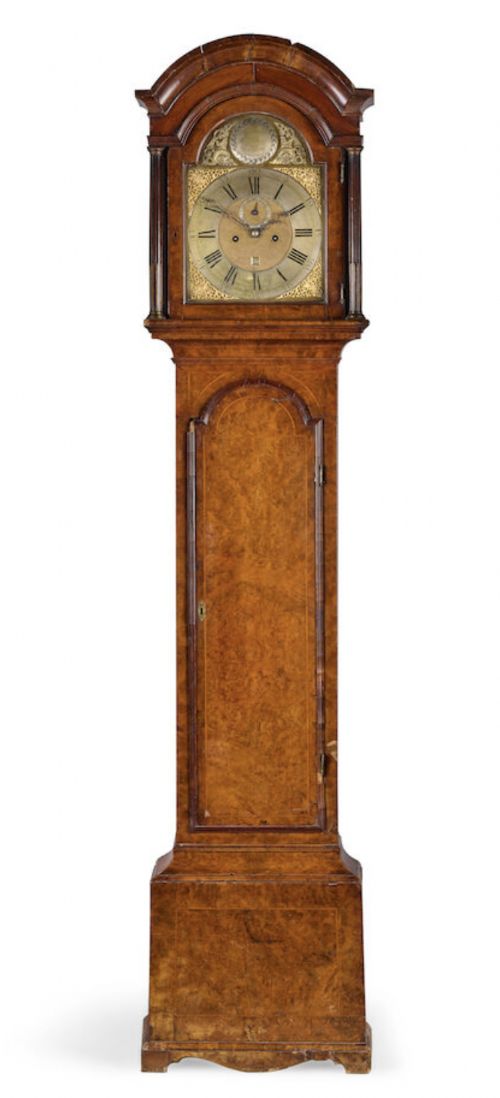
When searching for a georgian dial clock london, a buyer encounters timepieces originating primarily from the eighteenth century, the Georgian period, and the Regency era. The forms span tall longcase clocks housed in timber cases to wall-mounted drop dial pieces designed for public and domestic spaces.
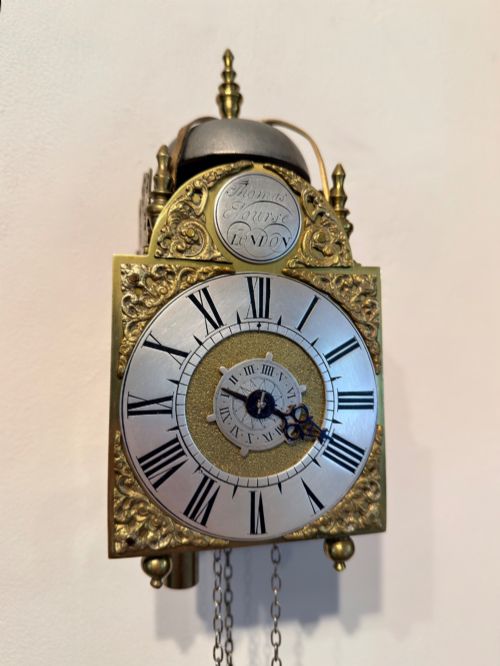
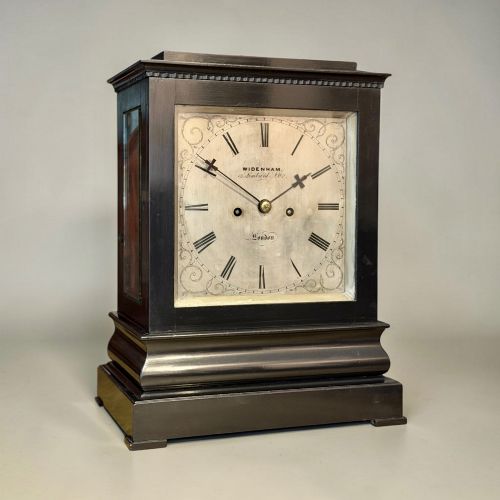
The most common examples on this page are wall-mounted fusee dial clocks and longcase grandfather clocks bearing signatures of London makers. These objects serve both as functional timekeepers and as architectural woodwork reflecting traditional English design.
Materials and Construction
Makers utilised dense timbers such as mahogany, flame mahogany, and walnut for the structural cases, sometimes applying ebonisation or lacquer in Chinoiserie styles. These wooden housings protect intricate brass and steel internal movements.
Dials incorporate silvered metal, brass, and glass elements to display the time clearly. Fusee movements and anchor escapements regulate the power delivered by the weights or springs.
Some clocks feature automation where tiny mechanical figures move in time with the strike.
Distinctions in Execution
The sophistication of the internal movement dictates the standing of a piece, from standard time-only fusee setups to complex quarter-striking and musical mechanisms. The refinement of the brass engraving and the execution of the silvered metal dial indicate workshop proficiency.
Timber selection and cabinetwork determine the exterior standard. Flame mahogany veneers, burr walnut figures, and well-proportioned mouldings separate standard production from masterwork output.
Charles Shuckburgh·John Ellicott·James McCabe·William Jourdain·Benjamin Taylor·Windmills and Wightman·Henry Weedon·Langley Bradley·Handley and Moore·Des Granges·William Allam·James Tregent·John Rainsford·Thomas Goddard·Paul Philip Barraud·Ganthony·Francis Perigal·Parkinson and Frodsham·Grimaldi and Johnson·Somersall·John Shelton·John Thompson·Gardner·James Bullock·John Seddon
The Georgian Dial Clock London Glossary
- Fusee
- A conical pulley used in clockwork to maintain equal force on the train as the mainspring unwinds. This device improves timekeeping accuracy across the power reserve.
- Drop Dial
- A wall clock featuring a circular dial positioned above a short, rounded wooden trunk that encloses the pendulum. This format became popular in public and domestic interiors during the Georgian period.
- Longcase Clock
- A tall floor-standing timepiece enclosed in a wooden case, commonly known as a grandfather clock. These instruments house long pendulums and weight-driven movements.
- Silvered Metal
- A brass dial plate treated with a silver compound to create a matte white finish for engraved numerals. This technique enhances legibility in varying light conditions.
- Bracket Clock
- A portable spring-driven clock originally designed to sit on a wall bracket or table. Many examples feature arched wooden cases and carrying handles.
Georgian Dial Clock London: Frequently Asked Questions
Where were these clocks placed?
Longcase clocks stood in hallways and principal rooms where their height and striking chimes served the household. Wall dial clocks hung in kitchens, offices, and stairwells for immediate visibility.
Smaller bracket clocks rested on mantelpieces or dedicated wooden wall brackets within private chambers.
How do fusee movements work?
A fusee uses a spiral-grooved cone connected to the mainspring via a fine chain or cord. As the spring loses tension, the chain pulls on a wider part of the cone to equalize the torque.
This mechanical compensation ensures the clock maintains steady momentum as the power winds down.
How are Georgian and Regency periods told apart?
Georgian pieces generally display traditional proportions with restrained classical carving and rich mahogany or walnut grains. Regency work often incorporates bolder brass inlays and sharper architectural lines influenced by classical revival styles.
Examining the maker's signature and the secondary wood inside the case helps confirm the era.
How should a wall dial clock be hung?
Secure the clock directly to a solid wall stud using appropriate fixings to support the weight of the timber case and movement. The backbox must sit flat to keep the pendulum swinging freely.
Level the case carefully so the beat of the escapement sounds even and regular.
What is a convex dial?
A convex dial curves outward toward the viewer rather than sitting flat behind the glass bezel. This shape reduces glare from nearby windows and improves legibility from oblique angles.
Many wall clocks from the Regency period utilise this convex configuration.