
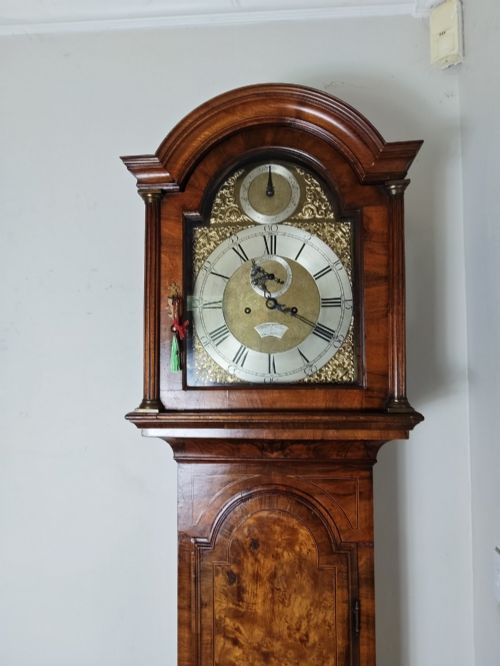
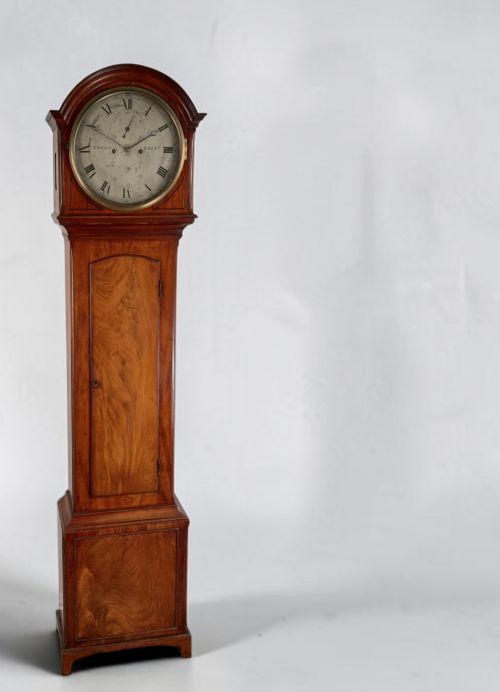
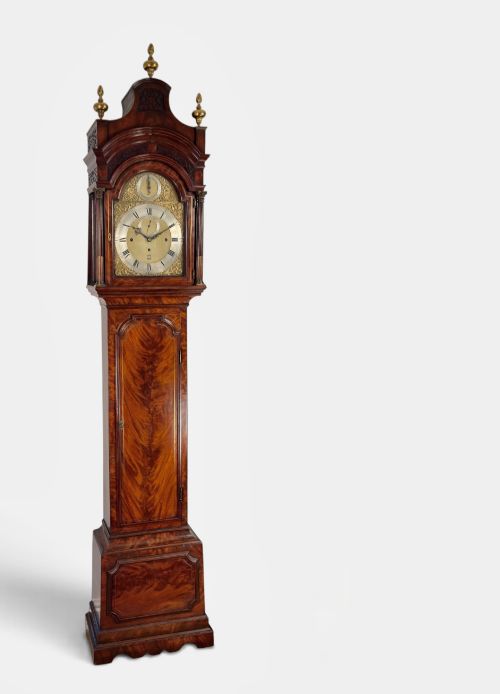
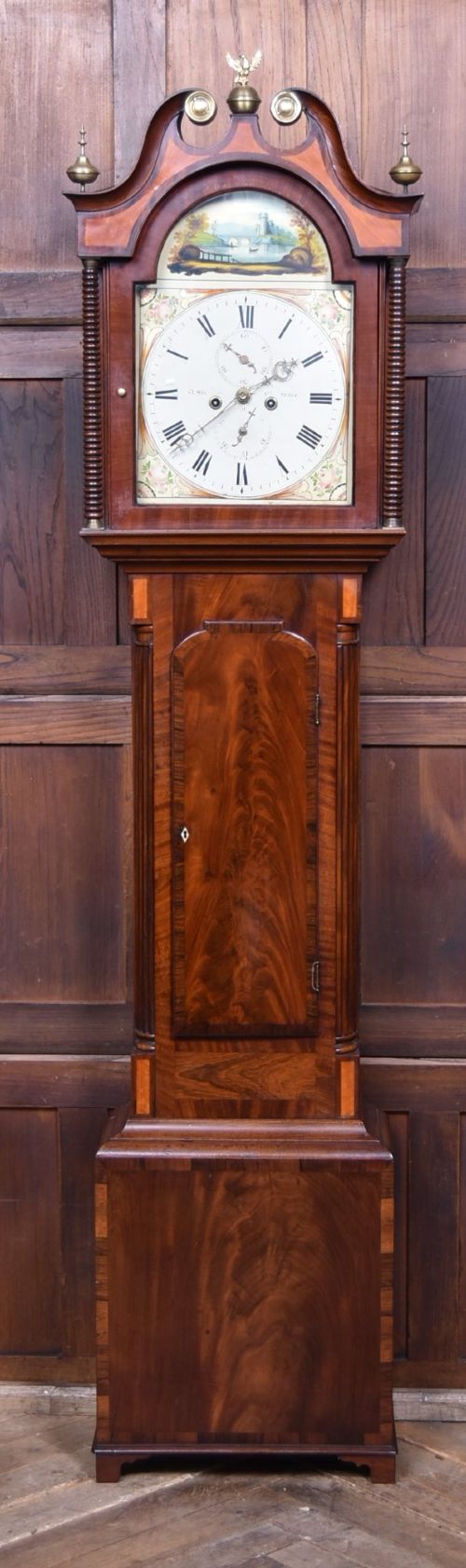

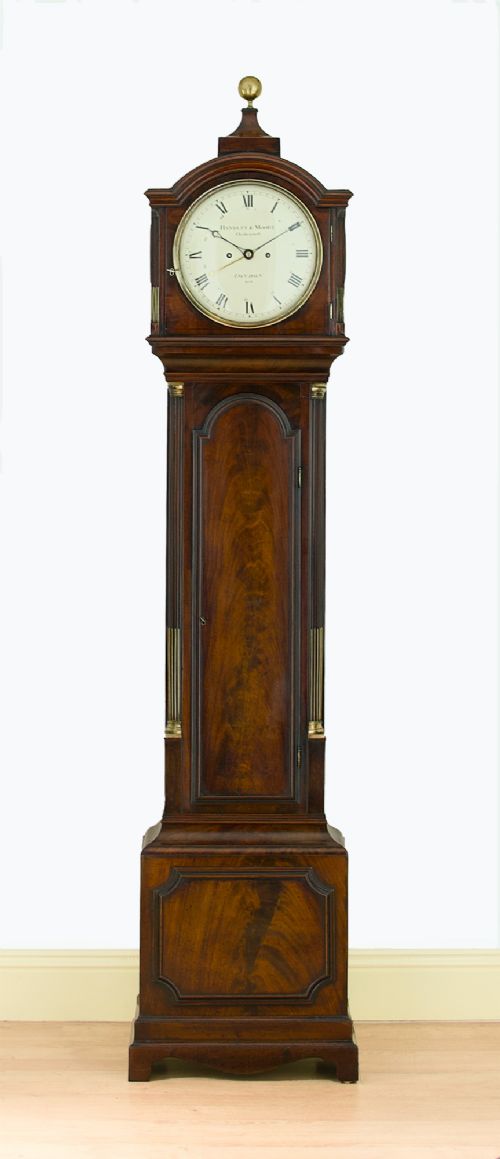
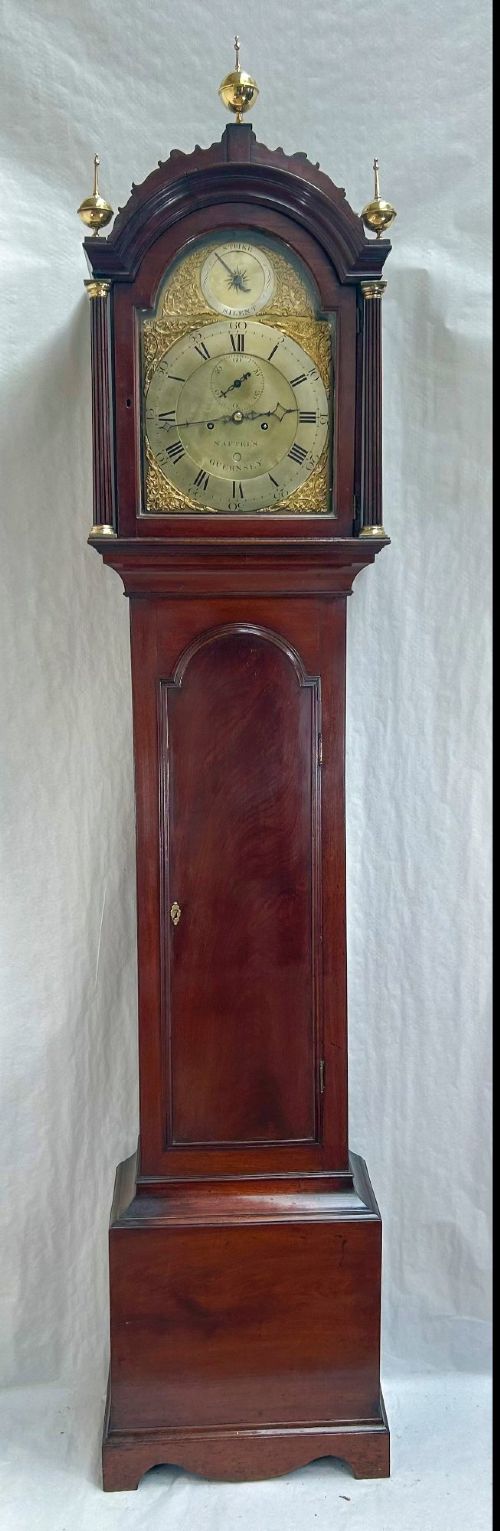
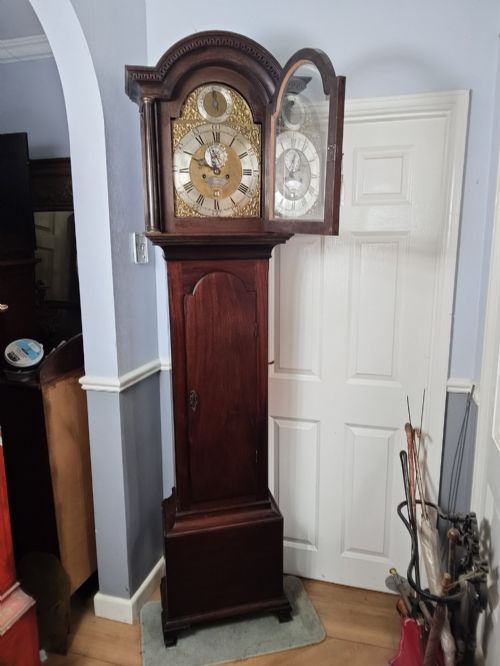
Eight Day Tallcase Clock
An eight day tallcase clock brings the steady rhythm of the eighteenth and nineteenth centuries into a room through brass, mahogany, and oak.
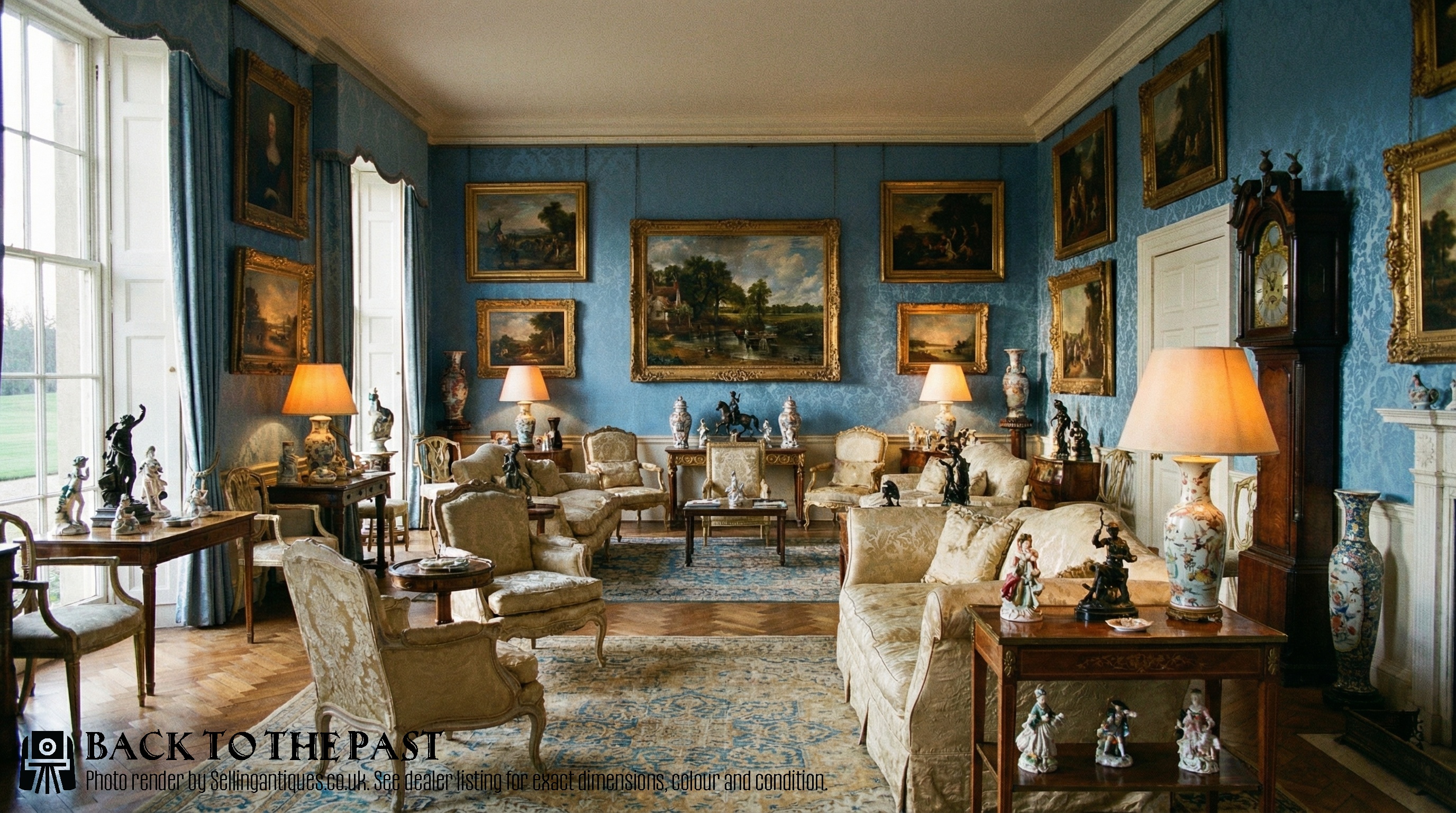
Eight Day Tallcase Clock
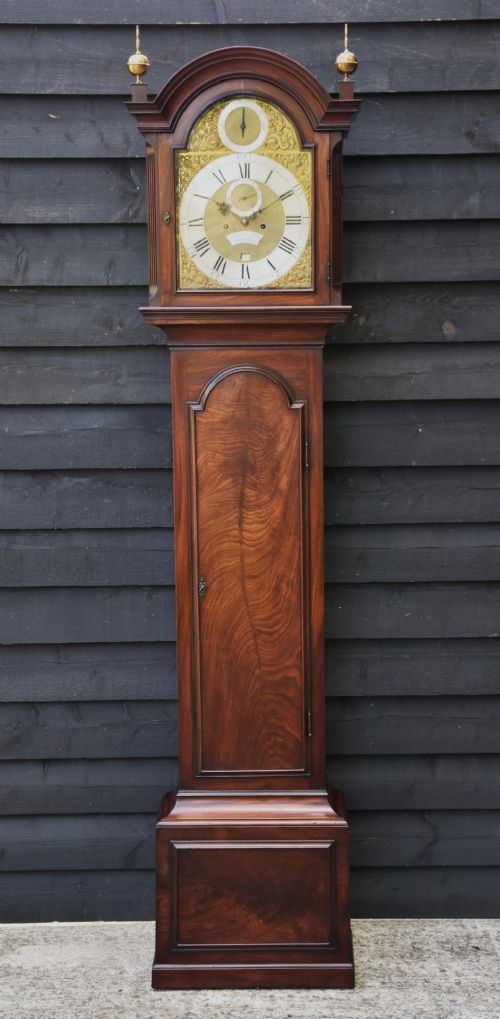
An eight day tallcase clock houses a weight-driven movement inside a floor-standing wooden case, requiring winding once a week. These pieces span periods from the seventeenth century through to the twentieth, with Georgian examples dominating the selection.
The objects appear under several historical designations in the evidence, including longcase clocks, grandfathers, and long case clocks. The most frequent encounters involve mahogany and oak cases built in English, Scottish, and regional workshops.
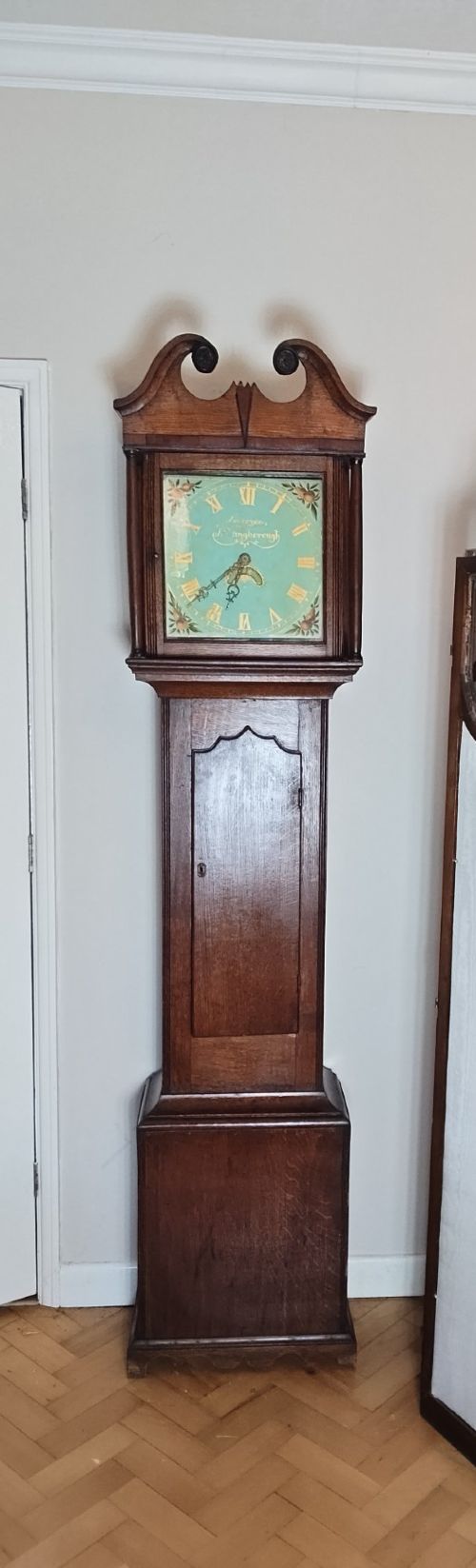
Makers ranged from London masters to provincial watchmakers in towns such as Montrose, Preston, and Falkirk. The forms vary from architectural brass-faced models to simpler painted iron dials with moon phases.
How they were made
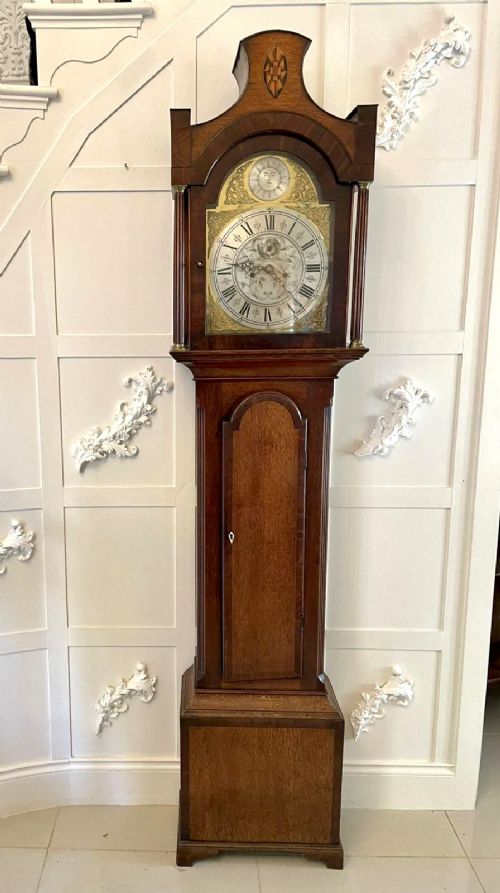
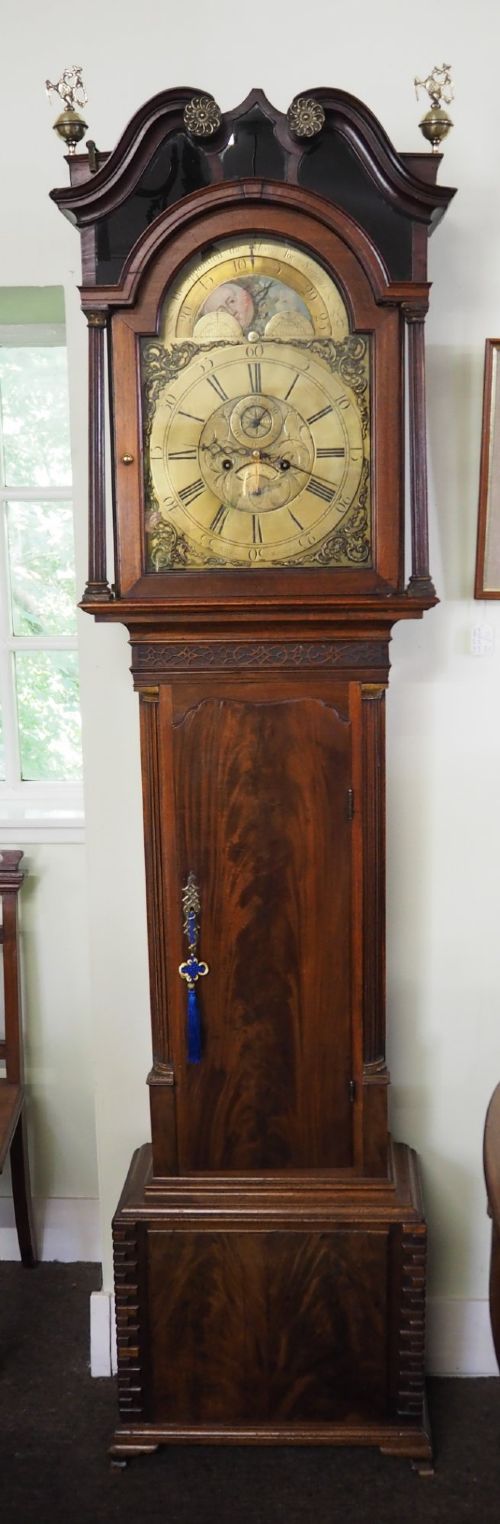
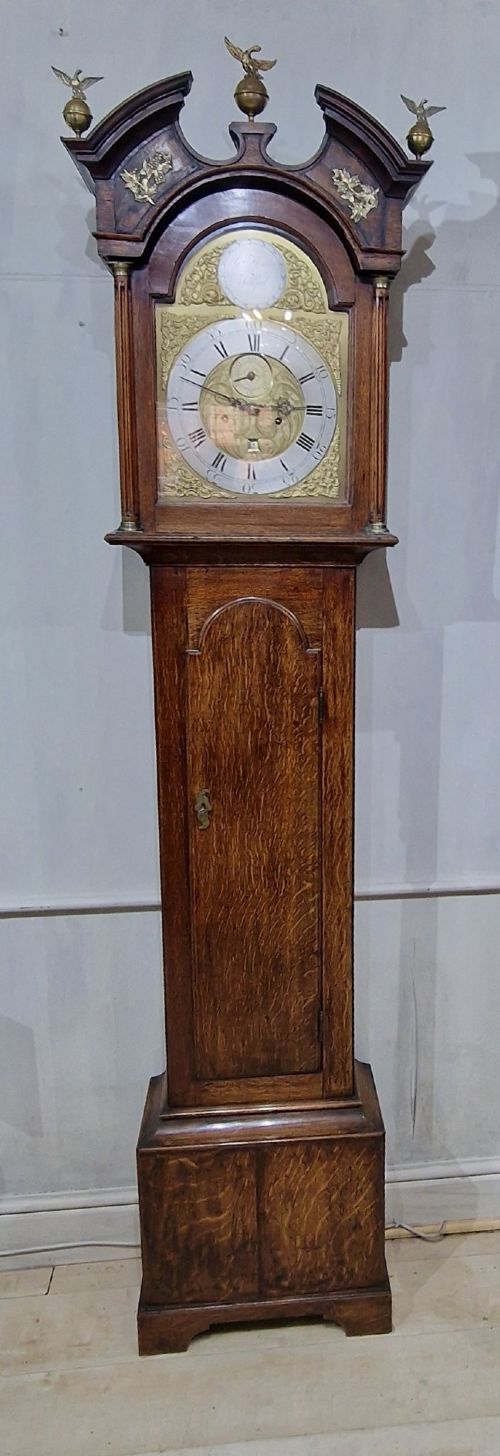
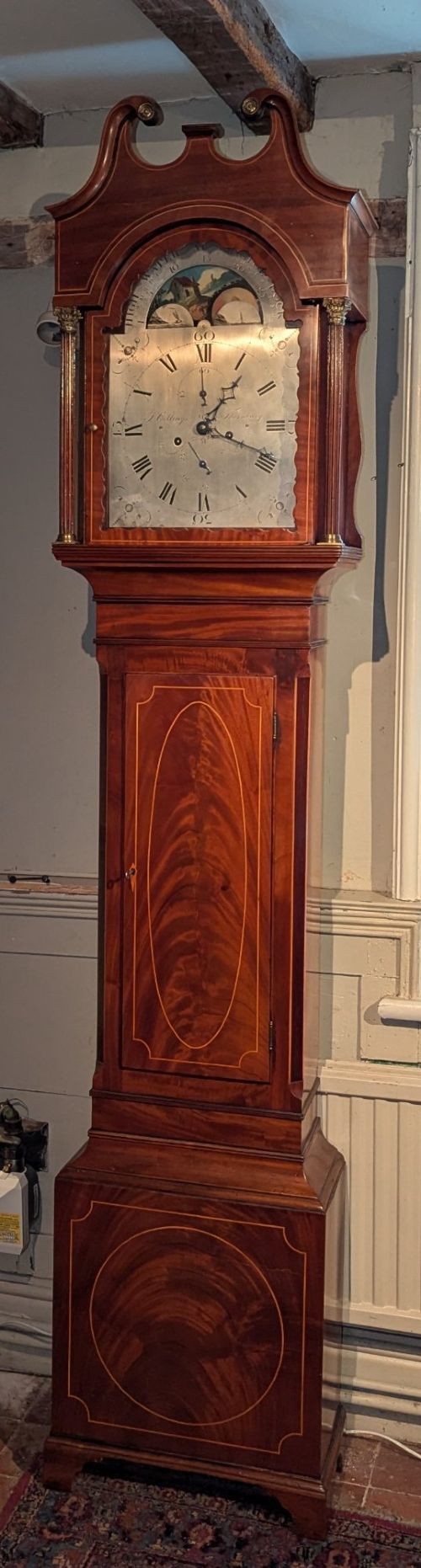
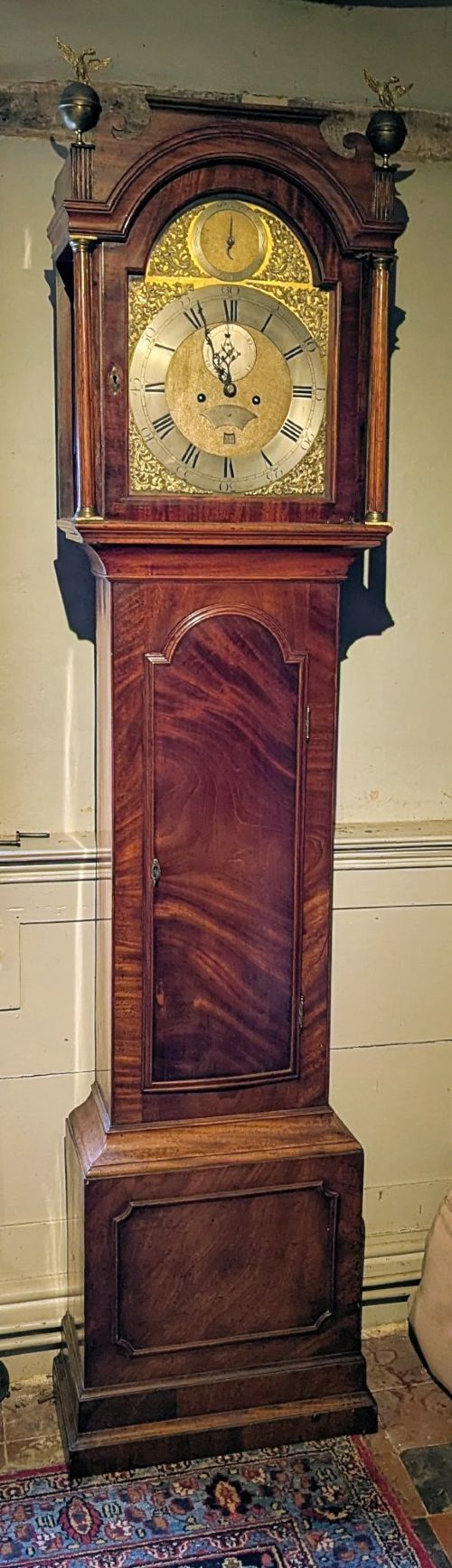
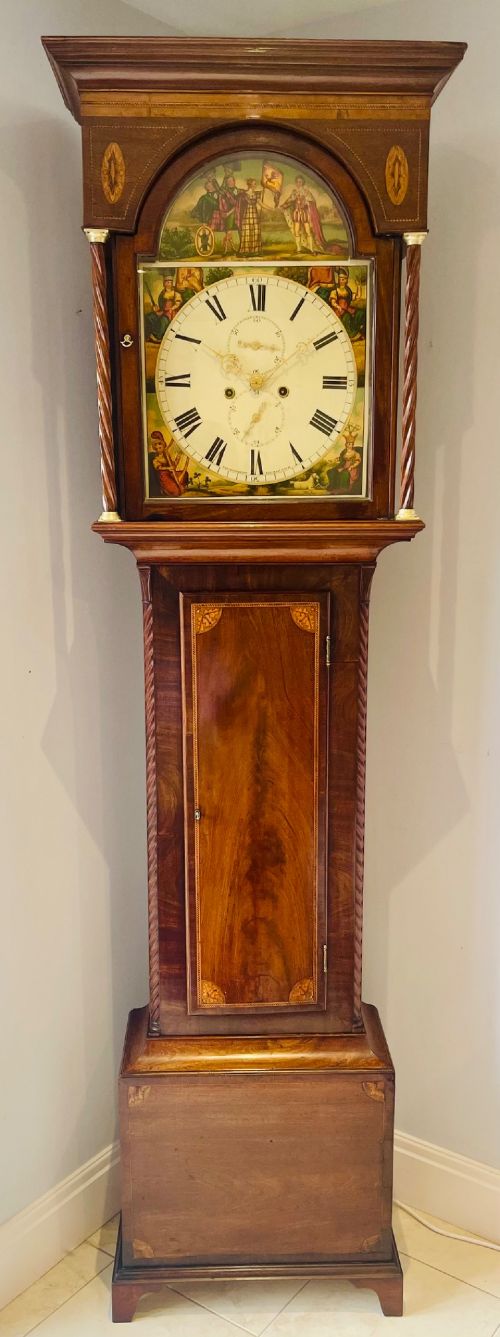
Cabinetmakers constructed the tall floor cases primarily in mahogany, oak, and walnut, frequently employing flame veneers, marquetry inlay, or burr figures to decorate the wood. Glass protected the dial door, while brass and steel formed the intricate gear trains and striking mechanisms inside.
Dial construction combined cast brass corner spandrels and engraved chapter rings in earlier periods with painted iron and moon phase discs in later nineteenth-century examples. Weights suspended on lines or chains provided the power, regulated by a pendulum swinging within the trunk.
The listings feature movements constructed from brass and steel housed within cases of mahogany, oak, walnut, and maple.
What varies in quality
The distinction between ordinary and superior pieces rests on the precision of the movement and the proportion of the case. London makers and notable regional firms often produced more complex strike-silent or quarter-chiming gearwork paired with finely figured flame mahogany or burr walnut cabinetry.
Proportion and dial execution dictate the overall standing of a clock, where crisp engraving on brass arch dials or detailed hand-painted moon phases separate simpler regional timepieces from masterwork productions.
John Ellicott·Handley & Moore·Henry Weedon·Henry Massy·William Moon
The Eight Day Tallcase Clock Glossary
- Dial
- The face of the clock where the time is read, constructed from brass, painted iron, or silvered metal.
- Moon phase
- A rotating disc showing the phases of the moon, visible through an arched aperture on the dial.
- Quarter striking
- A mechanism that chimes the quarters of the hour on bells or gongs in addition to sounding the full hours.
- Spandrel
- The decorative metal corner pieces framing the central chapter ring on a brass clock dial.
- Trunk
- The long central section of the tallcase that houses and protects the hanging weights and swinging pendulum.
Eight Day Tallcase Clock: Frequently Asked Questions
How often do you wind an eight day tallcase clock?
An eight day tallcase clock requires winding once every week by pulling up the internal weights.
Owners typically use a small crank key inserted into winding holes on the dial face.
Where should I place a longcase clock?
These clocks need a stable, level floor and a secure fixing to the wall through the backboard to keep the pendulum swinging evenly.
Avoid placing them in areas subject to heavy vibrations or rapid temperature shifts that affect the wood and metal.
How do I identify a Georgian tallcase clock?
Georgian models generally date from the eighteenth or early nineteenth century and feature classical architectural proportions in mahogany, oak, or walnut.
Their dials often display engraved brass corners or early painted iron faces signed by the maker.
What is a moon dial?
A moon dial is an extra painted or engraved disc positioned above the main clock face that tracks the lunar month.
Watchmakers added this complication for rural and maritime use where lunar cycles governed tides and travel.