


Edwardian Work Box
An edwardian work box is a fitted domestic container designed for needlework and small valuables, combining period craftsmanship with practical utility.

How they were made
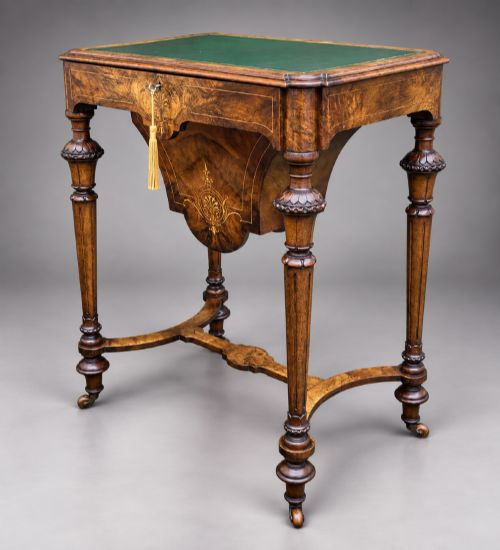
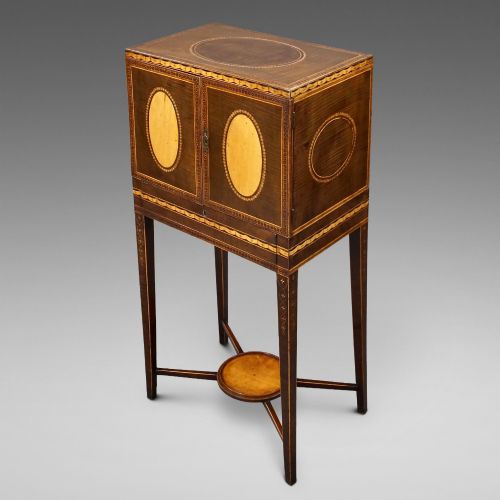
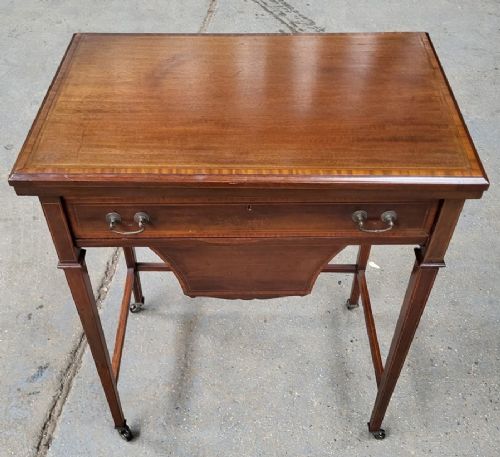
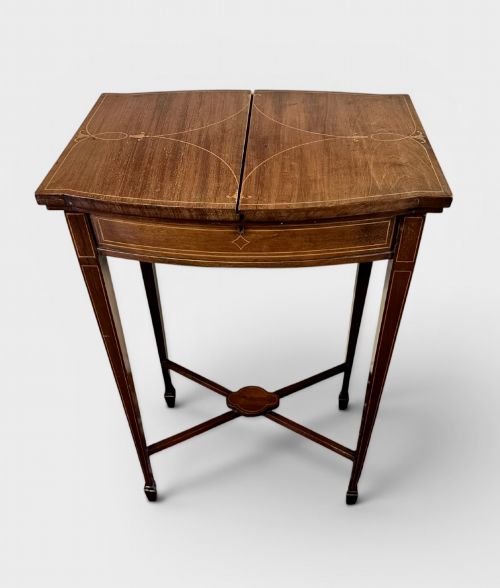
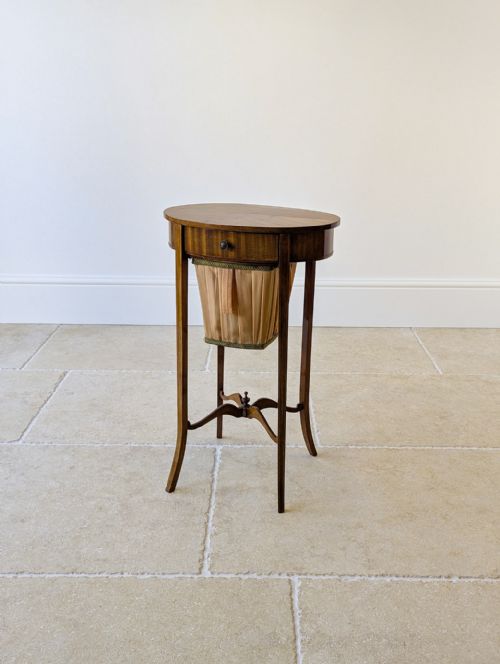
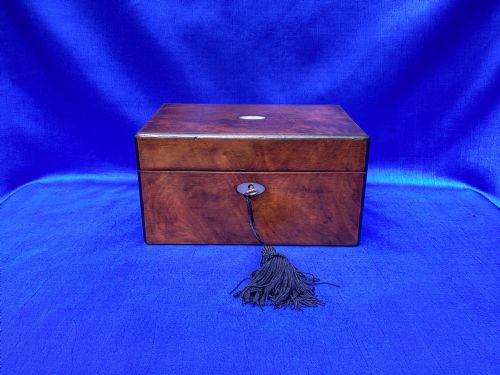
Cabinet makers utilised dense hardwoods such as mahogany and rosewood as carcases, often applying veneers of burr walnut, satinwood, or harewood to create patterned surfaces. Cross-banding, stringing in boxwood, and marquetry inlays defined the exterior decoration of Edwardian tables and boxes.
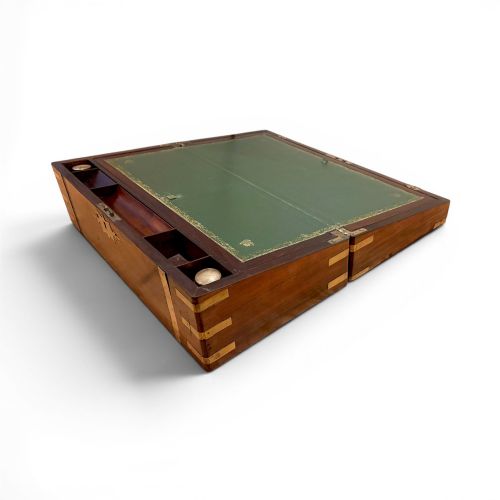
Interiors required precise joinery to house compartmentalised trays, needle holders, and wells for sewing tools. Portable boxes frequently featured brass mounts, campaign handles, and hinged lids lined with velvet or silk.
What varies in quality
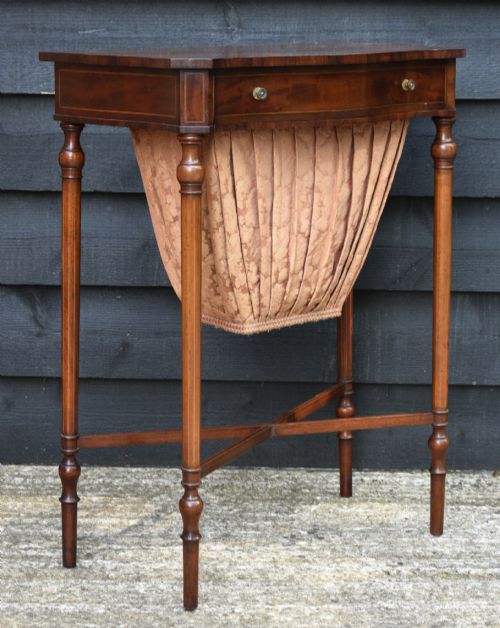
Quality rests upon the crispness of the marquetry and stringing, the choice of timber veneers, and the condition of the fitted interior compartments. Superior pieces display intricate shell inlays, figured burr walnut, and well-preserved silk linings or original fabric baskets.
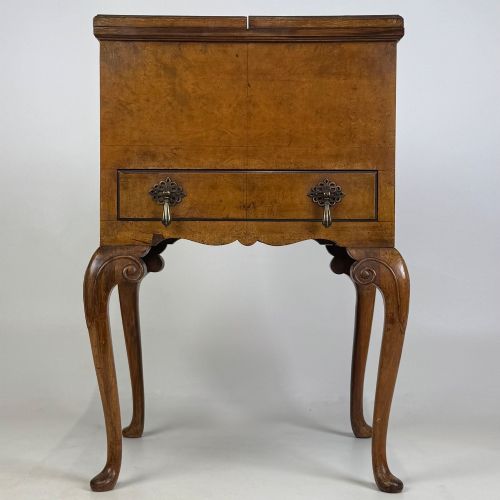
The integrity of the construction shows in the joinery of the legs and the fit of the lids, where lesser examples exhibit plain mahogany with minimal detailing and replaced interiors.
One listed work box doubles as a butler's carry with a fitted cutlery tray.
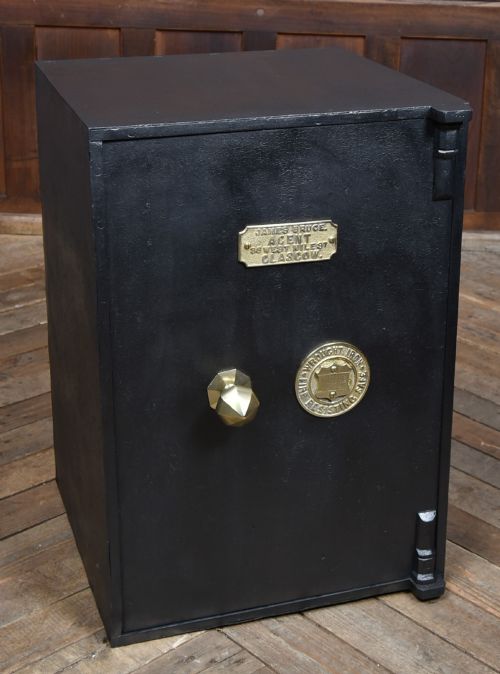
Gillows·Mappin and Webb·Asprey and Co·Ollivant and Botsford·James Bruce
The Edwardian Work Box Glossary
- Cross-banding
- A strip of veneer applied to the border of a surface with the grain running perpendicular to the centre.
- Marquetry
- Decorative veneer work formed of fitted pieces of wood, shell, or ivory to create pictorial or geometric designs.
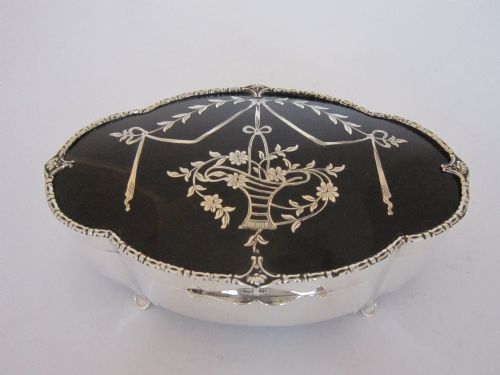
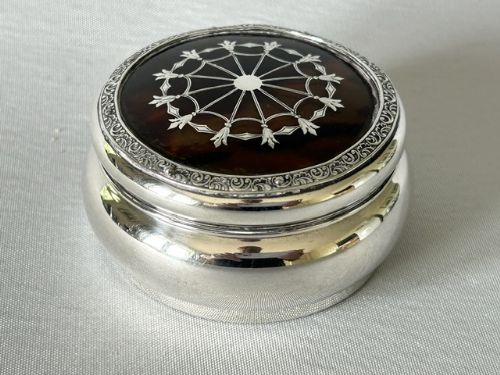
- Pique work
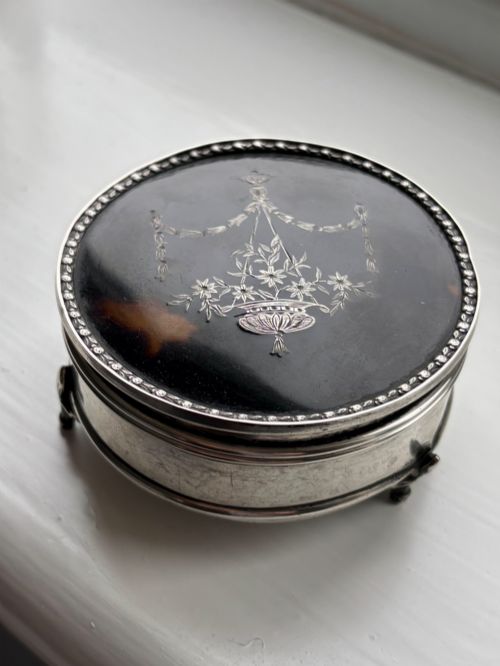
- The insertion of tiny gold or silver pins into tortoiseshell or ivory to form delicate patterns.
- Satinwood
- A lustrous yellowish-wood utilised extensively in high-status late-period and Edwardian cabinet making.
- Stringing
- Thin inlaid lines of contrasting wood used to outline panels and tabletops.
Edwardian Work Box: Frequently Asked Questions
What is an edwardian work box?
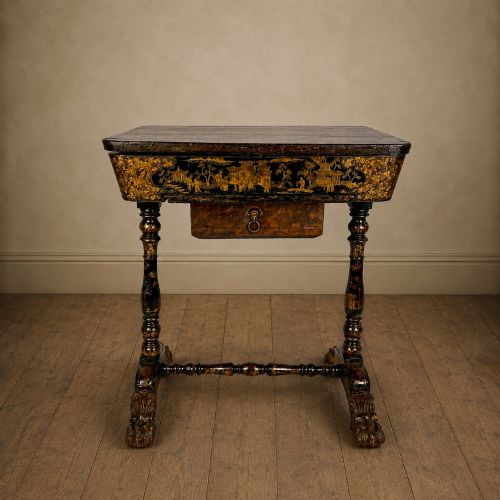
An edwardian work box is a small cabinet, table, or portable chest designed for storing sewing gear, threads, and personal trinkets. These pieces reflect the domestic pursuits of the early twentieth century.
They often feature hinged lids, compartmented trays, and occasionally suspended silk baskets beneath the main body for holding wool and fabrics.
How were work boxes used?
These boxes served as tidy repositories for ladies engaged in needlework, embroidery, and mending. The fitted interior kept bobbins, pins, and scissors organised during parlour activities.
Portable variants allowed owners to carry their sewing projects between rooms, while table forms remained stationary as decorative furniture.
Where should I place one?
Smaller tabletop boxes sit comfortably on dressing tables, sideboards, or chests, where they can store modern jewellery or small keepsakes. Table versions function well beside armchairs or sofas as occasional surfaces.
Keep them away from direct sunlight and strong heat sources to protect the delicate wood veneers and antique silk linings.
How do I spot an Edwardian piece?
Edwardian items typically display lighter timbers like satinwood or inlaid mahogany, contrasting with the heavier, darker rosewood and walnut common in Victorian examples. Marquetry and shell motifs are characteristic.
Construction details, such as machine-sawn elements combined with hand-finishing, help date these objects to the decades around nineteen hundred.