



Edwardian Wooden Secretary Desk
An edwardian wooden secretary desk offers a practical surface for letters and papers, combining concealed compartments with a sturdy drop-down writing flap.
Edwardian Wooden Secretary Desk
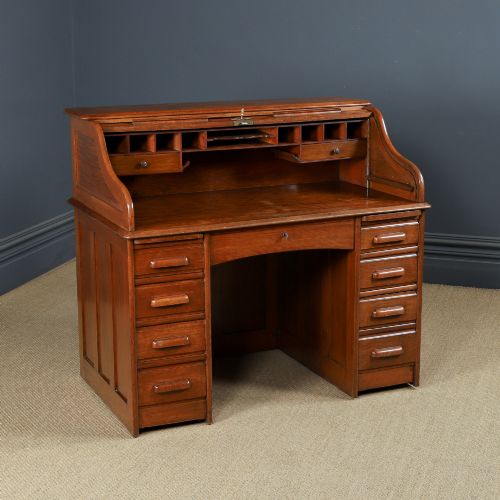
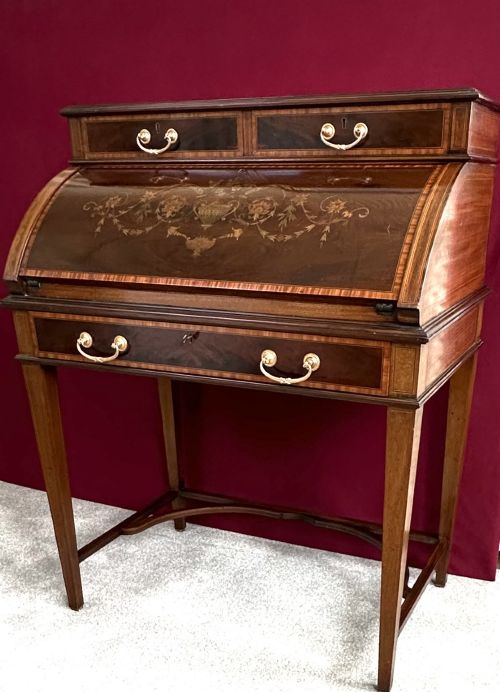
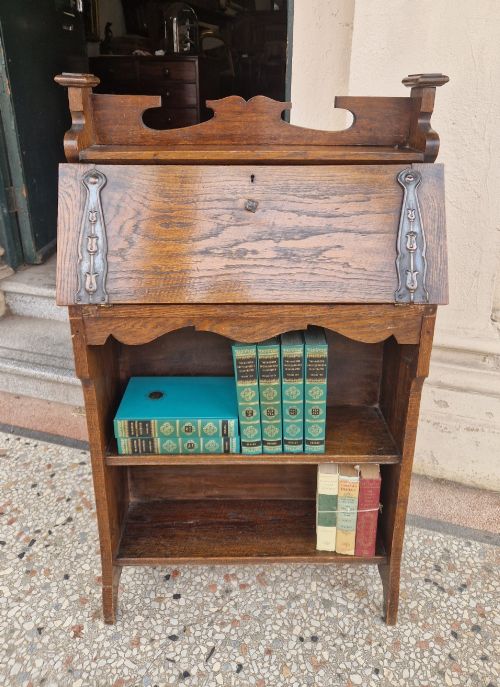
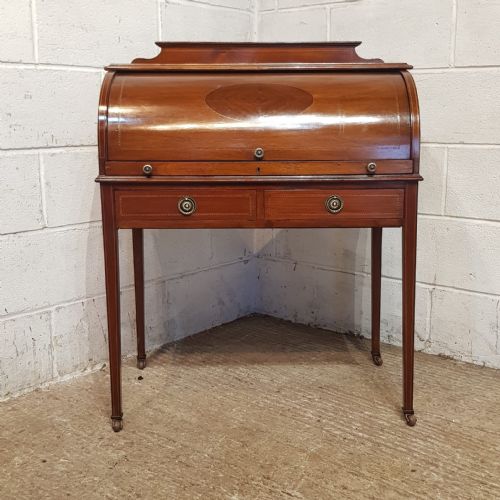
When searching for an edwardian wooden secretary desk, you encounter various forms including fall-front bureaux, cylinder desks, and tall bureau bookcases. The pieces on this page span the Edwardian period alongside late Victorian, Georgian, and early twentieth-century examples.
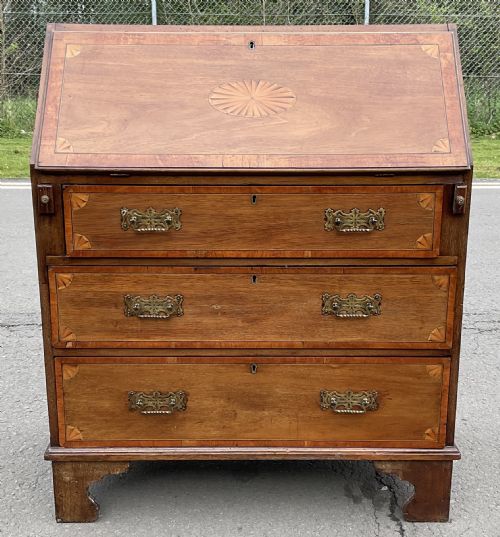
The most common format is the writing bureau, featuring a hinged writing slope that opens to reveal fitted interiors with small drawers and pigeonholes. Oak and mahogany serve as the primary woods, often enhanced with satinwood inlay or marquetry details.
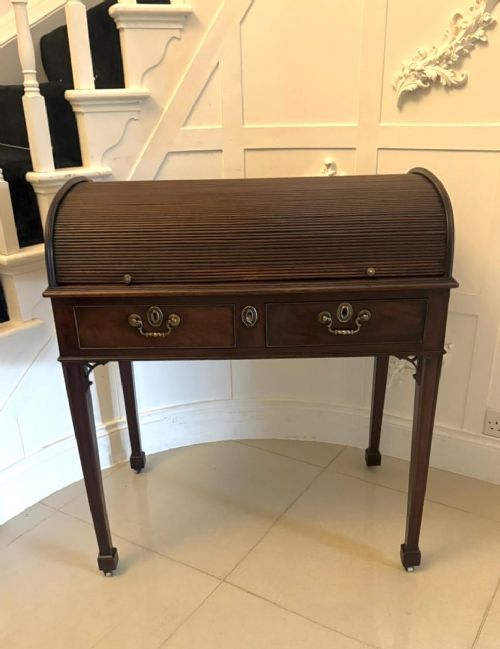
Larger variations incorporate bookcase top sections with glass doors, while smaller alternatives include barrel-fronted desks and narrow writing cabinets designed for compact spaces.
Materials and construction
Cabinet makers utilised solid timbers and selected veneers, predominantly mahogany and oak, alongside walnut, elm, and satinwood for decorative contrast. Construction techniques involved dovetail joints for drawers and panelled construction for larger carcasses.
Brass handles, escutcheons, and leather writing inserts provide functional contrast to the wooden surfaces. Inlaid pieces feature delicate stringing and marquetry motifs set into the primary timber.
Several desks include clever moving interiors and secret compartments designed to keep private correspondence safe from prying eyes.
What separates the grades
The refinement of the interior stationery fittings and the precision of the exterior inlay set better examples apart from standard utility pieces. Fitted compartments with secret drawers and well-executed marquetry indicate higher craftsmanship.
The choice of timber grain and the condition of the original brass hardware and leather inserts influence the overall integrity of the piece. Superior construction shows in smooth drawer movement and tightly fitted writing flaps.
The Edwardian Wooden Secretary Desk Glossary
- Bureau
- A desk featuring a sloping hinged lid that drops down to form a writing surface. It conceals pigeonholes and small drawers inside.
- Marquetry
- Decorative woodwork where pieces of various coloured veneers are fitted together to form pictorial or geometric designs. This technique embellishes drawer fronts and fall-front panels.
- Tambour
- A sliding surface made of narrow strips of wood glued to a canvas backing. It tracks around a curve to enclose the desk interior.
- Cylinder desk
- A desk with a rounded, quarter-circle wooden shutter that rolls back to reveal the writing surface and interior compartments.
- Bonheur de jour
- A light lady's writing desk featuring a small superstructure of drawers and shelves above the main work surface.
Edwardian Wooden Secretary Desk: Frequently Asked Questions
How do I identify an Edwardian desk?
Edwardian desks often display lighter mahogany timbers with delicate satinwood inlay, contrasting with the heavier, darker woods of the preceding Victorian era.
Construction details, original brass hardware, and interior drawer arrangements also help distinguish pieces dating from the early nineteen-hundreds.
What is a bureau bookcase?
A bureau bookcase combines a lower writing desk with a glazed upper cabinet for storing books.
This two-part form provides both a functional writing surface and enclosed display shelving.
Are these desks suitable for daily work?
Many of these pieces accommodate modern writing tasks and laptop use on their fold-down flaps.
Care should be taken to protect antique leather and wooden writing surfaces from heavy wear.
What woods were commonly used?
Mahogany and oak appear most frequently, supplemented by walnut, elm, and satinwood.
Inlaid details often utilise contrasting lighter woods to create geometric or floral patterns.