
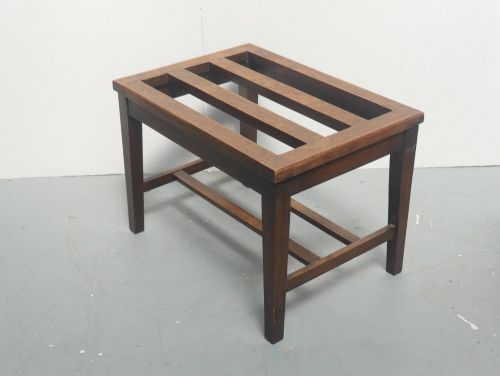
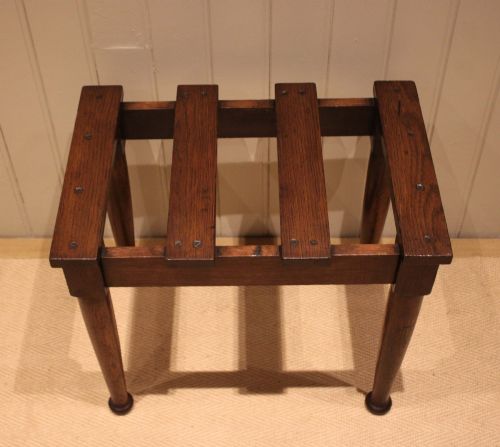
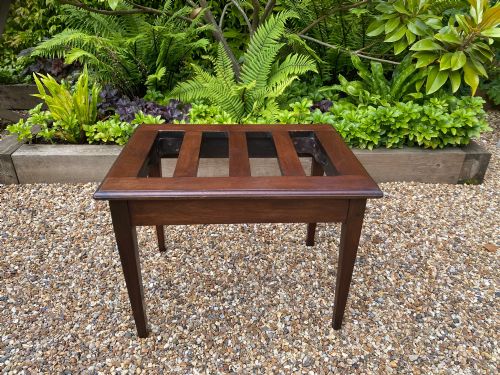

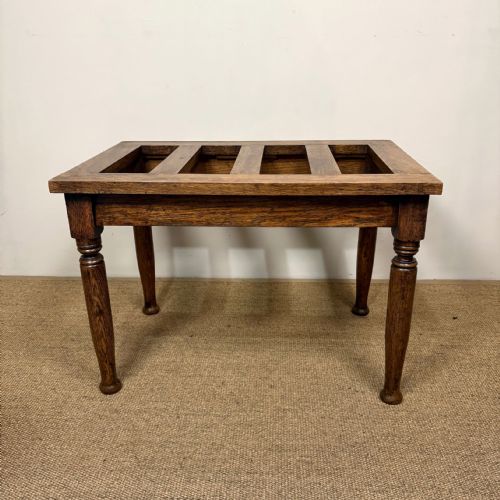
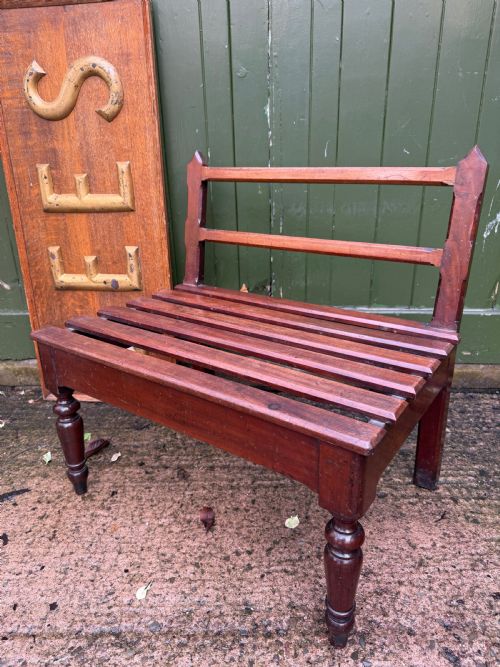


Edwardian Wooden Luggage Bench
An edwardian wooden luggage bench brings practical bedroom utility and sturdy timber construction into modern spaces.
Edwardian Wooden Luggage Bench
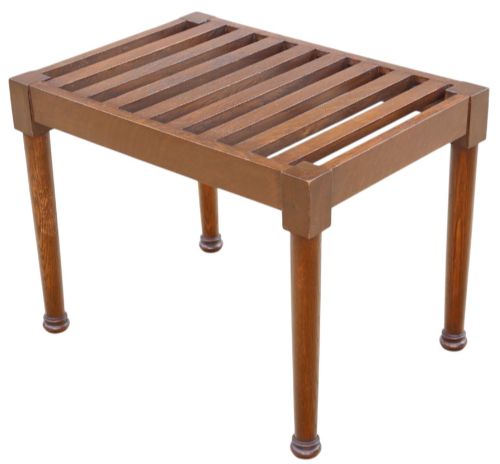
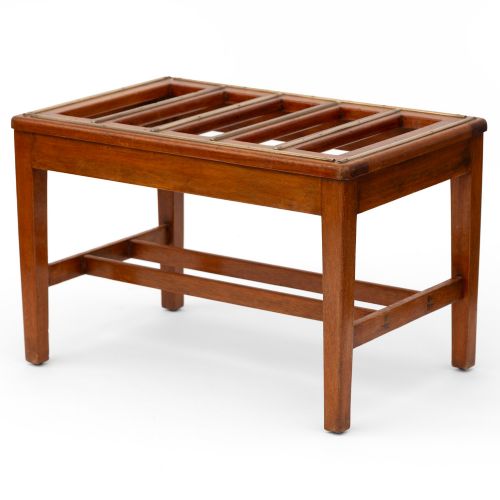
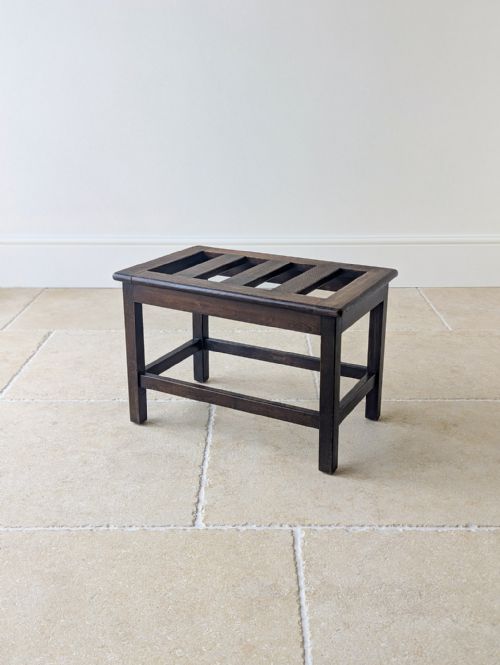
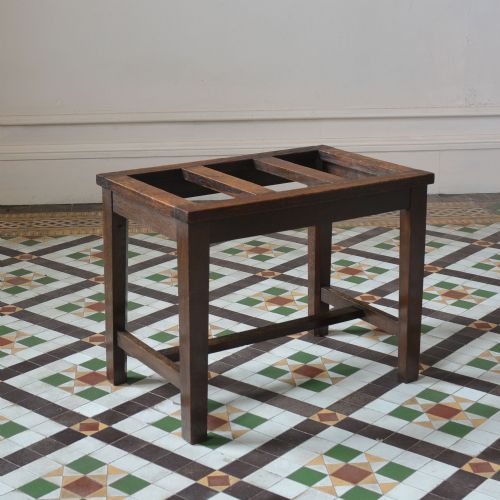
An edwardian wooden luggage bench serves as a sturdy stand for holding suitcases and travel bags at a convenient height within a bedroom or dressing room. The examples seen here mostly date from the Edwardian period, alongside Victorian and early twentieth century pieces.
Most pieces take the form of luggage stands or racks constructed from solid timbers like oak and mahogany. Some items include specific details such as a raised and raked rear upstand support or carved decoration.
Origins range across English country house styles and urban hotel furnishings, including pieces originating from West End establishments and Scottish workshops.
How they were made
Makers utilised heavy timbers such as oak, mahogany, ash, and pine to build these durable luggage stands. The wood was frequently polished to highlight the natural grain.
Metal components like brass and iron often form structural fittings or folding mechanisms. Painted pine finishes also appear among the nineteenth century examples.
Listings feature oak, mahogany, ash, and pine timbers across pieces dated from the nineteenth century to the Edwardian era.
What varies in quality
The choice of timber creates a clear distinction across the range, with dense hardwoods like mahogany and figured oak sitting above simpler painted pine alternatives. Solid construction methods provide greater stability under heavy luggage.
Refined decorative touches, such as carved woodwork or deep proportions with a raised rear upstand support, elevate certain pieces beyond standard utility items.
Waring & Gillow
The Edwardian Wooden Luggage Bench Glossary
- Luggage stand
- A low wooden bench designed to hold suitcases at a convenient height in a guest bedroom. These pieces often feature slatted tops.
- Upstand
- A raised vertical barrier at the rear of a piece of furniture. This feature prevents luggage from sliding backward against a wall.
- Edwardian
- The period spanning the reign of King Edward VII from 1901 to 1910. Furniture from this era often lighter in scale than Victorian pieces.
- Victorian
- The historical period covering the reign of Queen Victoria from 1837 to 1901. Items from this era tend to feature substantial timbers and solid proportions.
Edwardian Wooden Luggage Bench: Frequently Asked Questions
Where were these luggage stands used?
These stands typically sat in guest bedrooms of large country houses and hotels to hold visitors' travel trunks. They kept bags off the floor and made unpacking straightforward.
Today they serve the same practical purpose in domestic bedrooms or double as low display surfaces.
How do I tell Edwardian pieces from Victorian ones?
Edwardian stands generally display lighter timber tones and simpler lines compared to earlier nineteenth century furniture. Victorian pieces often use heavier proportions and darker finishes.
Examining the construction timbers and hardware helps determine the approximate period of manufacture.
Can these benches hold heavy modern suitcases?
Solid hardwood construction ensures these luggage benches easily support modern travel bags and heavy suitcases. Their original purpose required them to hold large leather trunks.
Regular placement of heavy luggage remains well within the structural capacity of these timber frames.
What woods were commonly used?
Oak and mahogany appear most frequently among the surviving pieces, offering durable surfaces and strong frames. Ash and pine are also found in regional and utility pieces.
Polished finishes protect the timber while highlighting the natural grain patterns of the wood.