


Hotel Bedroom Luggage Bench
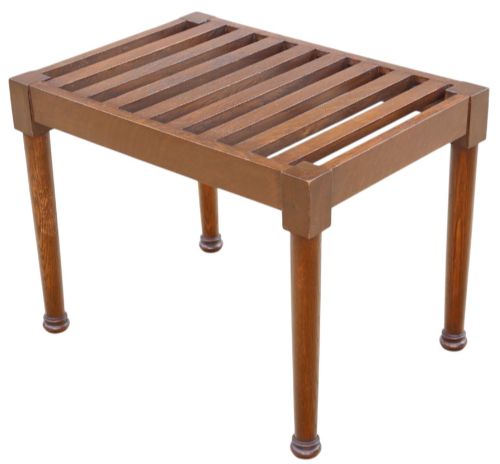
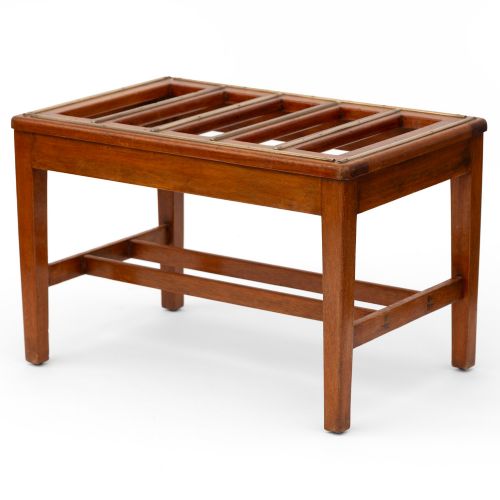
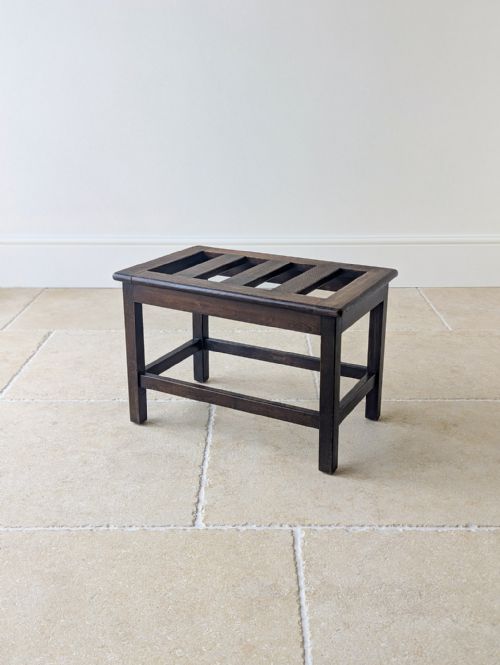
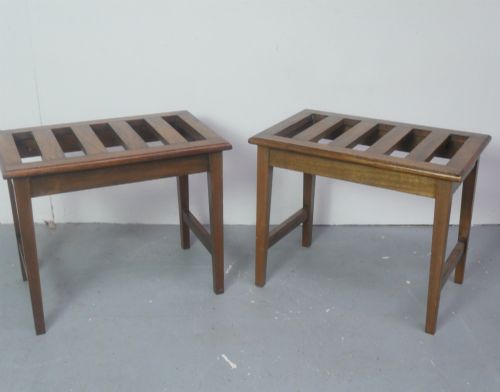
A hotel bedroom luggage bench offers a practical resting place for cases, appearing in sturdy oak, mahogany, and walnut across Victorian and Edwardian periods.
Hotel Bedroom Luggage Bench
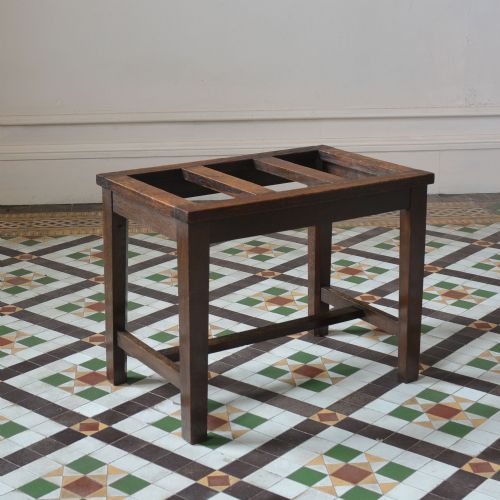
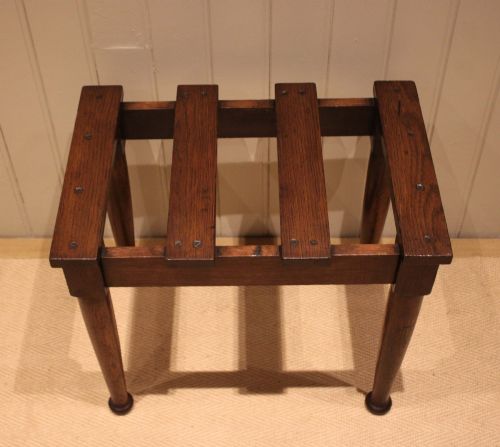
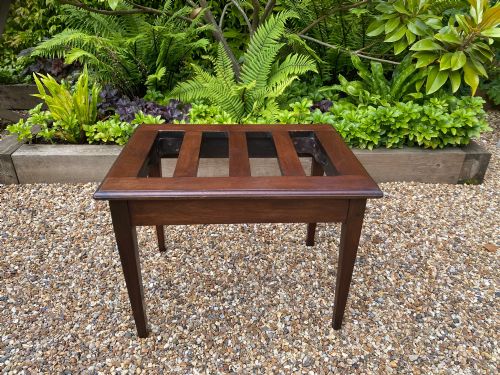
A hotel bedroom luggage bench is a functional stand designed to hold travel cases at a convenient height, sparing beds and floors from heavy trunks. These pieces typically take the form of luggage stands or luggage racks constructed to endure frequent handling in guest rooms.
The examples gathered here span from the nineteenth century through the early twentieth century, including Edwardian and Victorian designs. Buyers will frequently encounter sturdy wood frames in oak and mahogany, often featuring folding or fixed tops.
Originating in professional hospitality settings like West End hotels as well as large residences, these benches combine utilitarian purpose with period craftsmanship. They suit modern bedrooms and guest suites as both functional furniture and historical accents.
How they were made
Makers utilised solid timbers such as oak, mahogany, walnut, teak, and general hardwood to build frames capable of supporting heavy luggage. These materials were often polished to highlight the natural grain and ensure durability under daily use.
Metal components like brass hardware frequently appear on these stands, adding structural reinforcement and subtle detailing to the wooden framework. Construction methods focused on strength, resulting in robust joints and stable bases designed for longevity.
One polished oak stand carries the distinct provenance of a former West End hotel.
What varies in quality
Quality in a hotel bedroom luggage bench rests upon the selection of timber and the solidity of its construction, distinguishing heavy-duty commercial pieces from lighter domestic variants. Superior examples display denser hardwoods and careful finishing that withstands decades of folding and weight.
The proportion and finish of the woodwork dictate the overall character of each stand, with polished surfaces showing a deeper lustre. Finer pieces maintain tight joints and substantial framing that reflect the rigorous standards of nineteenth and early twentieth-century workshops.
The Hotel Bedroom Luggage Bench Glossary
- Edwardian
- A style and period spanning the reign of King Edward VII, noted for lighter furniture designs and continued use of oak. This era produced many of the practical stands found in hotels of the time.
- Victorian
- The period of Queen Victoria's reign, characterised by substantial construction and durable hardwoods. Pieces from this era often show heavier framing built for demanding environments.
- Mahogany
- A durable hardwood valued for its rich reddish-brown colour and fine grain. Cabinetmakers frequently employed it for furniture intended to combine strength with a polished appearance.
- Luggage rack
- An alternative term for a stand designed specifically to elevate bags off the floor. These items appear in various woods across the nineteenth and twentieth centuries.
Hotel Bedroom Luggage Bench: Frequently Asked Questions
What is a hotel bedroom luggage bench used for?
These benches provide a raised surface for guests to place suitcases, making packing and unpacking much easier without bending down to the floor.
They also protect beds and upholstered furniture from heavy, dusty travel trunks and bags in guest rooms.
How do I care for an antique wood luggage stand?
Dust the wooden frame regularly with a dry cloth and apply a quality beeswax periodically to maintain the polished finish.
Keep the stand away from direct heat sources and strong sunlight to prevent the timber from drying out or splitting.
How can I tell a Victorian stand from an Edwardian one?
Victorian stands typically feature heavier, more robust timber construction built for endurance in busy grand hotels.
Edwardian pieces often display slightly lighter proportions while retaining the functional strength required for luggage support.
Will these stands hold heavy modern suitcases?
Original hotel bedroom luggage benches were engineered to support heavy canvas and leather trunks used by travellers in the nineteenth and early twentieth centuries.
Their solid oak and mahogany frames make them more than capable of holding contemporary luggage safely.