





Edwardian Wooden Kitchen Chairs
Edwardian wooden kitchen chairs bring honest utility to a room, offering sturdy ash, elm, and beech frames built for daily domestic life.
Edwardian Wooden Kitchen Chairs
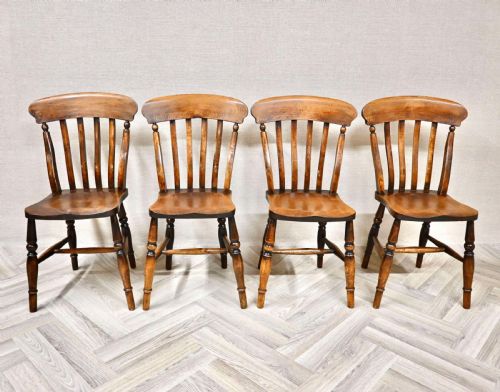
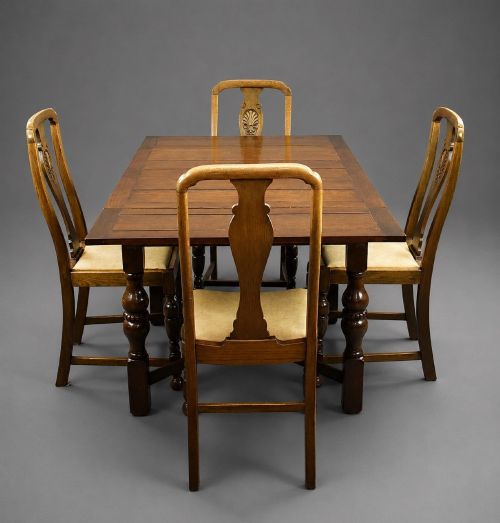
Edwardian wooden kitchen chairs encompass robust seating designed for hardworking domestic spaces around the turn of the twentieth century. These domestic seats emerge primarily from the Edwardian era, 1900, 1910, and 1920, alongside earlier Victorian and Georgian traditions.
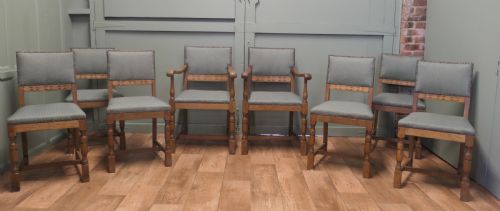
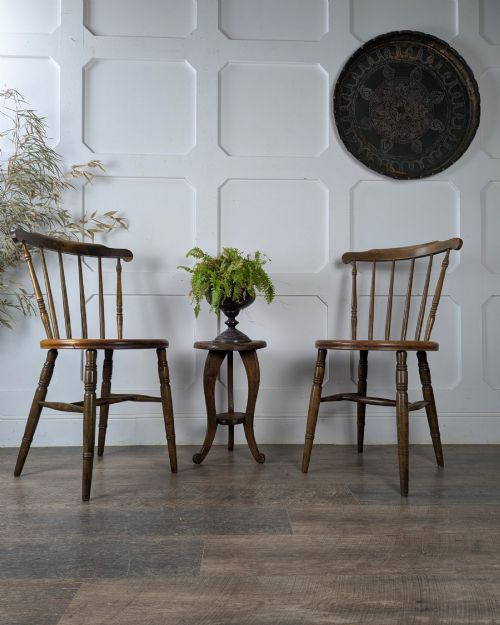
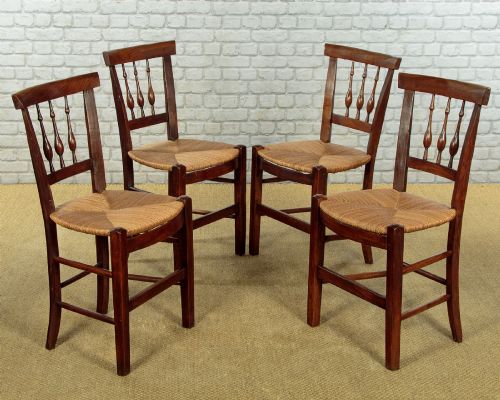
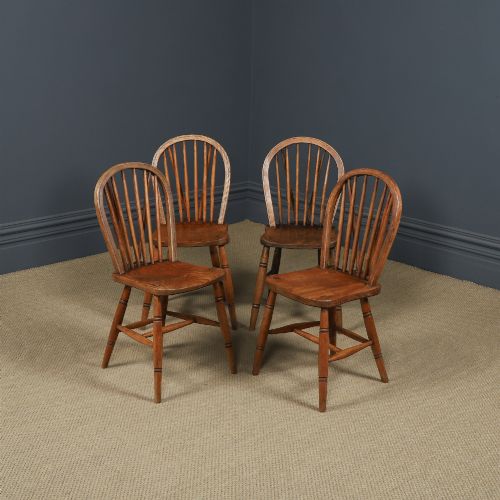
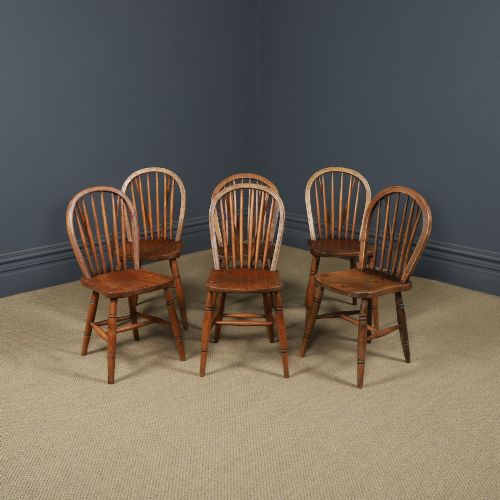
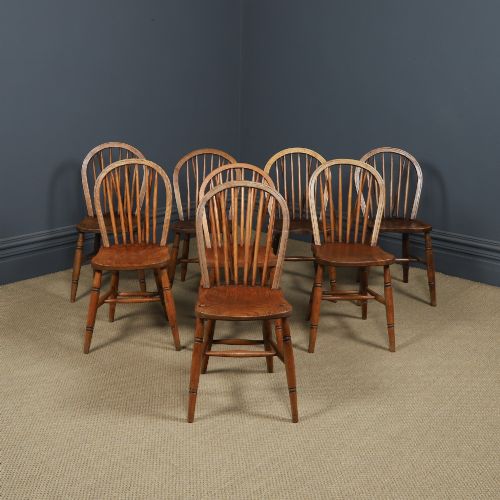
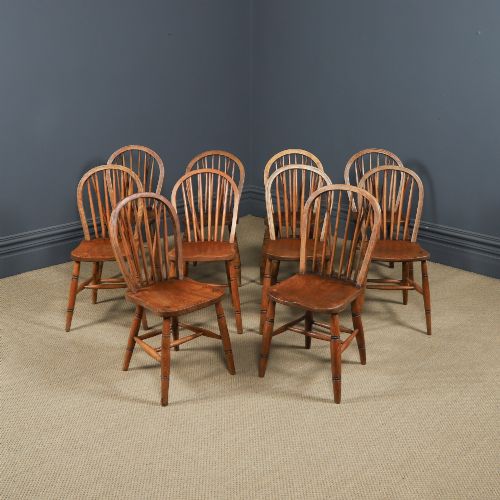
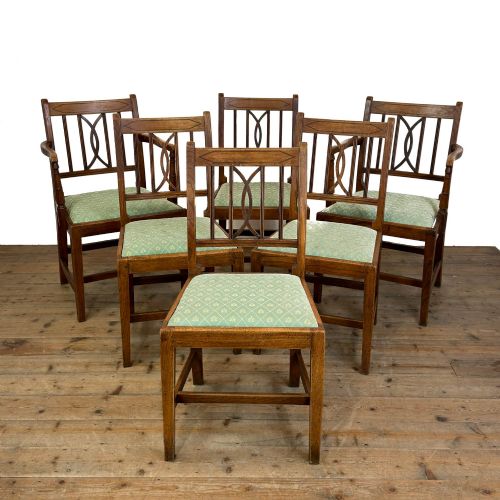
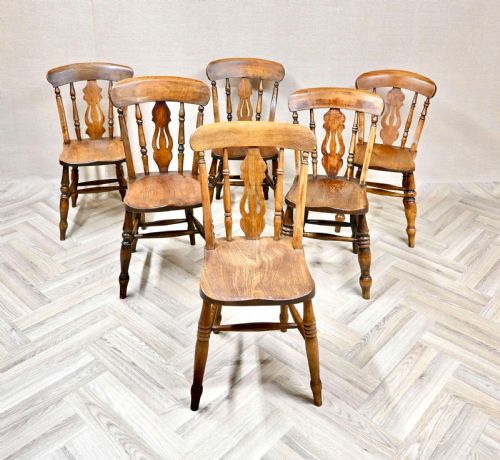
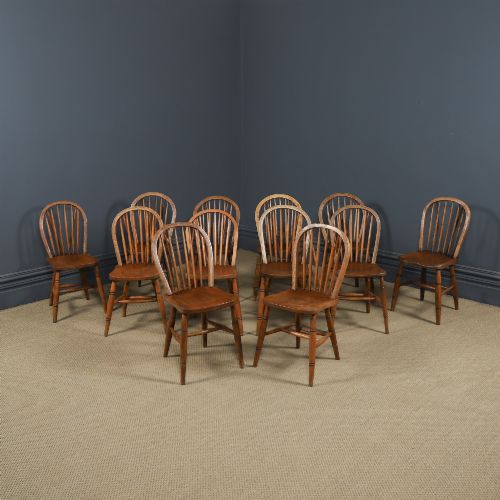
Buyers encounter various vernacular forms here, including Windsor hoop and stick back models, ladder backs, lath backs, and rush seat dining chairs. Sets range from pairs up to twelve matching pieces, accompanied by individual armchairs, rocking chairs, and station chairs.
The aesthetic bridges English country house styles, Arts and Crafts movements, and commercial environments such as shops and railway stations. Practical service dictates the construction, relying on native timbers shaped for daily utility.
Construction and materials
Carpenters utilised native hardwoods like ash, elm, oak, beech, and rush to construct these seating forms. Windsor chairs combined elm seats with ash or beech spindles and bentwood hoops, exploiting the specific flexibility and strength of each timber.
Joinery methods involved traditional turning, steam bending, and wedged tenons to withstand heavy household strain. Rush and wood seats provided durable surfaces without requiring elaborate upholstery.
Edwardian Wooden Kitchen Chairs Retail Price Guide 2026
Typical asking prices for edwardian wooden kitchen chairs among the pieces listed under this phrase on Sellingantiques today, from the lower quarter to the upper quarter. They describe what is for sale here now, not the wider market.
One extraordinary survivor even advertised Watsons Matchless Soap directly from a shop floor.
Factors of quality
Quality rests upon the selection of timber and the integrity of the original construction rather than decorative ornamentation. Chairs retaining matched grain patterns across a set demonstrate superior workshop selection at the outset.
The survival of original surface patination and tight, uncompromised joinery separates utilitarian survivors from heavily altered examples. Lighter woods showing deep, honeyed tones through decades of cleaning exhibit the best of vernacular craftsmanship.
The Edwardian Wooden Kitchen Chairs Glossary
- Windsor
- A chair built with a solid wooden saddle-shaped seat into which the legs and back sticks are independently inserted. This construction distributes weight effectively and provides enduring structural stability.
- Ash and Elm
- Timbers frequently paired in vernacular chair making, where the resilient elm provides a stable seat and the elastic ash forms strong bent hoops or spindles.
- Rush Seat
- A woven seating surface made from dried marsh grasses. It yields a resilient, textured base favoured in traditional country dining chairs.
- Ladder Back
- A chair back featuring horizontal slats between two upright posts. This design offers straightforward structural support and simple manufacture.
- Bentwood
- Wood shaped by exposure to steam and moisture before being clamped into curved forms. It creates strong, lightweight frames without heavy joints.
Edwardian Wooden Kitchen Chairs: Frequently Asked Questions
How do I identify Edwardian kitchen chairs?
Look for construction traits typical of the early twentieth century, such as ash and elm frames combined with simple Windsor or ladder back designs. These pieces often show functional vernacular details rather than heavy Victorian ornamentation.
Compare the timber patination and joinery methods against standard nineteenth-century manufacturing techniques to confirm the period.
Are these chairs suitable for daily dining?
Most of these wooden designs were constructed precisely for heavy domestic use in kitchens and dining rooms. Their robust ash, elm, and beech frames handle regular seating well.
Ensure that individual leg joints and stretchers remain secure before putting a set into everyday service around a table.
What is a Windsor kitchen chair?
A Windsor chair relies on a thick wooden seat slab that anchors the legs underneath and the back spindles above. This clever engineering creates a remarkably rigid skeleton without needing a traditional box frame.
Such chairs appear frequently in sets or as single armchairs within country kitchen environments.
How do I care for antique wooden chairs?
Maintain the timber by applying occasional traditional wax polish to nourish the grain and protect the surface. Avoid placing wooden seating near direct heat sources or rapid temperature shifts.
Keep rush or wooden seats clean using a dry cloth and check structural joints periodically for any looseness.