
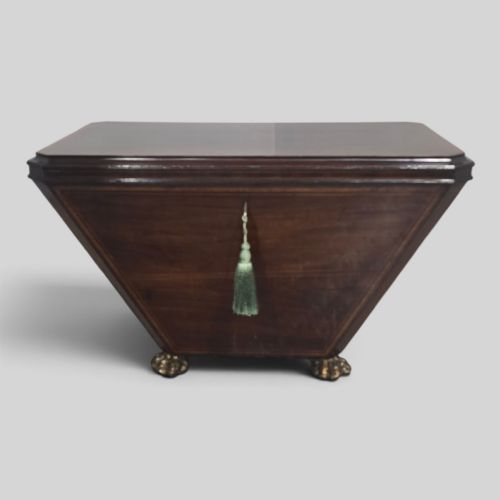


Edwardian Wine Chest
These edwardian wine chest pieces are refined timber containers built to store and chill bottles with elegance.
Edwardian Wine Chest
An edwardian wine chest serves as a specialised furniture piece designed to house and preserve bottled wine within domestic spaces. These items appear in various forms including wine coolers, cellarettes, and drinks cabinets.
The versions most commonly met on this page date from the Edwardian period alongside pieces influenced by earlier Regency and George III designs. Makers constructed these cabinets using rich timbers such as mahogany and oak, often incorporating fine decorative details.
Forms range from oval brass-bound vessels to sarcophagus shapes and inlaid standing cabinets. Each piece reflects the formal dining traditions of its era.
How they were made
Craftsmen built these pieces primarily using solid mahogany, oak, and wood veneers as structural foundations. Timber selection determined both the durability and the formal appearance of the finished wine container.
Surface ornamentation relied heavily on contrasting boxwood and satinwood inlay work to create geometric and floral patterns. Metal elements such as brass bands provided structural reinforcement and decorative contrast against the dark timber.
Listings feature pieces spanning from the nineteenth century through the Edwardian era, utilising mahogany, oak, and brass.
What varies in quality
The standard of timber selection and the precision of the veneer work largely determine the overall quality of a piece. Finer examples display carefully matched grain patterns and deeply figured mahogany surfaces.
Superior craftsmanship shows in the intricacy of the satinwood and boxwood inlays and the substantial weight of the brass mountings. Maker attribution, such as work originating from established firms, further distinguishes exceptional pieces from standard workshop production.
Edwards and Roberts·Freemans of Norwich·Whytock and Reid
The Edwardian Wine Chest Glossary
- Cellarette
- A lockable container or cabinet specifically designed to hold wine bottles near the dining table. These vessels often feature fitted interior compartments to keep bottles secure.
- Sarcophagus
- A distinct burial-chest shape adapted for furniture design, featuring a sloping lid and a rectangular body. This classical form frequently appears on nineteenth-century wine coolers.
- Inlay
- A decorative technique where pieces of contrasting wood like satinwood or boxwood are inserted into recesses in the primary timber. This creates flat ornamental patterns across the surface.
- Veneer
- A thin layer of superior wood applied over a secondary timber base to provide a decorative exterior. Cabinetmakers utilised this method to display rich grain figures economically.
Edwardian Wine Chest: Frequently Asked Questions
What is an edwardian wine chest?
An edwardian wine chest is a specialised timber container designed to store and cool wine bottles. These pieces reflect the formal dining customs of the early twentieth century.
They appear in various forms including cellarettes, coolers, and storage barrels, utilising traditional cabinetmaking materials like mahogany and brass.
How were these wine chests used?
These chests functioned primarily in dining rooms to keep wine bottles close at hand for hosts and guests during meals. Interiors often featured compartments or lead linings to hold ice and bottles securely.
Many designs allowed servants to access stored wine easily while maintaining the formal aesthetic of the dining interior.
How do I identify an Edwardian piece?
Edwardian pieces often combine traditional cabinet shapes with lighter satinwood and boxwood inlay work. They frequently draw stylistic inspiration from earlier Regency and George III designs.
Examining the secondary timbers and the style of the inlay helps distinguish genuine period production from later revivals.
What materials are typical for these pieces?
Mahogany and oak form the primary structural timbers for the vast majority of these wine chests. Craftsmen frequently added contrasting details in satinwood and boxwood inlay.
Metal components such as brass bindings and lead linings appear regularly to provide durability and functional containment for ice and bottles.