


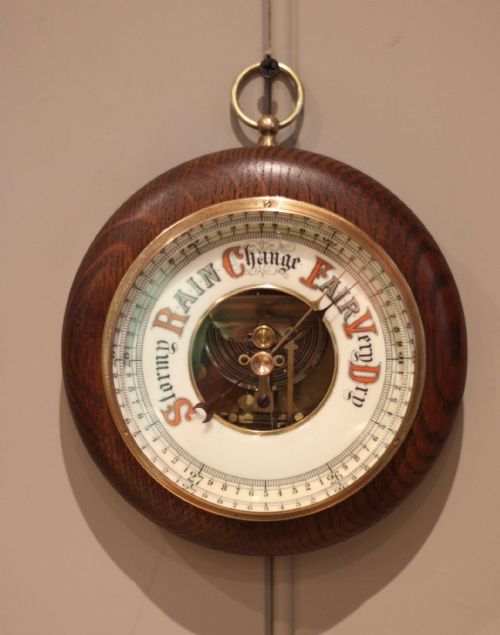


Edwardian Weather Gauge
These edwardian weather gauge instruments track atmospheric pressure and humidity with brass and mahogany craftsmanship that brings period scientific precision into a room.
Edwardian Weather Gauge
An edwardian weather gauge spans wall-mounted aneroid barometers, pocket altimeters, and desk-standing barographs that record atmospheric changes over time. When exploring an edwardian weather gauge selection, buyers encounter instruments housed in mahogany, oak, and rosewood cases alongside specialised scientific devices.
The objects originate primarily from the Victorian and Edwardian eras, utilising brass dials and silvered metal scales to display pressure and temperature variations. Domestic banjo barometers sit alongside specialised apparatus such as hygrodeiks and recording rain gauges.
Makers from London supplied these instruments, combining functional utility with cabinet-making styles ranging from inlaid wood to Chinoiserie finishes. The pieces reflect a period when domestic meteorology became both a science and a decorative pursuit.
Materials and construction
Instrument makers utilised brass for internal movements and bezels, paired with silvered metal for engraved dial faces. Cases were constructed from seasoned hardwoods including mahogany, oak, and beech, frequently featuring inlaid stringing or carved details.
Glass protected delicate pointer hands and barometer dials, while specialised instruments incorporated leather cases or chart drawers for recording paper drums. Woodwork relied on traditional joinery to house sensitive aneroid capsules and thermometer tubes securely.
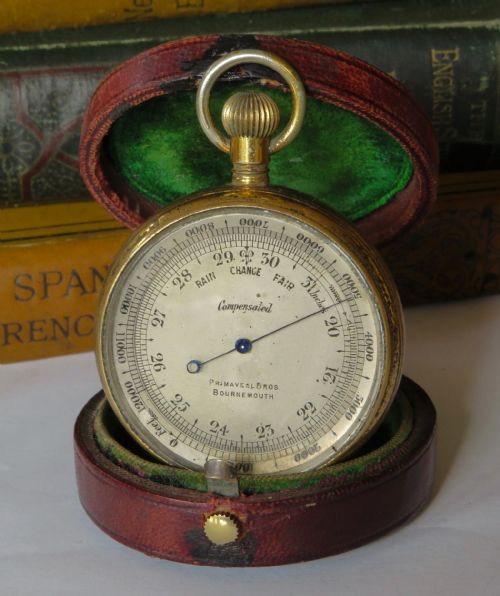
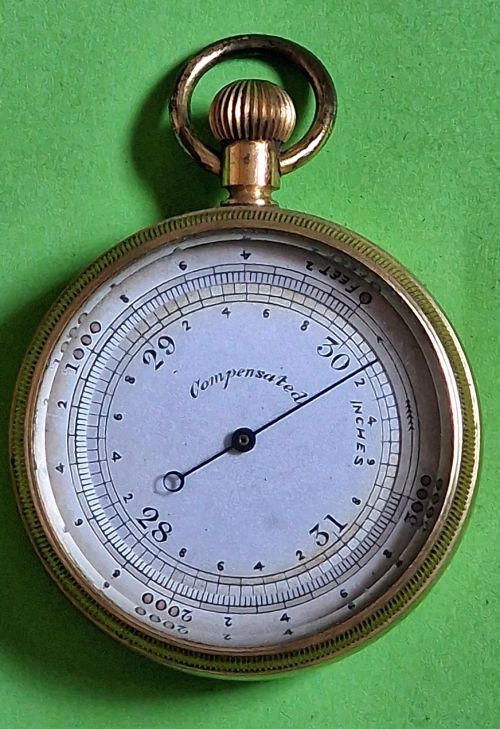
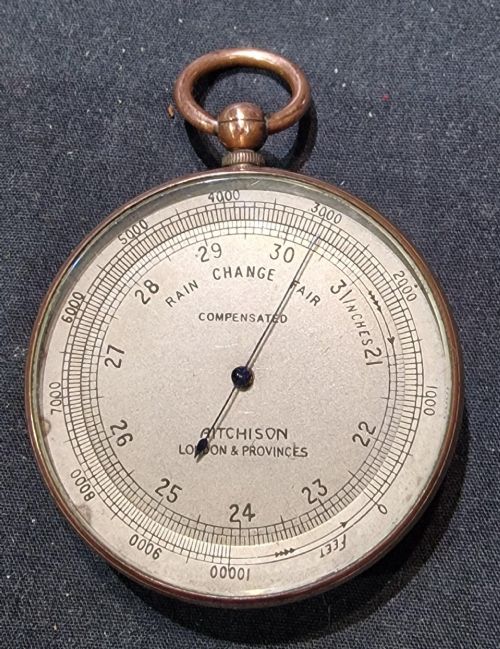
Some pocket barometers doubled as altimeters for early military observation balloonists who needed to measure altitude in the clouds.
Distinctions in quality
Quality depends upon the precision of the maker's signature and the complexity of the meteorological mechanism, such as recording barographs versus simple wall barometers. Finer examples display crisp engraving on silvered dials and superior cabinet timbers like figured mahogany with intact inlay.
The presence of specialised scientific functions, including altitude adjustment or wet and dry bulb hygrometer scales, separates standard domestic instruments from advanced observational tools.
Short & Mason London·Callaghan & Co of London·Dollond London·Primavesi·Aitchison
The Edwardian Weather Gauge Glossary
- Aneroid barometer
- An instrument that measures atmospheric pressure without liquids, using a flexible metal capsule. Changes in pressure cause the capsule to expand or contract, moving a pointer across a dial.
- Barograph
- A recording meteorological instrument that plots barometric pressure over time on a rotating drum of graph paper. These devices are typically housed in mahogany cases with glass covers.
- Hygrodeik
- A specialised hygrometer featuring dual wet and dry bulb thermometers alongside a sliding chart to determine relative humidity. It provides a direct reading of atmospheric moisture levels.
- Altimeter
- A barometric instrument calibrated to measure altitude above sea level based on atmospheric pressure. Pocket versions were housed in leather travel cases.
- Banjo barometer
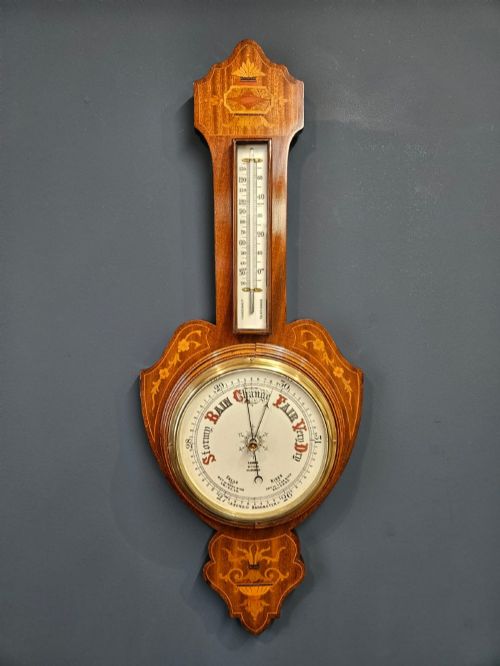
- A wall-mounted instrument shaped roughly like a banjo, typically combining a circular dial at the top with a thermometer or hygrometer along the vertical stem.
Edwardian Weather Gauge: Frequently Asked Questions
How do aneroid barometers work?
Aneroid barometers use a sealed, corrugated metal box that expands or contracts with shifting atmospheric pressure. This movement connects through levers to the pointer on the dial.
Changes in weather alter the pressure, allowing the instrument to indicate approaching rain, fair conditions, or variable skies without using liquid mercury.
What is a barograph used for?
A barograph continuously records atmospheric pressure onto a rotating paper chart secured to a drum. This mechanical tracking preserves a visual history of weather patterns over a full week.
Contained within glazed wooden cases, these instruments combine clockwork mechanisms with sensitive barometric capsules.
Where should I place a barometer?
Barometers perform best away from direct heat sources, open windows, and strong vibrations that might influence the internal mechanism. Interior walls in principal rooms provide a stable environment.
Most wall-mounted designs include a small adjustment screw on the back to calibrate the needle to local sea-level pressure.
How do I identify an Edwardian piece?
Edwardian instruments often feature cleaner cabinet lines, lighter oak or inlaid mahogany cases, and distinct maker signatures on the silvered dials. Stylistic cues separate them from earlier Victorian examples.
Makers active during this period frequently incorporated improved aneroid movements and patent adjustment mechanisms into their designs.