



Edwardian Watercolour Pair
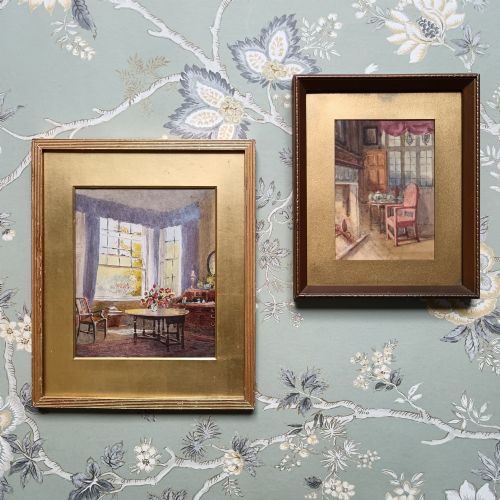
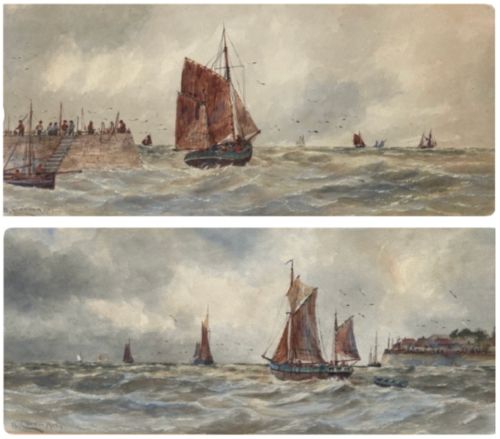
These edwardian watercolour pair selections bring together matched compositions on paper, offering balanced wall displays for traditional interiors.
Edwardian Watercolour Pair
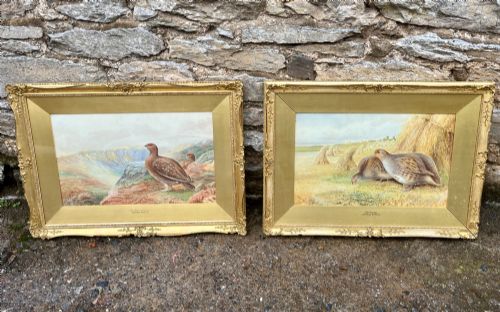
An edwardian watercolour pair consists of two complementary paintings executed on paper, designed from creation to hang side by side. Subjects across these matched works encompass rural landscapes, moorland scenes, coastal views, game birds, street scenes, and sporting or genre narratives.
Most examples date from the early twentieth century, utilising Edwardian period aesthetics alongside surrounding dates from the late nineteenth century up to the nineteen-forties. These pairings frequently originate from British schools, capturing traditional country and maritime subjects with skilled brushwork.
Buyers encounter framed paintings presented under glass, often set within wood or giltwood surrounds that complement the delicate nature of works on paper. The matching formats provide an immediate sense of symmetry and balance when placed upon domestic walls.
Materials and technique
The primary construction relies on watercolour pigment applied to paper, occasionally supplemented by gouache for added opacity and depth. Artists utilised washes and fine line work to build tonal contrast and intricate detail across both sheets in a set.
Framing materials typically comprise wood and giltwood, protecting the fragile paper surface beneath glass. Many pieces retain period mounts and backing structures that correspond to the manufacturing standards of the early twentieth century.
Edwardian Watercolour Pair Retail Price Guide 2026
Typical asking prices for edwardian watercolour pair among the pieces listed under this phrase on Sellingantiques today, from the lower quarter to the upper quarter. They describe what is for sale here now, not the wider market.
Mediums recorded include watercolour pigment, gouache, woven silk, and paper, housed within traditional wood and giltwood frames.
What varies in quality
Quality rests upon the artist's ability to maintain equal execution and tonal balance across both sheets, ensuring the pair reads as a unified composition rather than two unrelated images. Signed works by documented painters generally command higher regard among collectors.
The preservation of the pigment and paper surface directly influences desirability, particularly where fading or discolouration is absent. Original frames, especially period giltwood configurations, add significantly to the integrity of the ensemble.
William Cannon·George Rankin·F.J. Snell·Alfred George Morgan·George Whyatt·Leslie Rackham·John Sanderson Wells·AJ Thornton·Arthur Claude Strachan·Frank Dadd·Karl Feiertag·J. Hughes Clayton
The Edwardian Watercolour Pair Glossary
- Watercolour
- A painting method where the paints are made of pigments suspended in a water-based solution. This medium allows for translucent washes and delicate tonal transitions on paper.
- Gouache
- A water-based paint consisting of pigment and other inert materials designed to be opaque. It is frequently combined with watercolour to create highlights and solid areas of colour.
- Diptych
- A painting divided into two sections, or two panels designed together. In this context, the term describes matched watercolours created as a pair.
- Giltwood
- Wood carved and covered with a thin layer of gold leaf or gold paint. This material is common in the frames housing fine art from the Edwardian period.
- Genre painting
- Artwork that depicts aspects of everyday life by portraying ordinary people engaged in common activities. These scenes often tell a narrative story within a domestic or rural setting.
Edwardian Watercolour Pair: Frequently Asked Questions
How do I hang a pair correctly?
Hang the two watercolours at equal eye level with a consistent gap between them to maintain balanced visual weight. Aligning the lower or upper frames ensures the matching composition reads correctly on the wall.
Keep them away from direct sunlight to protect the sensitive pigments on paper from fading over time. Proper spacing lets the dual narrative of the pair work together in the room.
Are these works signed by the artist?
Many examples feature artist signatures or monograms, often placed in the lower corners of the paper. Documentation on the reverse sometimes provides additional history regarding the subjects depicted.
Unsigned pairs still occur, representing competent studio work from the period without a recorded author. Signature placement should be verified under glass to confirm authenticity.
What subjects are most common?
British landscapes, coastal views, and rural scenes dominate the subjects found within these matched sets. Sporting subjects and genre narratives also appear frequently among the Edwardian selections.
Game birds and architectural street views provide further variety for collectors seeking specific thematic pairings. Each subject reflects the traditional artistic preferences of the early twentieth century.
How should I care for framed watercolours?
Protect the paper and pigments by placing the frames out of direct ultraviolet light and away from damp environments. Maintaining stable indoor humidity prevents warping of the wooden frames and degradation of the paper.
Glass fronts should be cleaned with care using non-liquid methods near the frame edge to prevent moisture seeping inside. Professional framing checks help preserve the historic backing materials.