

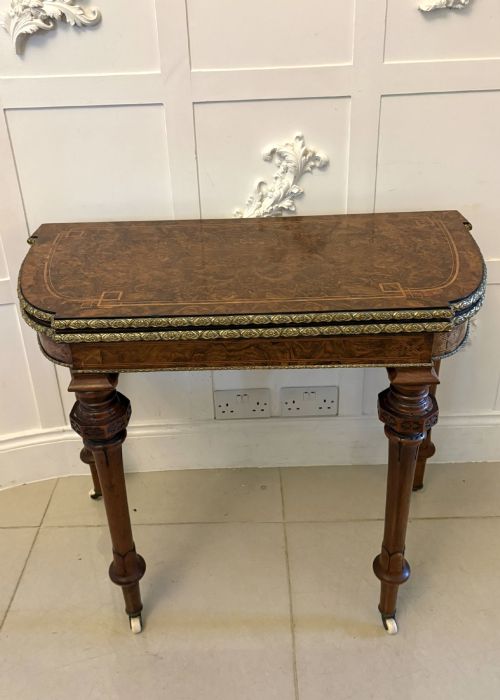
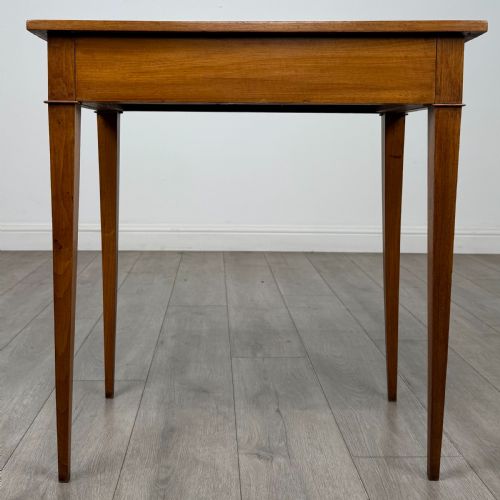
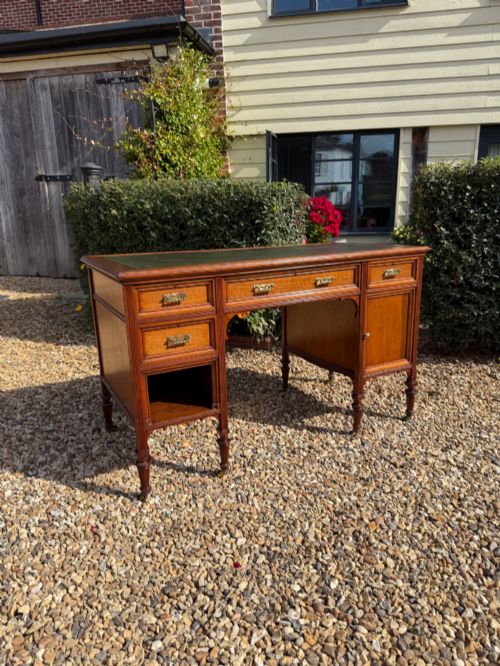
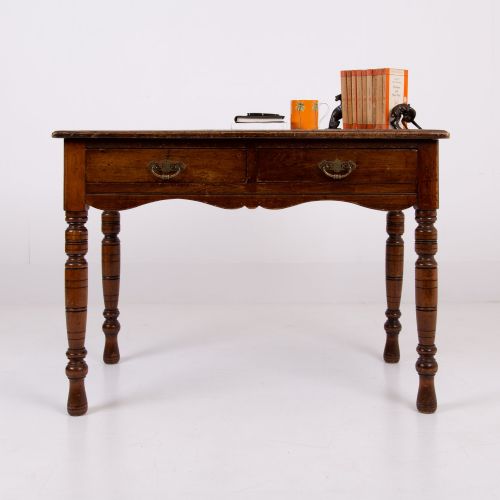

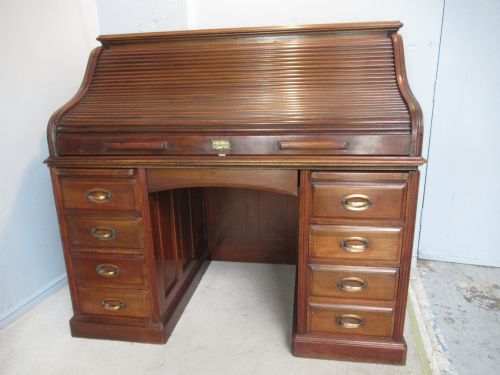
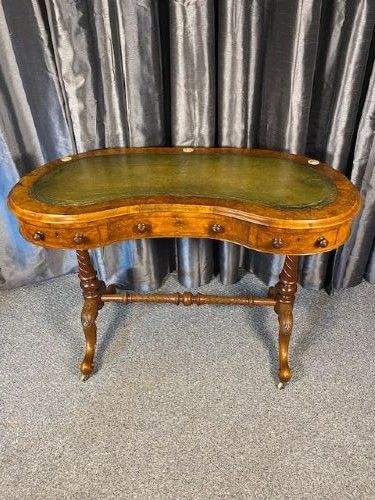
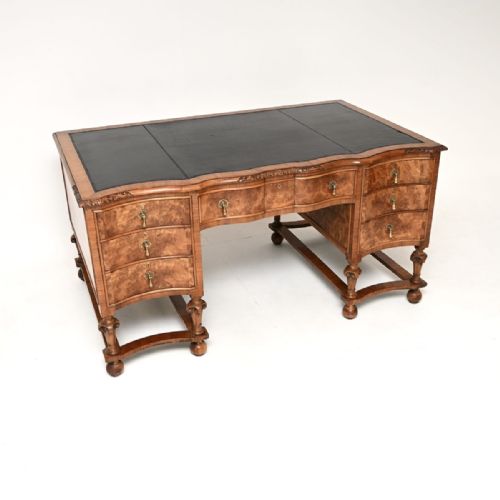
Edwardian Walnut Desk Table
These pieces combine figured timber with practical surfaces, and an edwardian walnut desk table brings period character to a working room.

Edwardian Walnut Desk Table
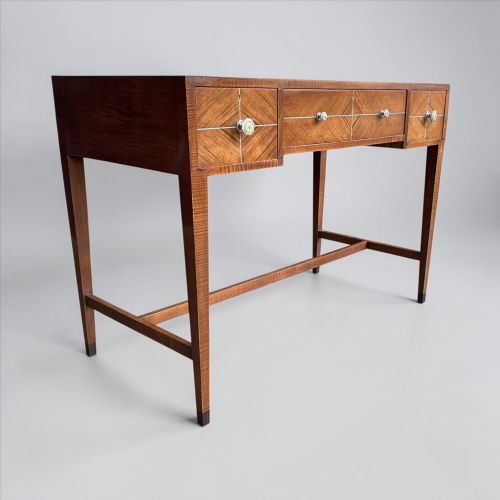
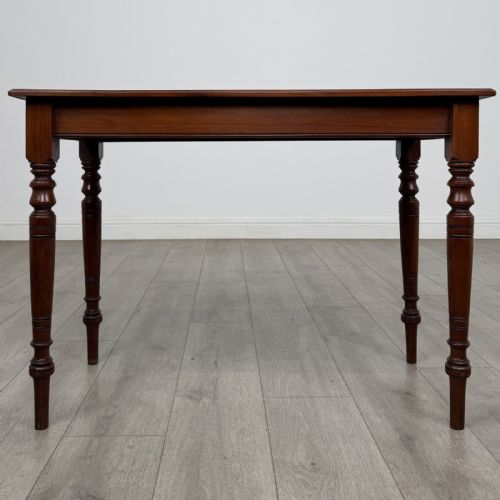
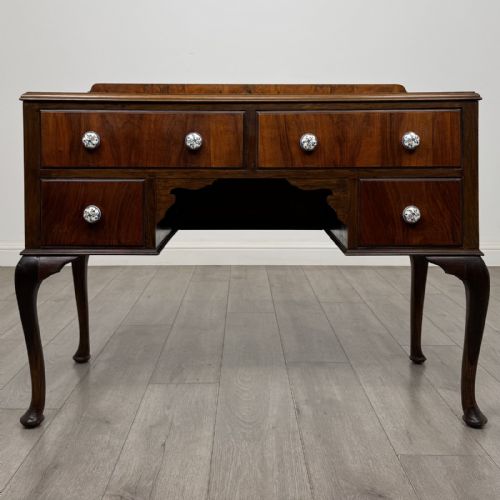
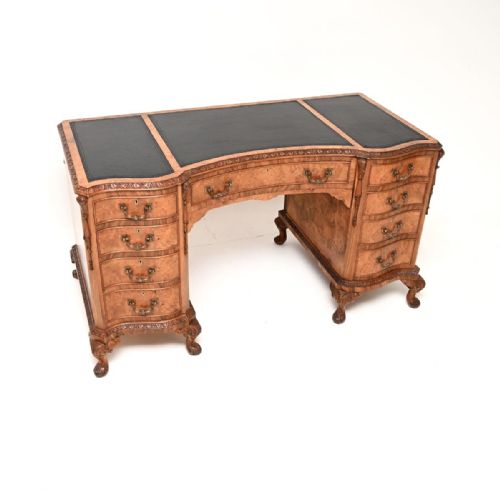
An edwardian walnut desk table covers compact writing surfaces, kneehole pedestal forms, and side tables produced during the early twentieth century. These pieces serve domestic workspaces and libraries, offering fitted drawers and distinct writing surfaces.
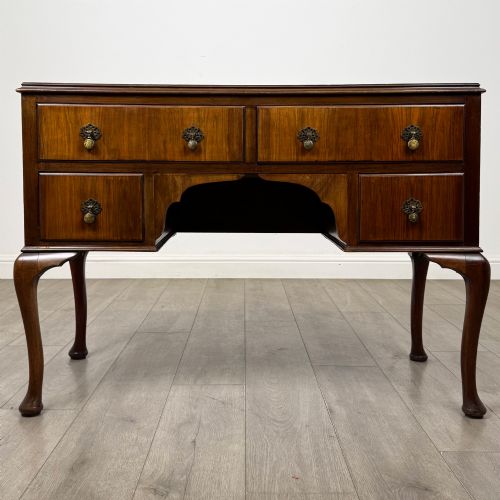
The selections span standard pedestal formats to lighter writing tables influenced by Queen Anne and Georgian revival styles. Walnut veneer and solid timbers define the primary structural vocabulary across the period.
Most examples date from the Edwardian era up to the 1930s, though Victorian prototypes and later revival pieces also appear. Buyers encounter both utilitarian library desks and decorative side tables adapted for writing.
How they were made
Joinery relies on solid walnut, satin walnut, and applied burr walnut veneers selected for prominent grain patterns. Secondary woods form the carcase interiors and drawer linings.
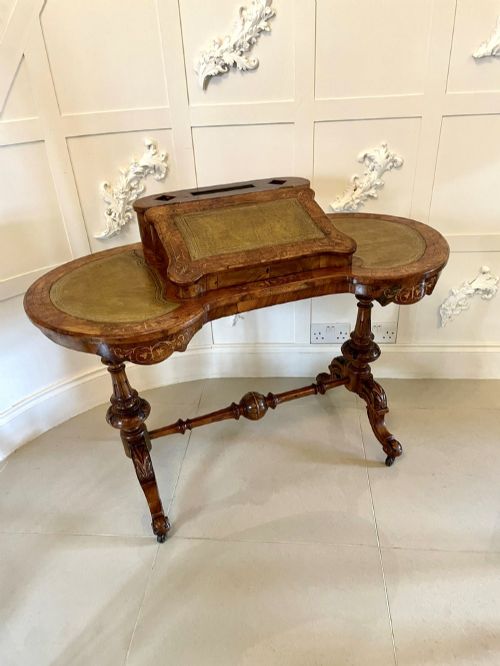
Working surfaces frequently incorporate inset leather panels alongside brass handles, locks, and occasional ormolu mounts. Polish and surface finishes highlight the natural figure of the timber.
Edwardian Walnut Desk Table Retail Price Guide 2026
Typical asking prices for edwardian walnut desk table among the pieces listed under this phrase on Sellingantiques today, from the lower quarter to the upper quarter. They describe what is for sale here now, not the wider market.
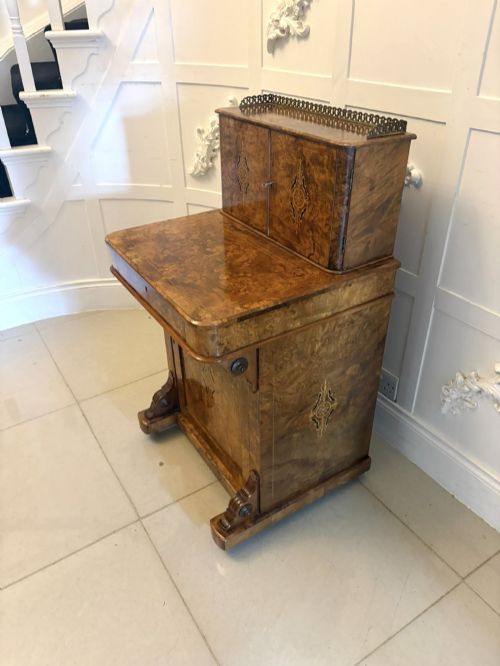
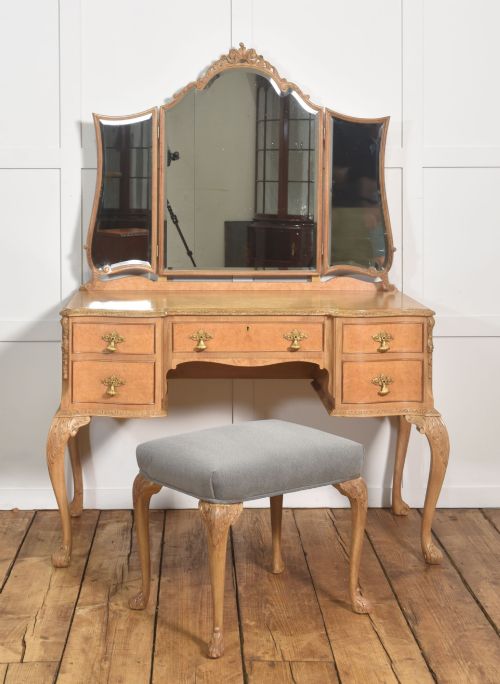
Object forms include pedestal desks, writing tables, console tables, and Davenport desks.
What varies in quality
The selection of timber veneer determines visual impact, with figured burr walnut commanding greater attention than plain stock. Cabinetmaking standards show in the neatness of dovetails, drawer operation, and matching grain across facades.
Maker attribution separates standard workshop output from signed pieces produced by prominent retailers and cabinetmakers. Original brassware, matching keys, and intact leather inserts preserve the integrity of the design.
Maple and Co·Wylie and Lochhead Glasgow·Edwards and Roberts·Gill and Reigate·Walker and Hall
The Edwardian Walnut Desk Table Glossary
- Burr walnut
- A timber harvested from walnut tree growths that produces intricate, swirling grain patterns. Cabinetmakers apply this wood as fine veneer to prominent surfaces.
- Pedestal desk
- A form comprising two banks of drawers supporting a wide writing surface. This layout provides substantial storage beneath the main tabletop.
- Partners desk
- A large double-sided writing table designed for two people to work opposite one another. These pieces feature drawers and cupboards accessible from both sides.
- Kneehole desk
- A compact writing table featuring a central recess for the user's legs, flanked by single or double columns of drawers. This configuration maximises storage in smaller rooms.
- Inlay
- The technique of embedding contrasting woods, brass, or other materials into the primary surface to create decorative patterns. Edwardian pieces often utilise subtle stringing.
- Gallery back
- A low decorative railing raised above the rear edge of a writing surface or tabletop. This feature prevents items from sliding off the back.
Edwardian Walnut Desk Table: Frequently Asked Questions
How do I care for a walnut surface?
Keep wooden surfaces away from direct heat sources and strong sunlight to prevent the timber from drying out or fading. Apply a quality beeswax periodically to nourish the grain and maintain a natural sheen.
Use felt pads under desk accessories to protect the polished wood and any leather inserts from scratches. Wipe spills immediately with a dry cloth to avoid marking the finish.
Are these desks suitable for daily work?
These tables function well for writing, reading, and laptop use while providing period character to a study. Many examples include drawers for modern stationery and paperwork storage.
Check the kneehole height and overall dimensions to ensure comfortable seating clearance before pairing the desk with an office chair.
How do I distinguish Edwardian from Victorian walnut?
Victorian walnut furniture often displays heavier proportions, darker finishes, and dense carving influenced by Gothic and French revival styles. Burr walnut veneer was heavily utilised during the mid to late nineteenth century.