





Edwardian Turned Spindle Table
An edwardian turned spindle table offers compact utility with slender character, bringing warmth to corners and small spaces.

Edwardian Turned Spindle Table
An edwardian turned spindle table brings lightness and practicality to living spaces through slender supports and compact tops. When you search for this phrase, you find small occasional furniture designed for practical placement beside seating or in hallways.
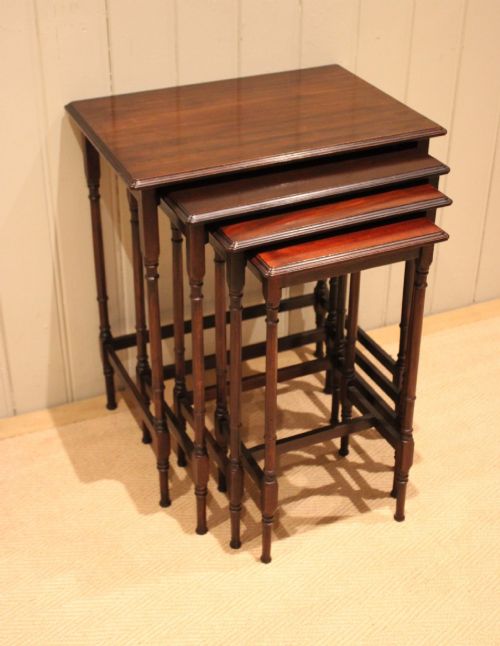
The versions most commonly met on this page span the Edwardian and Victorian periods, with pieces appearing from the late nineteenth century and into the early twentieth century. These tables take forms such as side tables, occasional tables, nests of tables, and centre tables.
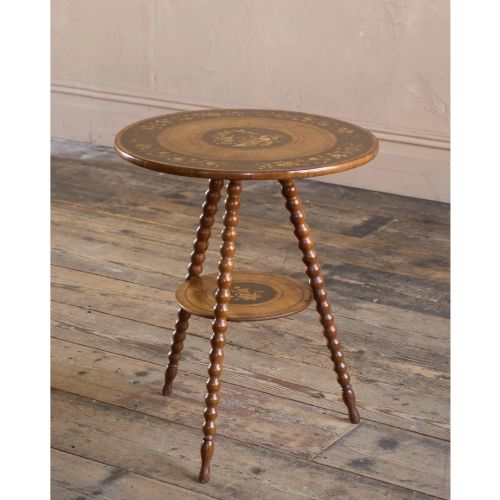
Makers of the period utilised rich timbers and decorative accents to elevate these functional items. Surfaces range from plain polished wood to inlaid designs, whilst bases feature characteristic turned spindle supports or bobbin legs.
Materials and construction
Carpenters constructed these tables using a variety of quality hardwoods, prominently walnut, mahogany, and rosewood, often enhanced with burr walnut or veneer. Marquetry, boxwood, and satinwood crossbanding supplied decorative contrast to the timber surfaces.
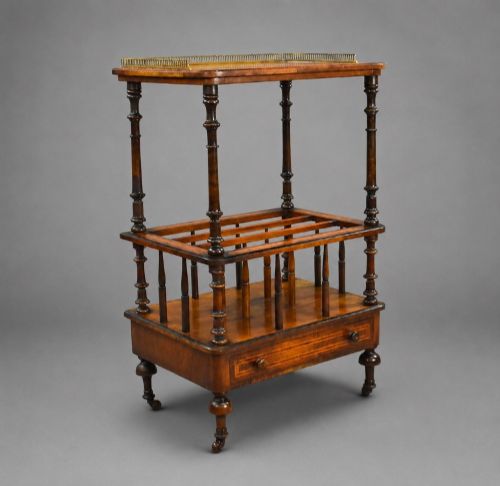
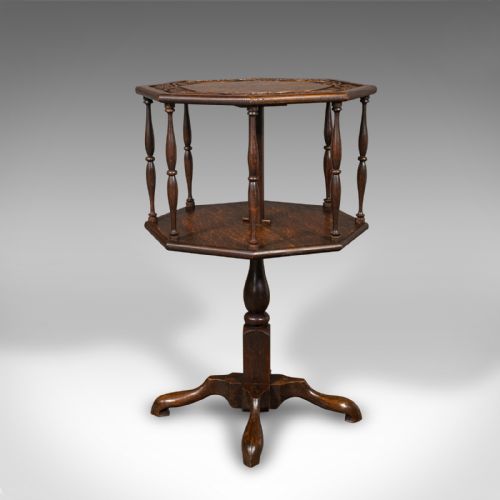
Structural stability came from carefully turned legs and spindle bases, sometimes incorporating brass fittings or multiple tiers for extra utility. Joinery focused on creating lightweight yet sturdy frames suited for daily use as lamp tables, side tables, or revolving bookcases.
Edwardian Turned Spindle Table Retail Price Guide 2026
Typical asking prices for edwardian turned spindle table among the pieces listed under this phrase on Sellingantiques today, from the lower quarter to the upper quarter. They describe what is for sale here now, not the wider market.
Some tables double as revolving book cabinets, ensuring your current reading pile spins with the gentlest push of a finger.
Distinctions in quality
The grade of an edwardian turned spindle table depends heavily on the selection of timber and the precision of decorative inlay. Finer examples display carefully matched veneers, crisp marquetry, and subtle crossbanding rather than plain surfaces.
Construction detail in the turned spindles and joinery separates standard pieces from superior examples. Better tables maintain tight joints and well-proportioned lower tiers, ensuring the slender legs support the top firmly without wobble.
The Edwardian Turned Spindle Table Glossary
- Crossbanding
- A decorative border of veneer laid around the edge of a table top so that the grain runs at right angles to the centre. This technique frames the primary timber and adds visual depth.
- Marquetry
- Patterns formed by fitting together contrasting pieces of veneer into a wooden surface. Craftsmen used this method to create floral or geometric designs on table tops.
- Spindle
- A slender, turned piece of wood used as a decorative and structural support in legs or lower tiers. These components give the furniture an airy and delicate appearance.
- Veneer
- A thin layer of choice wood applied over a secondary timber base to provide a decorative surface. It allowed makers to utilise figured grains efficiently.
- Canterbury
- A low stand featuring partitions for sheet music, books, or papers, often mounted on castors. These pieces frequently incorporate turned supports matching the table designs.
Edwardian Turned Spindle Table: Frequently Asked Questions
What is an edwardian turned spindle table used for?
These tables served primarily as versatile furniture for holding lamps, books, or decorative items in drawing rooms and parlours. Their compact footprints made them ideal for placement beside sofas or in hallways where space was limited.
Today, they function well in modern interiors as bedside stands, lamp tables, or small display surfaces. Their slender proportions allow them to fit easily into awkward corners without dominating a room.
How do I date an edwardian turned spindle table?
Dating relies on observing the combination of timber choices, decorative styles, and construction methods recorded across the periods. Pieces from the late nineteenth century often display heavier Victorian proportions, whilst true Edwardian examples lean towards lighter frames and subtle inlay.
Examining secondary woods and hardware also helps narrow the date range between the late Victorian era and the early twentieth century. Stylistic crossover between periods is common in pieces made around the turn of the century.
Are these tables sturdy enough for daily use?
Despite their delicate appearance and slender spindle supports, these tables were built to handle the demands of a busy household. The turned wooden members distribute weight effectively when the joints remain sound and well-glued.
Placing them on level flooring prevents undue strain on the individual legs and spindles. Regular gentle dusting and occasional waxing keep the timber conditioned for continued everyday placement.
What woods were used for these tables?
Cabinetmakers selected dense hardwoods such as mahogany, walnut, and rosewood for their strength and attractive grain patterns. Burr walnut and various veneers added visual texture to table tops and shelves.
Inlays often featured contrasting materials like boxwood and satinwood to create geometric or floral borders. Oak also appears in specific Arts and Crafts interpretations within the selection.