

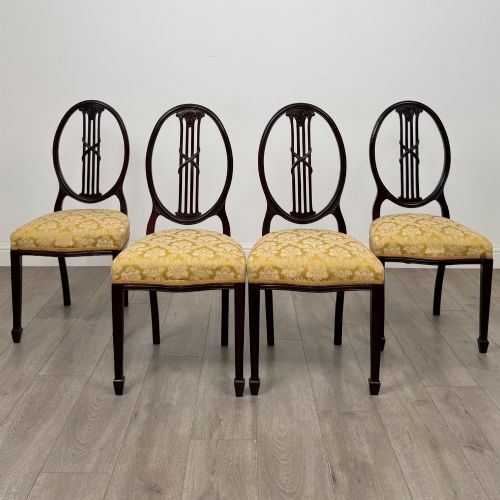
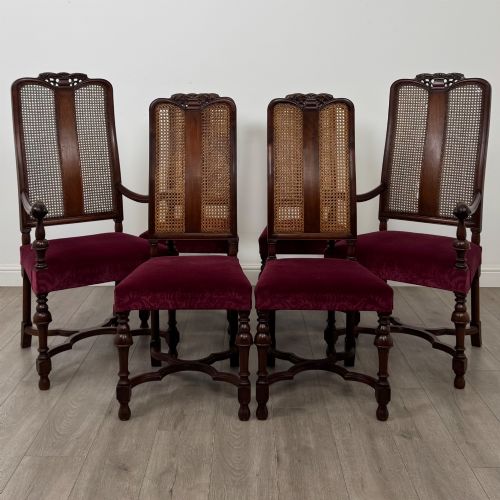
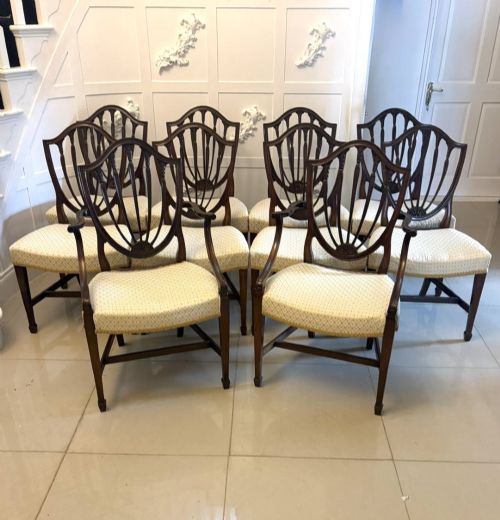
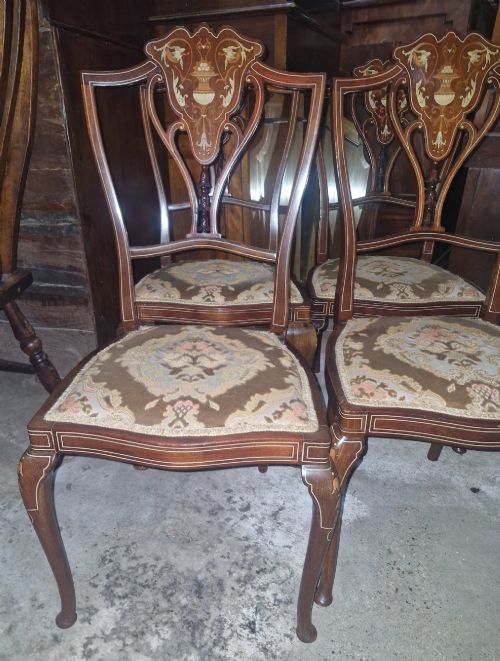
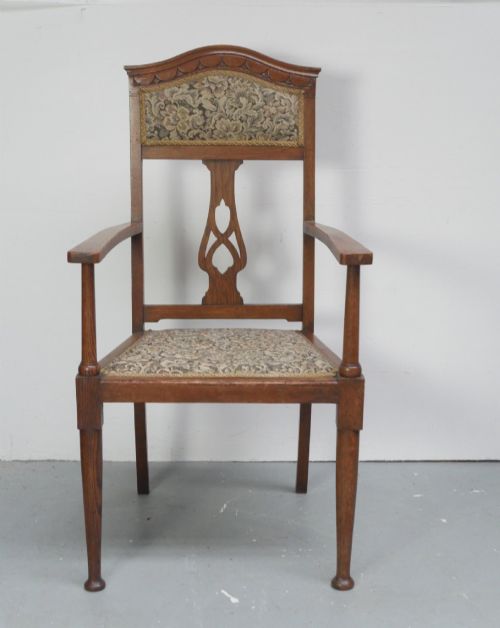
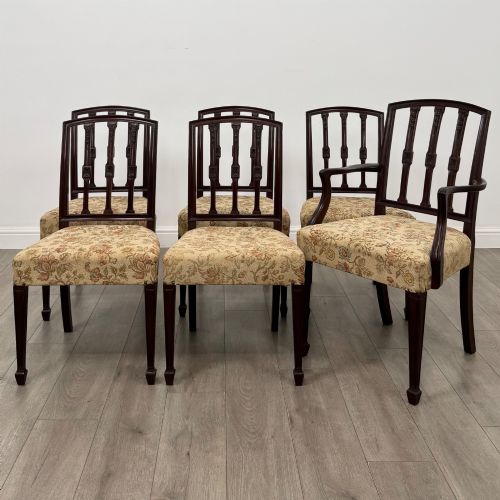
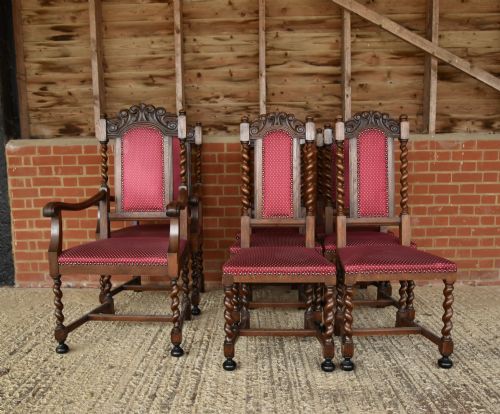
Edwardian Upholstered Side Chairs
Edwardian upholstered side chairs bring understated elegance and comfort to a room, offering practical seating shaped by the design revivals of the early twentieth century.
Edwardian Upholstered Side Chairs
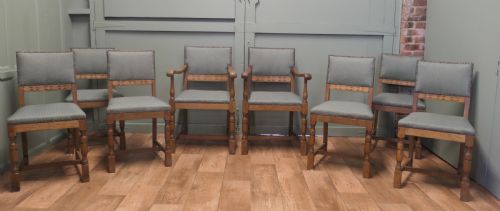
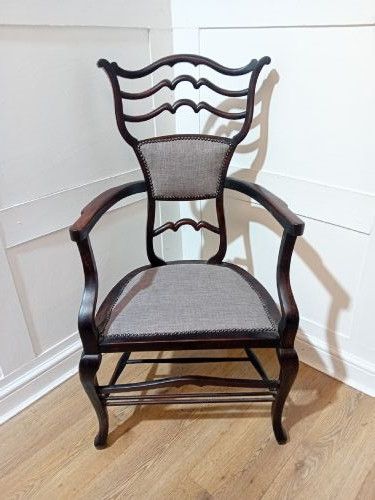
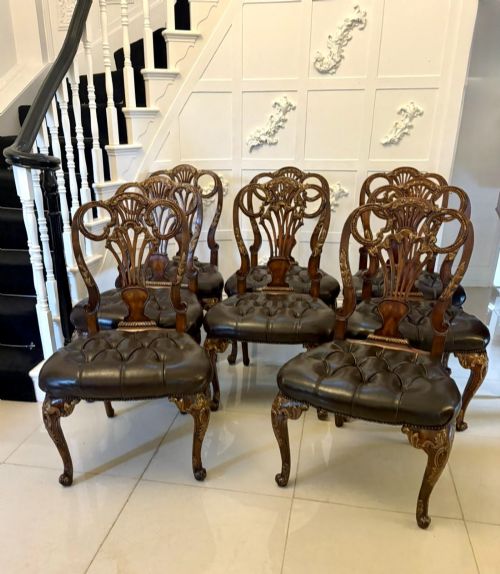
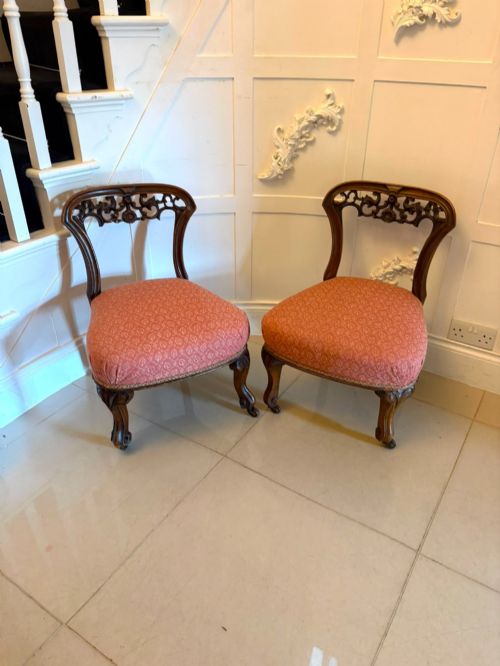
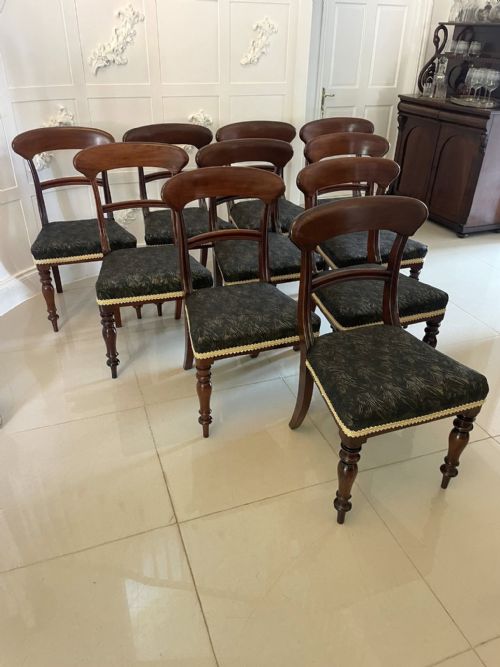
Edwardian upholstered side chairs encompass versatile seating forms produced around the turn of the twentieth century, bridging late Victorian mass production and refined revivalism. You will frequently encounter mahogany dining chairs, occasional chairs, and salon chairs bearing the light proportions typical of the period.
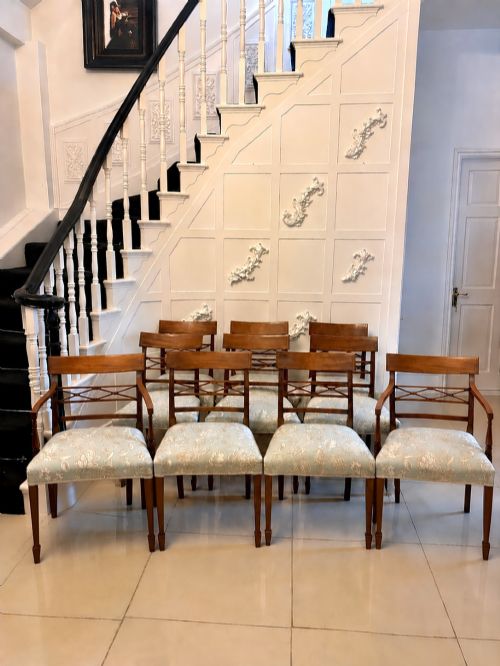
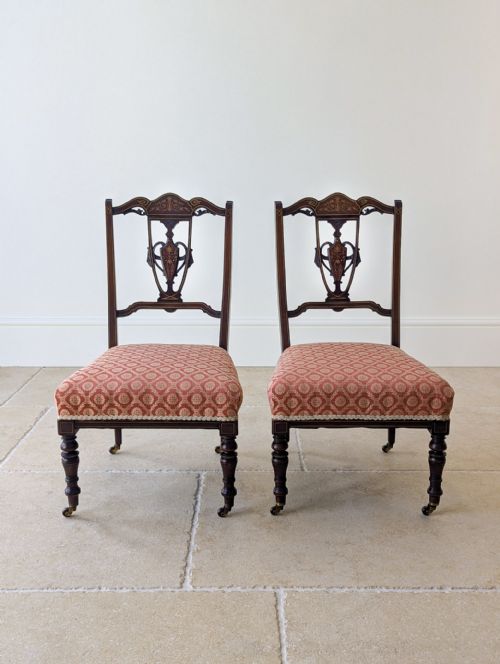
Makers of this era drew heavily on earlier vocabularies, resulting in frequent examples styled after Sheraton, Hepplewhite, and Georgian designs. These pieces often feature inlaid woodwork, shaped backs, and textile coverings ranging from simple tweed to hand-stitched tapestry.
While many survive as individual bedroom or hall seats, larger dining sets appear alongside smaller pairings intended for firesides or dressing rooms. The construction reflects a period transition towards lighter domestic spaces, moving away from heavy Victorian gloom while retaining solid timber frames.
How They Were Made
Frames are constructed primarily from timbers such as mahogany, oak, and walnut, frequently shaped through turning, curving, or delicate fretwork. Inlaid decoration in contrasting woods adds decorative linear detail to backs and crest rails.
Upholstery relies on textiles including velvet, fabric, and traditional tapestry, secured over supportive stuffing within wooden seat rails. Brass elements sometimes appear on castors or decorative mounts, completing the structural assembly.
Listings feature woods such as mahogany, oak, walnut, maple, and rosewood across dining, salon, and bedroom chair categories.
What Varies in Quality
The distinction between standard commercial production and finer output lies in the crispness of the timber carving and the subtlety of the wood selection. Superior examples display carefully matched grain patterns, precise inlay work, and robust joinery that withstands daily use without loosening.
Upholstery execution also divides the range, where hand-stitched details and high-grade textile choices elevate the piece far beyond basic factory output. The overall proportion and balance of the frame separate routine domestic seating from exhibition-standard commissions.
Charles Tozer·Maple and Co
The Edwardian Upholstered Side Chairs Glossary
- Side chair
- A chair without arms, designed primarily for dining or occasional use around a room. These forms make up a large portion of domestic seating surviving from the period.
- Inlay
- A technique where pieces of contrasting wood or other materials are inserted into depressions in the base wood to form a decorative pattern. Sheraton revival pieces rely heavily on this method.
- Shield back
- A chair back shaped in the outline of a heraldic shield, popular during the eighteenth century and revived frequently in Edwardian mahogany seating.
- Bergere
- An enclosed upholstered armchair with wicker or cane panels set into the wooden frame. They offer deep, comfortable seating wrapped in polished timber.
- Barley twist
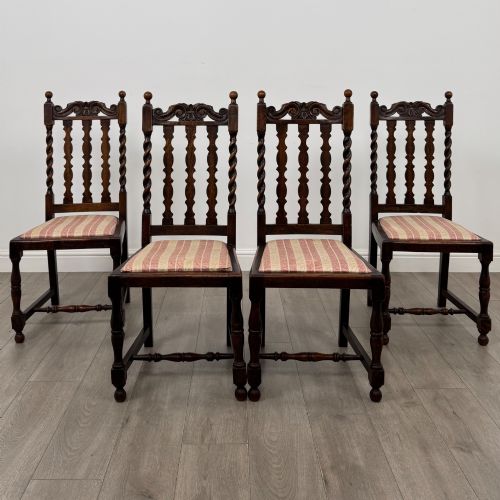
- A type of turning carved to resemble a twisted rope or barley stalk, commonly found on oak chair legs and stretchers from the period.
Edwardian Upholstered Side Chairs: Frequently Asked Questions
How do I identify Edwardian side chairs?
Edwardian side chairs are generally characterised by lighter proportions and brighter timber tones than their Victorian predecessors. They frequently incorporate revival styles such as Sheraton inlay or Georgian curves.
Look closely at the construction methods and wood choice to separate genuine pieces from later reproductions. The combination of lightweight mahogany or oak frames with period textile upholstery points directly to the early twentieth century.
Were these chairs used for dining?
Many Edwardian side chairs were manufactured specifically as dining sets, often in groups of six, eight, or ten. Their slender frames allowed several chairs to fit comfortably around a household table.
Alongside dining variants, similar forms served as bedroom chairs, salon seats, or occasional chairs for hallways. The intended placement dictated the presence of arms and the delicacy of the carving.
Can I mix these with modern furniture?
These chairs adapt readily to contemporary interiors because their restrained Edwardian proportions prevent them from dominating a modern room. Pairing them with a simple wooden or glass table creates a striking contrast.
Ensure the seat height matches your intended table or desk, as older seating can sometimes sit lower than modern standards. The variety of wood tones allows them to sit comfortably alongside twentieth-century design.
What fabrics were originally used?
Original upholstery materials included woven textiles, damask, tapestry, and velvet, often secured with brass upholstery tacks. Fireside and salon chairs occasionally featured heavy tweed or hand-stitched needlework.
Many surviving pieces have been re-upholstered over the decades to suit changing domestic tastes. Checking the webbing and interior stuffing helps determine whether the upholstery is period-correct or a modern replacement.