
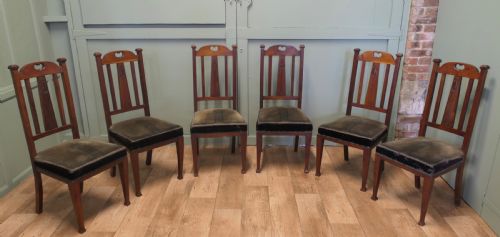
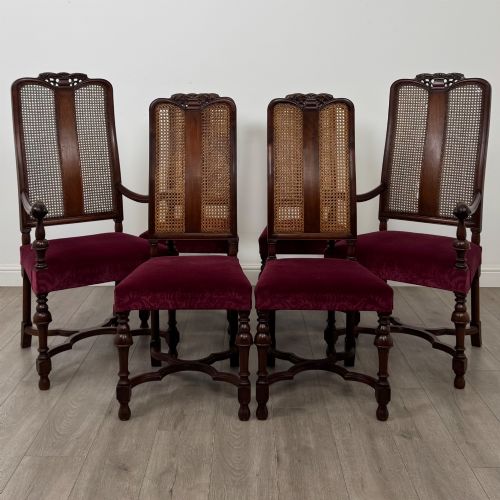
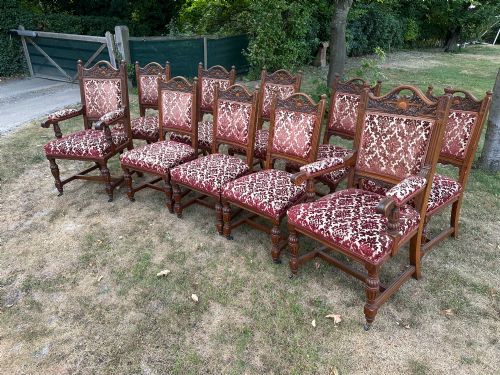
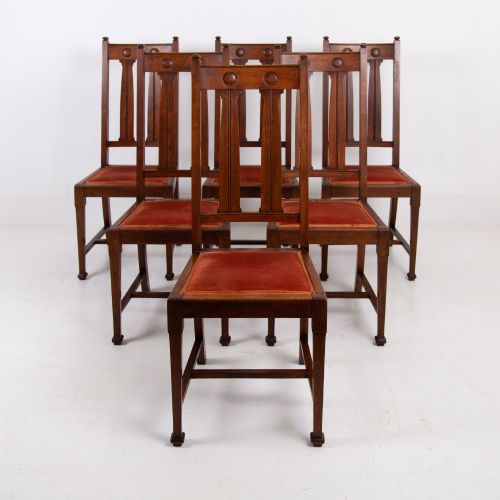
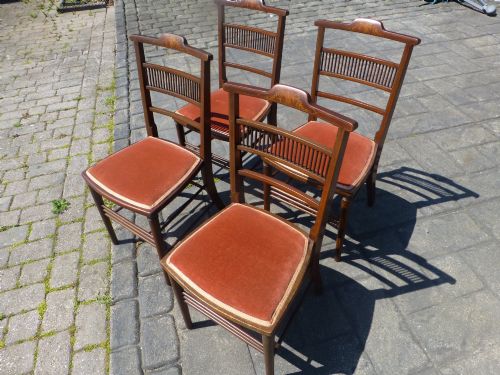

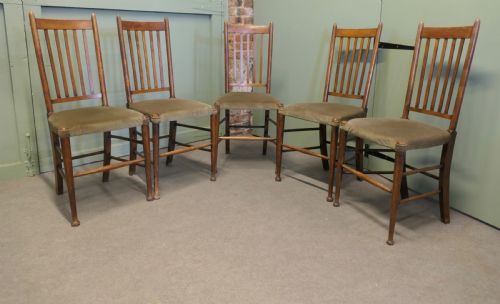


Edwardian Velvet Dining Chairs
Edwardian velvet dining chairs bring distinct period character to a room, offering sturdy construction alongside plush seating.
Edwardian Velvet Dining Chairs
Edwardian velvet dining chairs combine the elegant proportions of the early twentieth century with comfortable textile upholstery. These seating options emerge from periods spanning the late nineteenth century into the early decades of the twentieth, often appearing as sets of various sizes from pairs up to larger dining suites.
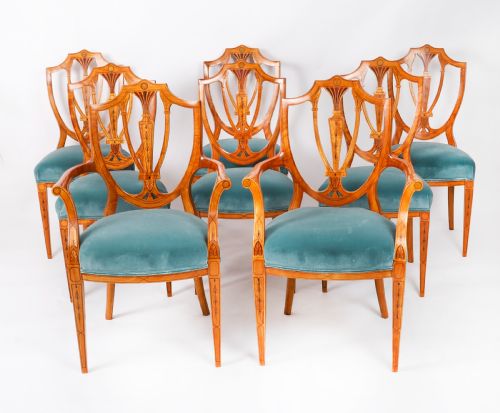
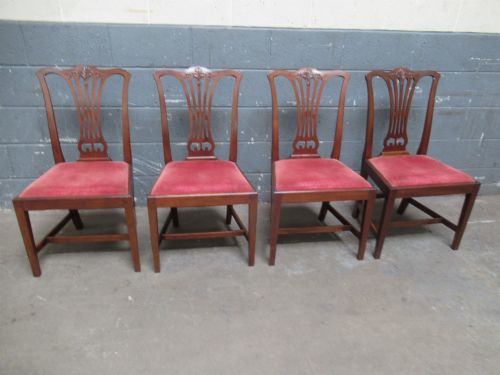
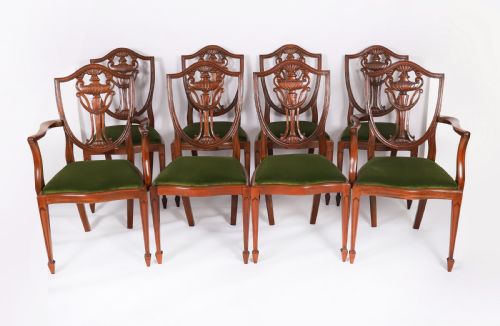
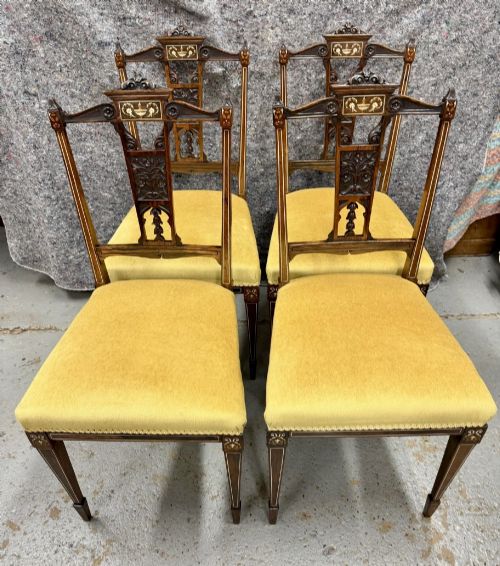
The selection here encompasses several distinct aesthetic revivals alongside Edwardian designs, including Arts and Crafts, Art Nouveau, Sheraton, Hepplewhite, and Jacobean styles. Buyers encounter various timber frames paired with velvet fabric, ranging from simple side chairs to elaborate carvers and armchairs.
Most pieces derive from the Edwardian era and surrounding decades, utilising timbers such as mahogany, oak, walnut, and satinwood. Alongside formal dining chairs, the selection includes related seating like salon chairs and occasional chairs upholstered in velvet.
Materials and construction methods
Cabinetmakers constructed the frames primarily from hardwoods including mahogany, oak, and walnut, frequently incorporating satinwood for decorative effect. Wood inlay, marquetry, and carved details appear across various revival styles to ornament the structural timber.
Upholsterers applied velvet over padded seats and high backs, securing the fabric to frames that often utilised traditional joinery. Brass elements occasionally appear on castors or decorative hardware associated with the seating.
Listings feature items spanning the Victorian, Edwardian, and early twentieth century periods, utilising mahogany, oak, walnut, and satinwood.
Factors influencing quality
The distinction between standard examples and finer pieces lies in the crispness of the wood carving, the complexity of any inlay work, and the reputation of the maker. Master workshops produced balanced proportions and durable joints that withstand daily use over generations.
The quality of the timber selection and the integrity of the original frame construction determine long-term durability. Preserved upholstery methods and the condition of the velvet surface also distinguish superior examples.
Cowtan & Sons·Shapland and Petter·Trollope & Colls Ltd·Blyth & Sons
The Edwardian Velvet Dining Chairs Glossary
- Carver
- An armchair designed to sit at the head of a dining table, often featuring open arms matching the surrounding side chairs.
- Marquetry
- Decorative patterns created by fitting different veneers into a primary wood ground to form pictorial or geometric designs.
- Shieldback
- A chair back shaped like a heraldic shield, popularised during the eighteenth century and revived in later periods.
- Barley twist
- A turned wooden furniture leg or stretcher carved in a spiral resembling twisted barley sugar.
- Satinwood
- A durable, light-coloured tropical timber prized for its smooth grain and reflective quality in polished furniture.
Edwardian Velvet Dining Chairs: Frequently Asked Questions
How do I clean velvet upholstery?
Velvet requires careful brushing with the grain to maintain the pile and remove surface dust without crushing the fabric fibres.
Professional cleaning is advisable for stubborn marks to avoid damaging the delicate textile surface.
Are these chairs suitable for daily use?
Most Edwardian and revival dining chairs were built for regular domestic use using robust hardwoods like mahogany and oak.
Checking the joints and frame stability ensures they will safely accommodate everyday seating.
How can I date an Edwardian chair?
Dating relies on identifying stylistic markers such as Edwardian proportions, Art Nouveau whiplash lines, or specific revival motifs.
Construction techniques and timber choices also offer clues to whether a piece originates from the nineteenth or twentieth century.
What is the difference between a side chair and a carver?
Side chairs are narrower dining seats built without armrests designed to fit compactly around a table.
Carvers feature supportive armrests and typically serve as the primary head-of-table seating.