


Edwardian Twin Beds
Edwardian twin beds offer paired sleeping frames in brass, iron, and hardwoods that solve the perennial problem of matching antique furniture for a shared room.
Edwardian Twin Beds
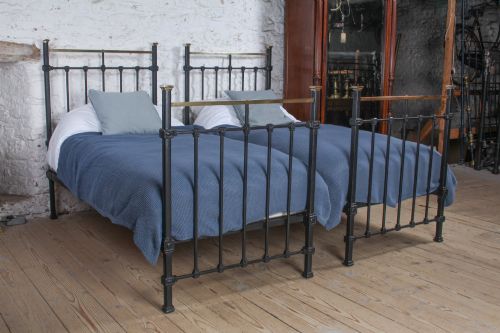
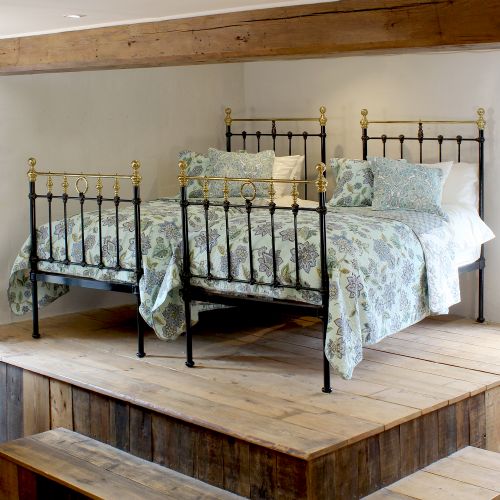
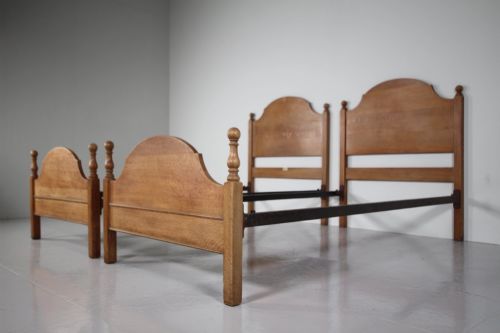
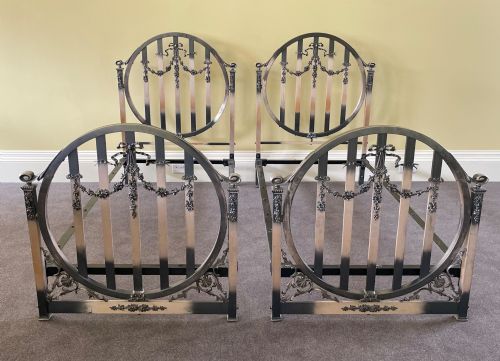
When searching for edwardian twin beds, buyers encounter matched pairs of single sleeping frames originating primarily from the Edwardian period alongside late Victorian and early twentieth-century examples. The selection spans utilitarian metal tubing and cast iron constructions to finely figured timber frames in mahogany, walnut, oak, and satinwood.
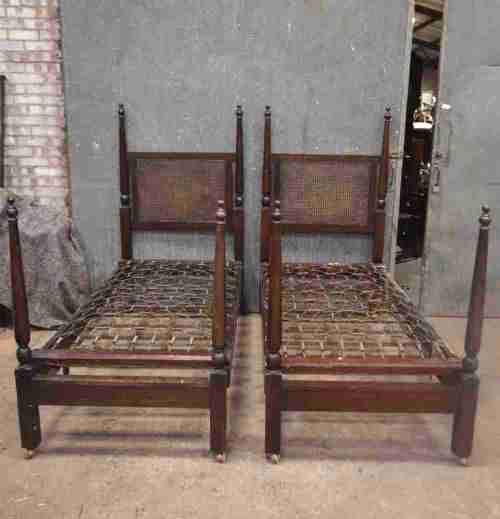
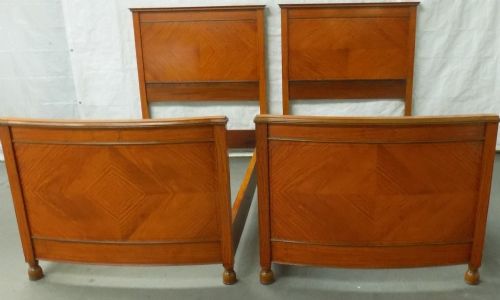
Most entries on this page consist of paired single bedsteads designed to match precisely, occasionally equipped with mechanisms allowing them to join together. Forms range from simple square brass tubes and painted iron rings to elaborate four poster configurations with cane panels and inlaid satinwood surfaces.
Stylistic influences vary widely across these listings, incorporating Arts and Crafts simplicity, Art Nouveau nickel plating, Queen Anne walnut, and Chinoiserie hand-painted portrait panels. Buyers select these beds to bring period character to guest rooms and master bedrooms without sacrificing uniformity.
Materials and Construction
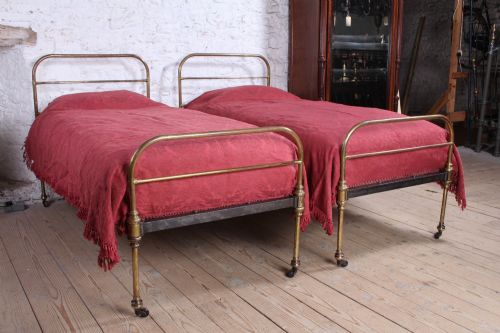
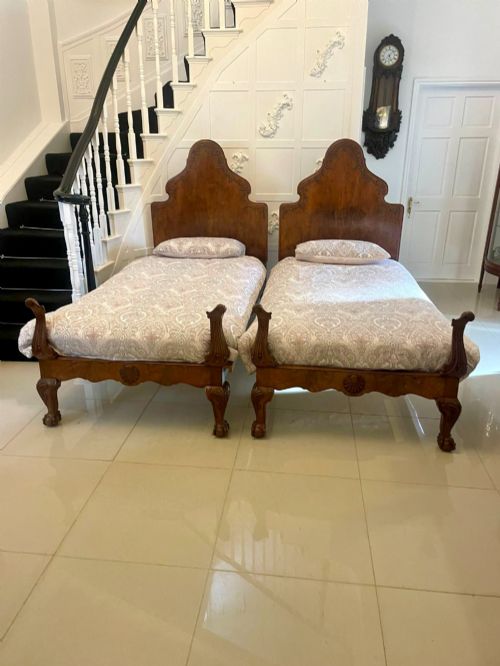
Metal frames utilise cast iron, brass, and nickel plating, often combining structural iron with decorative brass finials, tubing, and decorative rings. Timber examples employ solid and veneered hardwoods including oak, mahogany, walnut, and satinwood, frequently enhanced with intricate stringing, marquetry inlay, and carved details.
Specialist techniques define the finer pieces, such as woven cane bergere panels, polychrome hand-painted portrait panels, and specialised joinery found in labeled maker pieces. Metal components rely on foundry casting and joining methods that allow separate single frames to unite securely as a larger unit.
Assessing Quality and Execution
Quality separates through the integrity of timber selection and the sophistication of decorative elements, moving from plain functional iron to heavily carved burr walnut or meticulously inlaid satinwood. Maker attribution significantly elevates a piece, with labeled examples from established workshops demonstrating superior cabinetmaking and refined proportions.
Execution of decorative surface work dictates the upper tier of the range, visible in crisp brass casting, detailed hand-painted portrait panels, and intact woven cane work. The survival of matching pairs with their original hardware and joining brackets maintains the coherence and desirability of the set.
Heals·Heal & Son·Shapland and Petter
The Edwardian Twin Beds Glossary
- Bedstead
- The framework of a bed consisting of headboard, footboard, and side rails. This term frequently appears in historical listings alongside frame and bed.
- Bergere
- A type of enclosed upholstered armchair or bed panel featuring cane webbing. The technique involves hand-weaving natural cane into open wooden frames.
- Inlay
- A decorative technique where contrasting materials are inserted into depressions in a timber base. Satinwood and mahogany pieces often utilise this for linear stringing or pictorial motifs.
- Cast Iron
- An iron-carbon alloy poured into moulds to create rigid structural or decorative components. Victorian and Edwardian examples often feature painted finishes and applied brass decoration.
Edwardian Twin Beds: Frequently Asked Questions
Can edwardian twin beds be joined together?
Certain listings specifically note that the single frames can be joined to form a unified sleeping platform. Original connecting brackets and modular designs facilitate this combination.
Buyers should examine the specific hardware details in each listing to confirm whether joining mechanisms are present on metal or wooden frames.
What woods were used for edwardian twin beds?
Cabinetmakers utilised a variety of native and exotic timbers including mahogany, walnut, oak, and satinwood. Burr walnut and inlaid satinwood represent the more decorative end of the material spectrum.
Softer painted finishes and polished hardwoods allowed these beds to coordinate with existing Edwardian bedroom suites.
How do you style antique twin beds in a modern home?
Matching pairs bring symmetry and historical character to guest bedrooms or children's rooms without overwhelming the spatial layout. Pairing them with neutral linens lets the ironwork or timber grain remain the focal point.
Their relatively narrow proportions make them practical for smaller rooms where standard modern king sizes might fail to fit comfortably.