



Edwardian Turned Spindle Seat
Edwardian turned spindle seat designs combine domestic comfort with turned timber construction, offering a sturdy seating option for period interiors.
Edwardian Turned Spindle Seat
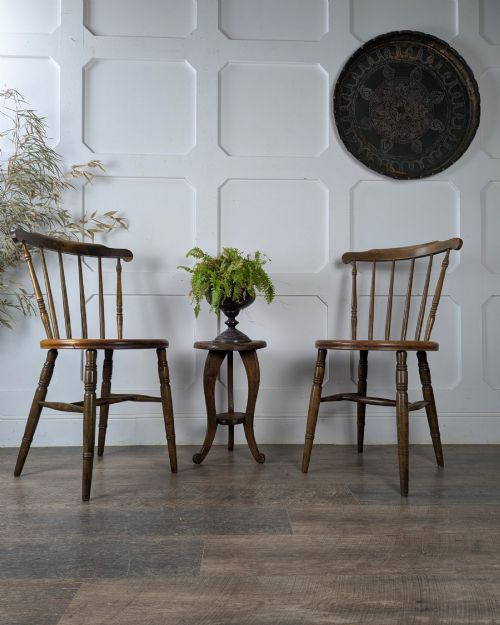
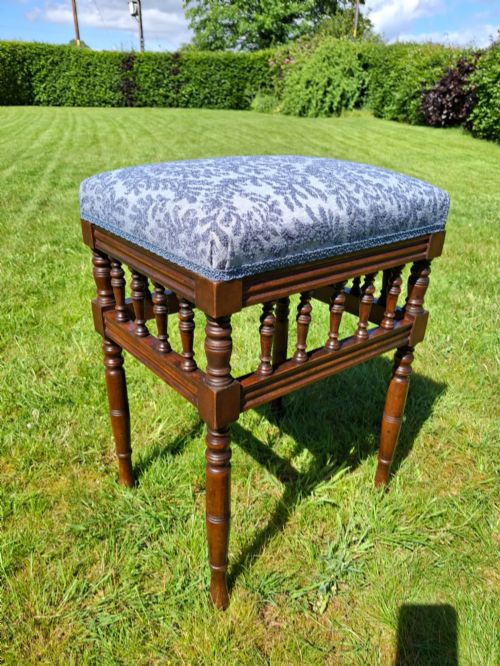
An Edwardian turned spindle seat encompasses various forms such as desk chairs, dining chairs, armchairs, and rocking chairs dating from the late nineteenth and early twentieth centuries. These pieces reflect styles ranging from English Country and Edwardian Country to Aesthetic Movement and Victorian traditions.
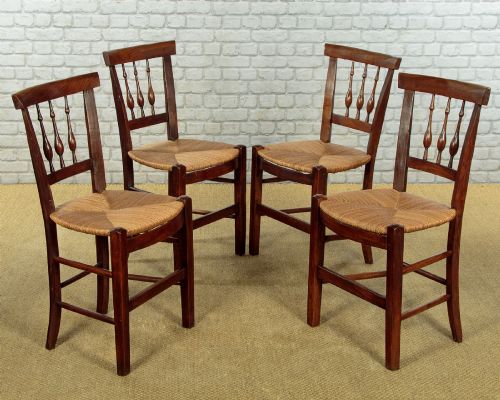
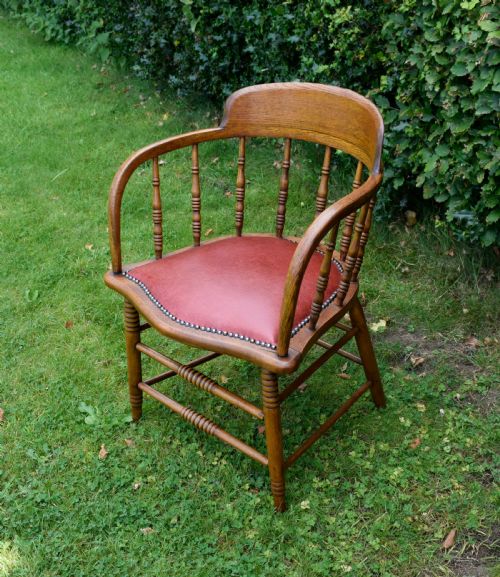
The version most commonly encountered on this page is the wooden chair featuring spindle backs and turned supports, frequently executed in oak, beech, elm, or mahogany. They appear as individual pieces, pairs, or sets of four and six, suited for studies, kitchens, and dining rooms.
Materials and construction methods
Construction relies heavily on native hardwoods such as oak, beech, elm, ash, and walnut, shaped through turning and bending techniques to form structural frames and spindles. These timbers provide the rigidity needed for everyday seating.
Seating areas incorporate solid timber boards, woven rush, or upholstered pads finished in fabric, leather, or tan hide, fastened securely to the wooden underframes.
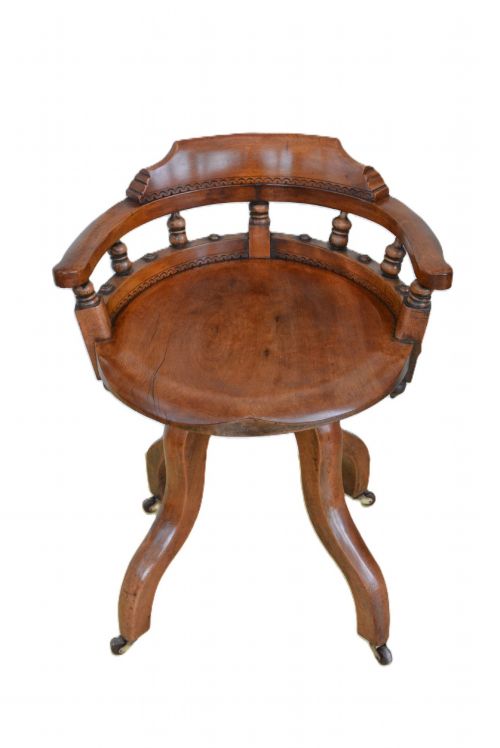
Certain desk chairs include swivel mechanisms, allowing nineteenth-century clerks to pivot between ledgers with unexpected momentum.
Distinctions in quality and execution
Quality varies according to the selection of timber and the precision of the turning work in the spindles and legs. Denser hardwoods and cleanly executed joinery distinguish better examples from simpler utility seating.
The integrity of the frame, the retention of original upholstery materials like leather or hide, and the balance of the proportions determine the desirability of each piece.
Codina·Godwin
The Edwardian Turned Spindle Seat Glossary
- Spindle back
- A chair back constructed from vertical turned wooden rods or spindles set between a top rail and seat. This design lightens the visual weight of the chair while providing robust back support.
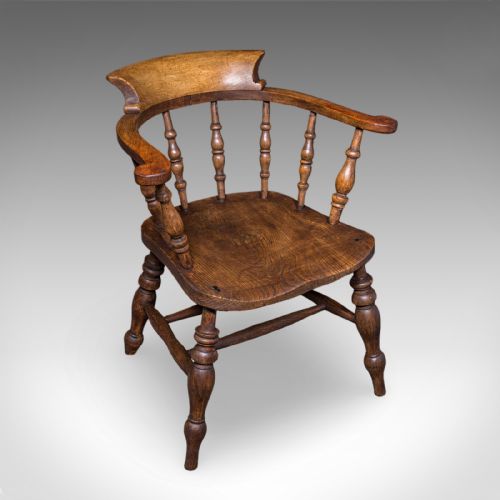
- Smoker's bow
- A low-backed wooden armchair with a continuous curved arm rail supported by turned spindles above a saddle-shaped wooden seat. It frequently serves as a desk or smoking room chair.
- Windsor
- A chair type featuring a solid wooden seat into which the legs and back spindles are wedged directly. Traditional versions utilise a combination of bentwood bows and turned components.
- Aesthetic Movement
- A late nineteenth-century design style emphasising visual refinement and simplicity over heavy historicism. Pieces in this manner often feature clean lines and unadorned timber surfaces.
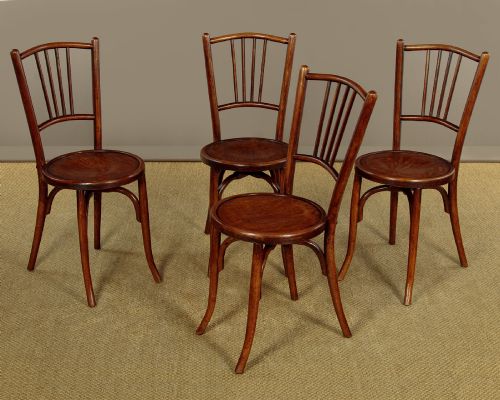
- Bentwood
- Wood softened through steaming and bent into curved structural forms under pressure. This technique creates continuous curves for chair backs and frames.
Edwardian Turned Spindle Seat: Frequently Asked Questions
What defines an Edwardian turned spindle seat?
These chairs are characterised by their turned wooden spindles forming the backrest, supported by frames built from timbers like oak, beech, and elm.
They appear in various functional forms, including desk chairs, armchairs, and dining seats from the late nineteenth and early twentieth centuries.
Where were these chairs used originally?
They served as practical seating across domestic and working interiors, including studies, libraries, kitchens, and reception rooms.
Their robust timber construction suited daily tasks at desks or dining tables.
How do I care for a wooden spindle seat?
Maintain the timber by cleaning with a dry or slightly damp cloth and applying appropriate wax polish periodically to nourish the surface.
Keep upholstered leather or fabric elements away from direct heat sources to prevent the material from drying out.
How can I tell the period of these chairs?
Dating relies on timber selection, construction methods, and stylistic indicators such as Aesthetic Movement influences or Edwardian country proportions.
Comparing the turned details against documented examples from around nineteen hundred helps establish the correct era.