
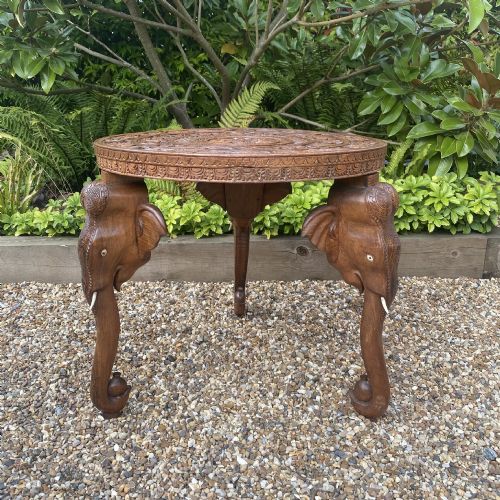
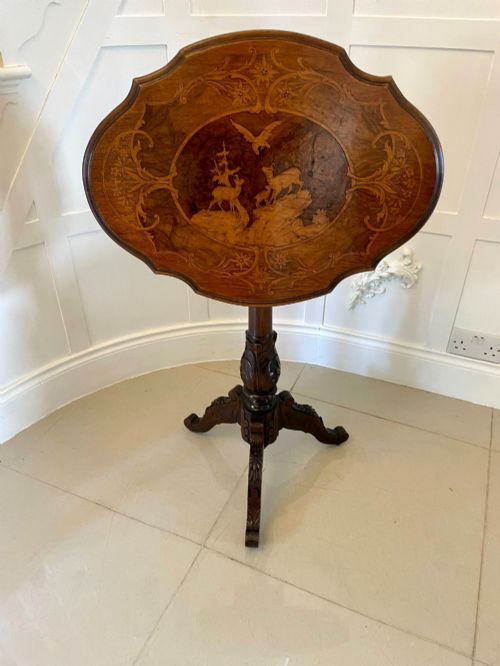
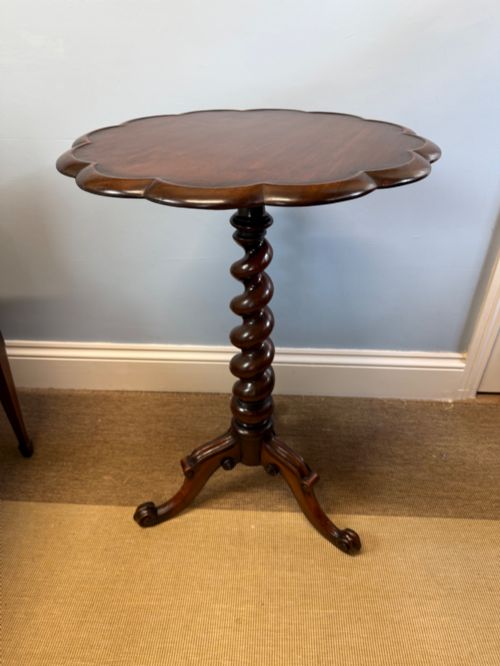
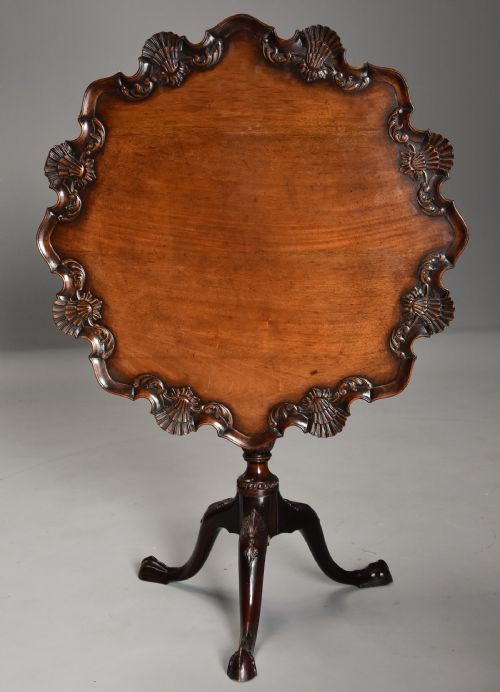
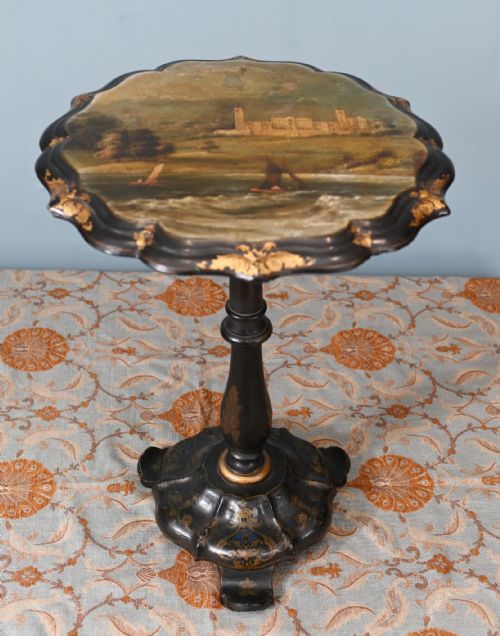


Edwardian Tripod Tea Table
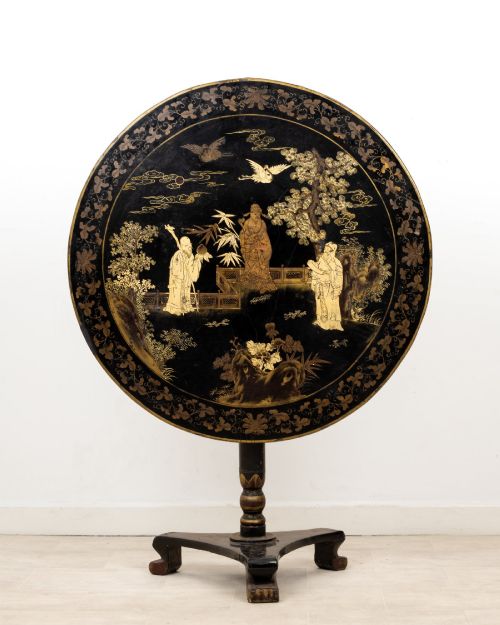
These edwardian tripod tea table examples offer compact occasional surfaces with tilting tops, bringing practical antique character to any room.
Edwardian Tripod Tea Table
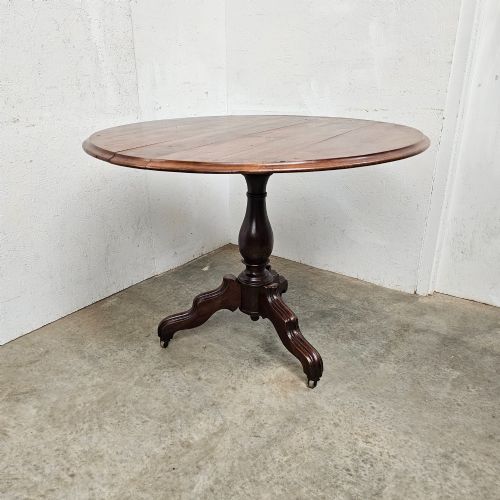
The edwardian tripod tea table category encompasses compact occasional furniture designed for flexible placement in domestic spaces. These pieces rest on three-legged supports, often featuring circular or shaped tops intended for easy movement around a room.
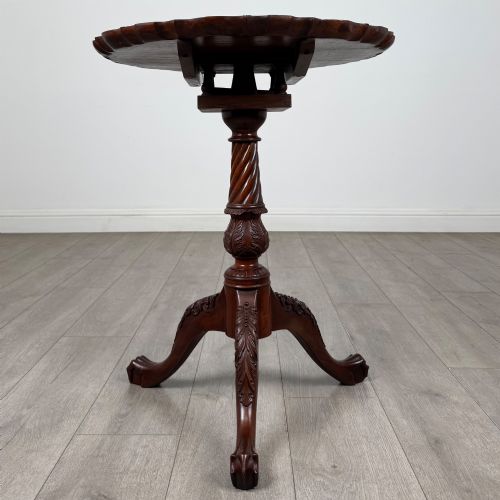
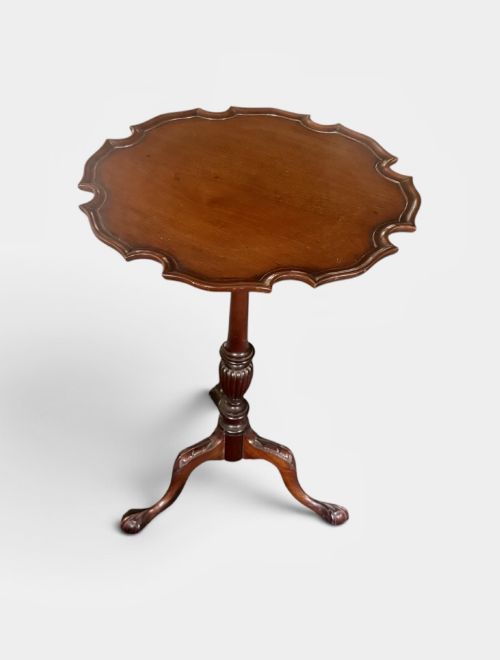
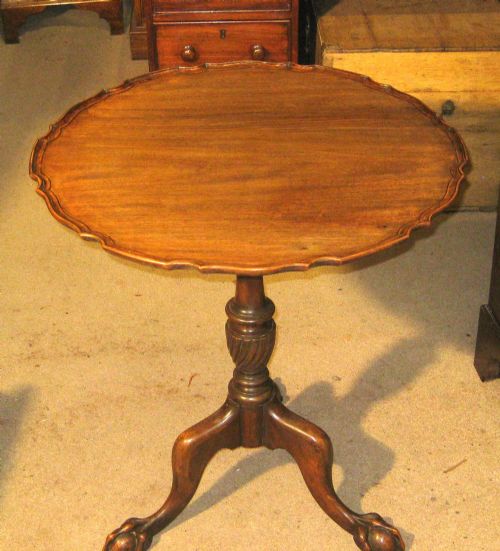
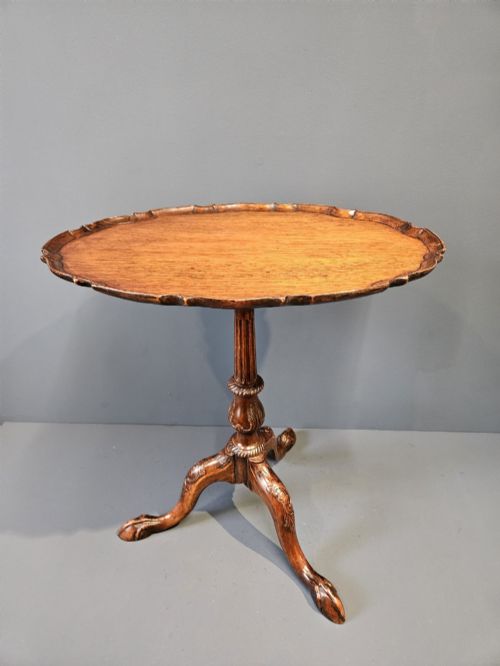
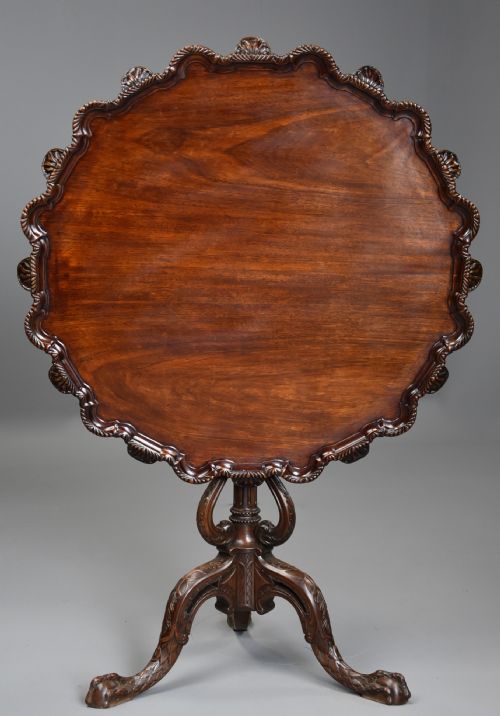
Most entries encountered on this page date from the Edwardian period or the late nineteenth century, drawing heavily on earlier Georgian and Victorian forms. Mahogany and walnut appear frequently as the primary woods, often shaped with raised pie crust edges or fitted with tilting mechanisms.
Materials and construction
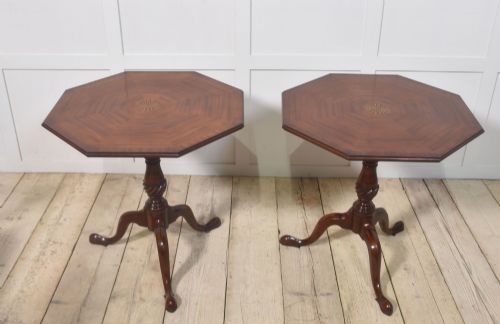
Makers utilised solid timbers such as mahogany, walnut, and teak, frequently pairing them with satinwood inlay or brass fittings. Tops were often turned from single boards or constructed with tilt mechanisms allowing the surface to fold vertically when not in use.
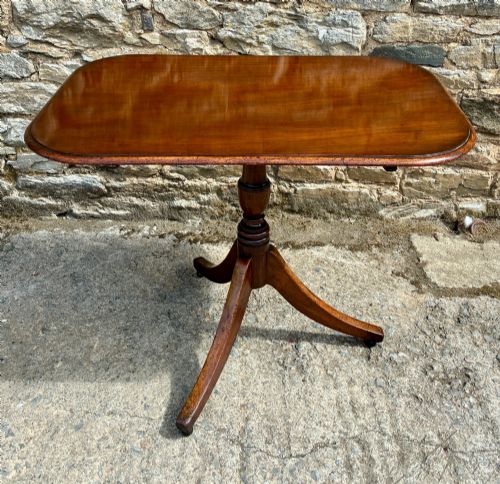
The three-legged bases typically feature turned pedestals flowing into cabriole or splayed legs, providing stable support beneath the central column. Surface decoration ranges from plain polished wood to intricate lacquer and gilt finishes.
Several tables include birdcage mechanisms that let the top spin like a compass before tipping sideways.
Distinctions in quality
Superior examples display crisp carving on the cabriole legs and finely moulded rims, such as pie crust edges shaped directly from the solid timber rather than applied in sections. The selection of figured mahogany or walnut veneer also distinguishes finer pieces from plain utilitarian items.
Mechanisms for the tilt-top action demonstrate construction standards, with well-fitted brass catches and stable birdcage joints ensuring the top locks firmly in place without wobble. Proportion and balance in the turning of the central pillar further separate standard workshop output from exceptional cabinet work.
The Edwardian Tripod Tea Table Glossary
- Piecrust rim
- A raised, decoratively carved edge shaped around the perimeter of a circular table top. This moulding echoes popular eighteenth-century styles revived in later periods.
- Tilt top
- A hinged mechanism allowing the table surface to swivel upright for convenient storage against a wall. It is commonly found on tripod occasional and tea tables.
- Birdcage
- A revolving wooden framework beneath a tilt top that allows the surface to both rotate and tilt. This construction is typical of finer Georgian and revival tables.
- Tripod base
- A support structure consisting of three diverging legs joined to a central vertical pillar. It provides stability on uneven floor surfaces without extra floor space.
- Satinwood inlay
- Contrasting light wood inserted into darker timber surfaces to create decorative borders or motifs. This technique highlights the refined detailing of Edwardian pieces.
Edwardian Tripod Tea Table: Frequently Asked Questions
What was an edwardian tripod tea table used for?
These tables served primarily for serving tea or holding small decorative objects in sitting rooms. Their portable nature allowed servants or residents to move them easily beside chairs as needed throughout the day.
When not in use, the tilting tops enabled the tables to stand flat against a wall to conserve floor space in smaller drawing rooms.
How do I identify an Edwardian piece?
Edwardian furniture typically dates from the early twentieth century, exhibiting lighter proportions and refined revival styles. Makers often drew inspiration from Georgian and Chippendale designs while employing machine-assisted precision alongside traditional hand work.
Examination of the timber, secondary woods, and fixing screws helps confirm the manufacturing era and distinguishes genuine period items from later reproductions.
Are tilt top tables stable?
A well-constructed tilt top table remains stable when the catch engages properly beneath the surface. The three legs ensure firm contact with the floor even if the surface is slightly uneven.
Wear in the central pivot or birdcage mechanism can introduce slight movement, which is common in older furniture that has seen active service.
How should I care for a mahogany table?
Polished wood surfaces benefit from occasional application of traditional beeswax to nourish the timber and maintain a soft sheen. Direct sunlight and excessive heat sources should be avoided to prevent the wood from drying or warping over time.
Using coasters and avoiding harsh chemical cleaners protects the antique polish from moisture rings and surface damage.