

Edwardian Tea Table Drop Leaf
These edwardian tea table drop leaf pieces combine folding utility with domestic elegance, offering a flexible surface for hosting afternoon tea.
Edwardian Tea Table Drop Leaf
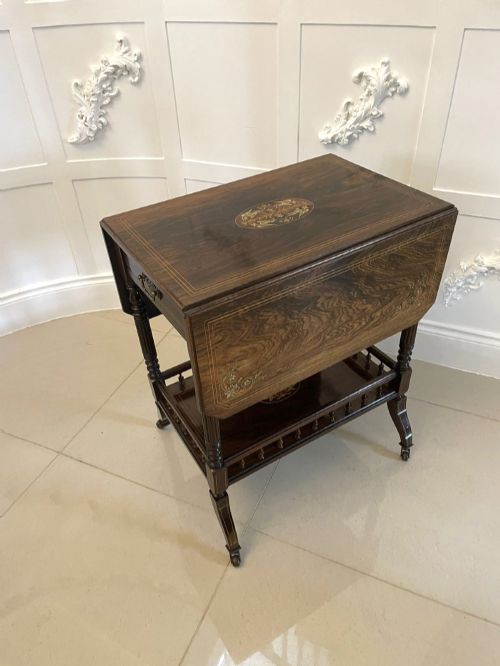
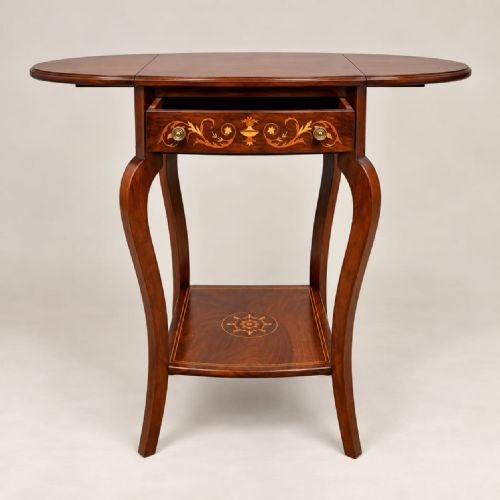
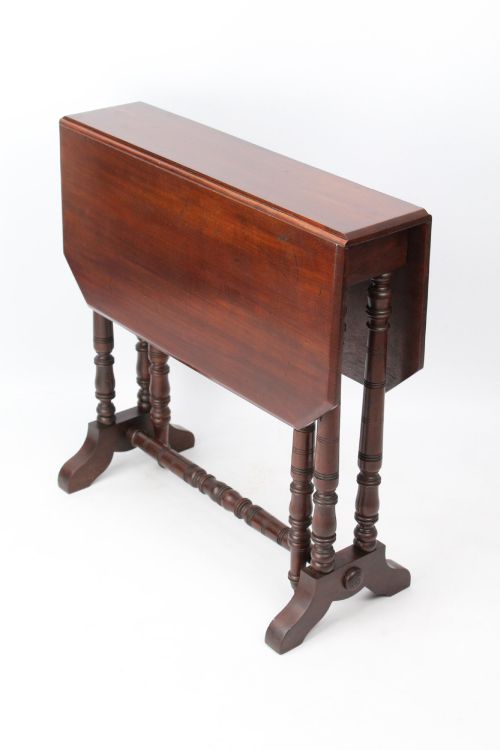
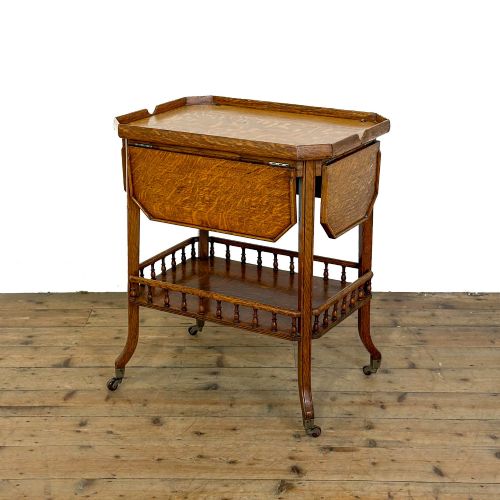
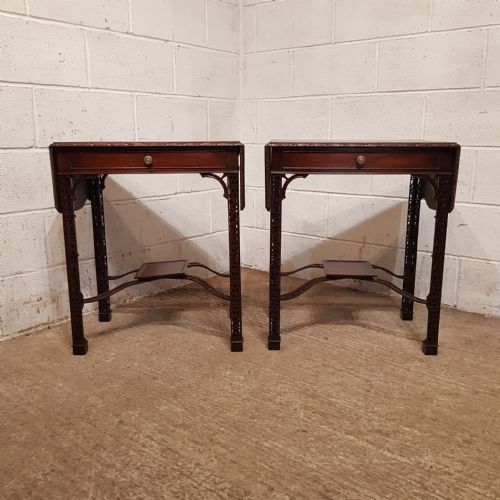
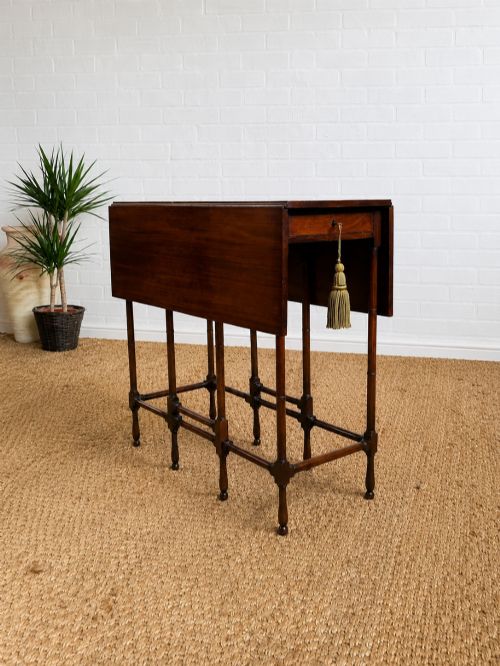
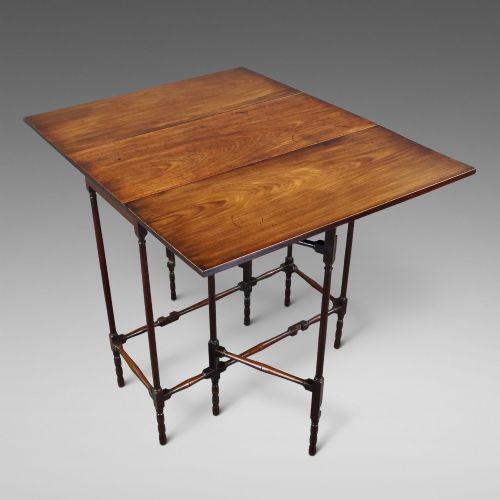
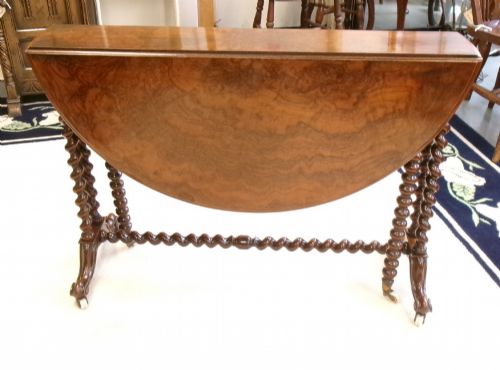
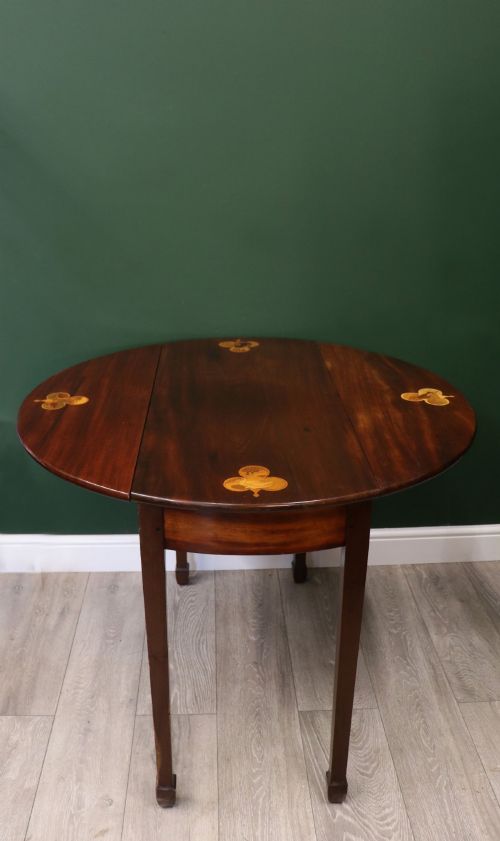
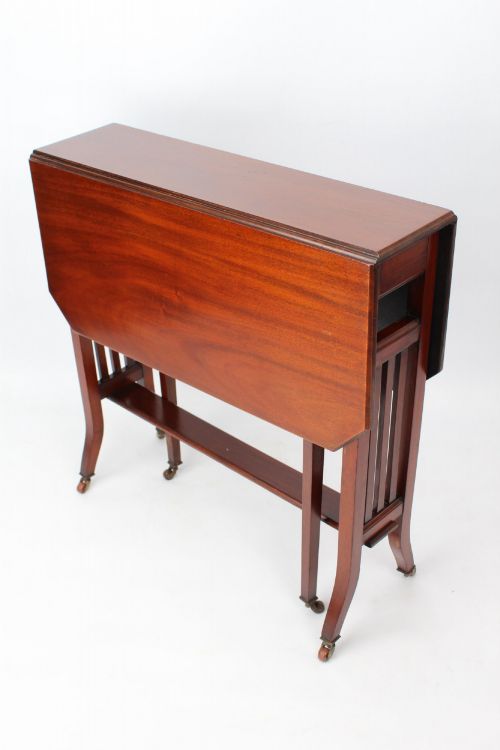
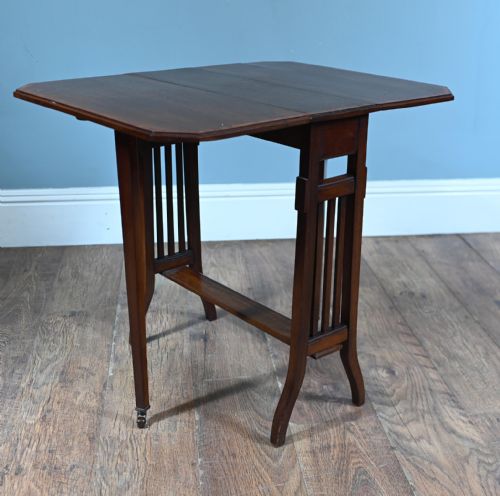
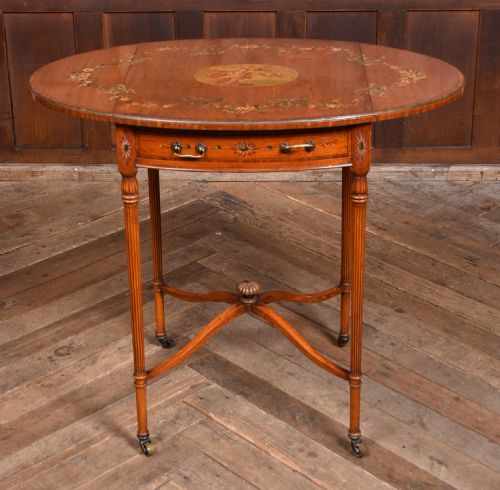
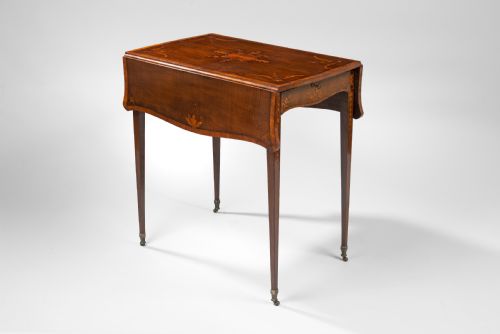
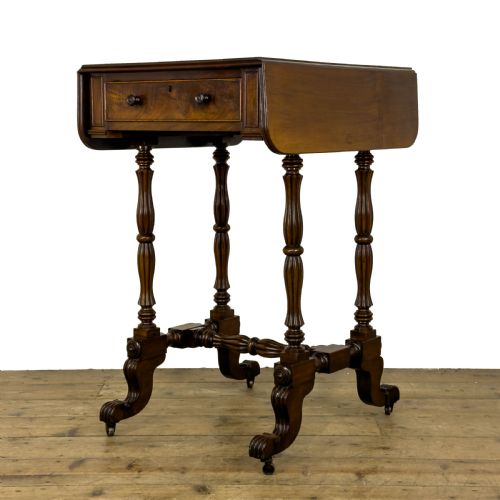
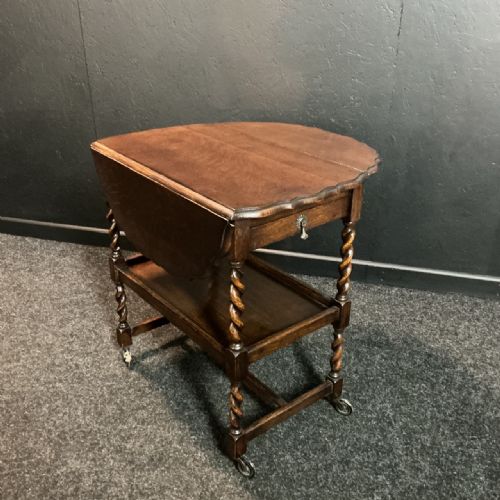
An edwardian tea table drop leaf typically takes the form of a Sutherland table, a gateleg design, or a pembroke table produced during the Edwardian period or late Victorian era. These pieces offer folding leaves supported by pivoting legs, allowing them to expand for tea service and fold down compactly against a wall when not in use. Mahogany and rosewood form the primary timbers encountered, often enriched with satinwood inlay or marquetry details.
Makers such as Maple & Co and Liberty & Co also produced variations during this timeframe, ranging from classical revival styles to Anglo-Moresque designs. Buyers will frequently encounter two-tier tea trolleys and occasional tables alongside standard drop-leaf configurations. The selection spans compact folding items suitable for smaller rooms up to dining-sized versions designed to seat four.
Materials and Technique
Cabinetmakers utilised solid mahogany, walnut, burr walnut, and rosewood for the structural framework and drop leaves of these tables. Timbers were selected for grain pattern and strength, particularly around the hinge mechanisms and folding leaf joints that bear regular weight.
Surface decoration frequently incorporates satinwood inlay, marquetry, and painted details set into the primary wood. Turned legs, including bamboo-turned styles or gateleg supports, provide stability when the leaves are raised.
Listings span periods from the 18th century through the Edwardian era, featuring mahogany, walnut, rosewood, and satinwood inlay.
Craftsmanship and Detail
Quality rests in the precision of the hinge mechanisms and the stability of the drop-leaf supports when extended. Finer examples display crisp satinwood inlay, carefully matched timber veneers, and robust gateleg pivoting without wobble.
The choice of secondary woods and the refinement of turned legs or brass castors distinguish standard production from workshop pieces bearing retail stamps. Cabinetwork that retains tight joints and smooth folding action represents the higher tier of survival.
Maple & Co·Liberty & Co
The Edwardian Tea Table Drop Leaf Glossary
- Sutherland table
- A narrow-profile drop-leaf table with exceptionally slim folding leaves and gateleg supports. This form allows the table to fold into a very compact footprint when the flaps drop vertically.
- Pembroke table
- A drop-leaf table featuring two hinged flaps on opposite sides and typically a single drawer beneath the top. The design dates back to the eighteenth century but continued through the Victorian and Edwardian periods.
- Gateleg table
- A table with hinged legs that swing outward to support drop leaves. The pivoting gate mechanism provides load-bearing strength to the extended flaps.
- Marquetry
- The art of applying pieces of veneer to a structure to form decorative patterns and pictures. Makers utilised contrasting timbers such as satinwood and harewood within mahogany fields.
Edwardian Tea Table Drop Leaf: Frequently Asked Questions
How do you use a drop leaf table daily?
These tables function as compact side surfaces or lamp tables when the leaves remain folded down against the base. Raising the flaps transforms the top into a larger surface suitable for serving afternoon tea or casual dining.
The folding mechanism allows the furniture to adapt to room layouts with limited space. Owners often place them beside seating areas or against walls to balance accessibility with floor clearance.
How do I identify an Edwardian tea table?
Edwardian examples generally display lighter framing, refined satinwood inlay, and sometimes bamboo-turned or slender tapered legs. They reflect the revival styles popular at the turn of the twentieth century, such as Sheraton and Chippendale influences.
Earlier Victorian versions tend toward heavier proportions in solid mahogany or walnut with darker finishes. Examining the timber grain, hardware, and secondary woods helps distinguish the period of manufacture.
Can these tables seat people for dinner?
Certain larger drop-leaf and Sutherland configurations provide sufficient surface area and leg clearance to seat four people. The stability of the gateleg supports determines whether the extended leaves can bear dining tableware safely.
Most occasional and tea tables are designed primarily for light service rather than heavy dining use. Checking the span of the open leaves and the sturdiness of the pivot joints clarifies the intended capacity.