
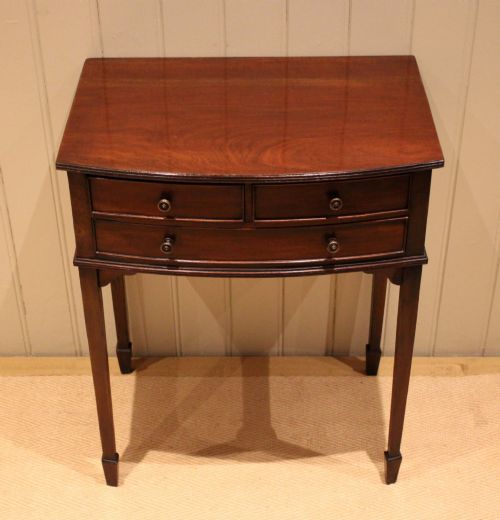

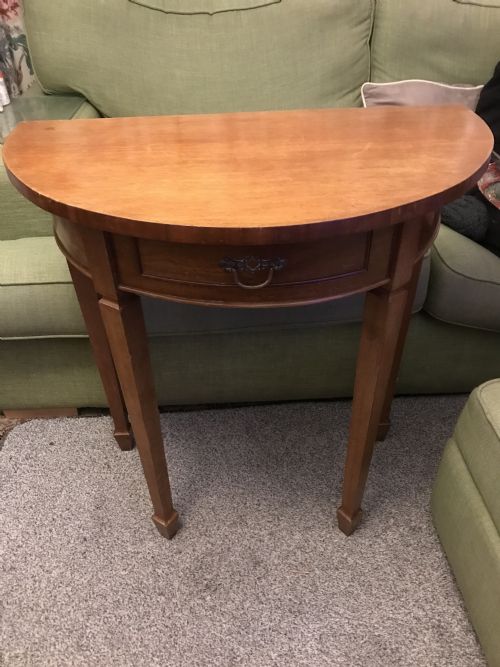


Edwardian Tapered Leg Desk
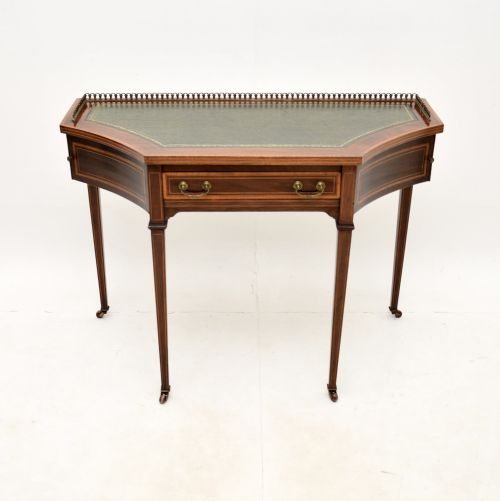
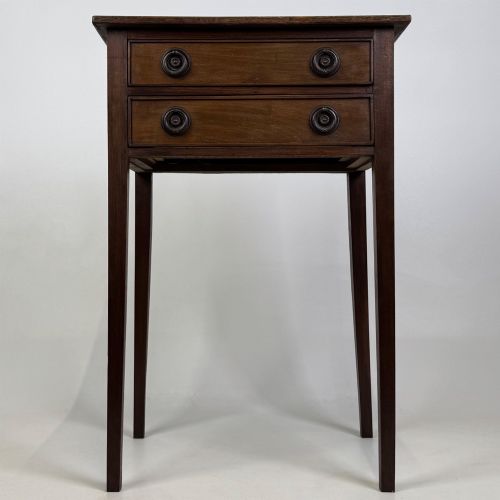
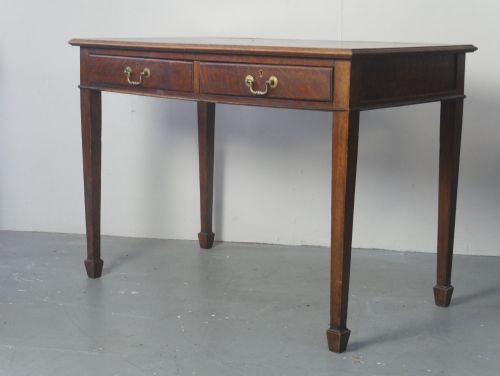
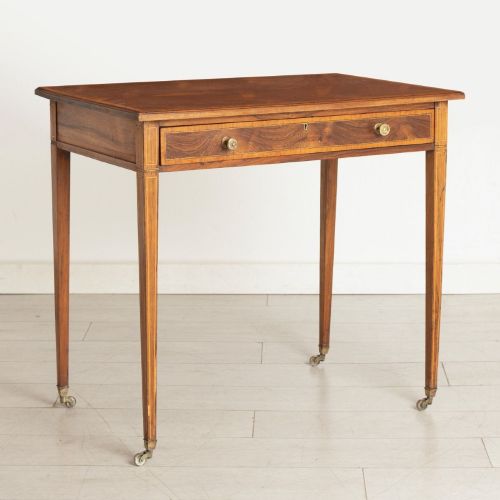
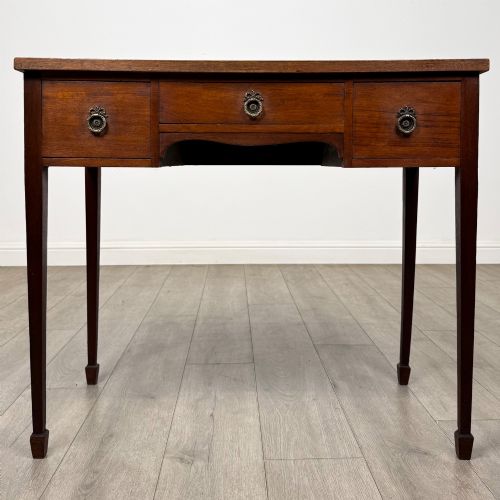
These edwardian tapered leg desk pieces offer practical writing surfaces with refined timber framing, bringing period proportion to study spaces.
Edwardian Tapered Leg Desk
When searching for an edwardian tapered leg desk, buyers encounter compact writing tables and occasional furniture originating primarily from the Edwardian era alongside late Victorian and early twentieth-century examples. The selection spans writing desks, writing tables, and side tables configured with slim supports that lift the writing surface.
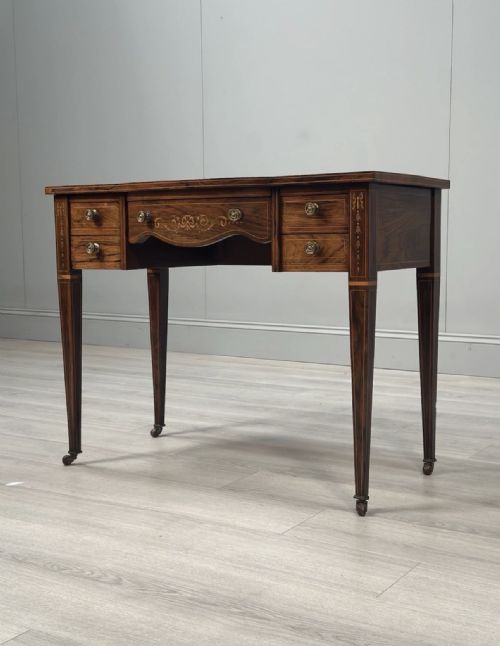
Mahogany forms the dominant timber across these listings, frequently accompanied by satinwood and rosewood variants displaying Sheraton Revival and Georgian stylistic influences. Pieces appear with single drawers, multiple compartments, or leather inserts designed for domestic writing tasks.
The layout typically prioritises domestic utility over heavy clerical storage, resulting in lighter proportions than earlier nineteenth-century library tables. Buyers frequently find inlaid decoration utilising boxwood, satinwood, and darker banding to frame the primary timber surfaces.
Materials and Construction
Cabinetmakers constructed these writing tables using solid mahogany, oak, and rosewood frames paired with fine veneers for tabletops and drawer fronts. Timber selection governed the visual weight, with lighter satinwood and polished mahogany favoured for principal display surfaces.
Inlay work relied on contrasting boxwood, satinwood, and tulipwood stringing embedded directly into the primary wood. Brass handles, key escutcheons, and leather writing surfaces complete the construction details recorded across the surviving pieces.
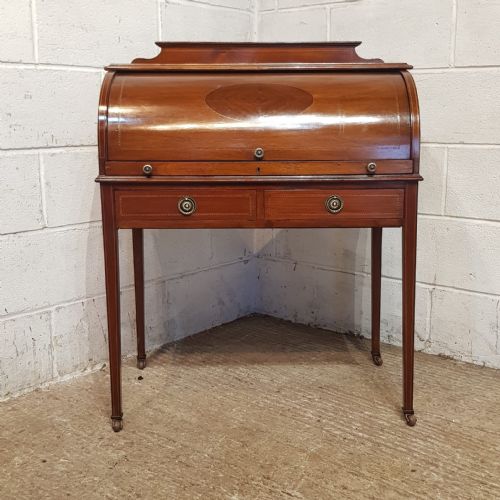
One cheerful bonnet-style desk waits patiently to hold your daily correspondence.
Craftsmanship and Proportion
Distinction across these desks rests in the crispness of the inlay work and the harmonious balance of the tapered supports relative to the top. Finer examples display meticulous matching of wood grain across drawer fronts and precise hand-cut joinery.
The integration of secondary timbers and the quality of the original brass hardware separate standard utility pieces from higher-tier cabinetmaking workshops. Condition of the leather insert and stability of the leg joints further define the standard of survival.
Edwards and Roberts·Jenners
The Edwardian Tapered Leg Desk Glossary
- Carlton House desk
- A form of writing desk featuring a curved superstructure of small drawers and pigeonholes running around the back and sides of the writing surface. This layout provides extensive compartment storage while maintaining a compact footprint.
- Sheraton Revival
- A late nineteenth and early twentieth-century design movement inspired by the neoclassical furniture of George Sheraton. Pieces in this style utilise delicate legs, symmetrical satinwood inlay, and classical urn or floral motifs.
- Bonheur du jour
- A light ladies' writing desk equipped with a small cabinet or set of drawers on the upper surface. The name translates from French as day's delight.
- Pembroke table
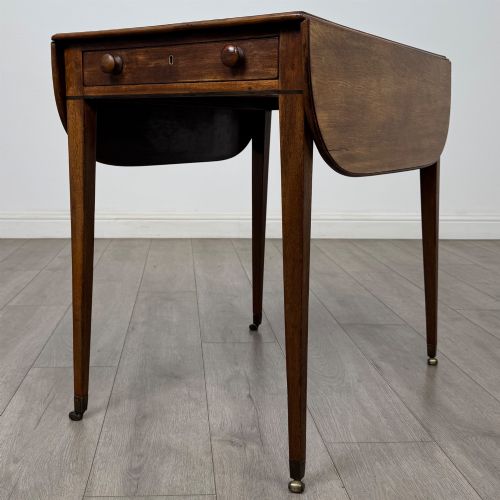
- A small drop-leaf table with hinged flaps on either side supported by folding brackets. They frequently function as writing surfaces or occasional tables within domestic interiors.
- Boxwood inlay
- Narrow strips of pale boxwood inserted flush into recesses within a darker primary timber to create geometric borders. This technique highlights the structural outlines of drawers and tabletops.
Edwardian Tapered Leg Desk: Frequently Asked Questions
What periods do these desks cover?
The listings span the Edwardian era alongside late Victorian and early twentieth-century manufacturing dates. Stylistic influences draw heavily from earlier Georgian and Sheraton precedents.
Cabinetmakers maintained these classical proportions while adapting forms for smaller domestic rooms of the early nineteen hundreds.
How were these desks used originally?
Owners utilised them primarily for private correspondence, record keeping, and reading in reception rooms or bedrooms rather than heavy administrative work.
Their lighter construction reflected a shift toward versatile occasional furniture suited to domestic drawing rooms.
Are the writing surfaces leather?
Many writing tables and desks incorporate inset leather panels designed to provide a smooth, durable surface for pen and ink work. These inserts frequently feature gold-tooled borders.
Surviving examples show various states of preservation on these panels, reflecting their practical everyday purpose.
How do I identify Sheraton Revival pieces?
Sheraton Revival pieces display characteristic neoclassical details including satinwood veneers, painted floral swags, and slender tapered legs. Cabinetmakers produced these revival items to capture eighteenth-century elegance.
The use of contrasting stringing and symmetrical drawer arrangements serves as a primary indicator of this style.