



Edwardian Desk on Castors
An edwardian desk on castors offers compact portability and practical writing space, combining period charm with functional mobility for daily use.
Edwardian Desk on Castors
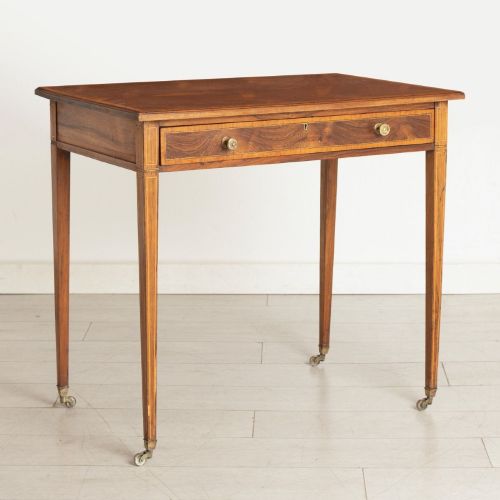
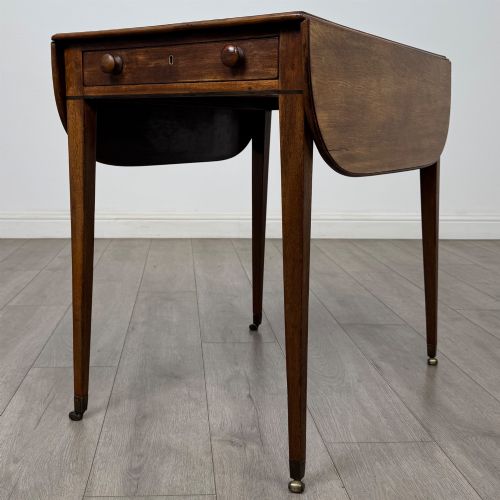
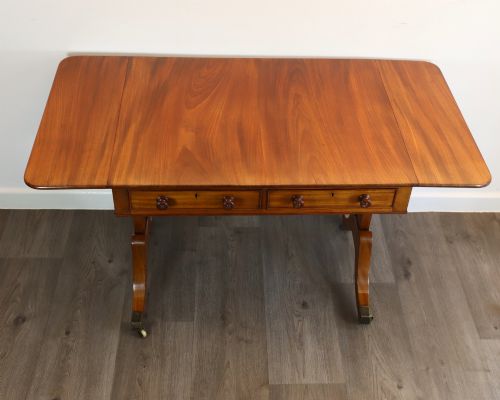
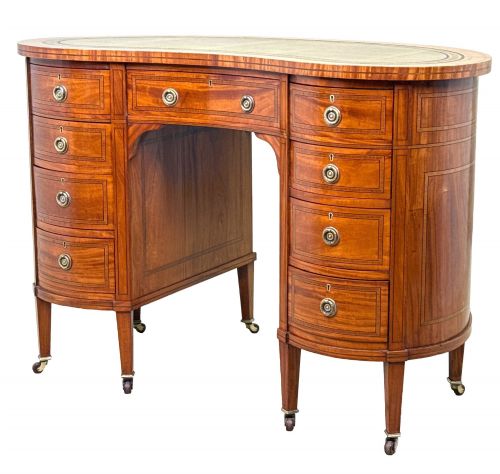
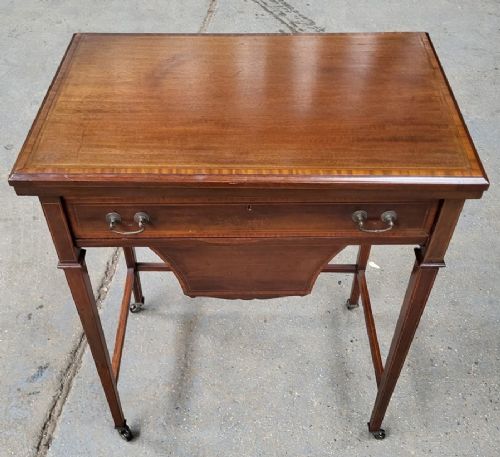
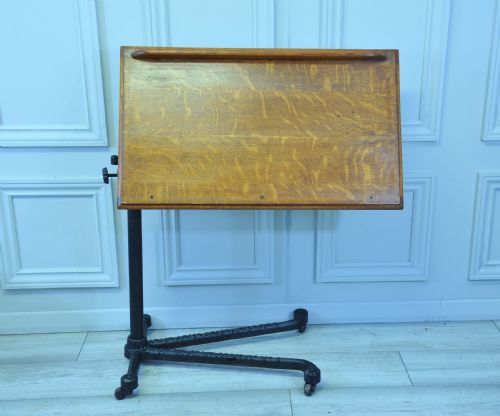
The edwardian desk on castors represents a practical evolution in domestic writing furniture, typically emerging from the Edwardian period alongside late Victorian and early twentieth-century examples. These pieces range from compact kidney-shaped writing tables to cross-banded and inlaid mahogany forms designed for studies and bedrooms. Buyers seek them for their manageable proportions and the inherent mobility provided by their original wheel mounts.
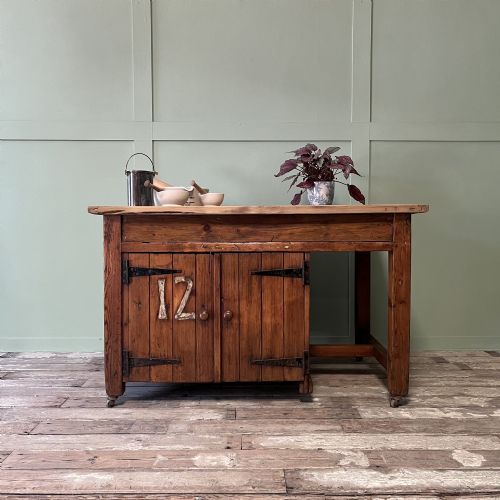
Most examples encountered here date from the Edwardian era or the broader nineteenth-century revival styles, utilising timbers such as mahogany, satinwood, and pine. They often feature inset leather writing surfaces and multiple drawers tailored for correspondence and study. The integration of castors allows these working tables to move smoothly across floor surfaces without heavy lifting.
Materials and construction
Makers constructed these desks primarily using solid and veneered mahogany, satinwood, oak, and pine, frequently applying decorative cross-banding and marquetry inlays to enhance the visual grain. Writing surfaces commonly incorporate inset leather panels tooled with gilt borders for a durable, smooth writing plane. Brass and iron castor fittings are secured to the base of the legs to facilitate movement.
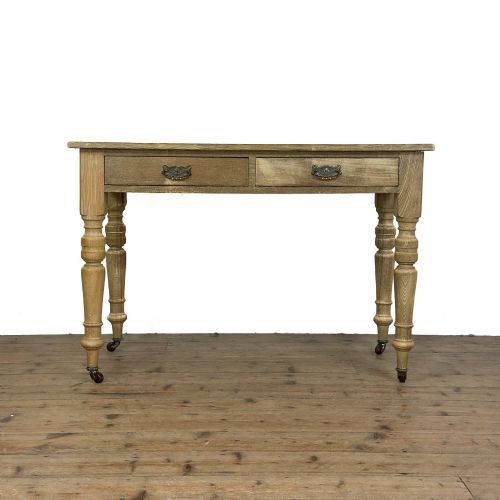
Joinery techniques rely on traditional drawer construction with dovetailed joints and internal framing to support daily writing tasks. Secondary timbers such as pine appear in drawer linings and internal partitions, while turned or tapered wooden legs anchor the metal castor mechanisms.
Listings feature periods spanning from the late 19th century through the Edwardian era to the 1920s, constructed in mahogany, oak, walnut, satinwood, and pine.
Judgements of quality
Quality in these writing tables rests upon the selection of timber figures and the precision of decorative inlay work, such as satinwood banding and marquetry details. Superior pieces display thoughtful proportion, balanced grain patterns across the primary surfaces, and harmonious integration of the writing surface with the surrounding wood.
The integrity of the structural joinery and the original hardware, including brass castors and drawer pulls, distinguishes finer workshop production from standard utility items. Smooth drawer operation and well-fitted internal compartments further reflect the standard of craftsmanship invested in the piece.
Hindley & Sons·Andrew Thomson & Sons·Carters Of London·W.Williamson & Sons·Kendrick & Jefferson·Shoolbred of London
The Edwardian Desk on Castors Glossary
- Castor
- A small wheel mounted on a swivel attached to the base of a leg to allow smooth rolling movement. These metal or wooden fittings enable easy repositioning of heavy writing furniture.
- Cross-banding
- A narrow strip of veneer applied to the border of a table top or drawer front so that the grain runs at right angles to the central panel. This technique frames the primary wood grain for decorative contrast.
- Marquetry
- The art of applying decorative veneer pieces in wood, shell, or ivory to form pictorial or geometric patterns on a surface. It appears on finer Edwardian cabinetwork.
- Kidney-shaped
- A curved furniture form resembling a kidney bean, commonly found in ladies writing desks and side tables. This shape allows the user to sit comfortably within the curve of the desk.
- Satinwood
- A lustrous, hard timber with a yellowish or golden sheen used extensively for fine veneers and stringing lines. It provides bright contrast against darker woods like mahogany.
Edwardian Desk on Castors: Frequently Asked Questions
What makes an edwardian desk on castors different from other tables?
These desks combine dedicated writing surfaces with integrated wheels, allowing the piece to be repositioned easily within a room. Their compact proportions suit smaller studies and bedrooms.
They often include fitted drawers for stationery and integrated leather tops designed specifically for correspondence rather than general dining or display.
How do I care for the leather writing surface?
The leather inset requires gentle cleaning with a dry or slightly damp cloth, avoiding harsh chemical cleaners that dry out the material. Periodic application of specialist leather balm preserves the suppleness of the hide.
Keep the writing surface away from direct sunlight and excessive heat sources to prevent cracking or fading of the gilt tooling.
Can I use an edwardian desk on castors on wooden floors?
The metal or brass castors roll smoothly on most floor surfaces, though delicate polished wood floors benefit from protective cups or rugs. Ensuring the wheels are free from dust and debris prevents scratching during movement.
Regular inspection of the castor mountings ensures they swivel freely without putting undue stress on the wooden legs.
How do I distinguish Edwardian desks from Victorian ones?
Edwardian examples generally exhibit lighter proportions, brighter satinwood inlays, and an overall airier aesthetic influenced by neoclassical and Sheraton revivals. Victorian desks tend to use denser timbers, heavier carvings, and darker finishes.
Construction details, drawer linings, and secondary woods also provide clues to the approximate decade of manufacture.