



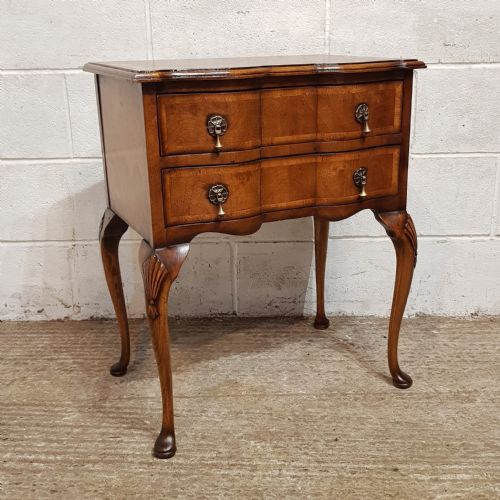
Edwardian Style Walnut Table
An edwardian style walnut table brings understated warmth to a room through rich timber grain and classic revival forms.
Edwardian Style Walnut Table
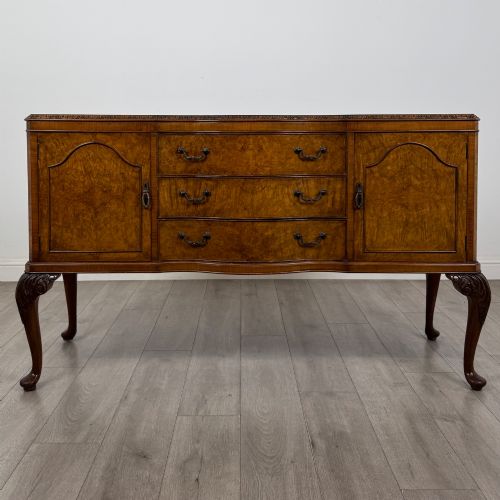
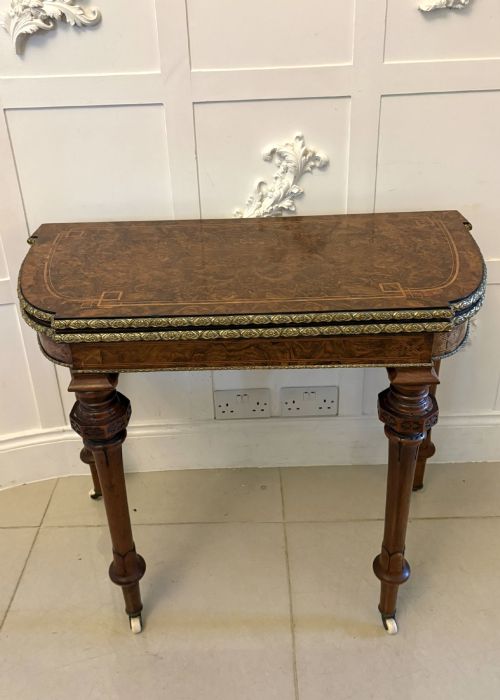
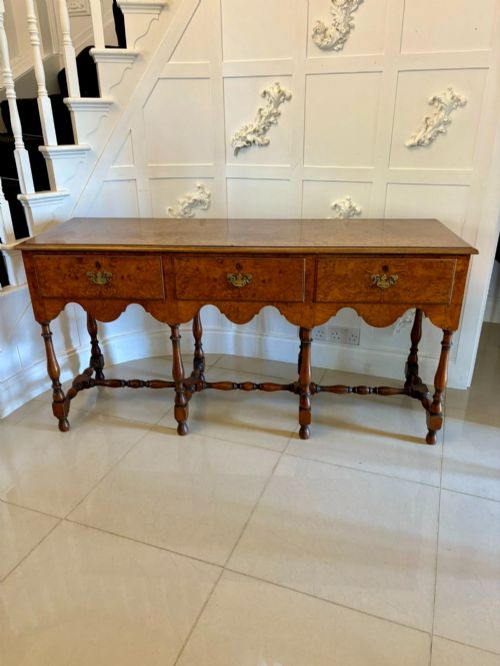
When searching for an edwardian style walnut table, buyers encounter a diverse selection of occasional tables, card tables, and writing desks originating from the late nineteenth century through the interwar decades.
The pieces on this page span Edwardian production as well as Victorian and later twentieth-century interpretations, drawing heavily on Queen Anne and Georgian revival aesthetics.
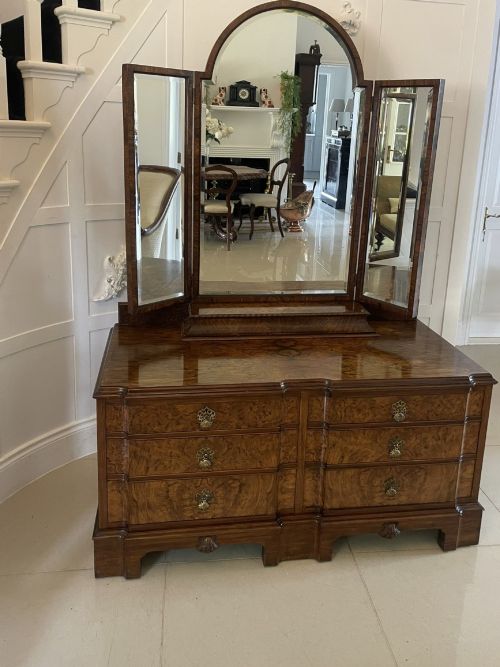
Side tables, lamp tables, and folding card tables appear most frequently, alongside larger pedestals and dressing furniture finished in figured or burr veneers.
Materials and Technique
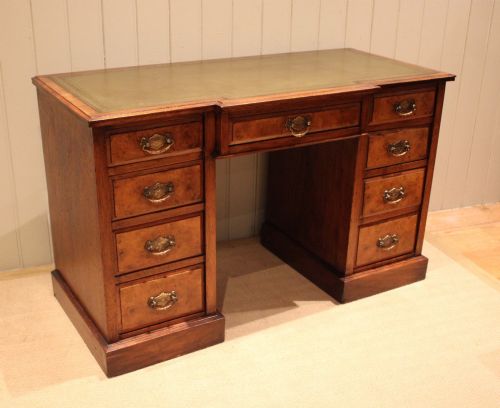
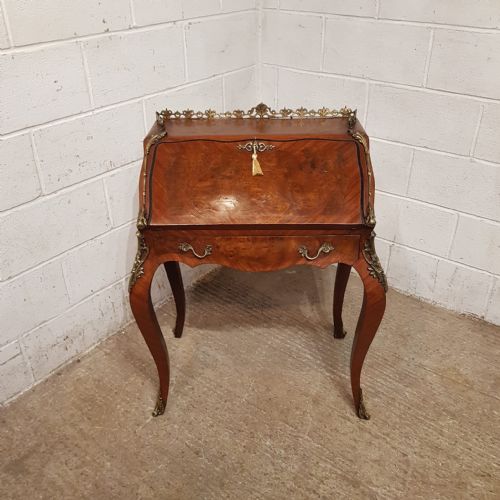
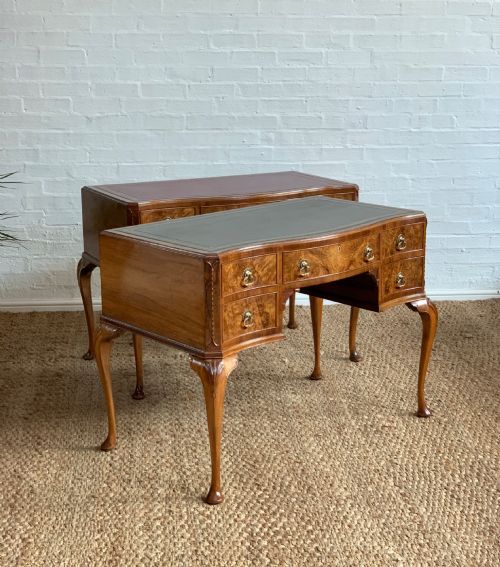
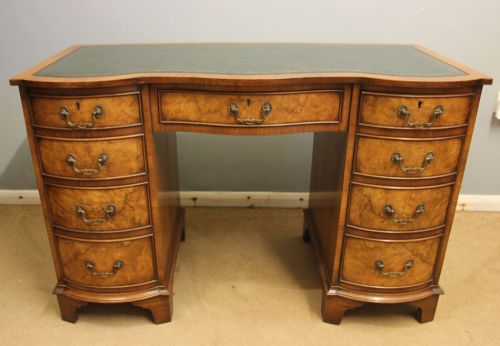
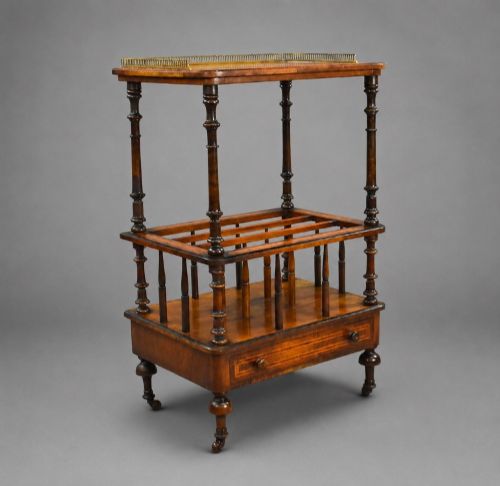
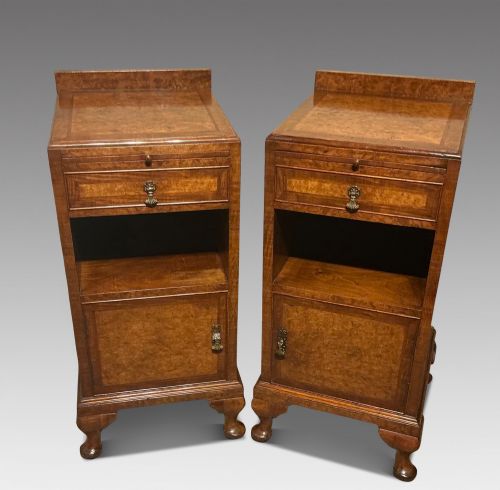
Cabinetmakers utilised solid walnut and decorative burr or figured walnut veneers applied to secondary timbers, frequently enhanced by brass mounts, leather inserts, and delicate inlay work.
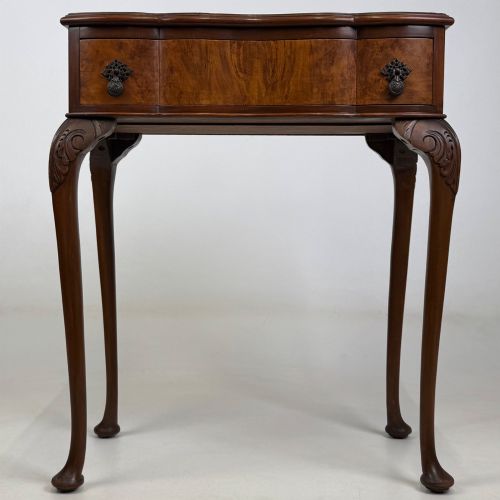
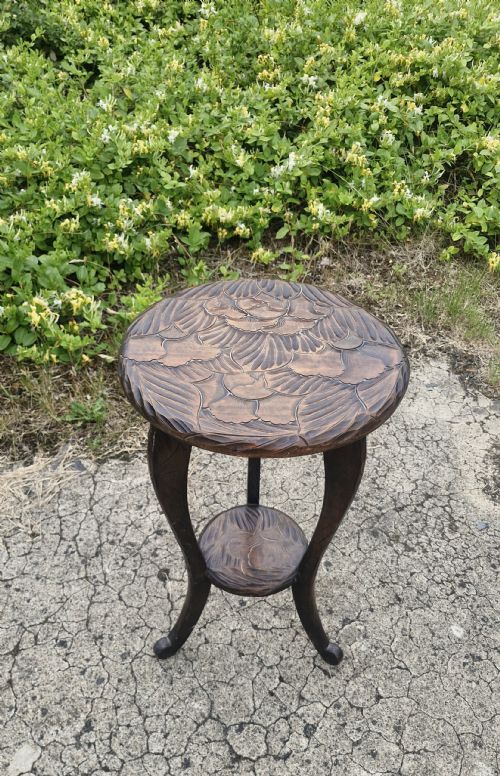
Construction techniques combine traditional joinery with curved serpentine fronts, carved cabriole legs, and occasional marble or onyx tops supported by sturdy framework.
Some tables double as sneaky games surfaces, hiding secret folding mechanisms behind innocent drawer fronts.
Markers of Distinction
Quality reveals itself in the selection of the walnut veneer, where symmetrical grain patterns and rich figuring elevate the visual impact of a piece.
The refinement of the carving on cabriole legs, the tightness of the joinery, and the retention of original hardware separate standard production from exceptional workshop output.
Wylie & Lochhead Glasgow·Liberty's·Maples of London·Gill & Reigate·Maple and Co·Howard & Sons Ltd·Whytock & Reid of Edinburgh
The Edwardian Style Walnut Table Glossary
- Burr walnut
- A prized timber harvested from tree growths, yielding intricate, swirling grain patterns highly sought after in cabinetmaking. It is frequently used for decorative veneer on table tops and drawer fronts.
- Cabriole leg
- A furniture leg that curves outward and then tapers inward, typically ending in a pad or claw foot. This form is characteristic of Queen Anne revival pieces.
- Marquetry
- Decorative patterns formed by fitting together small pieces of veneer into wooden panels. Artisans utilise various tinted woods to create complex floral or geometric designs.
- Pedestal desk
- A heavy writing table supported by two banks of drawers rather than four separate legs. These are often fitted with inset leather writing surfaces.
Edwardian Style Walnut Table: Frequently Asked Questions
How do I identify an edwardian style walnut table?
Look for characteristic revival elements such as cabriole legs, figured burr walnut veneers, and lighter proportions than heavier Victorian predecessors.
Examine the construction methods and secondary timbers beneath the surface to confirm the period of manufacture.
Were these tables used for dining or writing?
While some larger examples served dining purposes, the majority of pieces in this category function as side tables, card tables, or compact writing desks.
Many feature folding tops or compartmentalised interiors designed for specific domestic pastimes.
How should I care for walnut veneer surfaces?
Protect the timber from direct sunlight and excessive heat fluctuations to prevent the delicate walnut veneers from drying out or lifting over time.
Apply a quality beeswax polish occasionally and buff gently with a soft cloth to maintain the natural lustre of the wood.
What distinguishes Queen Anne style from Edwardian pieces?
Original Queen Anne furniture dates from the early eighteenth century, whereas Edwardian revival pieces reproduce these graceful curves and pad feet around nineteen hundred.
Revival pieces often combine earlier silhouettes with modern hardware and construction techniques characteristic of the twentieth century.