
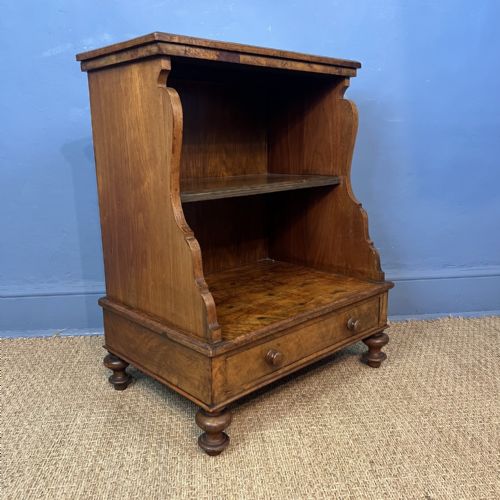
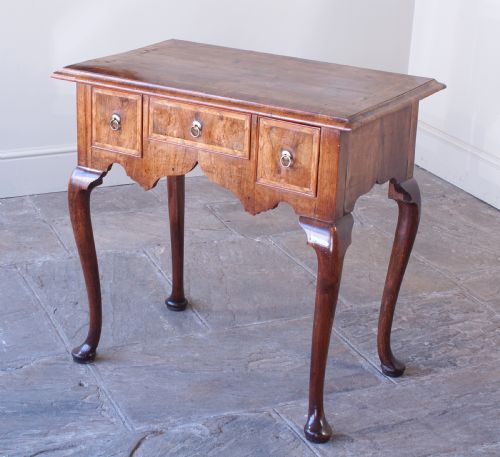

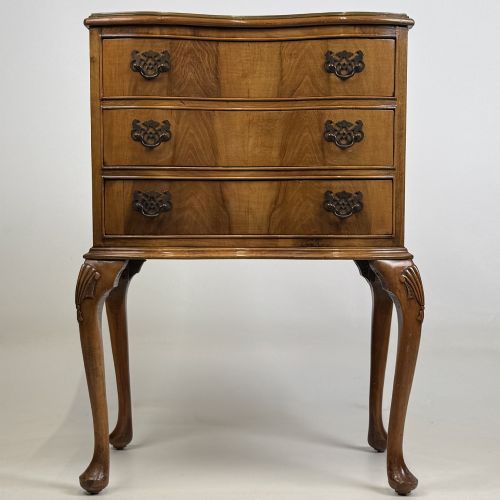
Small Walnut Drawer Table
A small walnut drawer table brings warmth and compact utility to a room, offering practical storage through periods from the eighteenth century to Art Deco.
Small Walnut Drawer Table
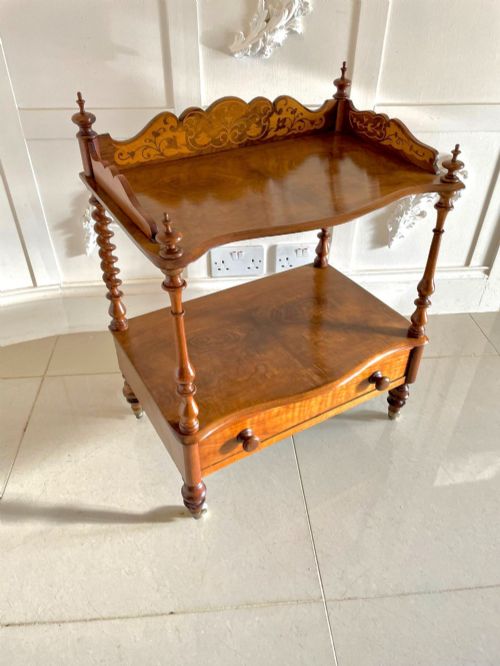
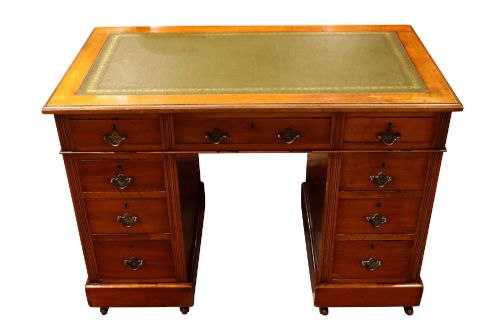
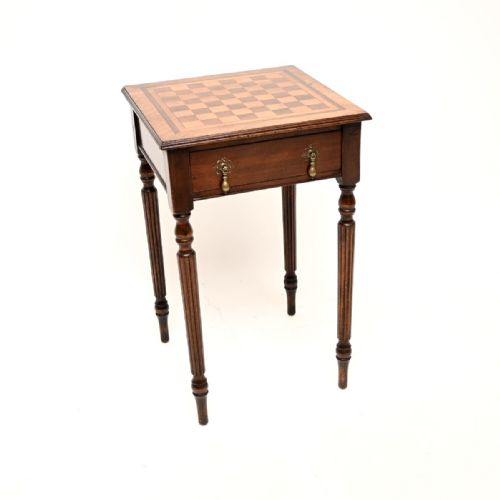
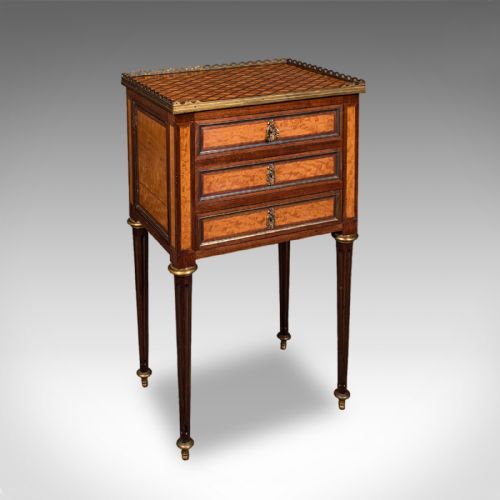
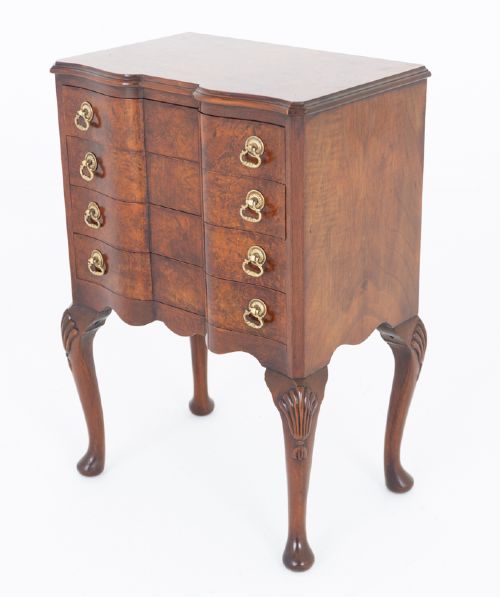
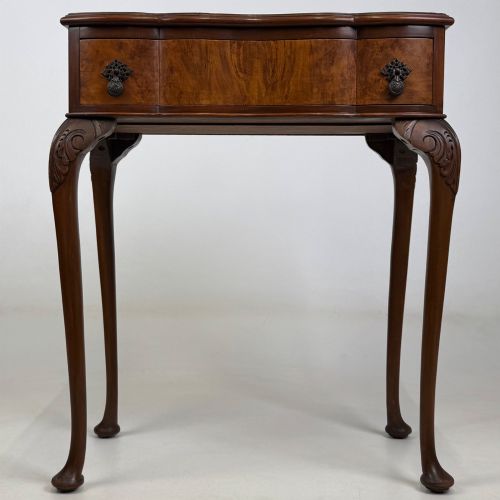
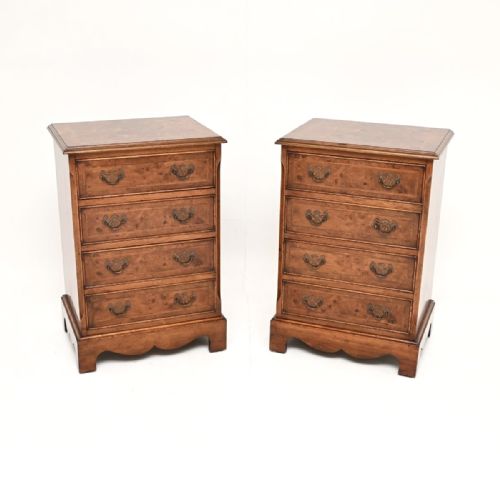
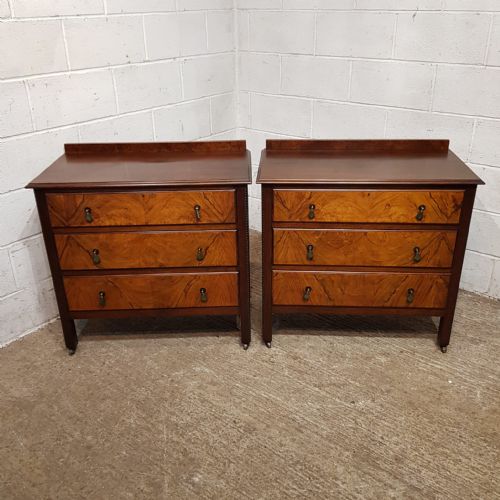
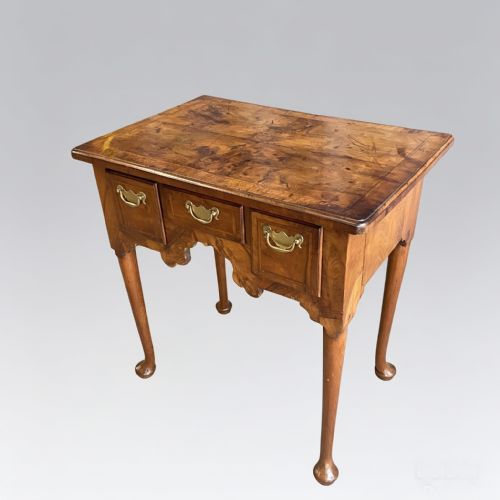
A small walnut drawer table encompasses lowboys, bedside chests, side tables, and compact desks designed for domestic use. The selection spans eighteenth-century pieces through Victorian, Edwardian, and Art Deco examples.
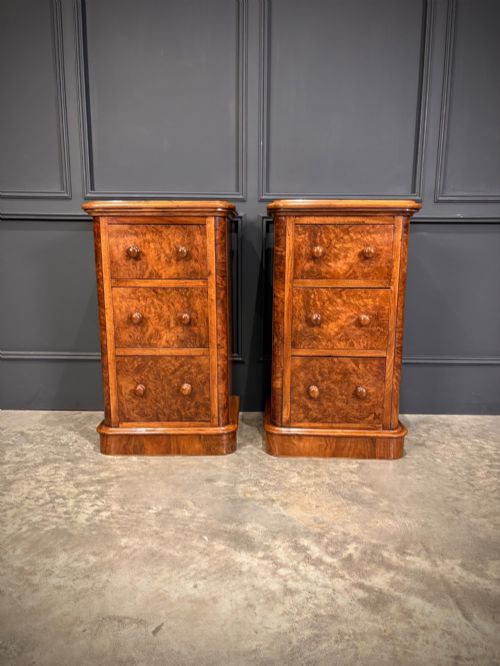
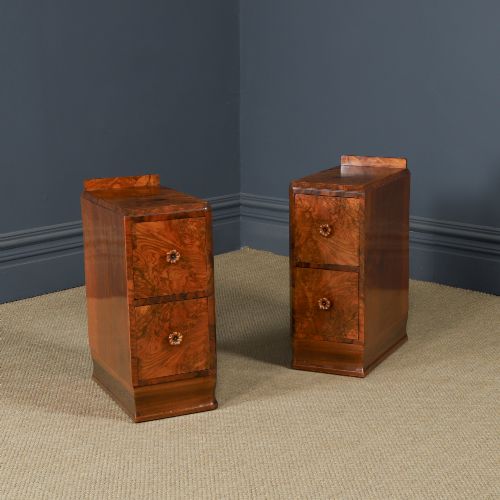
Buyers frequently encounter bedside cabinets and small side tables fitted with drawers, often rendered in burr or figured walnut veneers. These forms serve effectively as lamp tables or nightstands while retaining period character.
How they were made
Cabinet makers utilised solid timber alongside burr walnut, figured walnut, and burl veneers to create richly patterned surfaces on these tables. Brass hardware such as handles, hinges, and occasional military-style corner binding provide structural accent.
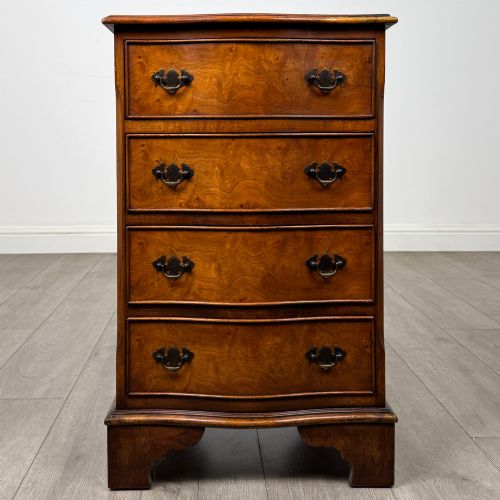
Construction techniques include quartered top assemblies, serpentine fronts, and dovetailed drawer boxes built into compact frames. Secondary timbers support the primary walnut exteriors across the different centuries.
What varies in quality
Quality rests in the selection and matching of the walnut veneers across the top and drawer fronts. Grain patterns that flow seamlessly demonstrate superior craftsmanship during the cutting and laying process.
The crispness of mouldings, the proportion of the legs or base, and the retention of original brass fittings distinguish finer examples from simpler production.
The Small Walnut Drawer Table Glossary
- Burr walnut
- A veneer taken from the wart-like growths on walnut trees, yielding intricate, swirling grain patterns. It requires high skill to lay without splitting.
- Lowboy
- A small seventeenth or eighteenth-century dressing table or side table featuring one or more rows of drawers. They typically stand on slender cabriole or straight legs.
- Serpentine
- A furniture front curving inward in the centre and outward at the ends, or vice versa. This shape demands precise woodworking to follow the contour.
- Bedside locker
- A small enclosed cabinet with a door or drawers, positioned beside a bed for night-time storage. Victorian and Edwardian examples often use burr walnut.
- Drop flap
- A hinged table leaf that lowers to reduce the footprint of the furniture when not in use. It allows versatile placement in smaller rooms.
Small Walnut Drawer Table: Frequently Asked Questions
Where should I place a small walnut drawer table?
These compact tables fit easily beside a bed, next to an armchair as a lamp table, or along a hallway wall. Their drawers provide convenient storage for small items while keeping surfaces clear.
The rich grain of the walnut adds warmth to both traditional and modern interiors without dominating the room.
How do I identify the period of walnut furniture?
Eighteenth-century pieces often feature solid proportions and elements like cabriole legs, while Victorian and Edwardian versions display darker finishes and varied veneer work. Art Deco examples from the 1930s lean into cleaner, streamlined silhouettes.
Examining the construction methods inside the drawers and the style of the hardware helps confirm the era of manufacture.
What is the difference between burr walnut and figured walnut?
Burr walnut comes from tree growths that produce dense, swirling, and circular grain patterns. Figured walnut displays a more natural, rippled wave across the timber.
Both finishes were chosen for high-end decorative surfaces on side tables and chests.
Are these tables suitable for daily use?
Most of these pieces were built for active domestic service as bedside chests, desks, or occasional tables. Solid construction and dovetailed drawers ensure they remain functional.
Routine care involves dusting with a soft cloth and avoiding excessive moisture on the veneered surfaces.