

Traditional Walnut Side Table
A traditional walnut side table brings rich timber grain and classic proportion into a room, serving as a dependable surface for lamps or books.
Traditional Walnut Side Table
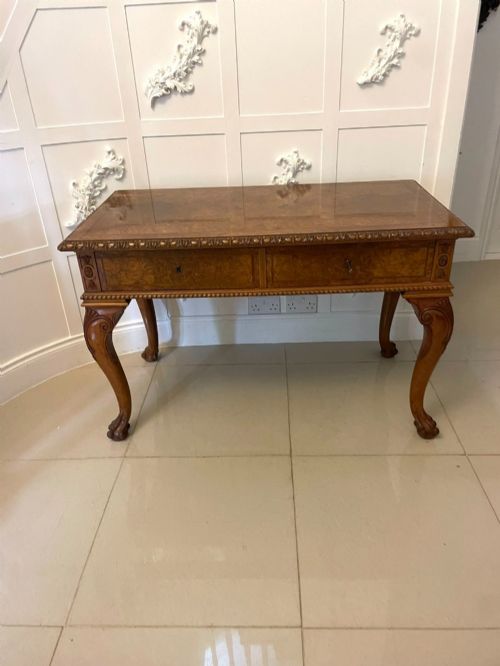
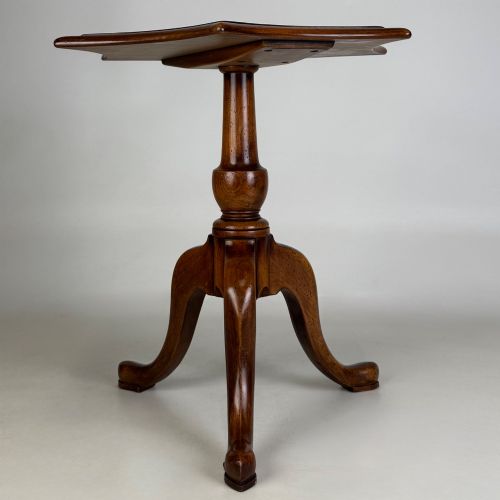
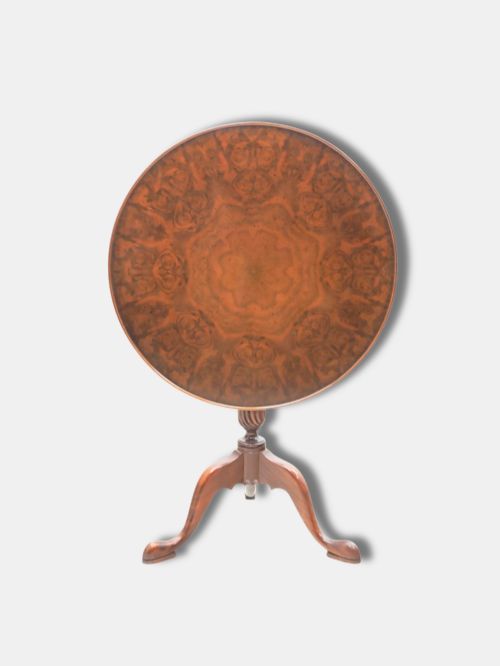
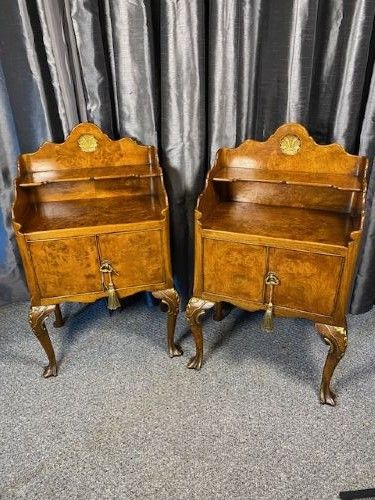
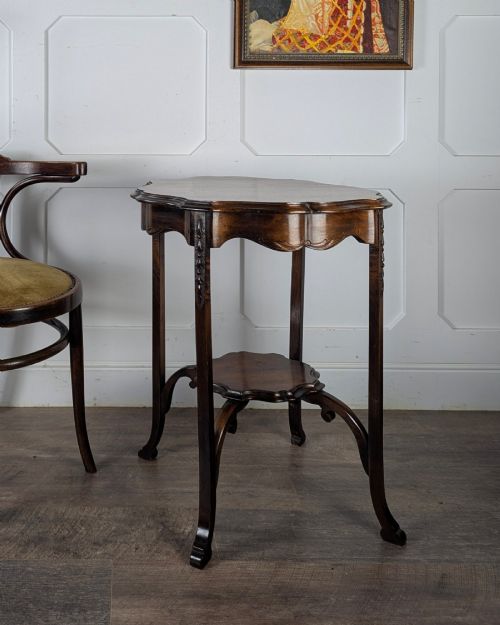
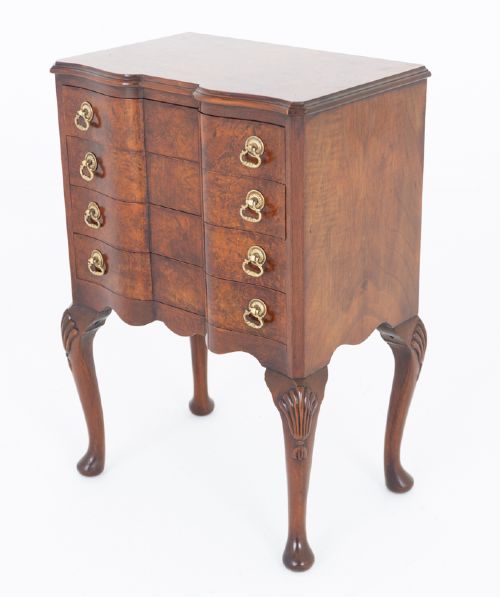
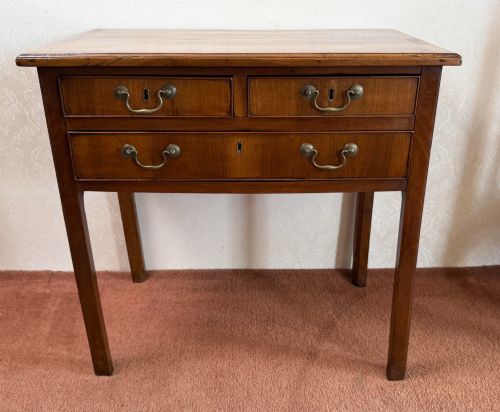
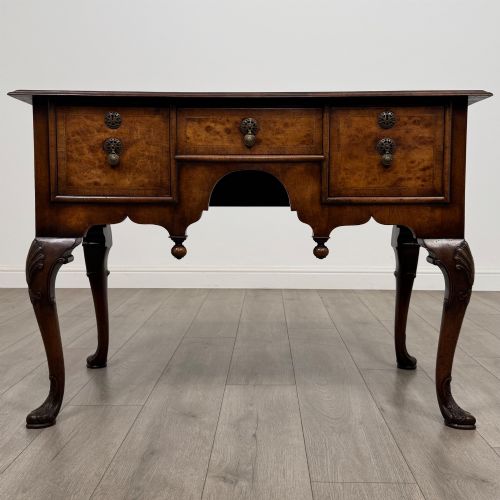
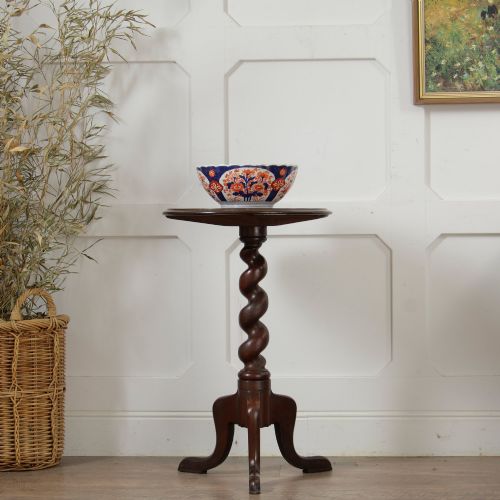
A traditional walnut side table is a compact surface built from timber varieties like plain or burr walnut, appearing in forms such as lowboys, tripod tables, and occasional tables. These pieces draw on design influences from the Georgian, Victorian, and Edwardian eras, alongside Queen Anne style revivals.
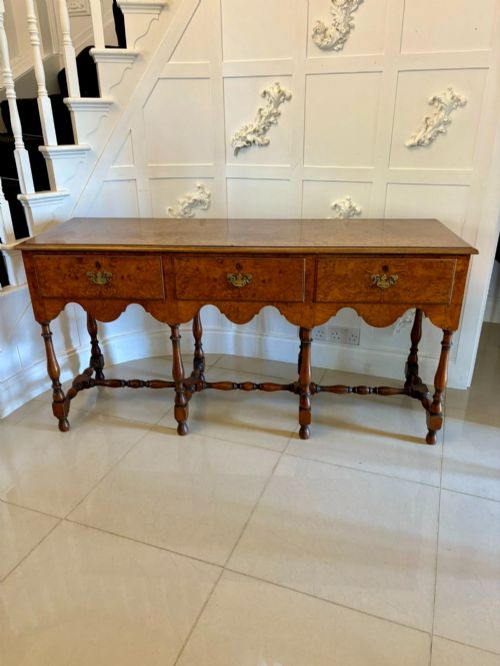
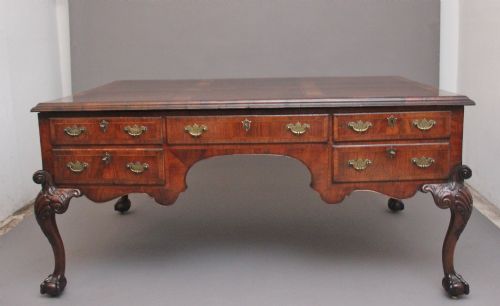
Buyers will most frequently encounter early twentieth-century interpretations, alongside Victorian and nineteenth-century examples, constructed with straightforward rectangular tops or circular surfaces on pedestals. The selection spans simpler occasional items to more decorative lowboys featuring multiple drawers.
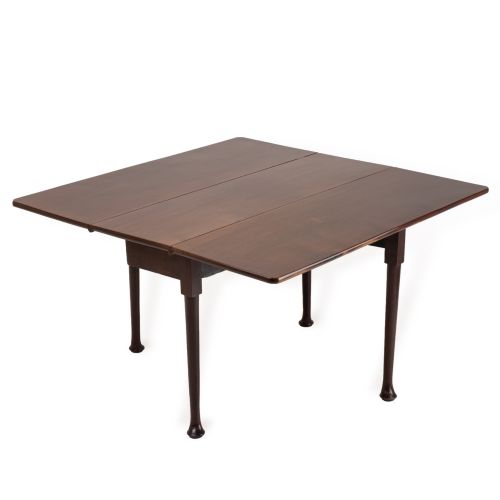
Originating largely from British cabinet-making traditions, these tables often incorporate stylistic touches such as cabriole legs, drop leaves, or gateleg actions. They suit domestic spaces requiring functional wood furniture with historical character.
What varies in quality
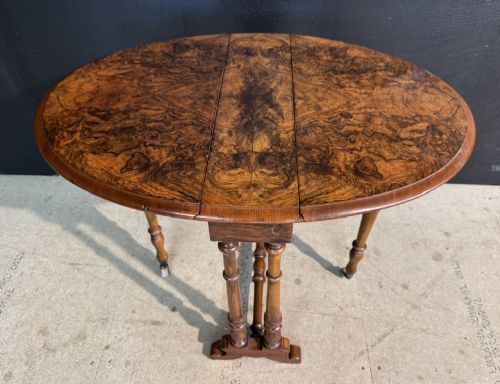
Quality in these tables rests heavily on the choice of timber, particularly the selection and matching of burr walnut veneer across prominent surfaces. Finer examples display lively, well-figured grain patterns that have been carefully laid out by the maker.
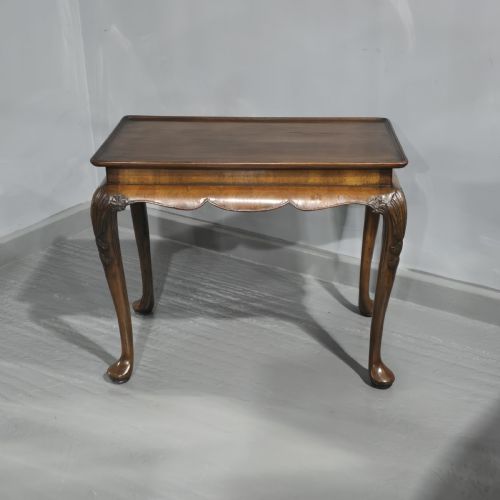
Construction methods and proportions also differentiate tiers of quality, with superior pieces showing refined carving on cabriole legs, crisp edge moulding, and smoothly operating drawers. Lesser examples may exhibit simpler turning, plainer timber selection, or heavier proportions.
Miniature sutherland tables prove that even occasional furniture sometimes suffered from an acute case of shrinking proportions.
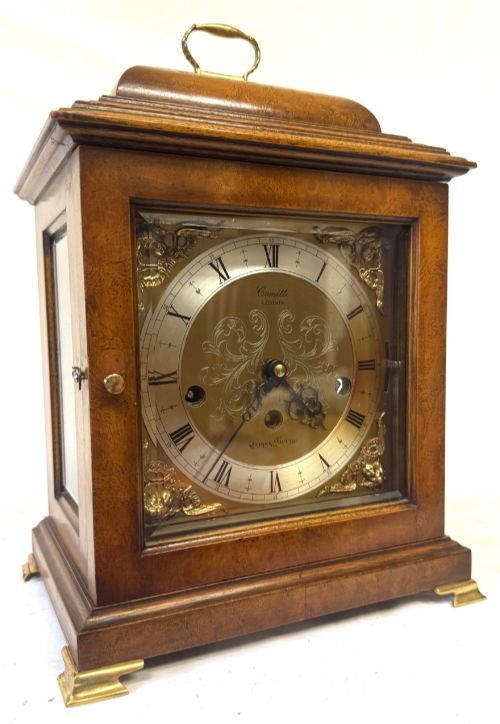
Epstein and Co·Whytock and Reid·Comitti Of London
The Traditional Walnut Side Table Glossary
- Burr walnut
- A decorative timber veneer taken from the wart-like growths on walnut trees, prized for its swirling, intricate grain patterns. It forms the primary visual feature on many tabletops and drawer fronts.
- Lowboy
- A small table with one or more rows of drawers, typically standing on four tall legs. This form originated in the eighteenth century and serves as a dressing table or side table.
- Cabriole leg
- A furniture leg that curves outward and then tapers inward, typically ending in a pad or claw foot. This design is characteristic of Queen Anne style pieces.
- Gateleg table
- A drop-leaf table where hinged legs swing out to support the folded leaves when raised. It provides an adjustable surface area within compact spaces.
- Tripod table
- A small occasional table supported by a central pillar resting on three spreading feet. These tables are usually lightweight and easy to move around a room.
Traditional Walnut Side Table: Frequently Asked Questions
What is a walnut lowboy?
A lowboy is a small table equipped with drawers beneath the tabletop, historically used for storage or personal grooming. In modern settings, it functions well as a compact side table or hall surface.
These pieces typically feature four legs and a rectangular top, showcasing the grain of the walnut timber across the main surface and drawer fronts.
How do I identify Queen Anne style?
Queen Anne style furniture is defined by graceful curved lines, most notably seen in the characteristic cabriole leg and pad foot. Decoration is kept minimal to let the form and timber grain take prominence.
Revival pieces from later periods often emulate these eighteenth-century proportions, combining traditional silhouettes with early twentieth-century manufacturing methods.
Where should I place a side table?
A side table fits naturally beside seating furniture in a living room, or as a bedside surface in a bedroom. Its modest footprint allows it to occupy corners or narrow hallways without crowding the floor space.
When pairing with other furniture, consider the timber tone to ensure the walnut complements existing wood finishes in the room.
Are these tables solid walnut?
Many tables utilise a combination of solid walnut for structural frames and legs, paired with burr walnut veneers applied to flat surfaces like tabletops. Veneering allowed makers to display highly figured grain patterns that solid boards rarely provided.
Secondary timbers such as oak or other native woods occasionally appear in internal components like drawer linings and structural supports.