






Edwardian Style Nesting Tables
Edwardian style nesting tables are practical interlocking sets designed for entertaining, appearing most frequently in mahogany or satinwood across this selection.
Edwardian Style Nesting Tables
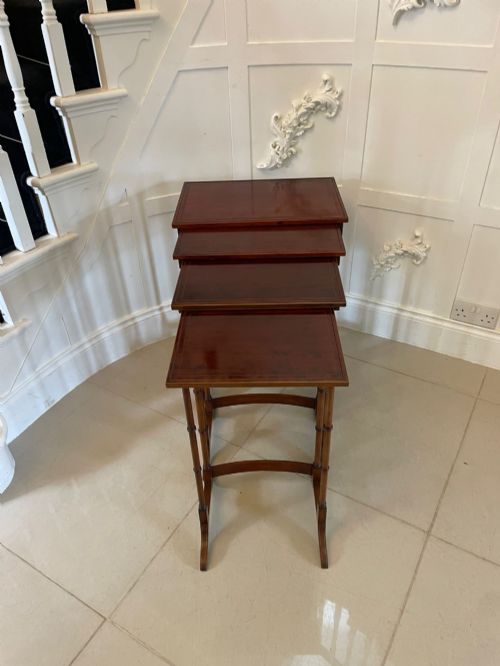
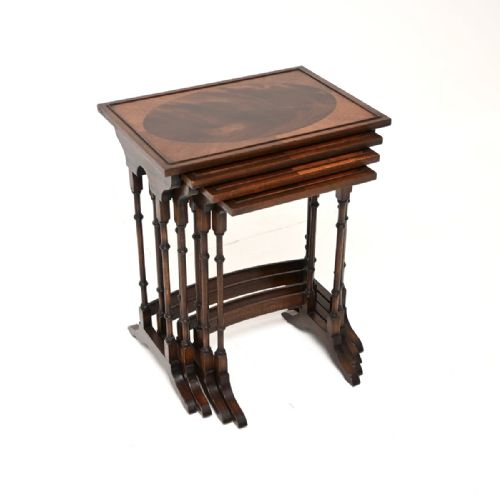
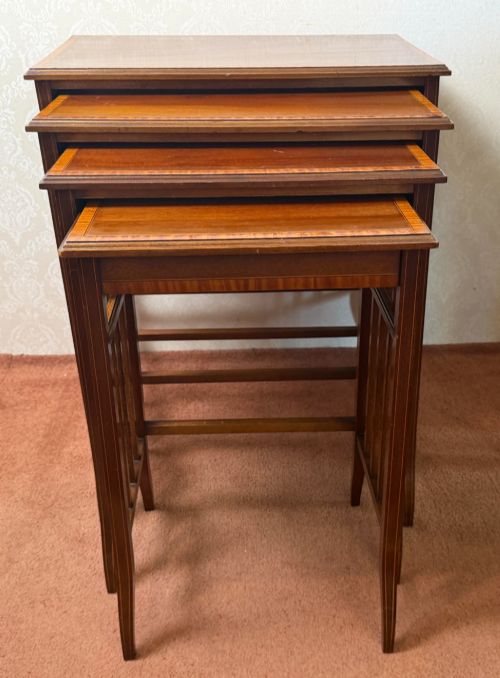
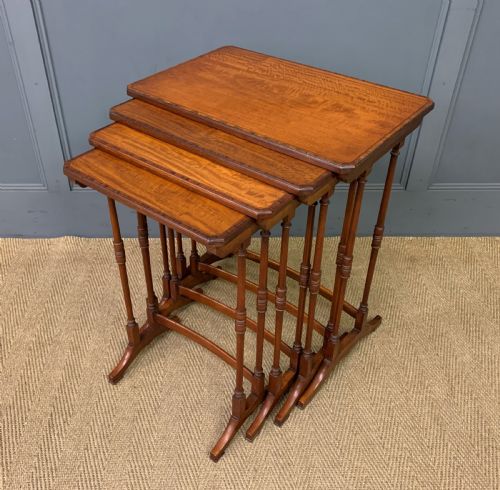
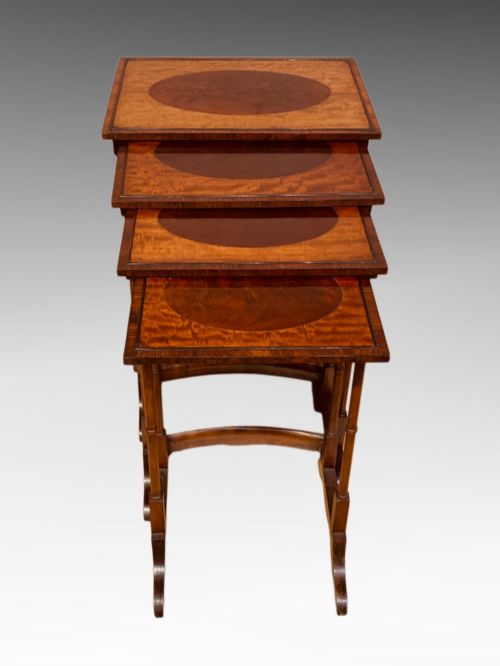
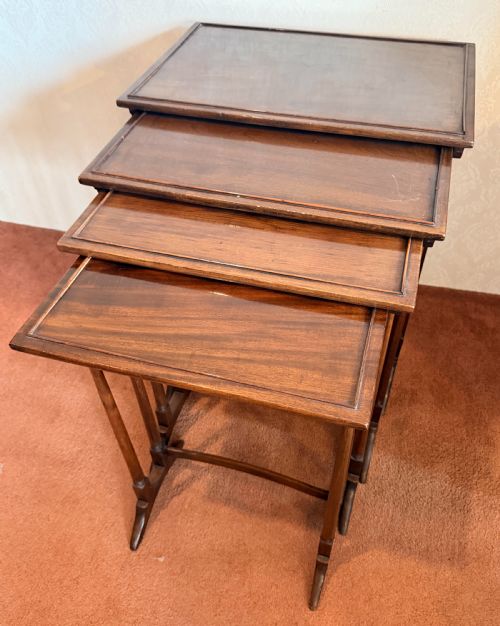
When someone searches for Edwardian style nesting tables, they are looking at sets of matching occasional tables that slide neatly beneath one another to save floor space. The version met most often on this page is the quartetto set of four tables, typically dating from the Edwardian period or the early twentieth century.
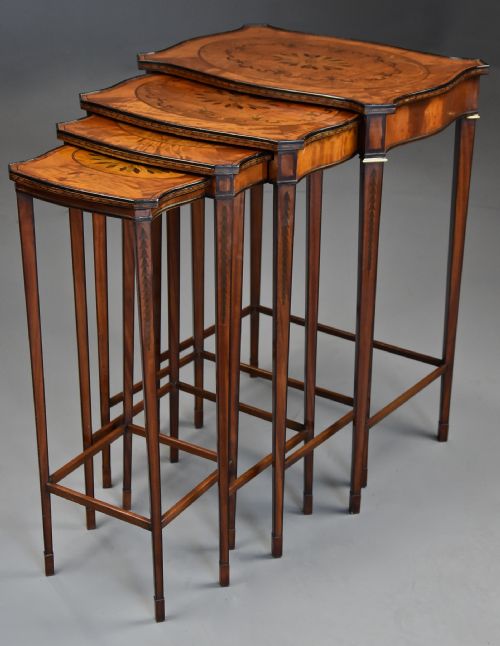
The evidence shows these pieces appearing in various forms, including rectangular, oval, kidney shape, and serpentine designs. Alongside Edwardian pieces, the selection includes examples from the Victorian, Georgian style, and Regency periods, stretching from eighteen eighty into the nineteen thirties.
Makers and workshops utilised specific woods like walnut and lacquer alongside the predominant mahogany and satinwood. These sets function practically as lamp, coffee, wine, or side tables while maintaining a compact footprint when stacked.
Materials and construction methods
Cabinetmakers constructed these tables primarily using solid mahogany, walnut, and satinwood, often enhanced with delicate veneer surfaces. Construction relied on precise sizing so that each smaller table slid smoothly into the frame of the one above it.
Decoration frequently involved boxwood inlay and satinwood cross banding to accentuate the edges of the tops and legs. Some examples incorporated lacquer or gilt painting, pointing to specific stylistic revivals like the Chinoiserie and Sheraton styles.
The listings span eight distinct periods, led by Edwardian and nineteenth-century examples alongside Victorian and nineteen-twenties pieces.
Assessing quality in nesting tables
Quality rests primarily on the crispness of the inlay work and the selection of the timber figures, such as figured mahogany or decorative satinwood grain. Finer examples display meticulous attention to proportion, ensuring the stacked tables sit flush without rocking.
The structural integrity of the legs, whether square tapered or turned, determines how well the set endures daily pulling out and sliding back. Superior pieces maintain tight joints and smooth gliding action across all three or four tables in the nest.
Waring & Gillow·E. Daligny
The Edwardian Style Nesting Tables Glossary
- Quartetto
- A set of four stacking tables designed to fit inside one another. This term appears frequently in descriptions of Edwardian and nineteenth-century nests.
- Satinwood
- A durable, lustrous hardwood with a yellowish sheen used extensively for veneers and decorative banding. Cabinetmakers favoured it for creating contrast against darker mahogany.
- Cross banding
- A decorative border technique where veneer strips are laid perpendicular to the grain of the main table top. It frames the central panel on many Sheraton style pieces.
- Parquetry
- Geometric mosaic woodwork formed by small pieces of timber fitted together to create patterned table tops. This technique appears on walnut occasional tables in the collection.
- Serpentine
- A gently undulating curved line forming the edge of a table top. This shape requires skilled woodworking to achieve graceful proportion.
Edwardian Style Nesting Tables: Frequently Asked Questions
What is a quartetto nest of tables?
A quartetto nest consists of four tables that descend in size so the smaller ones slide entirely beneath the largest. This design originated to maximise space in drawing rooms and parlours.
Cabinetmakers built them to serve multiple guests during tea or card games without cluttering the room when not in use.
How do I date an Edwardian nesting table?
Dating relies on stylistic markers, wood choices, and construction techniques recorded across the period headings from eighteen eighty to nineteen thirty. Edwardian pieces often feature lighter satinwood finishes and refined boxwood stringing.
Earlier Victorian examples tend to use heavier mahogany timbers, while later nineteen-twenties pieces sometimes adopt broader Georgian revival proportions.
Were these tables used as coffee tables originally?
Historically, these pieces functioned as occasional, lamp, wine, or side tables rather than low coffee tables. Victorians and Edwardians moved them around the room as needed for holding drinks or small lamps.
Modern living habits have adapted them to serve in front of sofas, taking advantage of their tiered heights.
What woods were commonly used?
Mahogany forms the majority of the frames and tops seen in these listings, often paired with contrasting satinwood veneer. Boxwood inlay and walnut also appear regularly across the different regional styles.
Specialist pieces occasionally incorporate lacquer finishes or painted gilt decoration to achieve specific decorative effects.
How do I care for inlaid table tops?
Care involves keeping the wood away from direct heat sources and strong sunlight that can dry out delicate veneers. Regular polishing with a traditional wax maintains the lustre of the mahogany and satinwood surfaces.
Avoiding moisture on the boxwood inlay prevents lifting or staining of the fine stringing lines.