


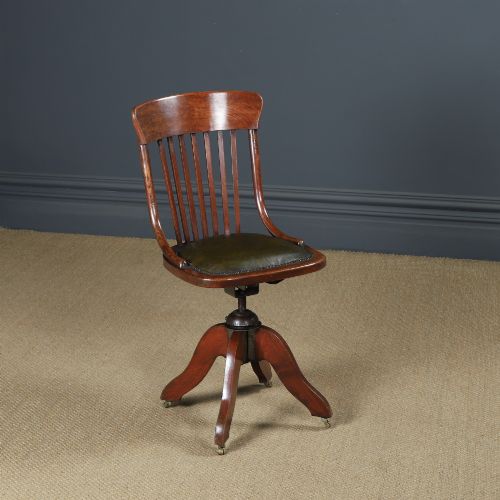
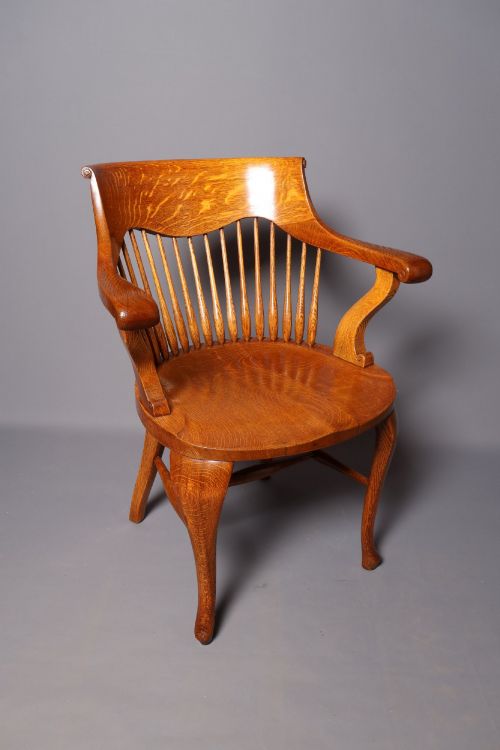
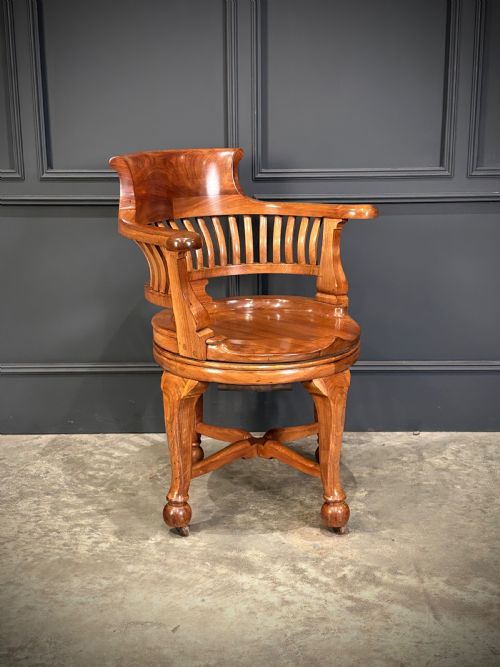
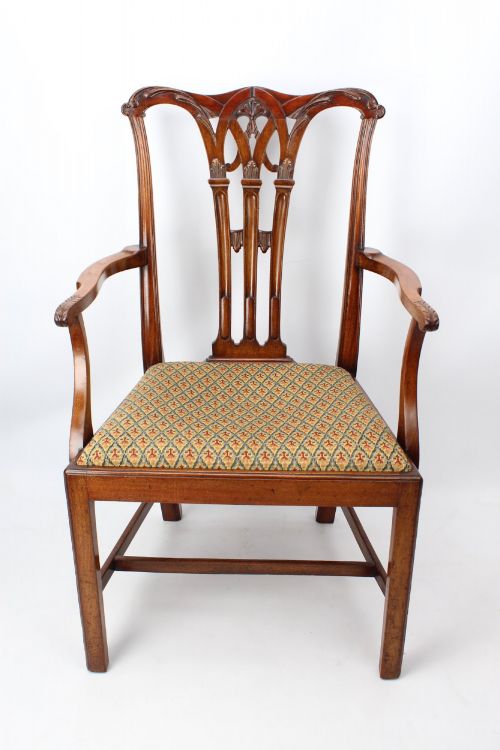

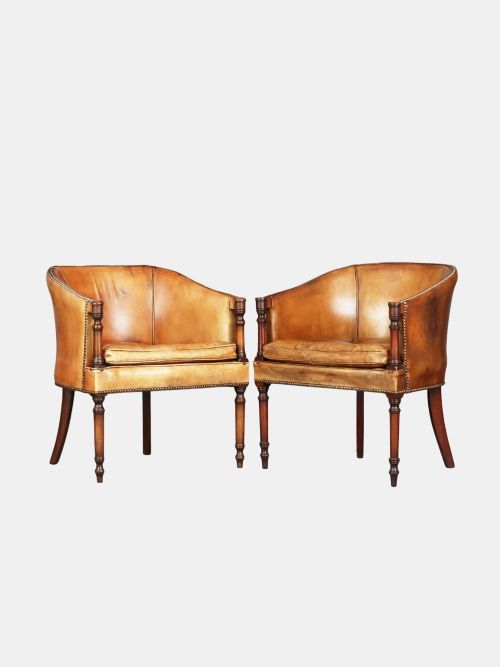


Edwardian Study Chair
An edwardian study chair brings practical comfort and refined timber craft to the home workspace, designed for long hours at a writing table.
Edwardian Study Chair
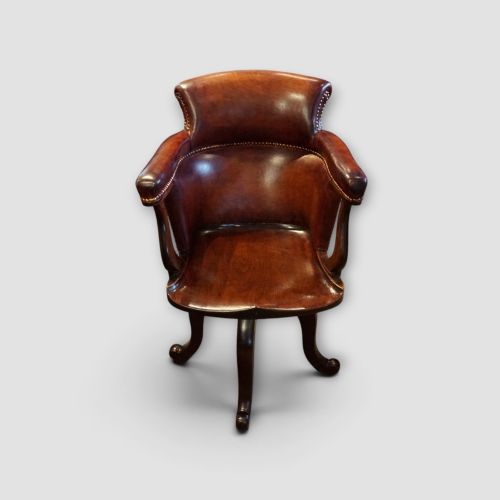
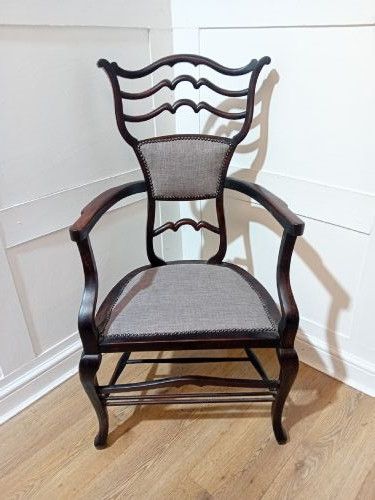
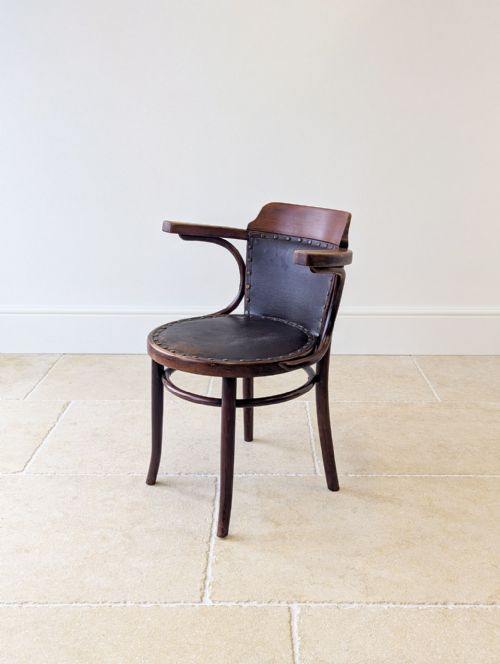
When you search for an edwardian study chair, you encounter sturdy timber seating designed specifically for administrative work or writing. The pieces on this page span the Edwardian period alongside late Victorian and George V examples, reflecting a continuity in office and library seating.
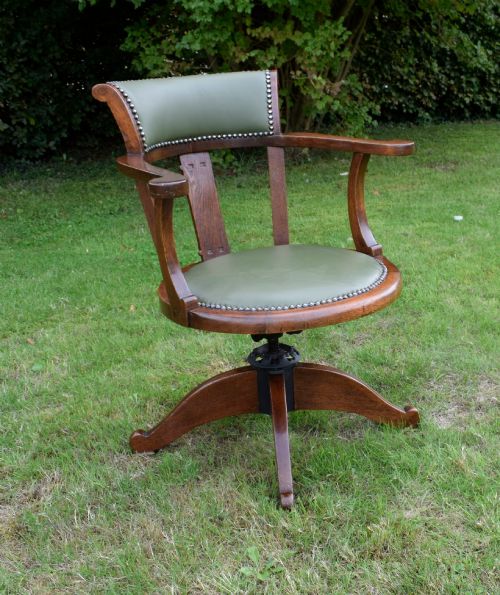
Most entries take the form of desk chairs, armchairs, and swivel chairs intended for practical daily use. Mahogany and oak dominate the selection, often paired with leather upholstery or cane work.
While the Edwardian era provides the core of these items, earlier influences from the nineteenth century appear through revival styles like Chippendale, Jacobean, and Gothic. These pieces combine period aesthetics with the ergonomic requirements of a working room.
Materials and Construction
Makers utilised dense timbers such as mahogany, oak, walnut, and beech to build frames capable of withstanding constant movement and weight. Joinery relied on traditional methods to secure high-stress joints, particularly where arms and swivelling bases attach to the seat.
Upholstery materials typically include leather, hide, and fabric, fixed to the frame with brass tacks or studs. Caned panels also appear frequently, providing a lighter decorative texture to the backrests and seats of library armchairs.
Swivel mechanisms on early twentieth-century examples incorporate iron and brass components to allow rotation and adjustable height. These functional elements merge industrial hardware with polished timber frames.
Several chairs include revolving bases that let busy clerks spin in circles long before modern desk chairs arrived.
Distinction in Craft
The distinction between standard utility seating and finer workshop production lies in the handling of timber and the complexity of the timber turning. Superior examples display carefully selected grain patterns and hand-carved details on the splats and arm supports.
Hardware integration separates basic office chairs from bespoke library seating. Smooth mechanical action in swivel variants and substantial gauge brass fittings indicate higher original manufacture.
The integrity of the upholstery foundation, whether hand-stitched leather or woven cane, dictates the longevity and physical refinement of the piece.
Kendrick & Jefferson·Shoolbred
The Edwardian Study Chair Glossary
- Bergère
- An upholstered armchair with enclosed cane work sides and back. This French style offers a lighter visual weight while maintaining structural rigidity in a library setting.
- Captain's Chair
- A sturdy wooden armchair with a rounded low back resting on spindle supports above a wide seat. Originally designed for ships and offices, it provides wrap-around lumbar support.
- Smoker's Bow
- A low-backed wooden Windsor armchair featuring a continuous curved arm rail. It serves as a comfortable, compact seat for reading and writing desks.
- Swivel Chair
- A seat mounted on a central pivoting spindle or base mechanism. This adaptation allowed nineteenth and twentieth-century workers to access different parts of a large desk without moving the entire frame.
Edwardian Study Chair: Frequently Asked Questions
How do I use one today?
These chairs function effectively as desk seating in modern home offices or as reading chairs in libraries. Their sturdy wooden frames and leather pads suit daily tasks.
Positioning them at a standard writing table allows you to appreciate their original purpose while adding period character to a room.
Can I adjust the height?
Certain models feature mechanical swivel bases with threaded iron spindles that raise or lower the seat. These early adjustment mechanisms allow you to set a comfortable working height.
Stationary models with fixed wooden legs do not offer height adjustment, so checking the seat dimensions against your desk is essential.
How do I identify the period?
Identifying the period involves examining the timber selection, hardware, and stylistic revival cues. Edwardian examples often feature lighter mahogany frames and subtle Edwardian Empire or Arts and Crafts details.
Earlier nineteenth-century pieces display heavier oak construction, Gothic Revival elements, or simpler Victorian turning patterns.