
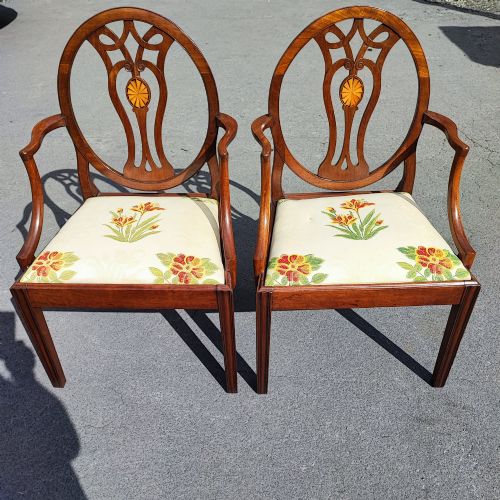
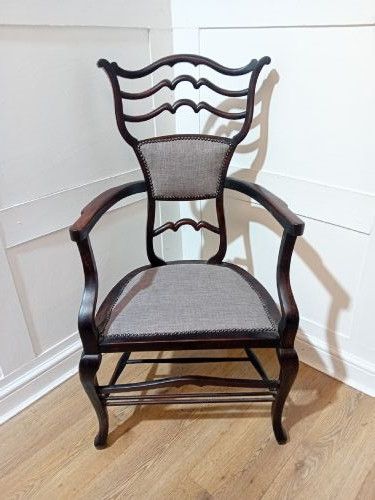
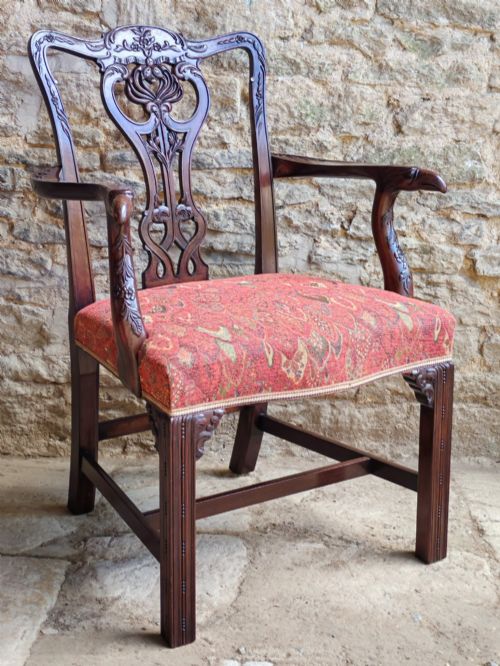
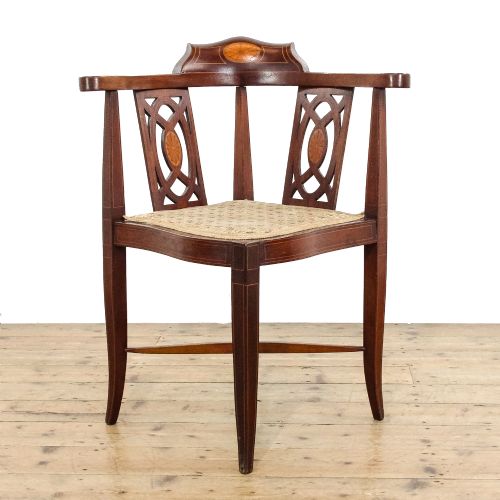


Edwardian Mahogany Elbow Chair
When you search for an edwardian mahogany elbow chair, you seek a refined seat that balances utility with the grace of revivalist cabinetmaking.
Edwardian Mahogany Elbow Chair
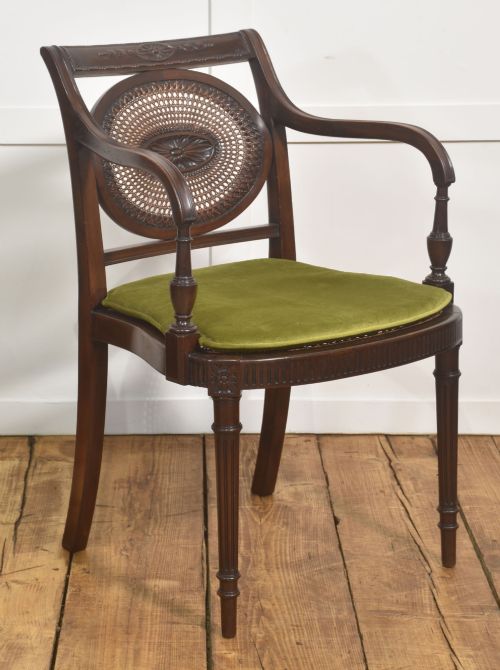
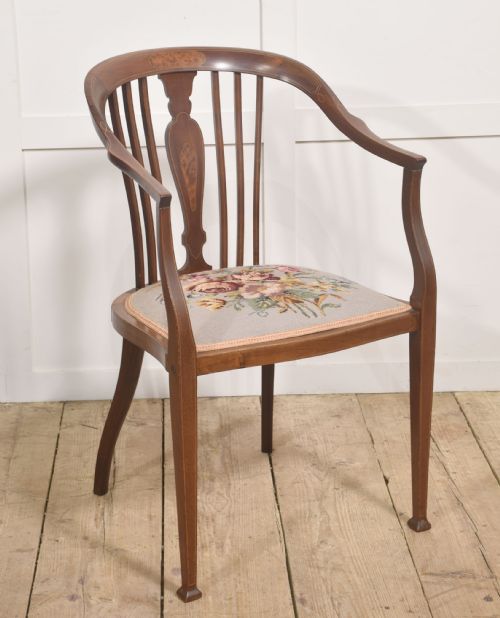
An edwardian mahogany elbow chair is a versatile seating form designed for the library, desk, or parlour, predominantly originating from the late nineteenth and early twentieth centuries. These pieces frequently draw upon earlier design vocabularies, presenting a lighter, more delicate interpretation of eighteenth-century aesthetics.
The most common examples encountered on this page date from the Edwardian period itself, alongside related pieces from the late Victorian era and the early twentieth century. They manifest in various specialised forms, including library armchairs, desk chairs, corner chairs, and salon carvers.
Makers of the period often employed revival styles such as Sheraton, Chippendale, and Regency, adapting historic proportions for contemporary domestic comfort. Upholstery varies widely, incorporating leather, velvet, fabric, and cane to suit the specific room for which the chair was intended.
How they were made
The construction relies fundamentally on solid mahogany timbers, frequently augmented by decorative wood inlay and satinwood banding to create crisp surface contrast. Joinery is typically concealed and robust, ensuring structural integrity in chairs subject to daily use at a desk or in a morning room.
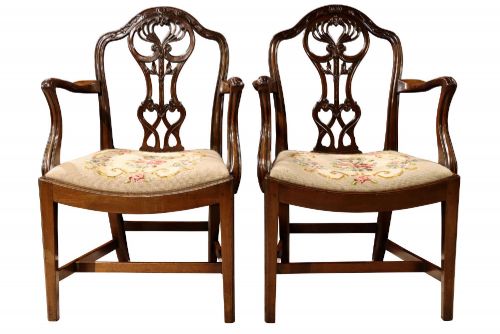
Many examples incorporate marquetry or intricate carving along the splats and arms, reflecting the revivalist tastes of Edwardian workshops. Upholstered variants utilise traditional stuffing methods beneath coverings of leather, velvet, or woven fabric, often secured with brass tacking.
Listings feature mahogany combined with satinwood, brass, leather, and fabric across Edwardian, Victorian, and Georgian revival styles.
What varies in quality
The distinction between standard commercial production and finer work lies in the crispness of the carving, the precision of the wood inlay, and the selection of figured mahogany. Superior pieces exhibit harmonious proportions and thoughtful detailing, such as pierced splats or sophisticated X-frame supports, rather than mechanical repetition.
Maker attribution elevates desirability, particularly when items bear the mark of established firms known for high-grade upholstery and cabinetwork. The integrity of the original timber and the retention of period upholstery materials further separate ordinary examples from exceptional survivals.
Howard and Sons·Waring and Gillow·Shoolbred·Jenks and Wood
The Edwardian Mahogany Elbow Chair Glossary
- Marquetry
- The art of applying decorative pieces of veneer to a structure to form intricate pictorial or geometric patterns. It appears frequently on the backsplats and rails of inlaid seating.
- Satinwood
- A pale, lustrous exotic timber utilised extensively for contrasting stringing and marquetry inlay on darker mahogany grounds. It highlights the refined aesthetic favoured by Sheraton revivalists.
- Splat
- The vertical central strip of wood in the back of a chair, often pierced, carved, or inlaid in revival designs. Its execution indicates the level of craftsmanship invested in the piece.
- Tub chair
- A form of upholstered seating where the arms curve continuously into a rounded back, enclosing the sitter. These provide a deep, enveloping seat popular in studies and bedrooms.
Edwardian Mahogany Elbow Chair: Frequently Asked Questions
What defines an elbow chair?
An elbow chair is an armchair featuring shorter arms designed specifically to support the elbows while allowing the sitter to draw closer to a table or desk.
These pieces bridge the gap between heavy armchairs and light side chairs, making them adaptable for multiple rooms.
How do I spot Sheraton revival style?
Sheraton revival pieces display clean, straight lines, tapered legs, and delicate contrasting wood inlay such as satinwood banding. The influence draws directly from late eighteenth-century neoclassical furniture.
Such designs avoid heavy carving in favour of balanced geometry and refined surface decoration.
Where were these chairs used?
They served primarily in studies as desk chairs, in libraries for reading, or in drawing rooms as occasional seating. Their lighter frames allowed them to be moved easily about the home.
Corner variants often occupied unused junctions in hallways or morning rooms, offering an inviting secondary seat.
Are upholstered seats original?
Many chairs retain period upholstery or have been recovered in traditional materials like leather, velvet, or woven fabric. Inspecting the webbing and stuffing helps determine the age of the covering.
Revival pieces frequently embraced diverse textiles to match contemporary interior decoration schemes.