



Edwardian Sterling Mantel Clock
These edwardian sterling mantel clock pieces bring remarkable silver craftsmanship and period charm to any mantelpiece.
Edwardian Sterling Mantel Clock
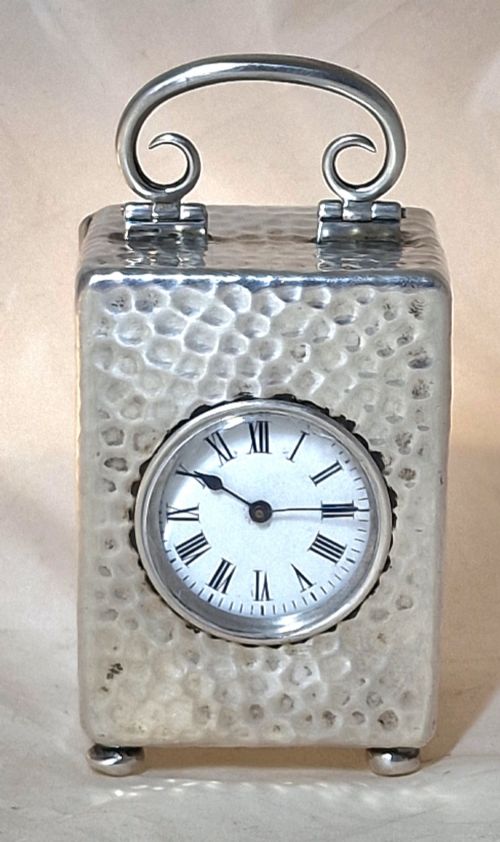
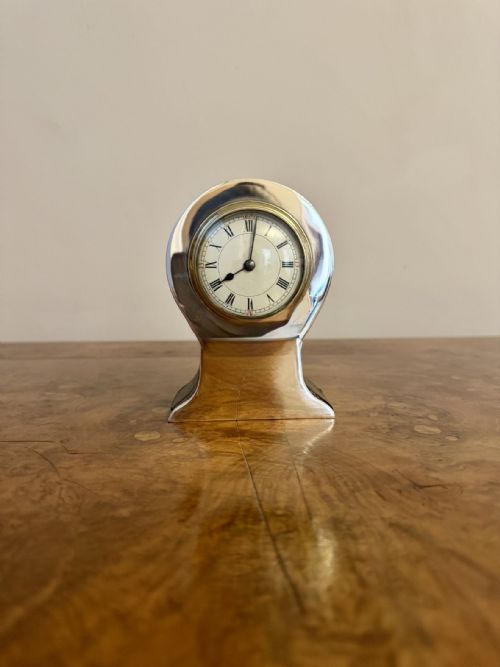
The versions you are most likely to meet on this page span the Edwardian period alongside dates from eighteen ninety to nineteen fifteen. Many examples take the form of miniature carriage clocks whilst others present bolder proportions or distinctive stylistic influences.
Makers and designers of the era incorporated various artistic movements into their work, resulting in pieces reflecting Arts and Crafts simplicity or flowing Art Nouveau curves. Each object combines mechanical timekeeping with the decorative sensibilities of its generation.
How they were made
Silversmiths utilised solid sterling silver and hallmarked silver for the exterior cases, often hammering the metal or shaping it into architectural housings for the clock movements. Front panels and bezels frequently framed glass windows that revealed the interior mechanics.
Artisans applied decorative finishes such as floral enamel and guilloche enamel to add colour and texture to the silver framework. Some workshops also integrated materials like tortoiseshell, brass, and wood into the overall design of the timepiece.
Edwardian Sterling Mantel Clock Retail Price Guide 2026
Typical asking prices for edwardian sterling mantel clock among the pieces listed under this phrase on Sellingantiques today, from the lower quarter to the upper quarter. They describe what is for sale here now, not the wider market.
Listings feature Edwardian pieces alongside items dated from eighteen ninety up to nineteen fifteen, spanning the Edwardian, Art Nouveau, and Arts and Crafts styles.
Assessing quality
The distinction between standard examples and the finest pieces rests upon the crispness of the silver hallmarking and the complexity of the case construction. Hand-hammered surfaces and intricate enamel work demand higher levels of artisan skill than plain polished metal.
Detailing on the dial and the inclusion of specialist decorative elements like guilloche enamel elevate the visual presence of a timepiece. Furthermore, the overall weight of the solid sterling silver and the retention of original glass panels influence the character of the object.
William Comyns·Henry Matthews·Liberty's London
The Edwardian Sterling Mantel Clock Glossary
- Carriage clock
- A portable spring-driven timepiece originally designed for travelling during the nineteenth and twentieth centuries. These clocks typically feature a rectangular brass or silver frame fitted with glass panels.
- Guilloche enamel
- A decorative technique where a precise geometric pattern is mechanically engraved beneath a translucent layer of enamel. This process creates a shimmering depth of colour on the silver surface.
- Hallmark
- An official stamp applied to precious metals indicating the standard of purity, the assay office, and the date letter. English silver hallmarks provide reliable chronological markers for dating.
- Timepiece
- A clock that measures and indicates the passage of time without a striking mechanism. Many smaller boudoir clocks operate purely as timepieces.
Edwardian Sterling Mantel Clock: Frequently Asked Questions
What is an edwardian sterling mantel clock?
An edwardian sterling mantel clock is a portable or stationary timepiece housed in a hallmarked silver case produced in the early twentieth century.
These pieces range from small carriage clocks to boudoir timepieces incorporating decorative glass and enamel panels.
How were these silver clocks used?
Original owners placed these clocks on mantelpieces, desks, and boudoir tables to track time in private rooms.
Because many were built as carriage clocks, their portable nature allowed users to move them between rooms or pack them for travel.
How do I live with an edwardian sterling mantel clock?
Living with these silver timepieces involves placing them in stable environments away from direct sunlight and excessive moisture to protect the enamel and silver.
Routine dusting with a soft cloth maintains the finish of the metal without harming the delicate glass panels.
How can I tell periods apart?
You can distinguish periods by examining the hallmarks stamped into the silver and observing stylistic cues such as flowing Art Nouveau lines or robust Arts and Crafts hammering.
Design motifs and materials often reflect the shifting aesthetic preferences between eighteen ninety and nineteen fifteen.