



Edwardian Square Tea Table
An edwardian square tea table brings versatile elegance to a sitting room, offering a neat surface that folds or expands with quiet ingenuity.
Edwardian Square Tea Table
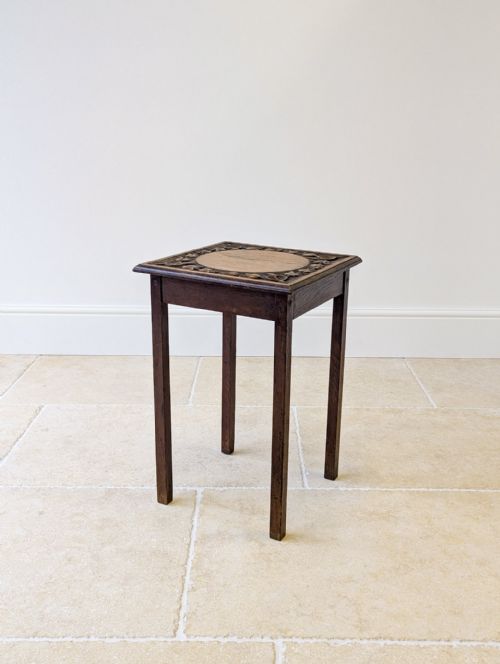
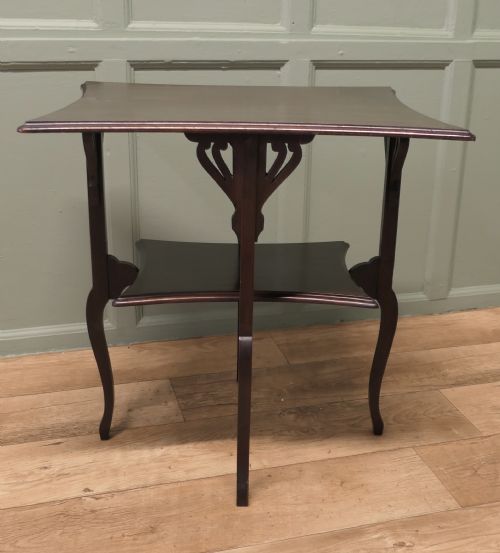
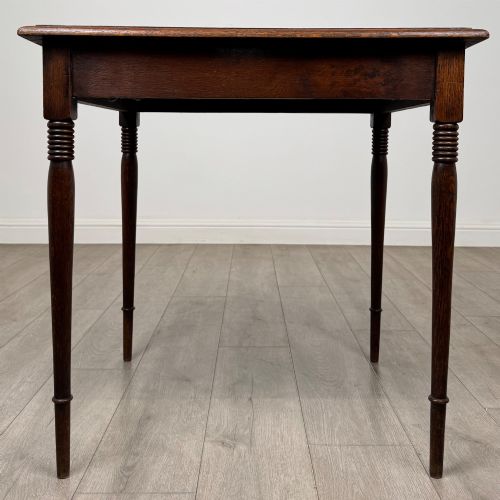
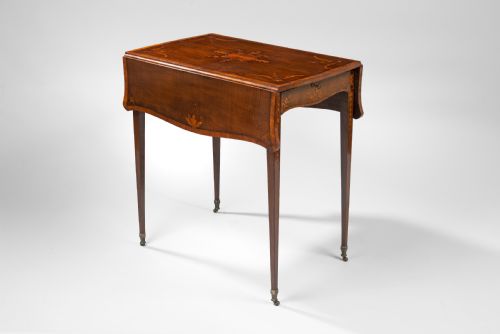
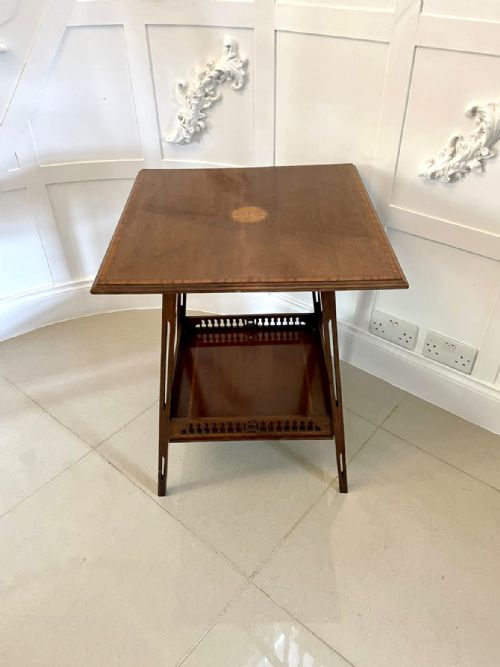
An edwardian square tea table represents a practical form of household furniture designed for hospitality and display during the early twentieth century. These pieces emerge predominantly in mahogany, frequently enriched with satinwood inlay or marquetry details that reflect historical revivalism.
The selection here encompasses various formats, from envelope card tables to folding flap tables and static occasional pieces. While the strict dates span from the late nineteenth century into the 1920s, the predominant aesthetic remains firmly rooted in the Edwardian era.
Materials and construction
Cabinetmakers constructed these tables using solid timbers such as mahogany and oak, often applying delicate veneers and contrasting stringing in boxwood, satinwood, and harewood. Inlay work was executed by hand, inserting thin slices of wood into precision-cut recesses to form floral or geometric motifs.
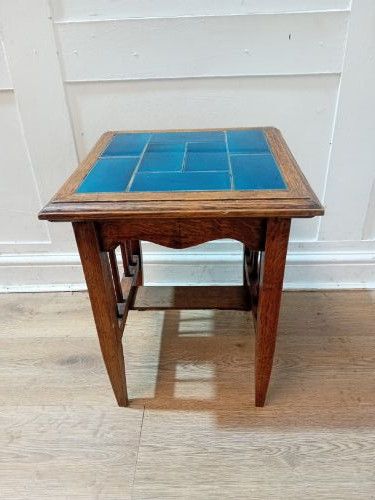
Structural joints relied upon traditional mortise and tenon techniques, whilst folding mechanisms utilised brass hinges and pivoting leaves to ensure smooth daily operation. Selected examples integrate ceramic tiles or carved detailing into the wooden framework for added visual texture.
Edwardian Square Tea Table Retail Price Guide 2026
Typical asking prices for edwardian square tea table among the pieces listed under this phrase on Sellingantiques today, from the lower quarter to the upper quarter. They describe what is for sale here now, not the wider market.
Listings feature mahogany, satinwood, oak, and harewood, alongside unusual variations incorporating ceramic tiles and rustic painted finishes.
Judgments of quality
Quality rests upon the crispness of the timber grain, the precision of the inlay work, and the structural integrity of the folding mechanisms. Superior examples display seamless mitres and tight joints where leaves meet, whereas simpler iterations rely on painted decoration rather than intricate marquetry.
The choice of secondary woods and the depth of the hand-polished finish distinguish workshop standards. A heavier investment of time by the original cabinetmaker reveals itself in balanced proportions and harmonious contrasts between the primary mahogany and lighter stringing.
The Edwardian Square Tea Table Glossary
- Marquetry
- Decorative veneer patterns assembled from various coloured woods to form pictorial or geometric designs. This technique demands immense precision from the artisan.
- Envelope table
- A square card table featuring four triangular folding flaps that swivel open to reveal a baize-lined surface. The mechanism operates through a clever pivoting action.
- Stringing
- Narrow inlaid lines of contrasting timber used to outline panels, drawers, or table tops. It accentuates the geometric lines of the piece.
- Harewood
- Sycamore wood stained grey using iron salts, frequently utilised in eighteenth-century and revival marquetry. It provides a cool, distinctive silvery tone.
Edwardian Square Tea Table: Frequently Asked Questions
How do I use an envelope table?
The top comprises four triangular flaps hinged diagonally across the centre. Lifting one flap causes the remaining three to unfold simultaneously into position.
Beneath this clever mechanism lies a hidden compartment or green baize playing surface designed for card games.
Where should I place this table?
These compact pieces fit comfortably beside a sofa or in the corner of a reception room as a lamp or display stand. Their finished backs and polished surfaces allow them to sit away from walls.
Folding versions adapt easily when guests arrive and extra surface area becomes necessary.
How do I date an Edwardian piece?
Examination of the internal secondary woods, screw types, and construction methods reveals the period of manufacture. Edwardian furniture often combines machine precision with hand-finishing techniques typical of the early twentieth century.
Revival styles draw heavily upon eighteenth-century Sheraton and Hepplewhite designs while retaining later structural traits.
Are these tables sturdy enough for daily use?
Solid mahogany and oak frames provide robust support for regular household tasks. Well-fitted joints and sound legs ensure stability under normal conditions.
Care should be taken with folding leaves and pivoting mechanisms to prevent undue strain on the brass hinges.