





Edwardian Slat Back Chairs
Edwardian slat back chairs combine sturdy timber construction with straightforward joinery, offering practical seating for dining rooms and offices alike.
Edwardian Slat Back Chairs
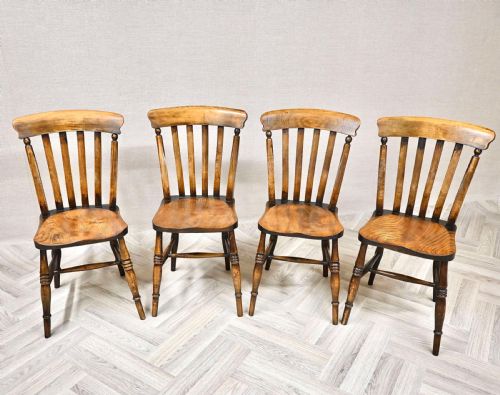
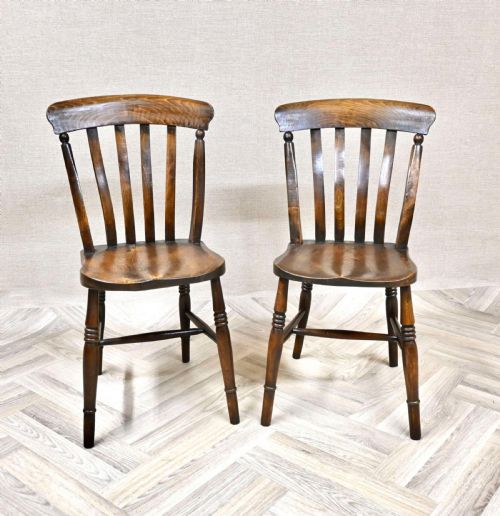
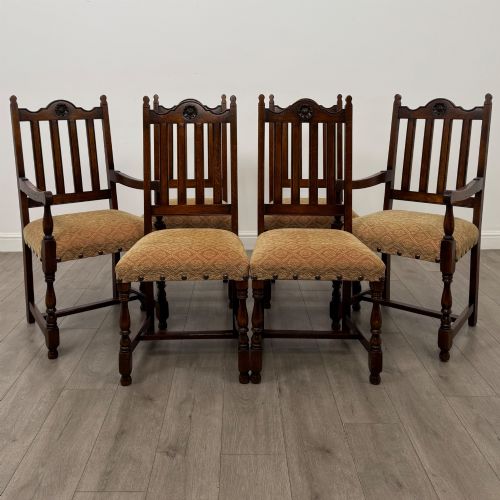
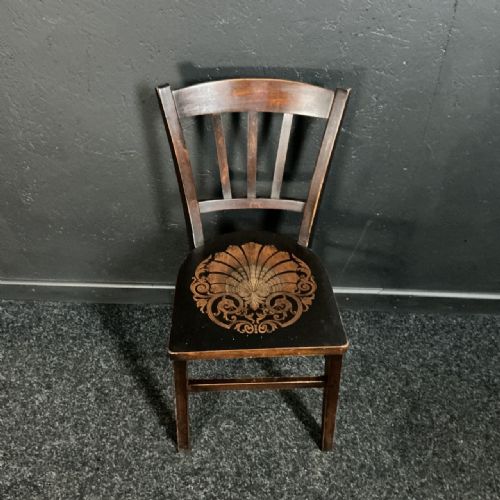
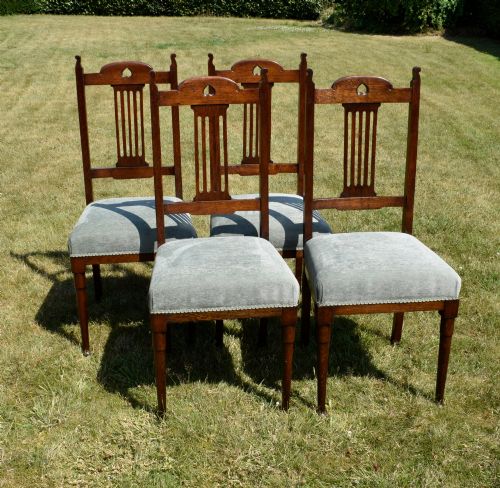
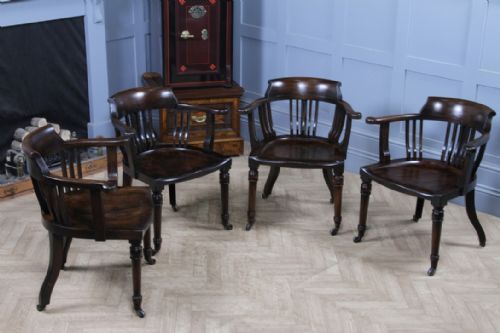
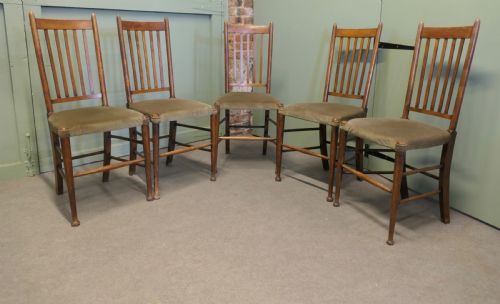
When you examine edwardian slat back chairs, you encounter seating designed primarily for daily utility in dining rooms, studies, and offices. The selection spans single side chairs, matched dining sets, and supportive armchairs.
Most examples you meet originate from the early twentieth century, drawing heavily on preceding nineteenth-century country and revival traditions. Makers utilised robust domestic timbers to create functional forms suited to domestic and commercial interiors.
How They Were Made
Carpenters constructed these seats using hardwoods such as oak, beech, mahogany, ash, and elm, often securing joints with traditional pegs and dowels. Upholstered variants incorporated fabric, leather, or velvet drop-in pads supported by stretchers.
Turned components like barley twist legs and curved bentwood elements appear alongside flat timber slats. Workshops also applied brass hardware and delicate inlay work to finer parlour and desk models.
Children managed to sit in style too, thanks to miniature elm chairs produced in High Wycombe during the early twentieth century.
What Varies in Quality
Quality rests on the selection of timber and the integrity of the joinery rather than ornamental complexity alone. Heavy oak and dense mahogany frames with tight, uncompromised joints represent the upper tier of production.
Consistency across a matched set elevates the standing of dining groups, whereas later replacements or poorly stabilized frames reduce overall structural harmony.
Heals of London·Shapland and Petter·James Shoolbread
The Edwardian Slat Back Chairs Glossary
- Carver armchair
- An armchair designed with open sides, frequently used at the head of a dining table or as a desk seat.
- Drop in seat
- An upholstered seat frame that lifts out independently from the wooden rebates of the chair chassis.
- Barley twist
- A decorative turning technique resembling a spiralling rope, commonly found on chair legs and stretchers.
- Bentwood
- Timber shaped into curved forms through the application of steam and pressure.
- Spindle
- A thin, turned wooden rod used vertically to form supportive chair backs.
Edwardian Slat Back Chairs: Frequently Asked Questions
What rooms suit these chairs best?
These pieces fit naturally around dining tables, within studies as desk seating, or as occasional chairs in bedrooms.
Their robust timber frames and varied heights accommodate both formal gathering spaces and everyday domestic environments.
How do I identify the period?
Dating relies on observing construction methods, timber choices, and stylistic cues like Arts and Crafts simplicity or Edwardian inlay.
Evidence from this era points toward functional designs blending regional vernacular traditions with light neoclassical revival details.
Are upholstered seats original?
Many surviving examples retain drop-in pads that may have been recovered in newer fabrics, velvet, or leather over the decades.
The underlying wooden frames and drop-in panels generally reflect the original period manufacture even when the surface textiles are later replacements.
How do I care for wooden frames?
Regular dusting with a dry cloth keeps the timber surfaces clean, while occasional applications of suitable wax preserve the finish.
Avoid placing these chairs near direct heat sources or rapid temperature shifts to protect the joints and prevent wood splitting.