


Edwardian Silver Tongs
Edwardian silver tongs bring period elegance to the table, spanning delicate sugar nips and substantial asparagus servers created during the early twentieth century.
Edwardian Silver Tongs
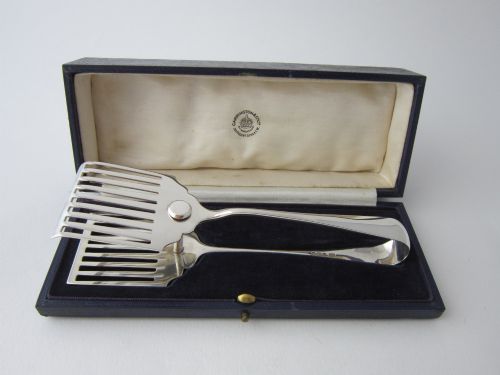
Edwardian silver tongs encompass small sugar nips designed for tea service alongside larger serving implements intended for asparagus, cake, or ice. The records show these pieces originating primarily in the Edwardian period, supplemented by related Victorian, George V, and Art Deco examples.
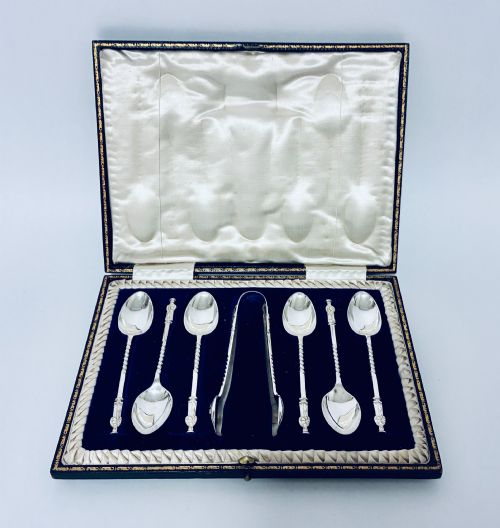
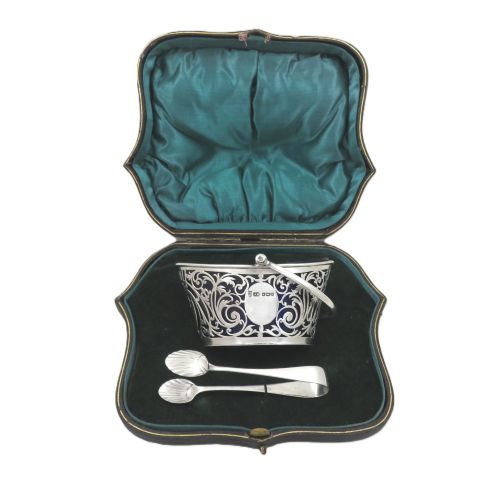
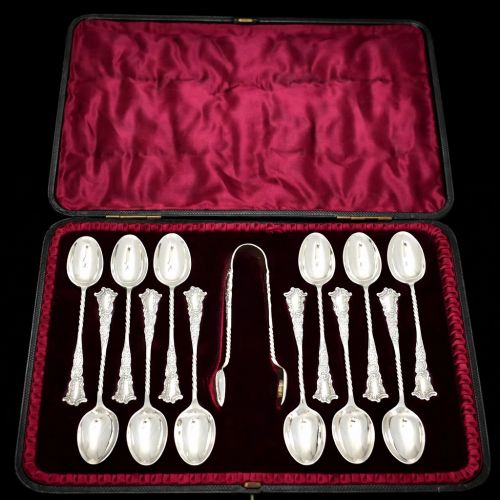
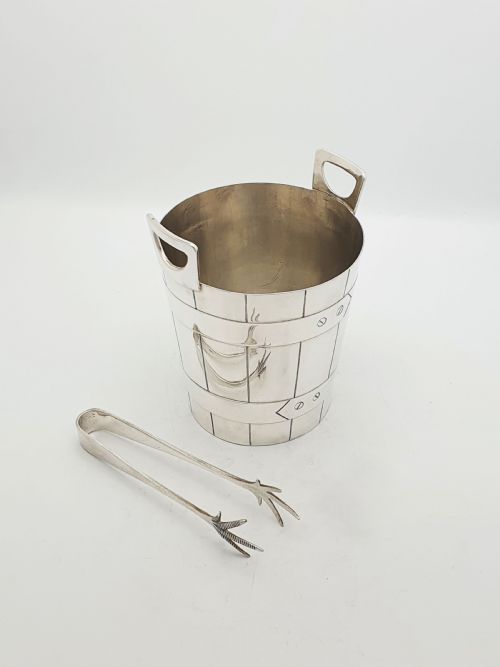
Buyers will encounter these utensils both individually and housed within fitted leatherette or velvet-lined presentation cases alongside matching teaspoons. Many examples appear in silver plate rather than solid sterling silver, frequently accompanied by cut glass ice buckets or ceramic dishes.
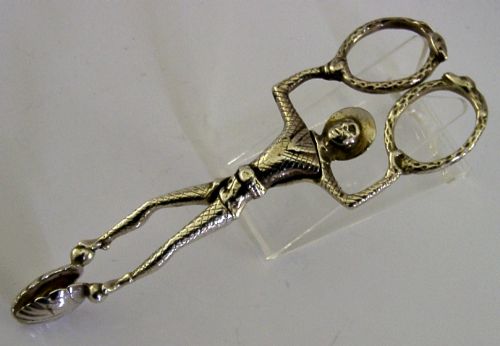
Sugar tongs dominate the selections, often featuring novelty forms such as wishbones, eagle claws, or harlequin jester motifs. Larger serving tongs appear with pierced ends, armorial crests, or traditional patterns like Onslow, Kings, and feather edge.
How They Were Made
Makers utilised sterling silver and silver plate as the primary metallic mediums, shaping them through stamping, piercing, and casting techniques. Articulated novelty pairs required precise engineering to enable movement in claws and wishbone mechanisms.
Interior components incorporate cut glass liners within ice pails, while fitted presentation boxes utilise silk, velvet, and leatherette to cradle the metalware securely.
Surface ornamentation relied on hand engraving, repoussé work, and applied crests to achieve the characteristic decorative finish of the period.
Some Edwardian sugar tongs took the form of articulated eagle claws, ensuring tea time came with an unexpected grasp.
What Varies in Quality
The standard of craftsmanship shows in the crispness of pierced decoration and the resilience of the spring action in sugar nips and serving pairs. Superior examples maintain firm tension in the hinge or bow without feeling stiff or loose in the hand.
Maker attribution and the presence of original fitted presentation cases elevate certain pieces above standard production items. Plain utility examples contrast with novelty mechanical designs and heavily engraved armorial presentation pieces.
Henry Stuart Brown·Garrard and Co·Walker and Hall·Mappin and Webb·Robert Stebbings·Cooper Brothers and Sons Ltd·Josiah Williams·Henry Atkins
The Edwardian Silver Tongs Glossary
- Sugar tongs
- Small spring or hinged utensils designed specifically for lifting sugar lumps into tea cups. These items often measure under five inches in length.
- Asparagus tongs
- Larger serving implements featuring wide blades or loops engineered to grip delicate stalks without crushing them. They frequently date to the Edwardian and George V periods.
- Silver plate
- A base metal, typically copper or nickel brass, coated with a thin layer of pure silver through electroplating. This method provided an accessible alternative to solid sterling silver.
- Sterling silver
- An alloy consisting of ninety-two point five percent silver and seven point five percent other metals, usually copper. British pieces carry hallmark stamps verifying this standard.
- Novelty tongs
- Utensils shaped to mimic natural objects or humorous figures, such as birds' claws or wishbones. Collectors prize these imaginative departures from standard domestic utility.
- Onslow pattern
- A distinct eighteenth-century revival handle design featuring a scrolled terminal that curls downward over the top of the stem. This style reappeared frequently on Edwardian flatware and serving pieces.
Edwardian Silver Tongs: Frequently Asked Questions
How were sugar tongs used?
Sugar tongs served a central role in formal Edwardian tea ceremonies, where hosts used them to transfer individual sugar lumps from a central bowl or basket into cups.
Because fingers remained strictly away from the sugar supply, these small nips required a nimble grip and dependable spring tension to operate cleanly during social gatherings.
What is the difference between sugar and serving tongs?
Sugar tongs measure shorter in length and feature delicate bows or hinge joints intended for handling small cube sugar. Serving tongs run substantially larger to accommodate heavy foods like asparagus, cake slices, or ice blocks.
Serving variations often incorporate wide, pierced blades or articulated claws to secure bulkier items at the dining table or bar.
Are plated tongs less authentic?
Silver plated items represent genuine period manufacturing rather than later reproductions, as makers produced extensive lines in plate for everyday domestic households alongside sterling silver for wealthier clientele.
Both materials originate from the same historical eras, though solid silver pieces carry official assay office hallmarks indicating metal purity.
How should I store cased sets?
Fitted presentation cases protect the silver and the inner velvet or satin linings from excessive dust and atmospheric tarnish when not displayed. Keeping the items dry inside their original boxes prevents unnecessary friction between packed spoons and tongs.