





Edwardian Silver Tea Tray
An edwardian silver tea tray brings substantial weight and refined metalwork to a formal tea service or drinks display.
Edwardian Silver Tea Tray
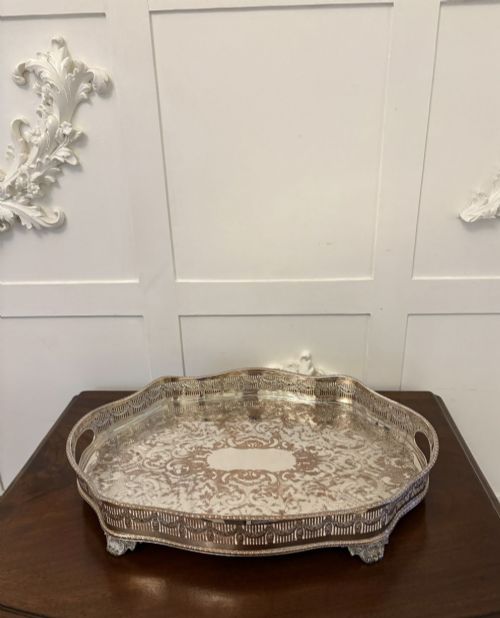
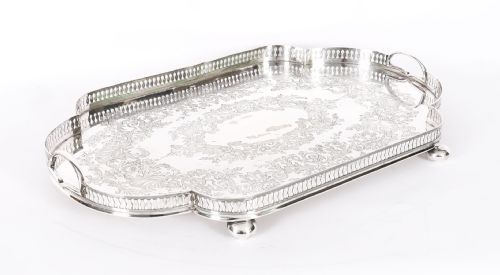
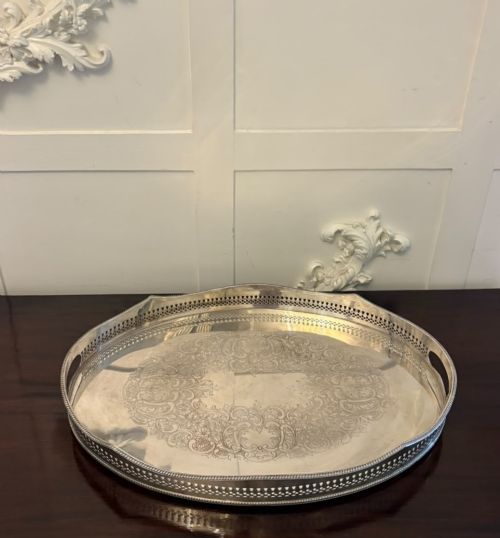
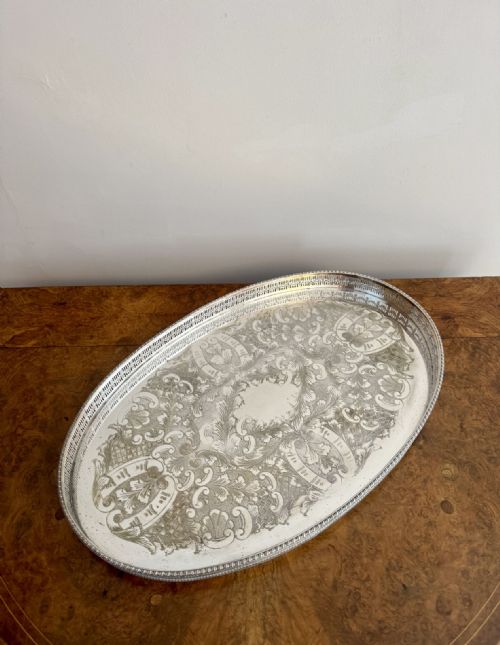
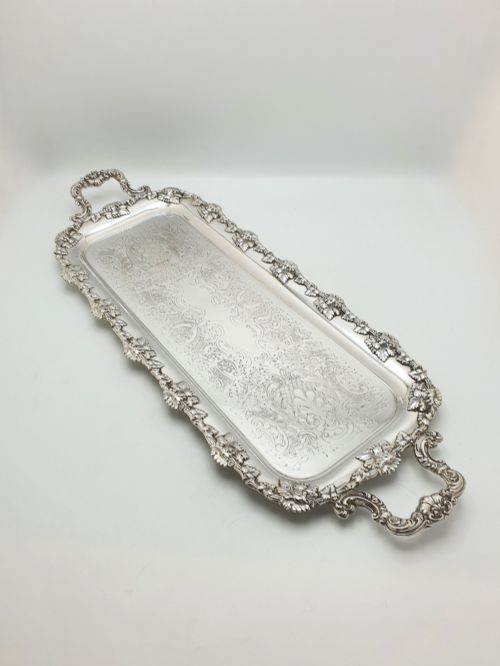
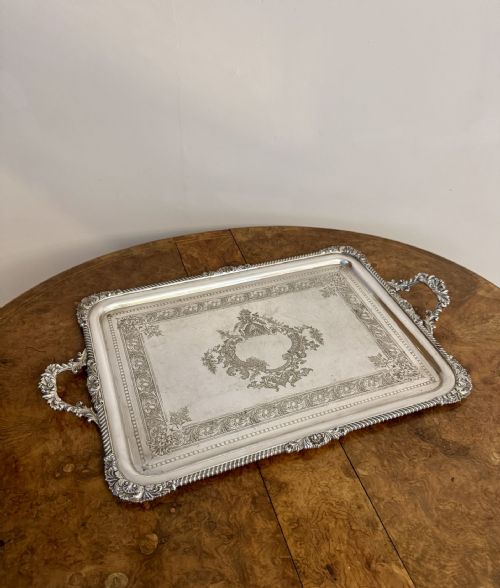
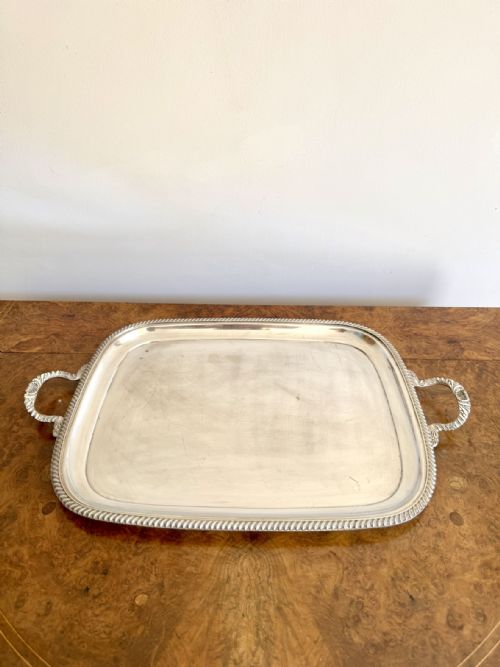
When you search for an edwardian silver tea tray, you encounter formal serving pieces designed for social gatherings in the early twentieth century. Most examples on this page date from the Edwardian period or around nineteen hundred, taking the form of oval, rectangular or octagonal platters with integrated handles and raised borders.
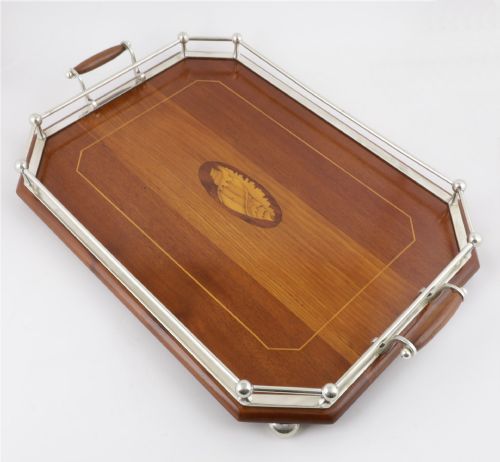
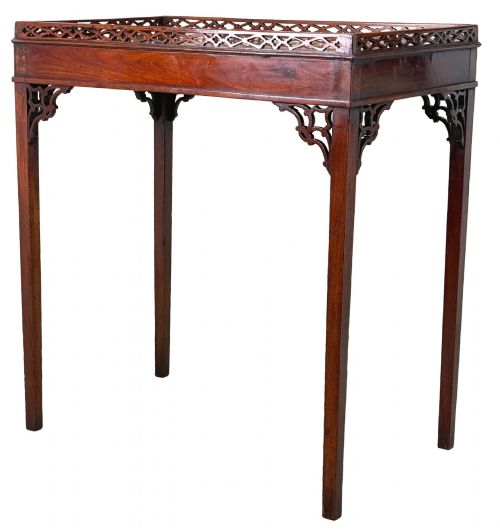
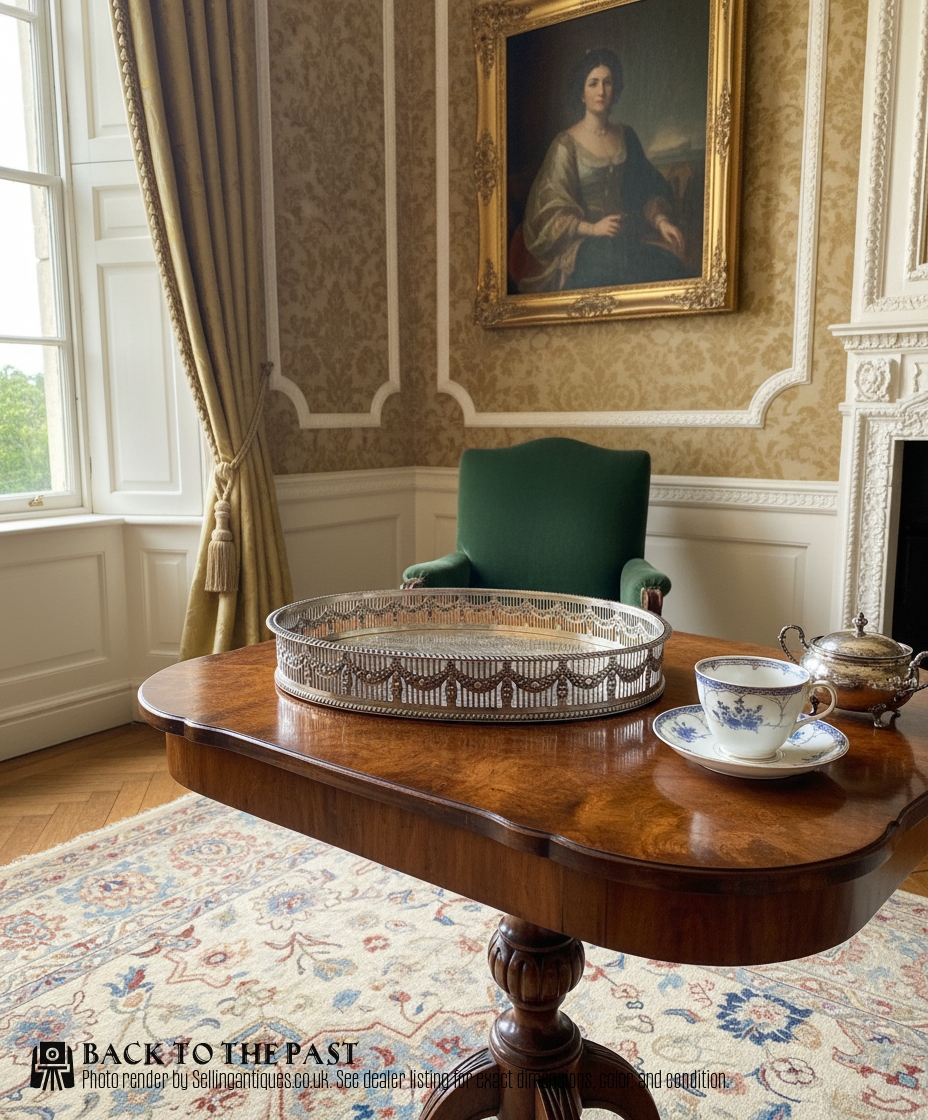
Alongside standard silver plated serving trays, the selection includes gallery trays featuring pierced metal balustrades and hybrid pieces combining timber frames with silver plate or sterling silver mounts. Occasional forms such as silver tables and tea tables appear alongside traditional portable trays.
Maker marks and production hubs from Sheffield feature prominently among these serving pieces, alongside general English manufacture. While sterling silver items occur, silver plate and electroplated nickel silver dominate the surviving material record.
How they were made
Makers utilised base metals and nickel silver as a foundation for extensive silver plating or electroplated nickel silver applications. Selected examples integrate solid hardwoods such as mahogany and oak into the base, often decorated with shell inlay or painted neo-classical scenes.
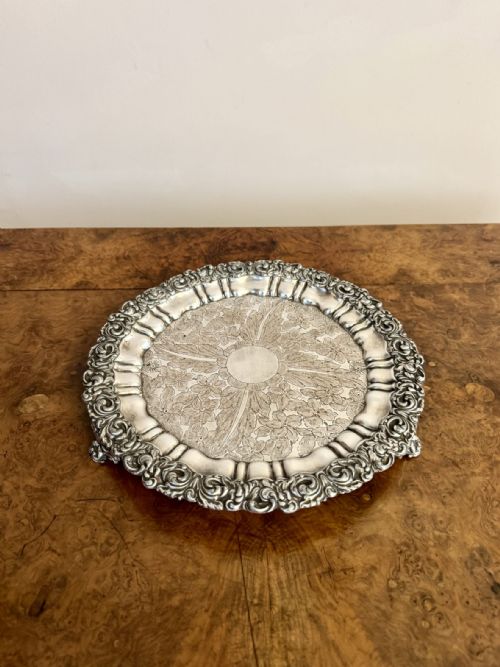
Surface decoration relied on detailed hand engraving across the central field, complemented by cast borders incorporating grapevine motifs or scalloped edges. Pierced galleries were constructed separately and soldered to the main tray body to create raised protective borders.
Miniature silver tea sets and tiny cake stands appear alongside full-sized trays, offering proper tea service proportions scaled down for dollhouse proportions.
What varies in quality
The distinction between standard production and top-tier pieces rests on the weight of the metal blank and the crispness of the chased or engraved surface work. Substantial gauge metal resists bending and provides a satisfying heft during service.
Superior craftsmanship shows in the structural joinery of handles and galleries, where soldered joints remain secure and flush with the body. The quality of silver plating thickness determines longevity, separating heavy electroplate from lighter washes that wear down to the base metal over decades of use.
James Deakin·Mappin & Webb·Harrison Bros·Frank Cobb & Co·Saunders & Shepherd
The Edwardian Silver Tea Tray Glossary
- Gallery tray
- A serving tray featuring a raised, pierced metal gallery or balustrade around the perimeter. This architectural rim prevents decanters and cups from sliding off during transit.
- Electroplated nickel silver
- A base metal alloy of copper, zinc and nickel coated with a layer of pure silver through electrolysis. It served as the primary durable alternative to solid sterling silver.
- Sheffield plate
- An early form of composite metal created by fusing a sheet of sterling silver to a copper core before rolling. The technique predates electroplating and appears on heavier formal pieces.
- EPNS
- An abbreviation for electroplated nickel silver found stamped on the reverse of many serving items. It indicates the underlying metallic composition of the piece.
- Chippendale period
- An eighteenth-century design style characterised by intricate carved mahogany and rococo influences. Edwardian makers frequently revived these aesthetic details on silver tables and tray tops.
Edwardian Silver Tea Tray: Frequently Asked Questions
How do I clean an edwardian silver tea tray?
Use a soft cloth and a dedicated silver polish designed for plated surfaces to remove tarnish without abrading the thin metallic layer. Avoid harsh chemical dips that strip residual dark patination from engraved recesses.
Store the tray in a dry environment away from direct sunlight and excessive humidity to slow down future tarnishing processes. Frequent gentle dusting prevents the buildup of airborne contaminants on engraved surfaces.
Can I use these trays for daily drinks service?
These trays handle modern cocktail service and everyday entertaining effectively when treated with reasonable care. The robust construction of silver plated and oak combinations suits regular domestic use.
Protect the surface from prolonged contact with moisture by using coasters under wet glassware. Ensure that heavy decanters are set down gently to prevent surface scratching on the engraved field.
How can I tell an Edwardian tray from a Victorian one?
Edwardian trays often feature lighter neoclassical or Sheraton Revival motifs, reflecting a shift away from heavy Victorian ornamentation towards simpler geometric lines. The introduction of bright cut engraving and oval gallery forms became widespread after nineteen hundred.
Victorian pieces from the eighteen eighties tend towards denser floral chasing and more robust, ornate border castings. Examining registration marks or maker ciphers helps confirm the exact manufacturing decade.