
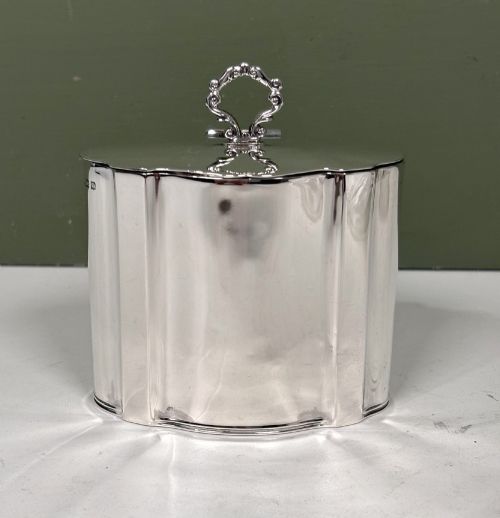
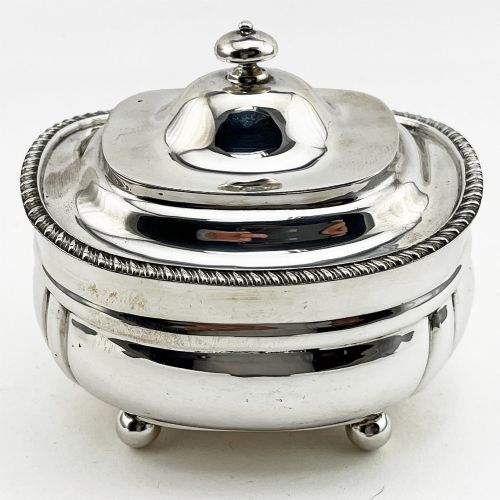
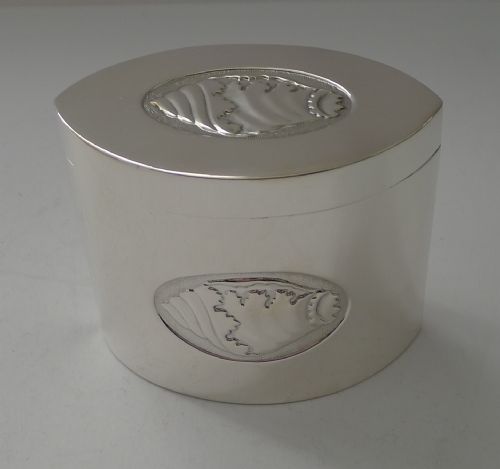
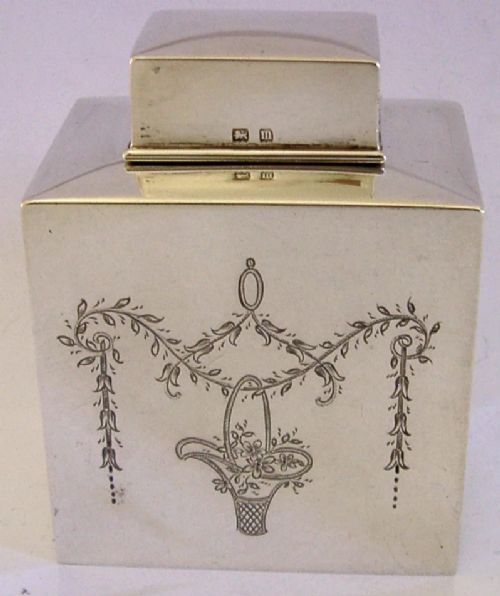



Edwardian Silver Tea Canister
These edwardian silver tea canister pieces are refined domestic vessels built to store loose leaf tea on the dining table.

Edwardian Silver Tea Canister
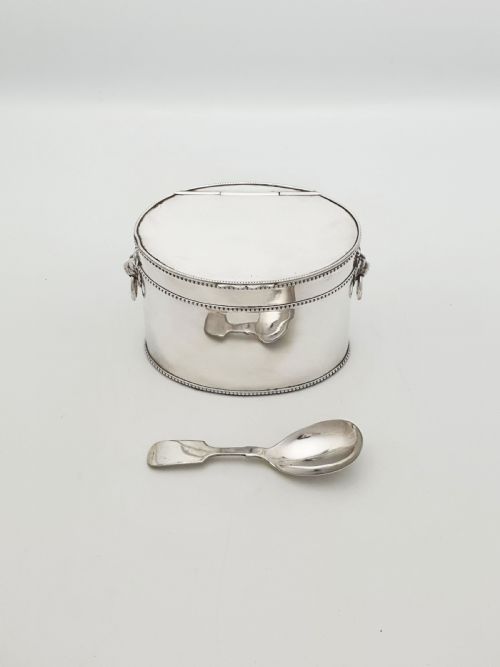
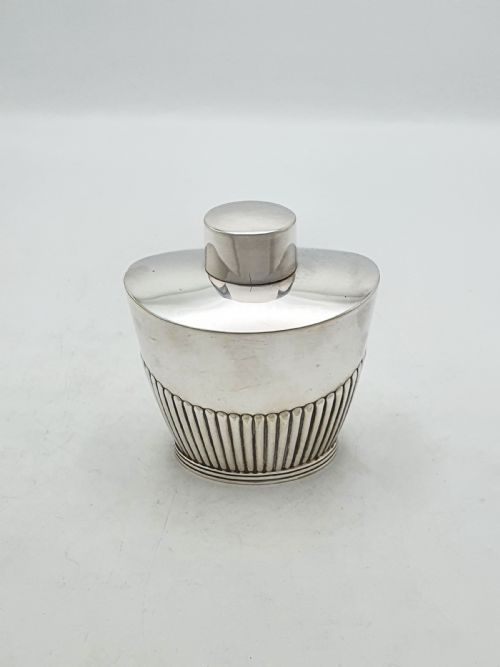
The aesthetic draws heavily on Edwardian, George V, and Georgian Revival styles, occasionally incorporating Arts and Crafts hammered surfaces or Neoclassical motifs. Formats range from plain rectangular boxes to cut crystal vessels mounted with silver collars and lion mask handles.
Materials and Construction
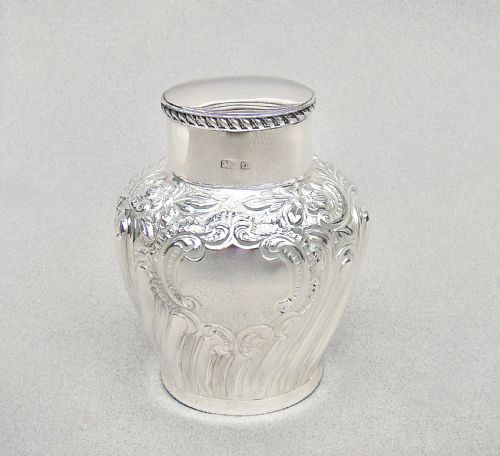
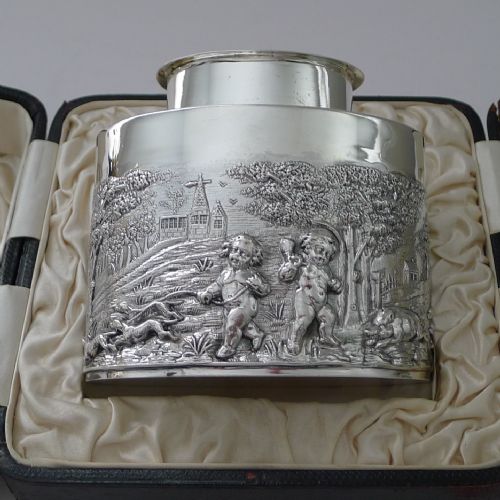
Makers shaped these containers primarily from solid sterling silver or silver plate, frequently pairing metal bodies with cut crystal glass and wooden elements like ebony. Silversmiths employed techniques such as hand hammering, repoussé decoration, and precision casting for decorative handles.
Structural integrity relied on secure soldering and snug fitting lids designed to preserve the aroma of the tea leaves inside. Assay office punches stamped directly into the metal record the year of creation and the city of origin.
Some tea caddies arrive complete with tiny matching spoons tucked inside, ready for measuring out your afternoon brew.
Assessing Craftsmanship
Quality separates ordinary production from exceptional workshop output through the crispness of the hallmarks, the weight of the silver, and the precision of the lid closure. Superior examples demonstrate careful hand finishing on repoussé panels and balanced proportions in decorative mounts like lion mask handles.
Lesser pieces rely on thinner gauge metal and simpler stamping without the detailed chasing found in works bearing noted maker marks. The integration of cut crystal bodies with fitted silver collars also marks the distinction between standard and finer utilitarian objects.
Charles Edwards·Zimmermann·Thomas Hayes·Mappin and Webb·William Hutton and Sons Ltd.·Goldsmiths and Silversmiths Co.
The Edwardian Silver Tea Canister Glossary
- Hallmark
- Official stamps applied by an assay office to indicate metal purity, origin city, and date of manufacture. These small marks provide the primary documentation for dating antique silver.
- Repoussé
- A metalworking technique where the artisan hammers the design from the reverse side to form raised relief patterns on the surface. This method creates tactile floral and scroll motifs.
- Sterling Silver
- An alloy consisting of ninety-two point five percent silver and seven point five percent other metals, usually copper. This standard composition ensures durability for daily domestic items.
- Lion Mask
- A decorative casting shaped like a lion face, frequently utilised as an anchor point for drop ring handles on caddy bodies. It adds a sculptural element to Neoclassical designs.
Edwardian Silver Tea Canister: Frequently Asked Questions
How do I date an edwardian silver tea canister?
Dating relies upon the assay office hallmarks stamped directly onto the silver surface, which include date letters corresponding to specific years.
Additional context comes from the stylistic attributes, such as Arts and Crafts hammered textures or Neoclassical revival forms popular in the early twentieth century.
Were these canisters used for loose tea?
These vessels were designed specifically to store dry loose leaf tea leaves safely away from light and moisture on the dining table or sideboard.
Tight fitting lids helped preserve the delicate aromas of the tea until it was ready for brewing.
Can I polish my silver tea canister?
Polishing should be done gently using a soft cloth and a specialised silver cleaner designed to remove tarnish without abrading the metal surface.
Avoid harsh dips or abrasive pads that can wear away fine details on repoussé decoration or maker marks.
What is the difference between sterling and silver plate?
Sterling silver consists of solid alloy throughout the entire object, meeting strict legal standards for precious metal content.
Silver plate utilises a base metal core coated with a thin outer layer of pure silver through electroplating or mechanical bonding.