

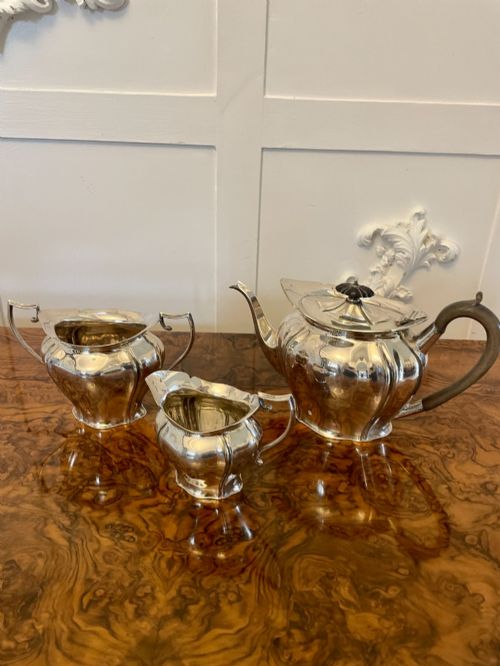
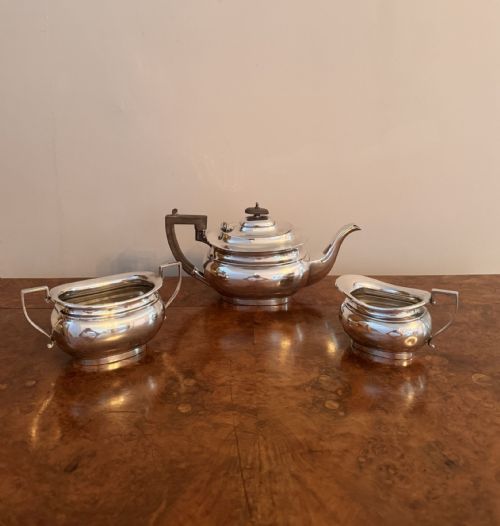
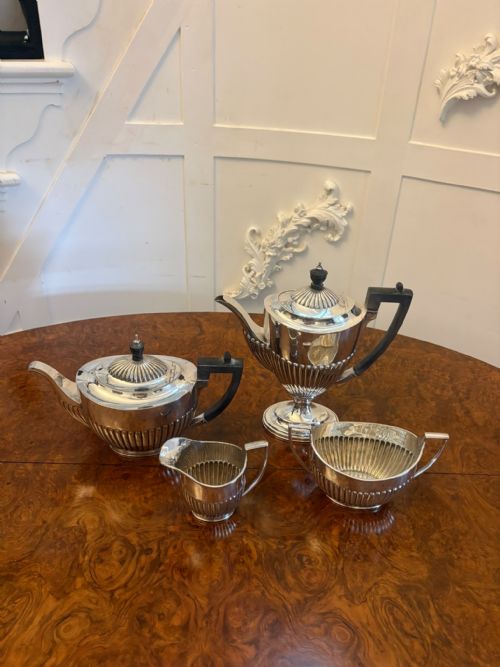


Edwardian Silver Plated Teapot
An edwardian silver plated teapot brings the refined ritual of early twentieth-century tea drinking straight to the modern table.
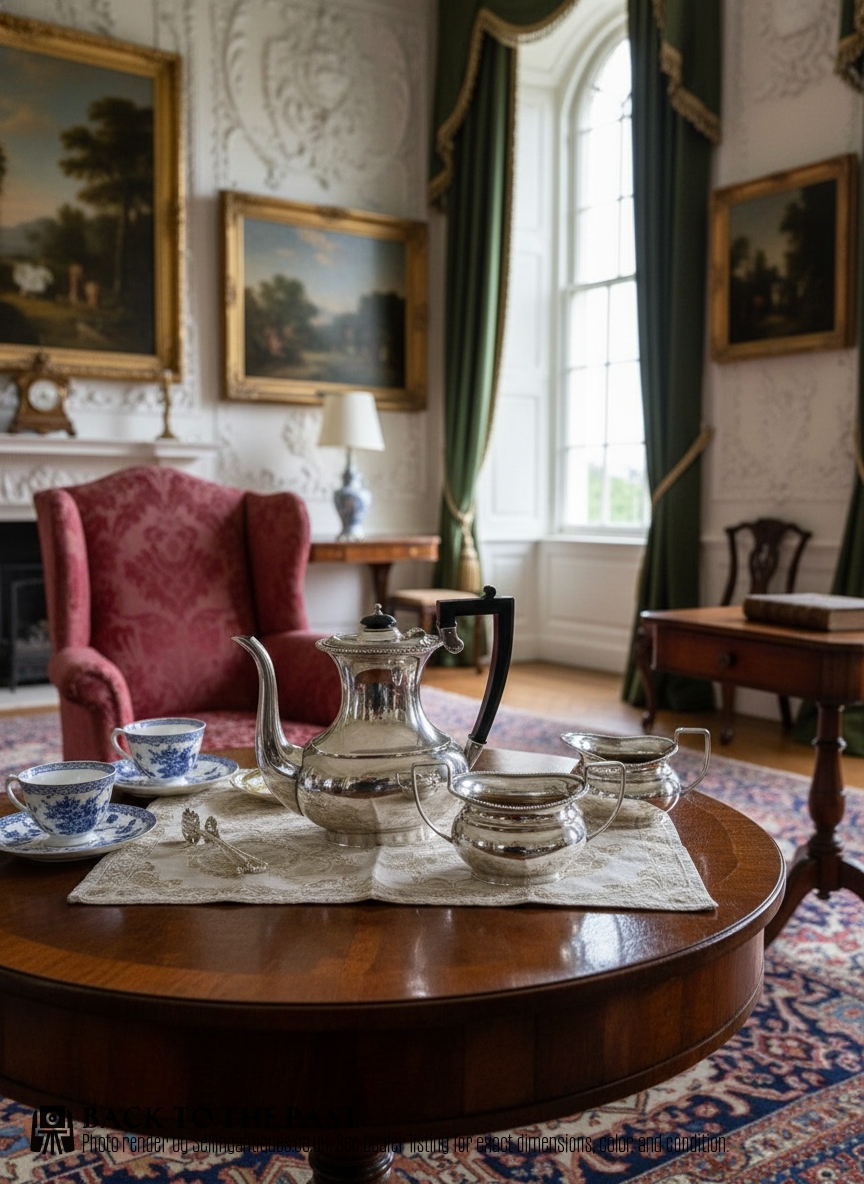
Edwardian Silver Plated Teapot
An edwardian silver plated teapot forms the centrepiece of formal tea service sets produced during the Edwardian period, often appearing alongside matching sugar basins, milk jugs, and coffee pots. These vessels embody the social rituals of the early twentieth century, reflecting the domestic elegance characteristic of 1900, 1910, and 1920 production.
Buyers will most frequently encounter these teapots as part of three-piece or four-piece matching sets, though individual spirit kettles on stands also emerge. The forms range from plain, restrained shapes to ornate revivals drawing heavily on Georgian and Rococo design motifs.
Originating predominantly from English workshops, these items capture the height of electroplating innovation. They offer the visual splendour of solid silver combined with the practical durability required for daily household hospitality.
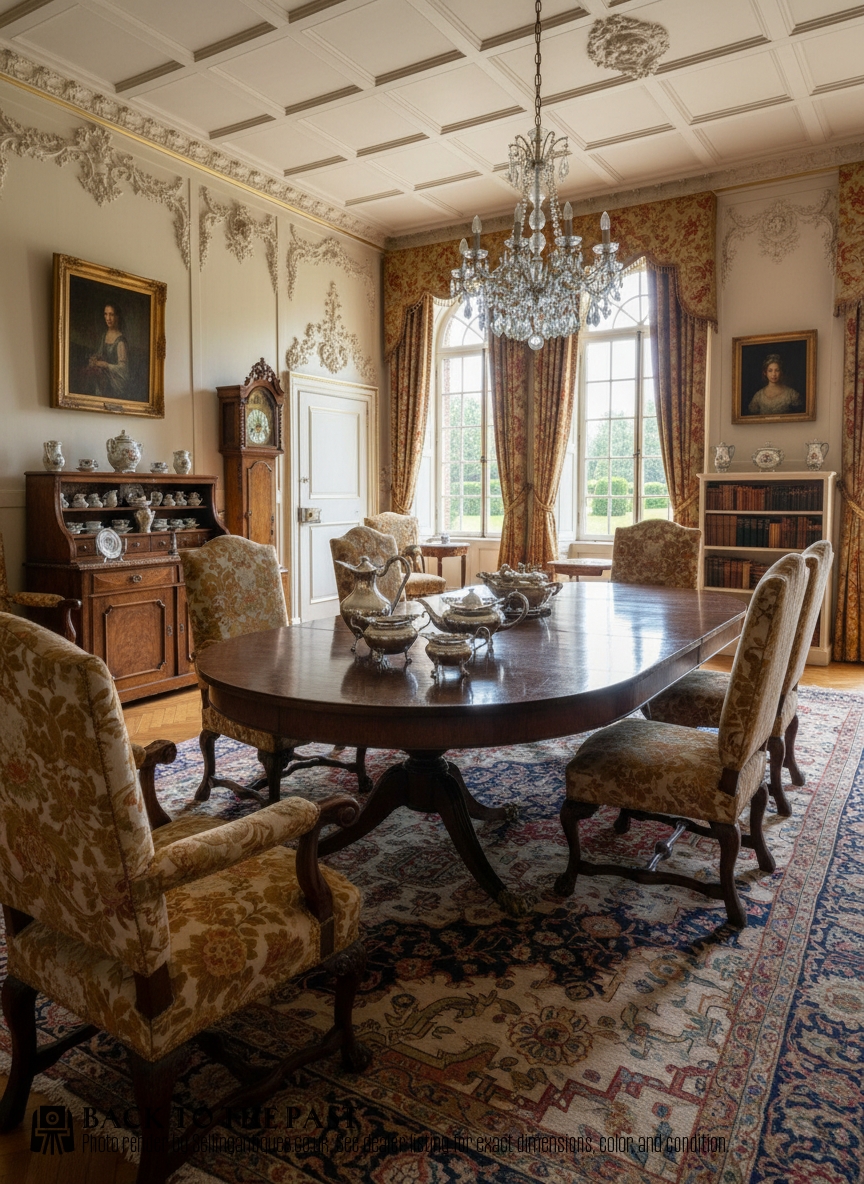
Materials and construction
Makers utilised electroplated nickel silver, commonly known as EPNS, as the primary substrate, applying a durable layer of silver onto a sturdy base metal. This technique allowed manufacturers to produce substantial tea services with complex decorative profiles that remained accessible to the Edwardian household.
Handles and finials frequently incorporate insulating materials such as ebonised wood, ebony, and bone to prevent heat transfer during use. These contrasting dark elements provide a functional grip while accentuating the bright reflective finish of the silver plate.
Edwardian Silver Plated Teapot Retail Price Guide 2026
Typical asking prices for edwardian silver plated teapot among the pieces listed under this phrase on Sellingantiques today, from the lower quarter to the upper quarter. They describe what is for sale here now, not the wider market.
Listings span the years 1900 to 1920, uniting Edwardian, Late Victorian, and Georgian Revival styles under electroplated nickel silver and silver plate.
Distinctions in craftsmanship
The degree of hand-chased ornamentation and the crispness of decorative detailing separate standard productions from masterworks. Pieces bearing marks from established firms demonstrate superior weight, balanced proportions, and intricate embellishments like grapevine detailing.
The preservation of the underlying silver plate across high-contact surfaces and engraved panels dictates the overall integrity of the vessel. Superior examples maintain the original sharpness of their maker stamps and decorative reliefs without excessive thinning from historical polishing.
Walker and Hall·Goldsmiths and Silversmiths Co
The Edwardian Silver Plated Teapot Glossary
- Silver plate
- A base metal coated with a layer of pure silver through chemical or electrochemical processes. This method made elaborate tableware attainable for a broader segment of society.
- EPNS
- Electroplated nickel silver, which serves as the durable metallic foundation for the majority of these pieces. It provides a rigid, resilient core underneath the silver coating.
- Spirit kettle
- A water-heating vessel suspended above a small burner on a dedicated metal stand. These allowed hosts to maintain hot water for tea refilling directly at the table.
- Ebonised wood
- Timber treated and finished to resemble ebony, frequently utilised for teapot handles and lid insulators. It offers both aesthetic contrast and thermal protection.
- Rococo Revival
- A decorative style referencing the ornate, asymmetrical curves and naturalistic motifs of the eighteenth century. Edwardian makers reinterpreted these flowing patterns on tea services and kettles.
Edwardian Silver Plated Teapot: Frequently Asked Questions
What is an edwardian silver plated teapot?
An edwardian silver plated teapot is a tea-brewing vessel manufactured during the Edwardian era, typically featuring a durable base metal coated in silver through electroplating.
These pieces were produced to facilitate formal afternoon tea service and frequently survive today as part of larger matching tea and coffee sets.
How were these teapots used historically?
Hosts utilised these teapots to brew and pour loose-leaf tea during formal social gatherings, drawing water from kettles mounted on stands when refilling was necessary.
The inclusion of insulating handles made from ebonised wood or bone allowed handlers to pour boiling liquids safely without burning their hands.
How do I care for silver plate?
Maintenance requires gentle cleaning with non-abrasive cloths and specialised silver cleaning solutions formulated specifically for plated items to preserve the thin metallic layer.
Regular, careful wiping prevents tarnish buildup while protecting the underlying base metal and any delicate ebonised or bone insulators.
How do I identify an Edwardian piece?
Identification relies on examining the characteristic styling, which often incorporates Georgian Revival curves or Rococo motifs alongside specific manufacturer hallmarks stamped into the metal.
The materials, such as EPNS and ebonised wood components, align strictly with early twentieth-century manufacturing techniques spanning the years around 1900 to 1920.