
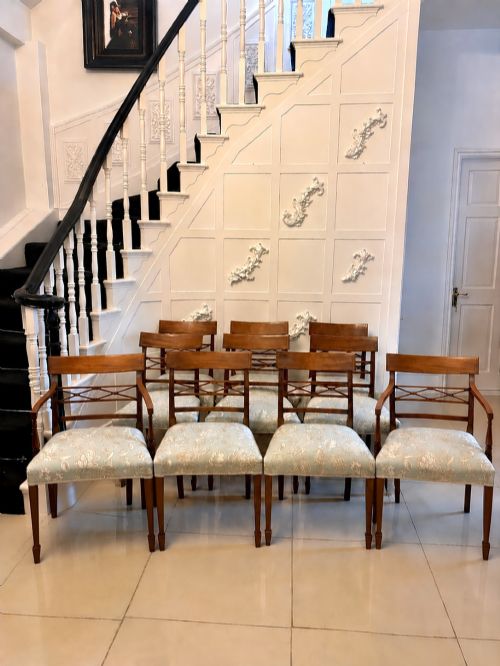
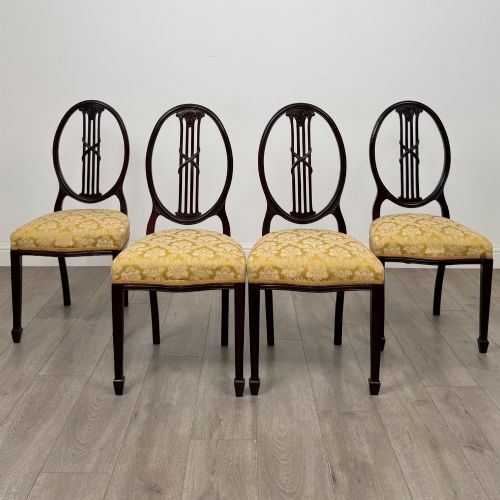
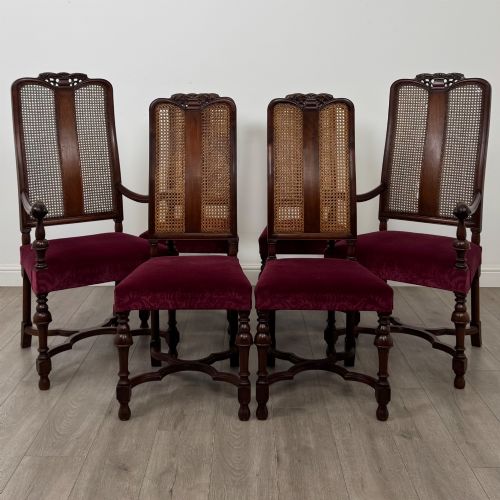
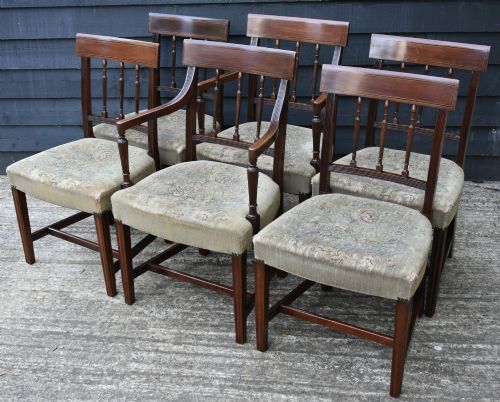
Edwardian Side Chairs Set
These edwardian side chairs set selections bring matched seating from the early twentieth century into modern dining rooms and parlours.
Edwardian Side Chairs Set
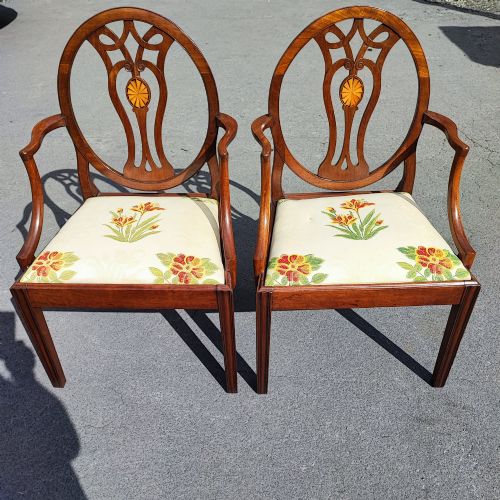
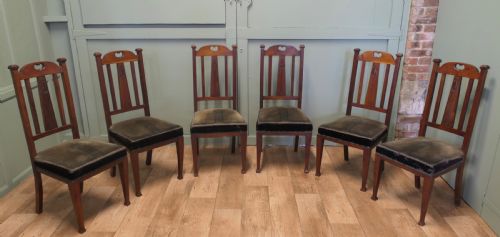
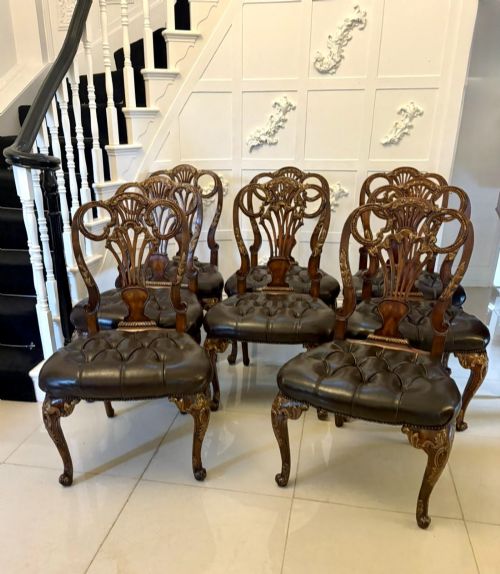
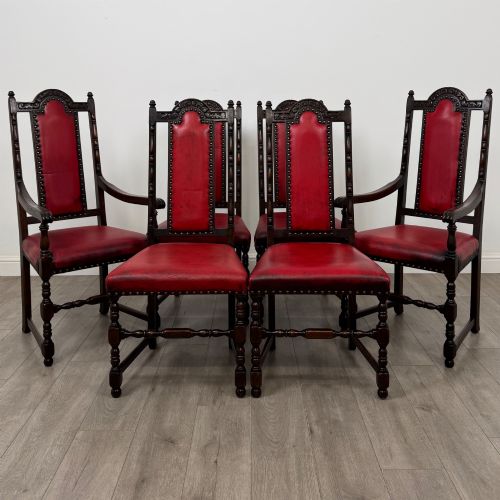
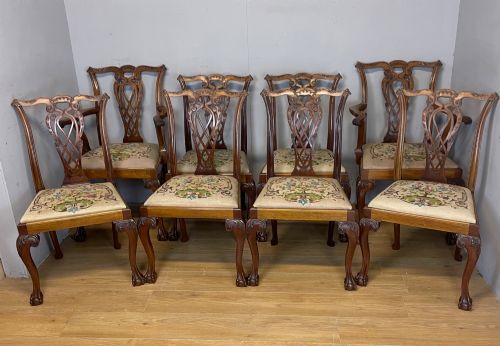
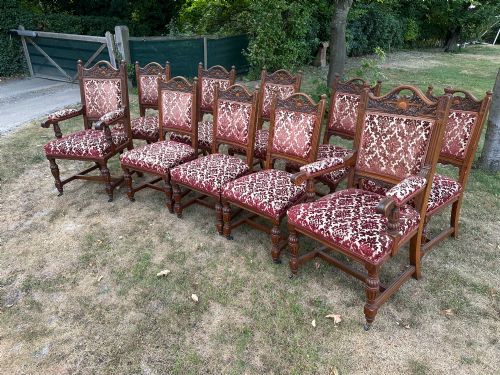
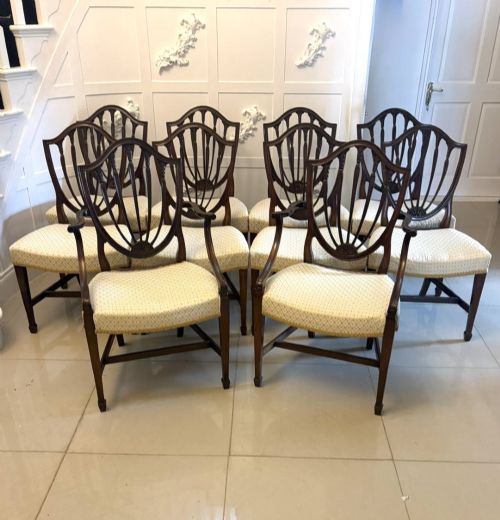
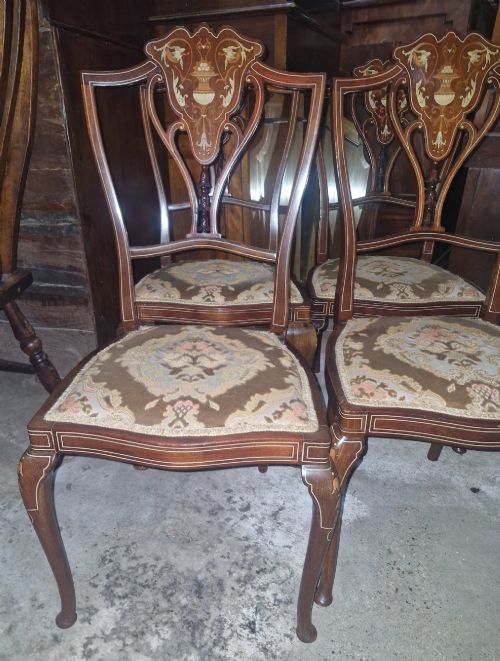
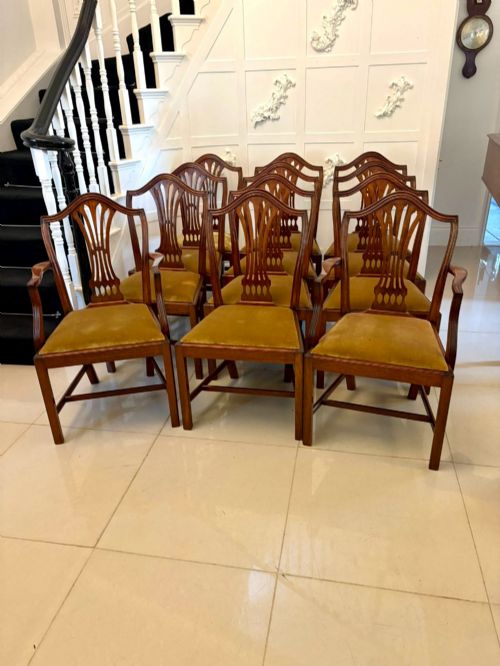
An edwardian side chairs set typically comprises matched groups of seating created around the turn of the twentieth century, appearing frequently in mahogany or oak. The forms range from simple bedroom chairs with inlaid details to robust dining sets built in revival styles like Sheraton, Hepplewhite, and Chippendale.
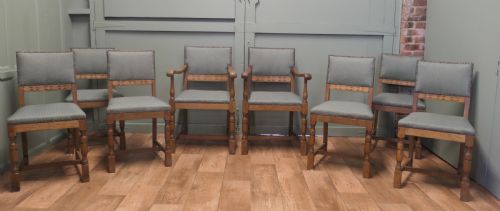
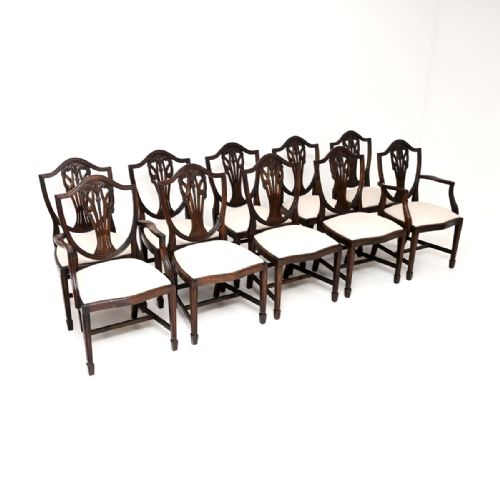
Buyers encounter these sets grouped in counts from four up to ten or twelve pieces, occasionally including matching carver armchairs. The physical evidence shows distinct construction periods clustered tightly around nineteen hundred, alongside related Victorian and later adaptations.
Materials and Construction
The primary timbers utilised across these sets are mahogany and oak, supplemented by walnut, satinwood, maple, and rosewood. Craftsmen shaped these woods using traditional joinery, often incorporating delicate marquetry inlay, brass accents, and hand-carved details.
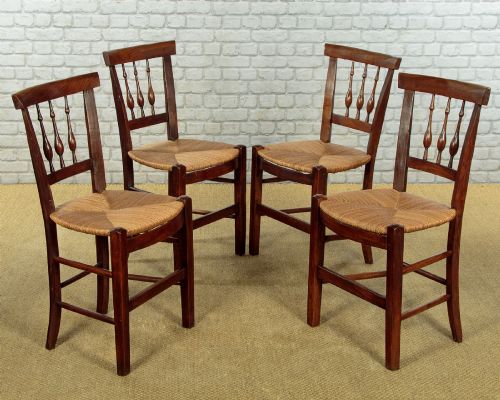
Seating upholstery relies on materials such as fabric, velvet, leather, and traditional rush seating. Frames demonstrate sturdy assembly techniques designed for daily domestic utility, whether plain or embellished with barley twist turnings.
Listings feature woods spanning mahogany, oak, walnut, satinwood, maple, and rosewood across various dining and salon chair configurations.
Distinguishing Quality
Quality rests upon the crispness of the carved ornamentation and the precision of the inlaid veneers. Superior sets maintain structural integrity across every chair in the group, showing uniform timber selection and matching grain patterns.
Finer examples reflect careful adherence to historical revival canons, displaying balanced proportions and well-executed joinery rather than hasty assembly. The consistency of the set as a complete group dictates its overall character.
Warings·Maple and Co·Cowtan and Sons·Codina
The Edwardian Side Chairs Set Glossary
- Shield Back
- A chair back shaped like a classic heraldic shield, popular in Hepplewhite designs. This contour provides comfortable lumbar support.
- Inlay
- Pieces of contrasting timber or shell fitted flush into the primary wood surface to create decorative patterns. Craftsmen utilised this technique extensively on satinwood and mahogany.
- Carver
- An armchair designed to match a set of dining side chairs, usually placed at the head of a table. These pieces feature supportive armrests.
- Barley Twist
- A woodworking technique where the furniture leg is turned into a spiral resembling twisted barley sugar. This decorative feature appears frequently on oak frames.
- Bentwood
- Wood softened by steam and bent into curved shapes, utilised in bistro-style seating. This method creates lightweight and resilient frames.
Edwardian Side Chairs Set: Frequently Asked Questions
How many chairs come in a set?
Sets typically contain four, six, eight, ten, or twelve individual chairs, occasionally accompanied by matching carver armchairs. Buyers should verify the exact count listed.
Larger dining sets frequently accommodate traditional family gatherings, while smaller groupings suit intimate breakfast rooms or bedroom spaces.
What woods were used for edwardian chairs?
Makers predominantly worked with mahogany and oak, supplemented by walnut, satinwood, maple, and rosewood. Timber choice often dictated the overall aesthetic.
Mahogany frequently carried fine inlay work and Sheraton styling, whereas oak appeared in sturdy Arts and Crafts or Jacobean revival pieces.
Are these chairs comfortable for daily use?
These chairs provide firm upright seating suited for formal dining and desk work. Many examples feature padded upholstery in fabric, leather, or velvet.
Buyers intending daily usage often examine the internal webbing and padding condition to ensure lasting comfort during prolonged sitting.
How do I identify revival styles?
Revival designs emulate earlier historical periods like Georgian, Chippendale, and Hepplewhite while incorporating turn-of-the-century manufacturing methods. Distinctive back splats and leg shapes offer clear clues.
Comparing the carving depth and timber finish helps separate genuine period interpretations from later reproductions.