


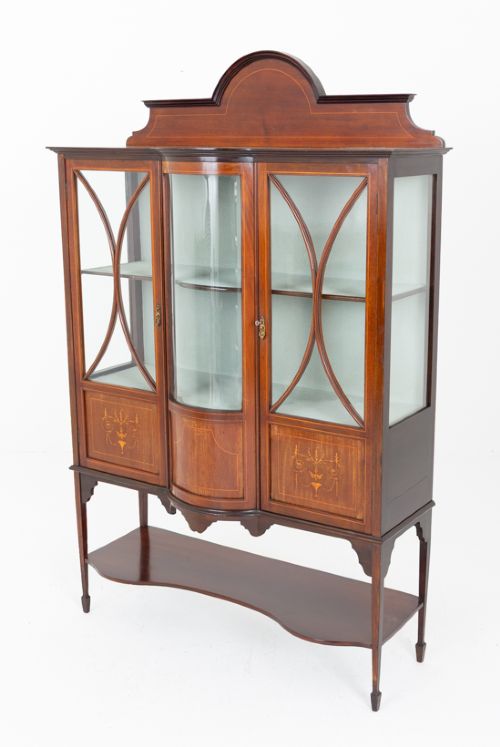
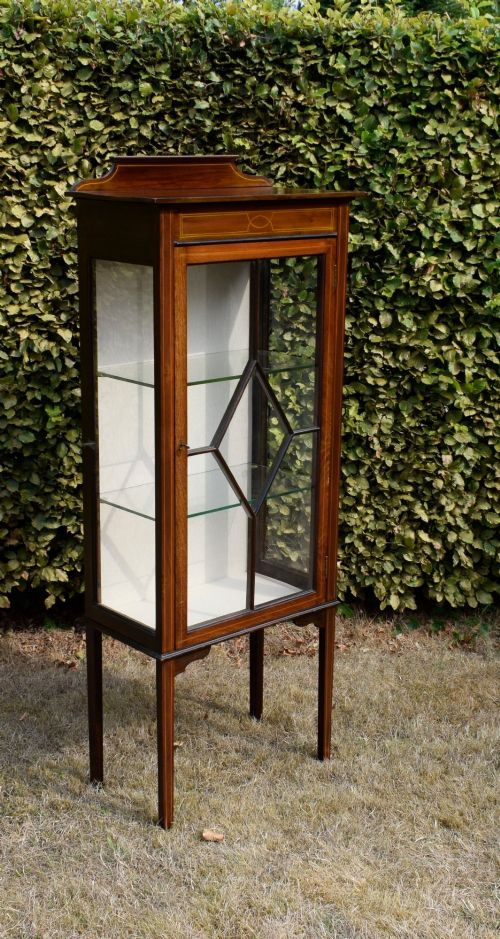
Edwardian Sheraton Revival Cabinet
An Edwardian Sheraton Revival cabinet brings refined neoclassical elegance to a room through delicate inlay and polished timbers.
Edwardian Sheraton Revival Cabinet
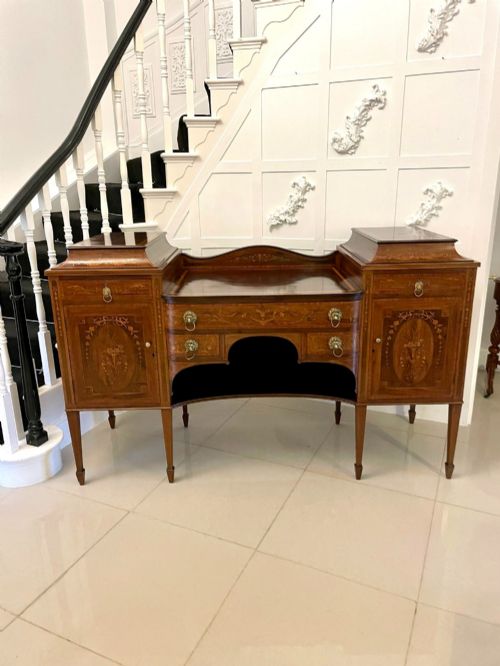
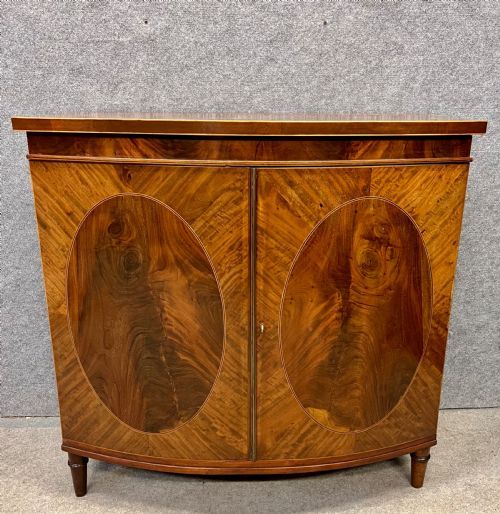
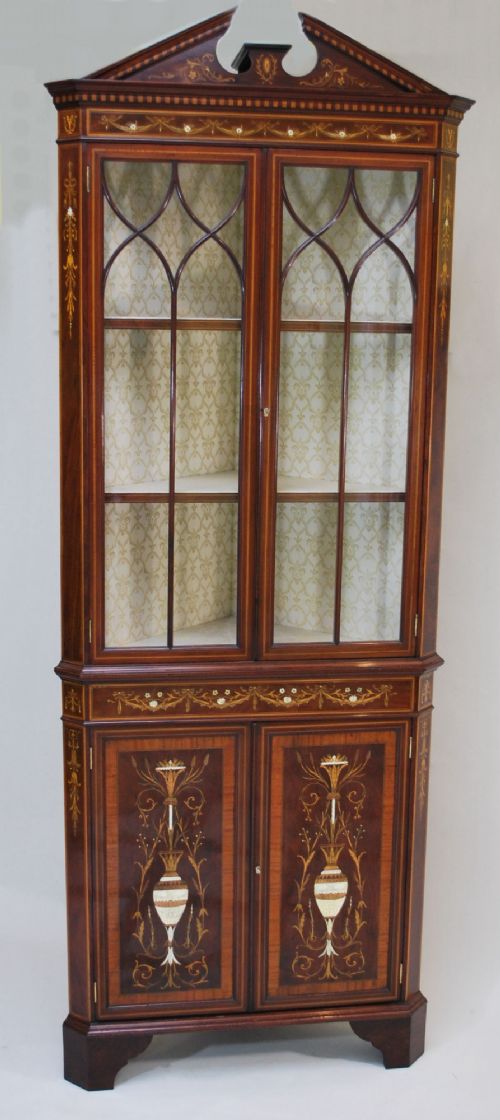
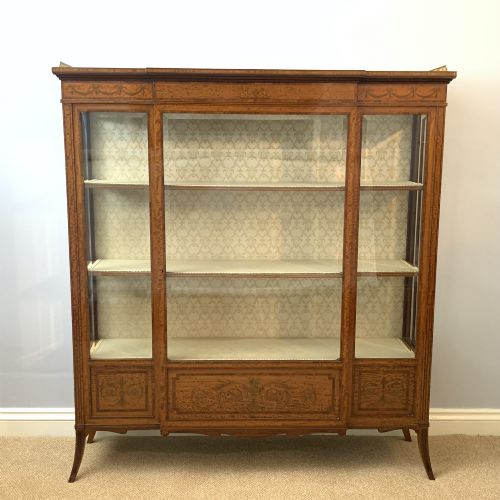
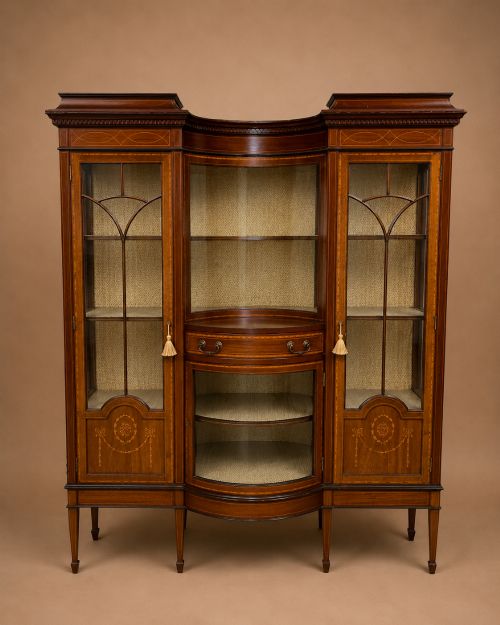
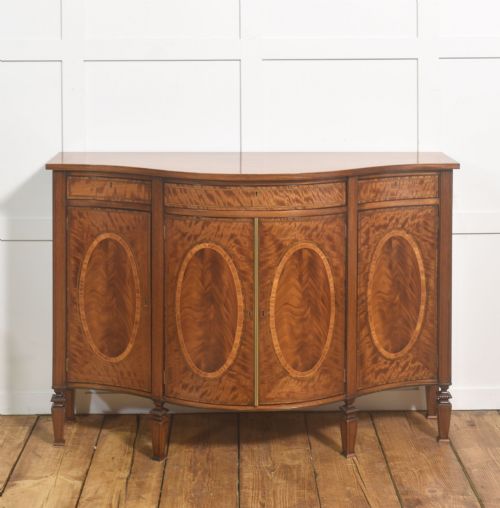
The edwardian sheraton revival cabinet category encompasses display cabinets, side cabinets, corner cabinets, and sideboards produced primarily around the Edwardian period and the late nineteenth century. These pieces draw heavily on eighteenth-century neoclassical designs, reinterpreted by makers working in mahogany and satinwood.
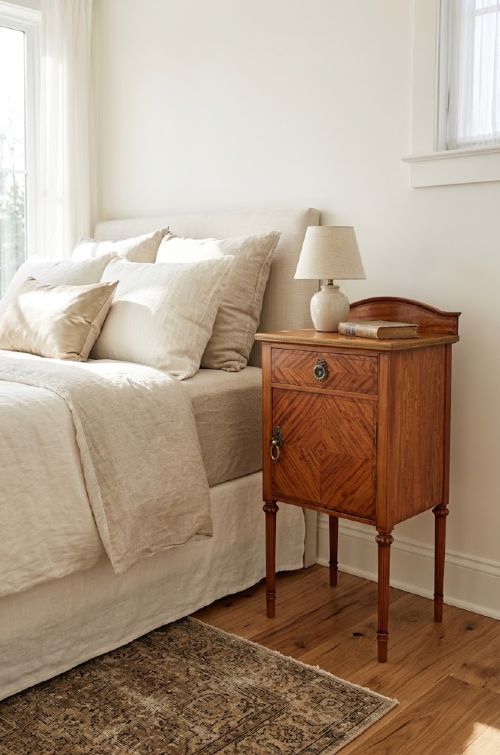
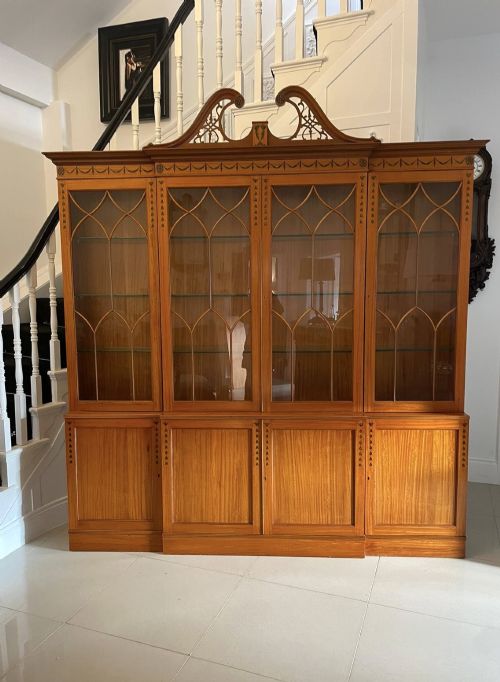
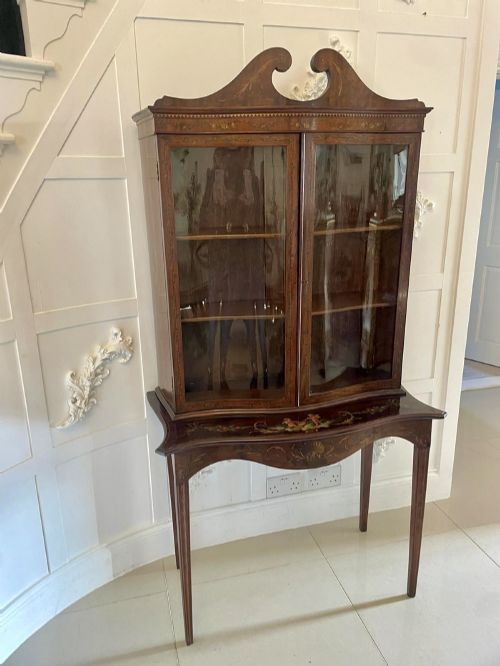
Display cabinets and side cabinets dominate the available forms, often featuring glazed doors and delicate proportions suitable for formal reception rooms. Buyers meet variations ranging from compact bedside cupboards to large breakfront and demi-lune pieces.
Origins span standard English cabinet-making workshops of the period, alongside prominent retailers and makers based in London who catered to affluent households seeking lighter, more graceful furniture styles.
Materials and Construction
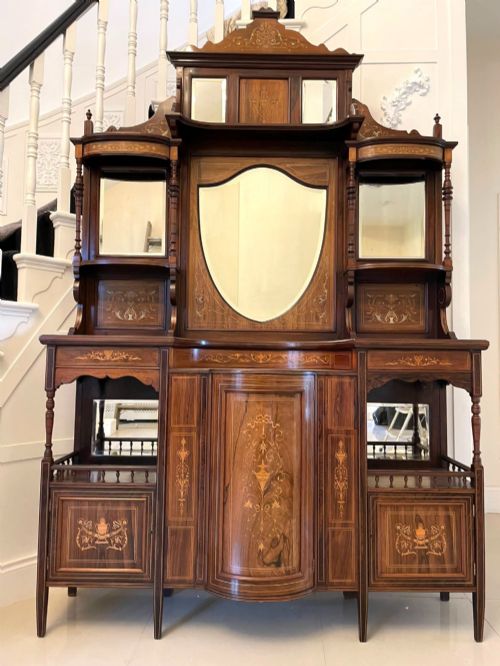
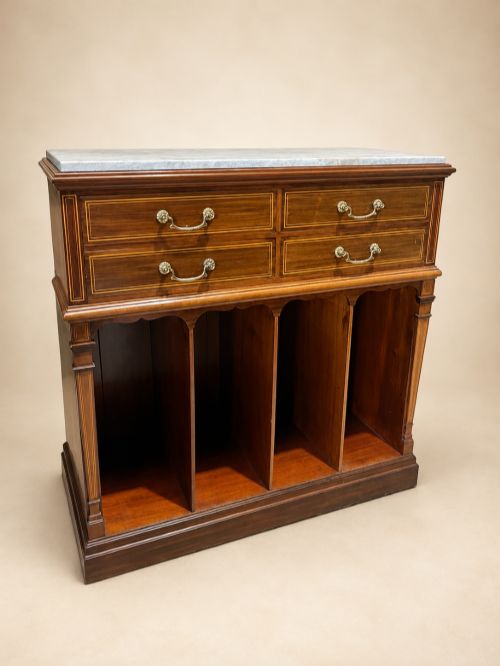
Construction relies heavily on solid mahogany and satinwood, frequently paired with contrasting timber inlays such as satinwood or marquetry details. Workshops utilised glass for astral-glazed display doors and incorporated brass fittings for hardware.
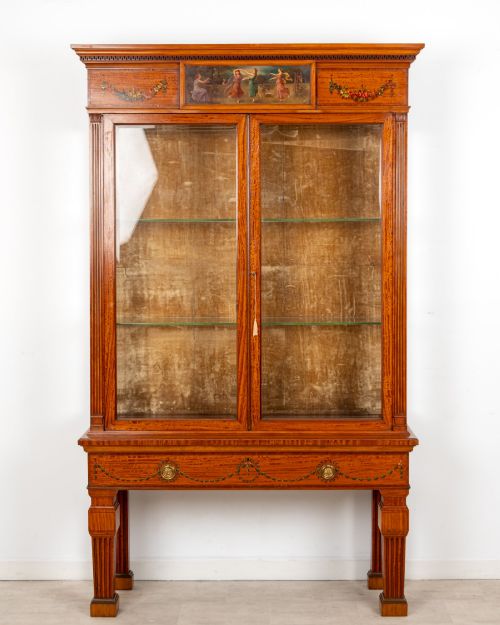
Surface ornamentation often includes original painted decoration and hand-painted panels, adding pictorial elements to the neoclassical geometric stringing and inlay patterns.
Listings span the Victorian era, the Edwardian period, and the early decades of the twentieth century, focusing on mahogany and satinwood.
Assessing the Standard
Quality in an edwardian sheraton revival cabinet rests on the precision of the marquetry and the choice of timber figure, particularly the depth and grain of the satinwood or mahogany. Finer examples display meticulous hand-painted decoration rather than mass-produced transfers.
Structural integrity, original glazing, and the retention of period brassware and painted panels distinguish superior pieces from standard commercial production of the era.
Hewetsons London·Hampton & Sons·Edwards & Roberts·Maple & Co
The Edwardian Sheraton Revival Cabinet Glossary
- Satinwood
- A lustrous timber with a yellow sheen used extensively for veneers and primary cabinet construction during the Sheraton Revival. It provides a bright surface for delicate painted details and contrasting stringing.
- Marquetry
- The art of applying pieces of veneer to a structure to form decorative patterns and pictorial designs. Cabinet makers used various coloured woods to create neoclassical motifs.
- Demi-lune
- A half-moon shape characteristic of certain side cabinets and sideboards designed to fit snugly against a wall. This curved form requires advanced woodworking skill to veneer accurately.
- Astral glazing
- Cabinet doors divided into small glass panes by wooden framework bars known as astrals. This method lightened the visual weight of large display pieces.
- Breakfront
- A cabinet design where the central section projects forward from the flanking sections. It adds architectural depth and presence to larger display and side cabinets.
Edwardian Sheraton Revival Cabinet: Frequently Asked Questions
What is an Edwardian Sheraton Revival cabinet?
These pieces are furniture items produced around the late nineteenth and early twentieth centuries that imitate the lighter, neoclassical furniture designs popularized in the eighteenth century.
They utilise timbers like mahogany and satinwood, often decorated with delicate inlay, marquetry, or hand-painted panels designed to brighten formal interiors.
How were these cabinets used originally?
Owners used display cabinets and china cabinets in drawing rooms and reception spaces to showcase porcelain, glassware, and treasured ornaments behind glass doors.
Side cabinets, demi-lune pieces, and sideboards served practical storage functions in dining rooms and parlours while contributing to the unified decorative scheme of the room.
How do I style a cabinet in a modern home?
The light tones of satinwood and mahogany allow these pieces to sit comfortably against neutral wall colours, contrasting effectively with contemporary minimalist interiors.
Display sections provide practical shelving for books or curated collections, while the compact footprint of corner and bedside variants suits smaller living spaces.
How do I distinguish Edwardian pieces from Victorian originals?
Distinguishing between the periods involves examining the specific timber treatments, hardware styles, and registration marks where present, though both eras shared a strong enthusiasm for Sheraton Revival aesthetics.
Victorian interpretations often display heavier proportions and darker mahogany tones, whereas Edwardian examples frequently lean towards brighter satinwood and more delicate painted decoration.