


Edwardian Serpentine Chest
An edwardian serpentine chest brings a flowing, undulating curve to domestic storage, uniting practical drawers with refined period craftsmanship.
Edwardian Serpentine Chest
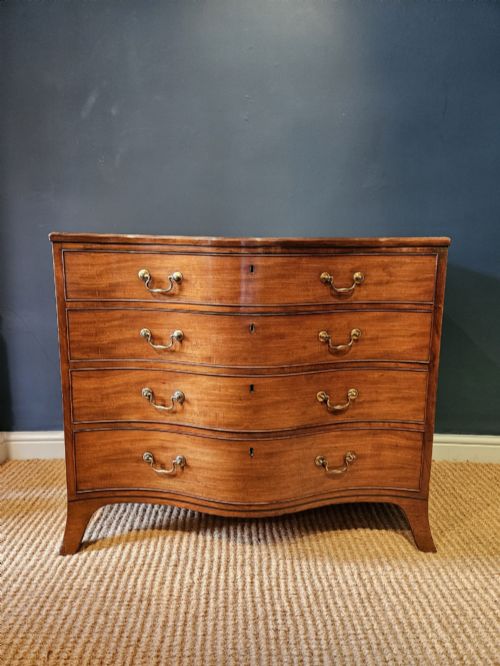
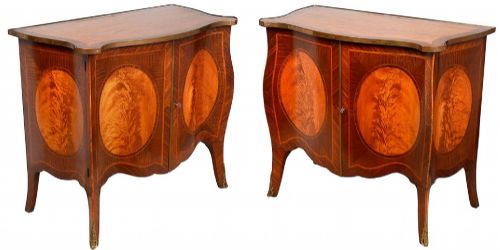
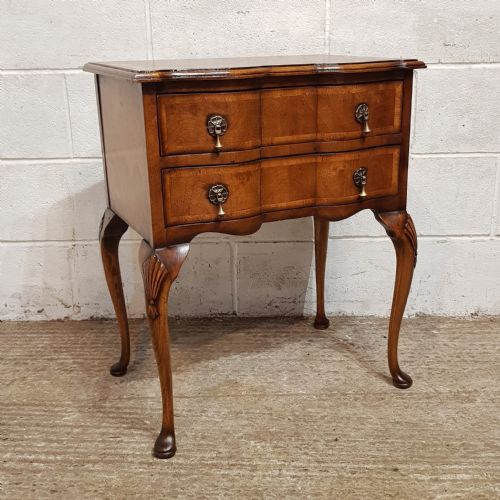
An edwardian serpentine chest presents a distinctive convex-centre and concave-ends front elevation, built primarily as a set of drawers or a compact commode. These pieces emerge predominantly from the Edwardian era and the early twentieth century, alongside revivals reaching back to George III originals.
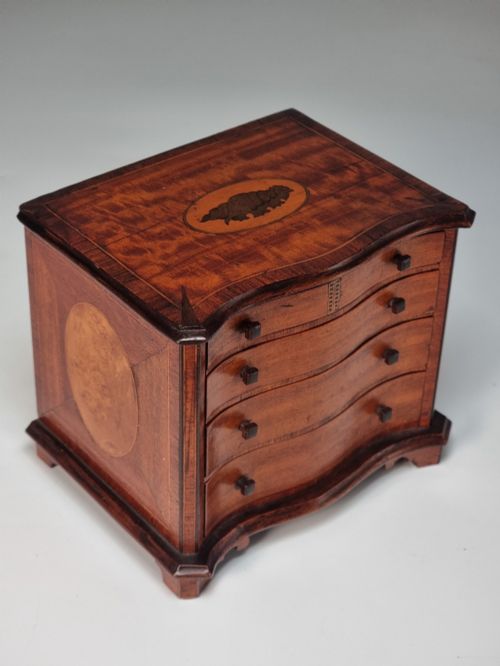
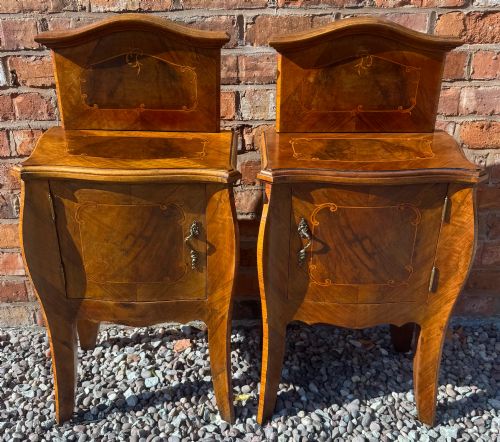
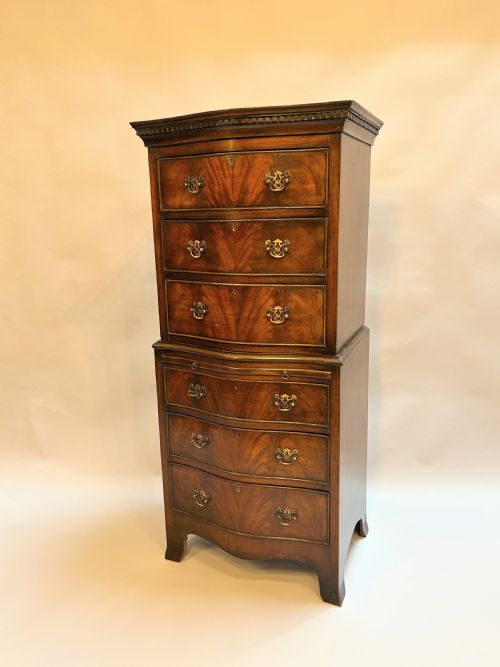
The form appears in various domestic formats beyond standard drawer sets, including bedside cabinets, tallboys, and miniature pieces. Walnut and mahogany dominate the offerings, frequently enhanced by figured veneers and satinwood inlay.
Buyers encounter genuine Edwardian examples alongside Georgian period pieces and later revival iterations from the nineteen-twenties. Each variation retains the characteristic curved silhouette that defines the search phrase.
How they were made
Cabinet makers constructed the curved fronts by shaping solid timber or by applying carefully laid veneers such as flame mahogany, burr walnut, and satinwood over secondary carcases. This technique required precise carpentry to ensure the undulating grain patterns followed the sweeping contours without buckling.
Brass hardware, including swing handles and escutcheons, complemented the polished timber surfaces. Inlaid stringing and banding frequently bordered the drawer fronts, defining the serpentine outlines with contrasting dark and light woods.
Several pieces include pull-out brush slides designed for dusting garments before morning outings.
What varies in quality
The choice of timber figure separates standard production from exceptional examples, with heavily marked flame mahogany and rich burr walnut commanding particular attention. The handling of the veneer across the curved front reveals the maker's skill in matching grains symmetrically.
Proportion and secondary detailing dictate the tier of the piece. Subtle inlay work, well-chosen brasses, and crisp execution of the serpentine sweep distinguish superior cabinet making from simpler commercial output.
A. F. Lloyd, Bideford·Waring s Gillows·Waring·Bickers of Dewsbury
The Edwardian Serpentine Chest Glossary
- Serpentine
- A front configuration shaped with a convex centre flanked by two concave curves. This contour requires specialised woodworking to maintain structural integrity.
- Flame mahogany
- A veneer cut from timber where the grain resembles flickering flames. It creates a highly decorative surface on period furniture.
- Burr walnut
- Timber taken from a tree growth featuring intricate, swirling grain patterns. It provides a luxurious finish for Edwardian drawer fronts.
- Commode
- A decorative low chest of drawers or cabinet. The term frequently applies to serpentine pieces from revival periods.
- Brush slide
- A pull-out shelf integrated above the top drawer. It served as a surface for grooming or sorting items.
- Tallboy
- A stacked double chest of drawers, creating a tall vertical storage unit. They appear in walnut and mahogany variants.
Edwardian Serpentine Chest: Frequently Asked Questions
Where do I place an edwardian serpentine chest?
These chests fit well in bedrooms, hallways, or reception rooms where the curved silhouette softens linear architectural spaces. Their modest proportions make them adaptable for placement against flat walls while adding visual depth.
Ensure adequate clearance around the curved front so the sweeping shape remains unobstructed. Pairing them with simple surroundings allows the figured wood grain to stand out as a focal point.
How do I distinguish Edwardian from Georgian pieces?
Edwardian examples typically date around nineteen hundred and often display lighter timber tones, satinwood stringing, or machine-sawn internal components. Eighteenth-century Georgian pieces show deeper patination and hand-cut joinery specific to earlier hand tool methods.
Revival pieces from the nineteen-twenties often emulate eighteenth-century proportions while retaining early twentieth-century construction traits. Examining the secondary timbers inside the drawers helps clarify the actual period of manufacture.
What is a brush slide used for?
A brush slide provides a pull-out wooden surface located directly above the primary drawers. Historically, it served as a temporary shelf for brushing garments or sorting small personal items.
In modern use, it functions as a convenient ledge when accessing the drawers below. It retracts flush into the frame when not required.
How do I care for figured mahogany surfaces?
Maintain the polished timber by dusting regularly with a dry, soft cloth to prevent particulate buildup. Avoid placing the chest in direct sunlight or near heat sources to protect the veneer from drying out.
Apply a traditional beeswax polish sparingly when the wood appears dry, buffing gently to maintain the lustre. Avoid silicone-based sprays that can penetrate the historic finish.