

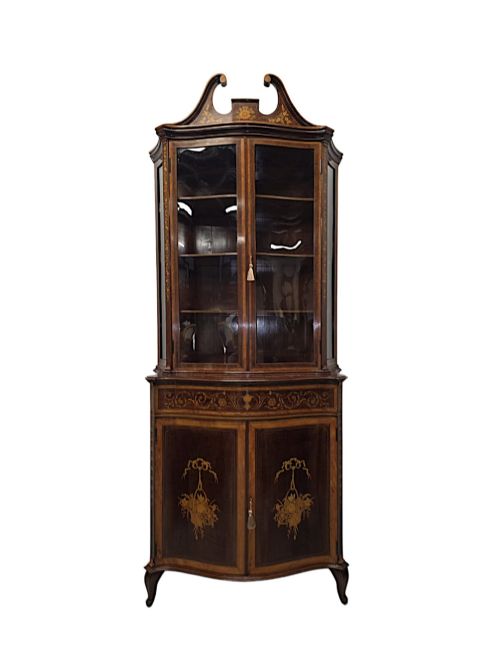
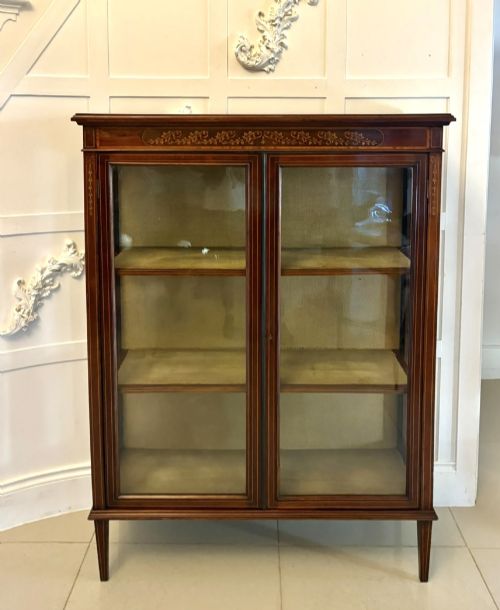
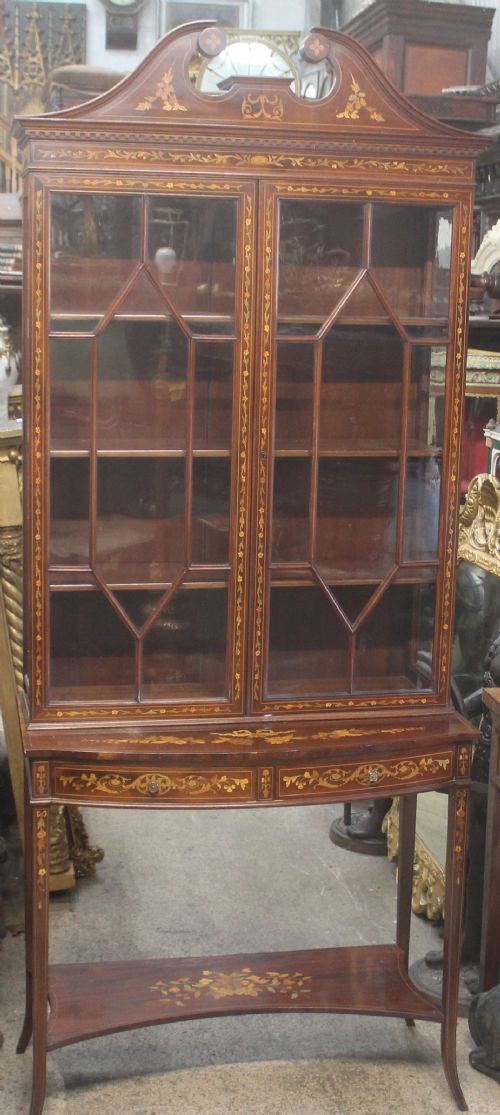
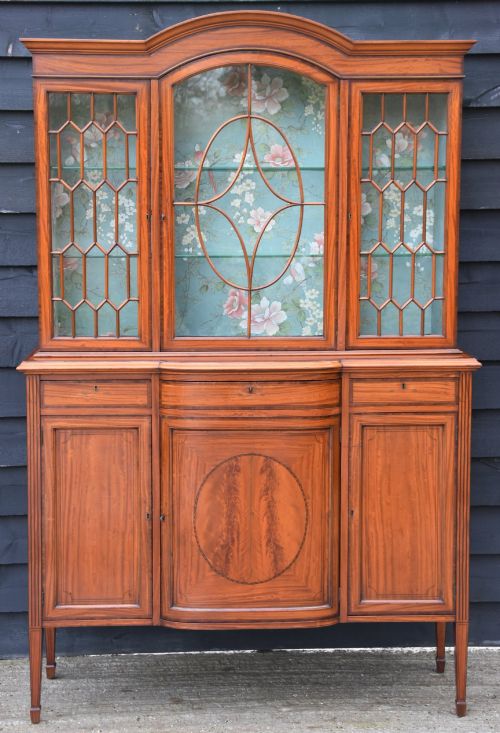
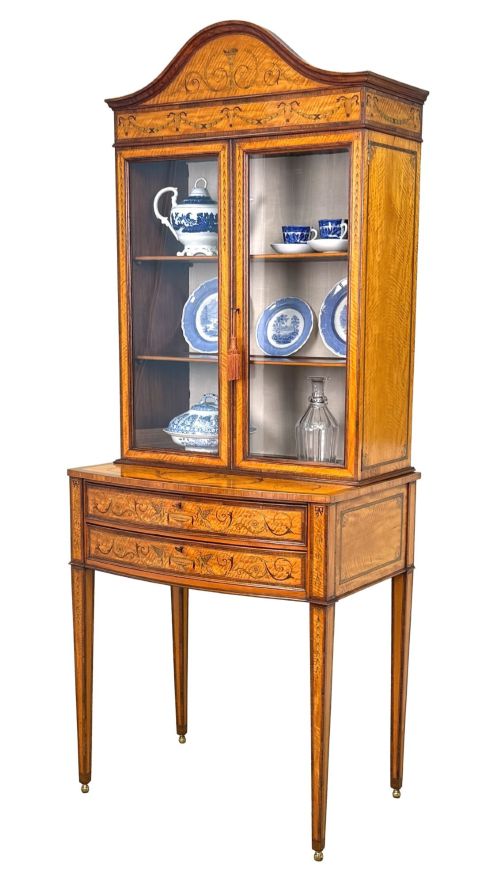
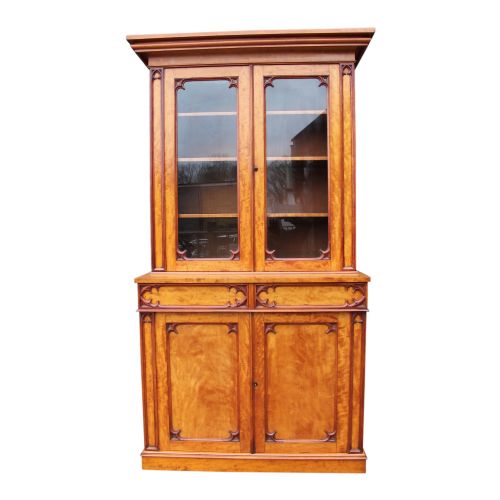
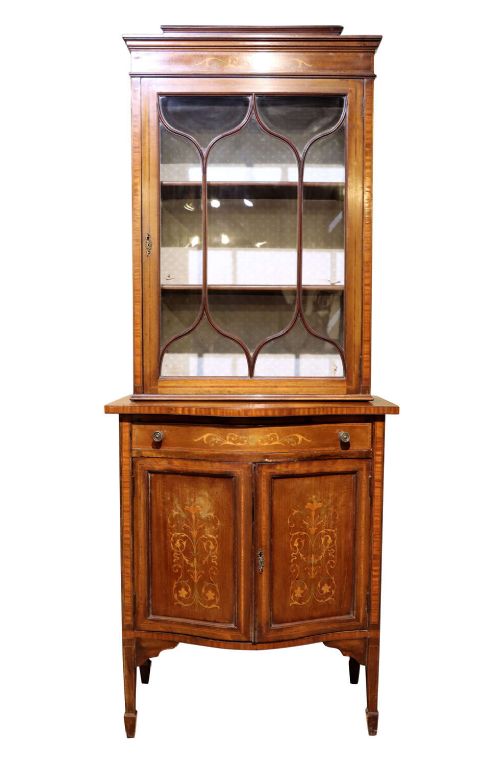
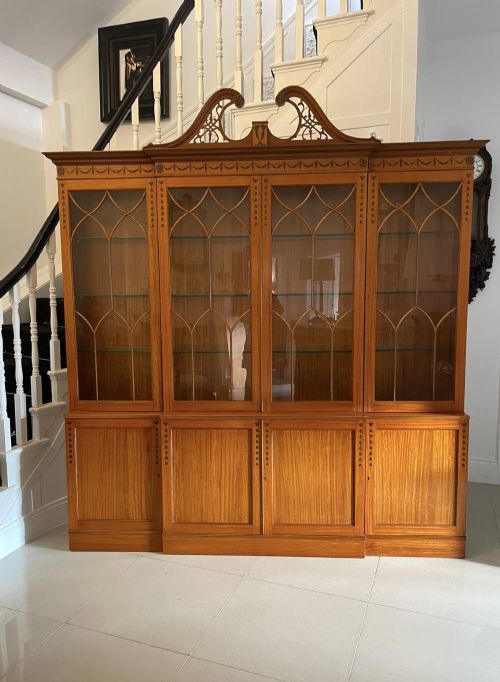
Edwardian Satinwood Glazed Bookcase
The edwardian satinwood glazed bookcase brings together light timbers, delicate inlay and glass fronting to brighten a formal interior.
Edwardian Satinwood Glazed Bookcase
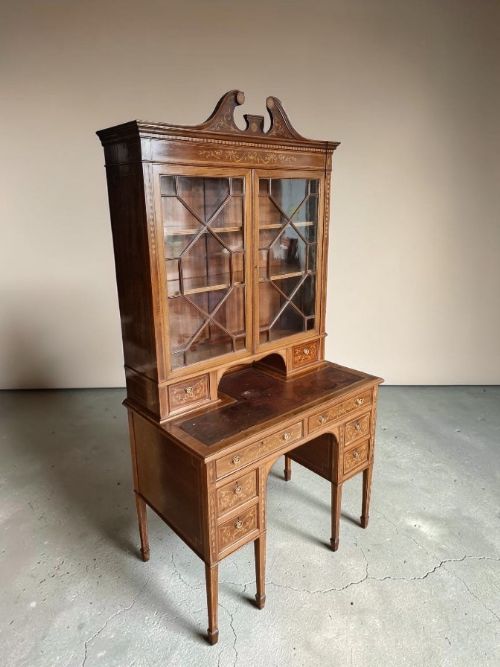
An edwardian satinwood glazed bookcase combines display space for books and decorative objects with the pale, reflective finish characteristic of the period. These items appear most frequently in forms associated with the Sheraton Revival, displaying symmetrical proportions and refined classical motifs.
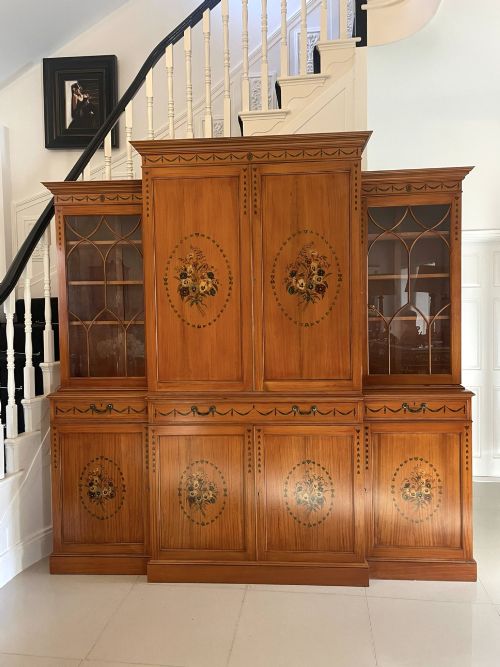
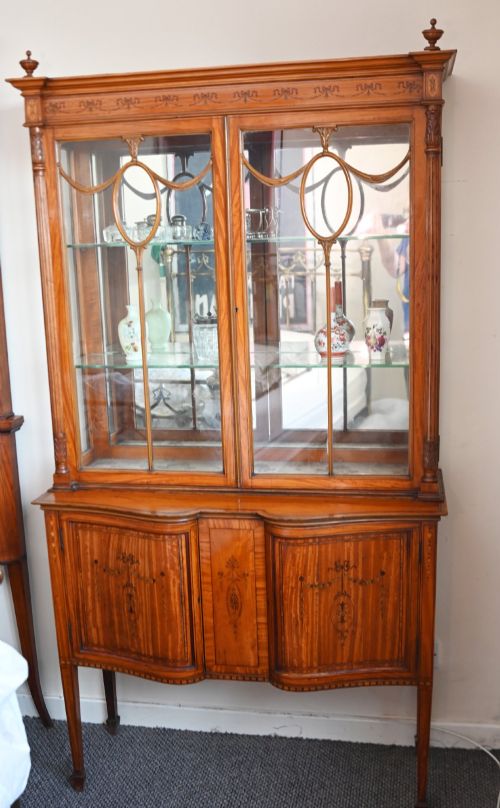
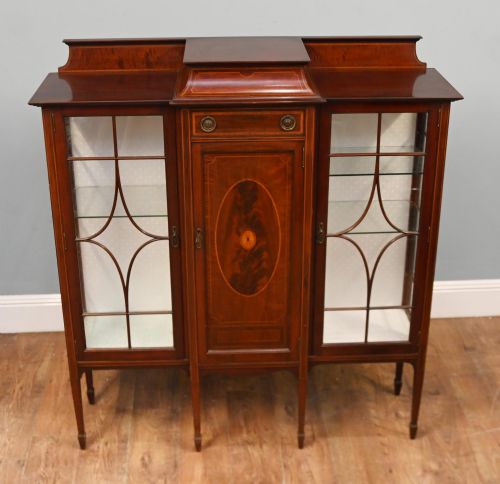
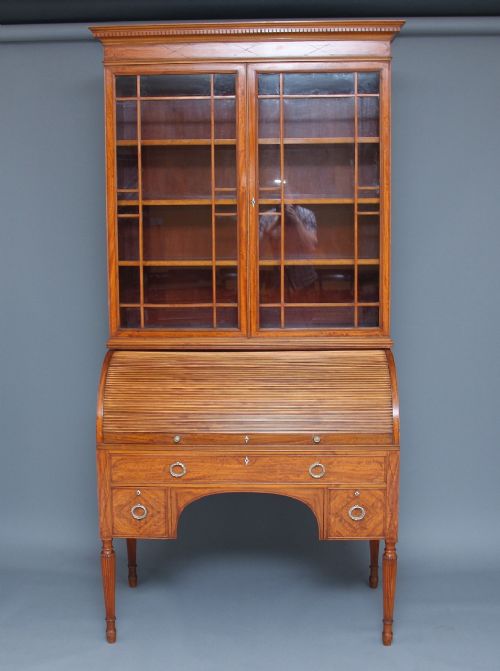
Makers produced these pieces predominantly around the turn of the twentieth century, drawing inspiration from eighteenth-century precedents. Alongside standard upright bookcases, buyers encounter breakfront formats, bureau bookcases, and specialised vitrines.
The integration of glass doors protects libraries and collections while maintaining visual lightness in a room. Structural variations range from compact single-door cupboards to large multi-section breakfront compositions.
How They Were Made
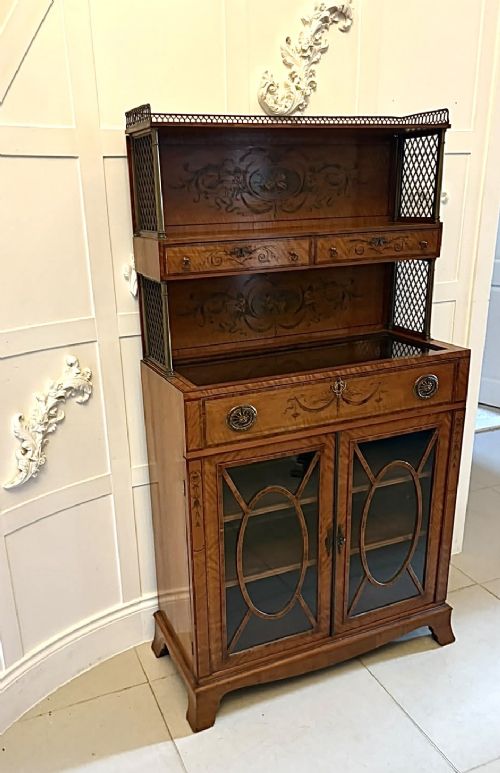
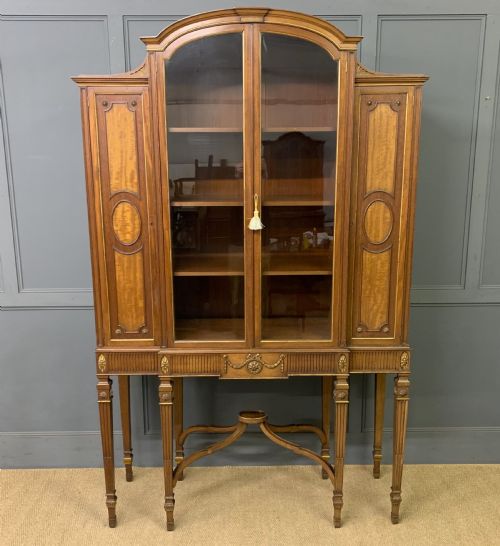
Craftsmen utilised foundational timbers like mahogany or maple, applying satinwood veneers to achieve a smooth, luminous exterior surface. Wood inlay, marquetry, and painted decorations frequently adorn the panels, creating contrast through darker woods or botanical motifs.
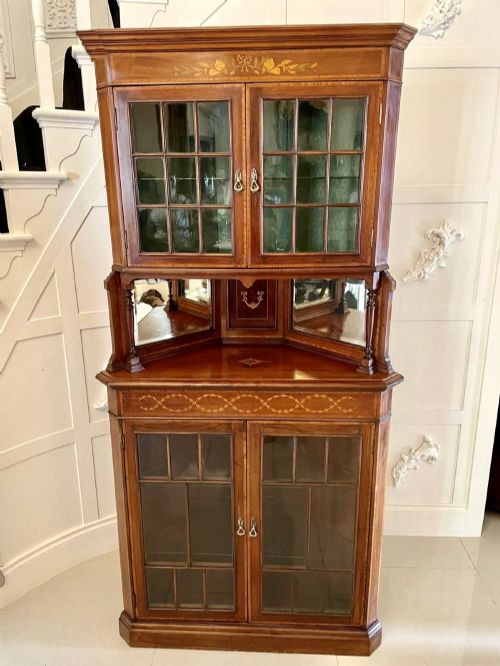
Glazing techniques involve timber or brass bars dividing the glass panes into geometric or astral patterns. Internal fittings often incorporate adjustable shelving, fabric linings, and mirrored backs to enhance illumination within the cabinet.
Edwardian Satinwood Glazed Bookcase Retail Price Guide 2026
Typical asking prices for edwardian satinwood glazed bookcase among the pieces listed under this phrase on Sellingantiques today, from the lower quarter to the upper quarter. They describe what is for sale here now, not the wider market.
Listings feature Edwardian, Victorian, and eighteenth-century periods, showcasing materials such as satinwood, mahogany, brass, and glass.
What Varies in Quality
The refinement of the marquetry and the crispness of the painted decoration separate standard production from exceptional examples. Finer pieces demonstrate precise botanical or classical motifs executed with meticulous control over shading and line.
Construction standards reveal themselves in the selection of timbers and the integration of internal fittings such as original brass hardware and hand-painted panels. The weight and clarity of the glass, alongside the precision of the joinery, dictate the overall stature of the piece.
Edwards & Roberts·Waring and Gillow·Maple & Co·Hampton & Sons·Jewell of Holborn
The Edwardian Satinwood Glazed Bookcase Glossary
- Satinwood
- A dense, lustrous timber native to the tropics, prized for its golden sheen and smooth texture when polished. It serves as the primary face veneer on high-status Edwardian cabinetry.
- Marquetry
- The art of forming decorative patterns by fitting together small pieces of veneer of different woods, tinted materials, or shells. This technique creates pictorial designs across cabinet doors and friezes.
- Sheraton Revival
- A late nineteenth and early twentieth century design movement that reinterprets the neoclassical furniture forms of Thomas Sheraton. Pieces in this style utilise balanced proportions, satinwood, and delicate inlay.
- Breakfront
- A cabinet design featuring a central section that projects forward from the flanking wings. This architectural arrangement adds depth and visual interest to large bookcases and display units.
- Astral Glazing
- A method of dividing glass doors into intricate lattice patterns using slender wooden bars. This style originated in the eighteenth century and returned to popularity during revival periods.
- Secretaire
- A desk form incorporating a fitted drop-front writing drawer concealed within the upper structure of a bookcase or cabinet. It offers a compact workspace without interrupting the exterior elevation.
Edwardian Satinwood Glazed Bookcase: Frequently Asked Questions
How do I care for satinwood?
Satinwood benefits from minimal exposure to direct sunlight to preserve its pale golden colour and prevent the timber from darkening unevenly over time.
Apply high-quality beeswax sparingly and buff gently with a soft cloth to maintain the natural lustre without building up heavy chemical layers.
Where should I place a glazed bookcase?
Position the piece on an interior wall away from direct heat sources and radiators to protect the dry timbers and delicate wood veneers from cracking.
Ensure the floor is level so the doors hang true and the glass remains free from structural stress.
How can I distinguish Sheraton Revival from original pieces?
Sheraton Revival pieces generally date from the late nineteenth or early twentieth century, utilising machine-sawn secondary timbers and modern construction tolerances behind the historical facade.
Original eighteenth-century examples exhibit hand-cut dovetails, older secondary woods like oak or pine, and distinct signs of historic tool marks.
What is the purpose of a mirror back?
Mirror backs inside the display sections reflect light outward through the glass doors, illuminating the books or ceramics kept within.
This decorative feature increases the visual depth of the cabinet, making it appear lighter and more expansive in smaller rooms.