
Edwardian Sapphire Engagement Ring
An edwardian sapphire engagement ring brings together delicate diamond clusters, rich blue stones and platinum settings from the early twentieth century.
Edwardian Sapphire Engagement Ring
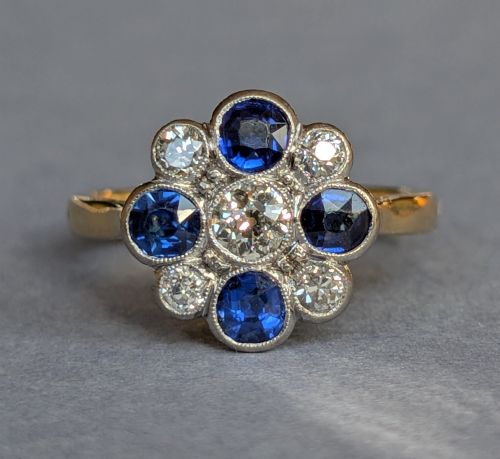
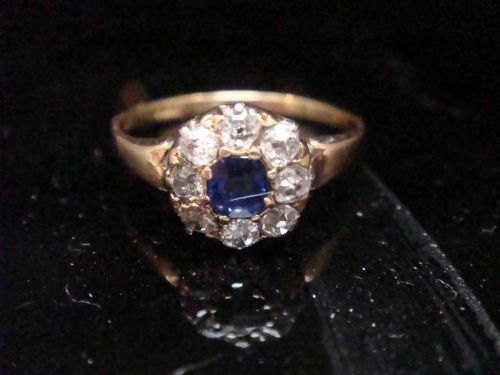
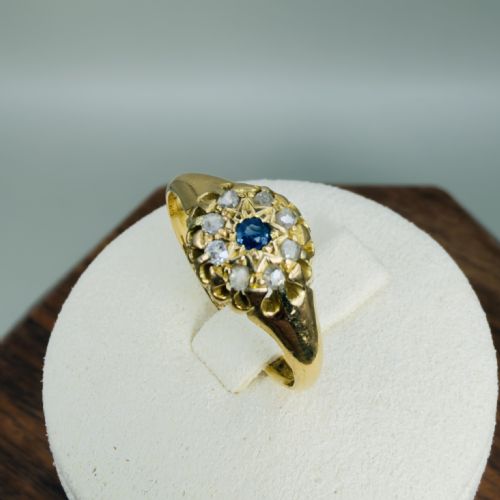
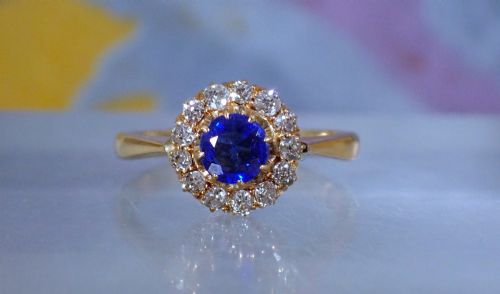
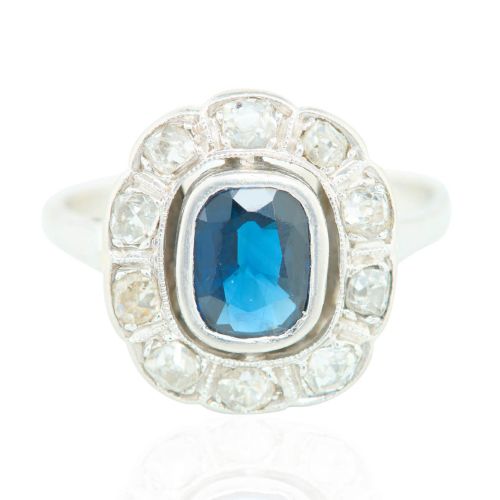
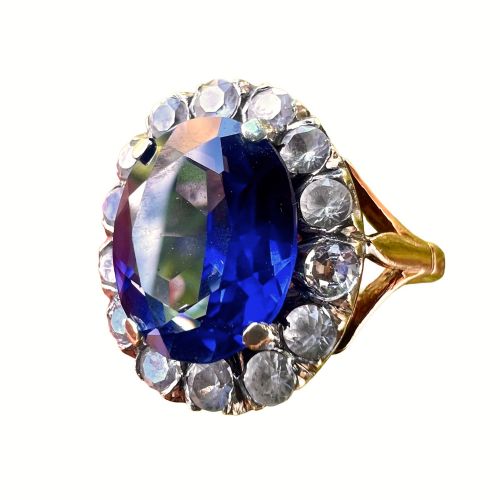
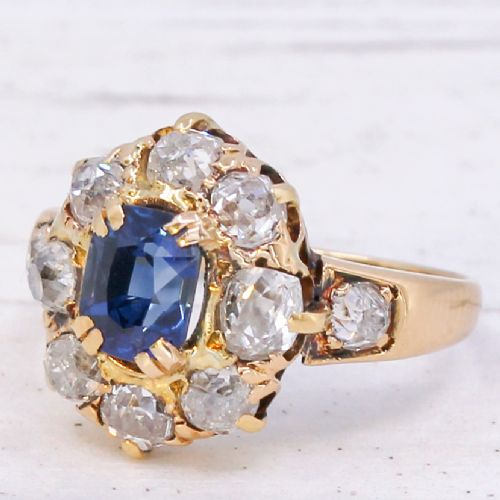
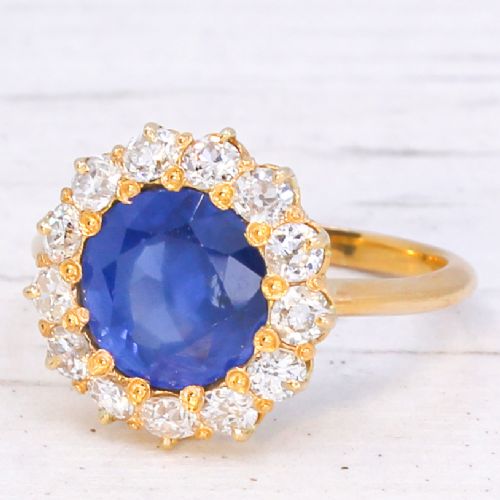
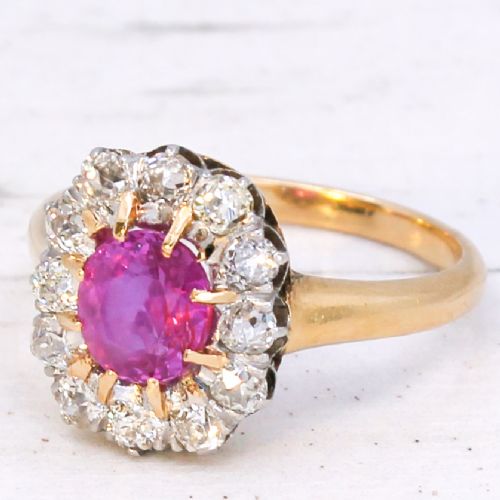
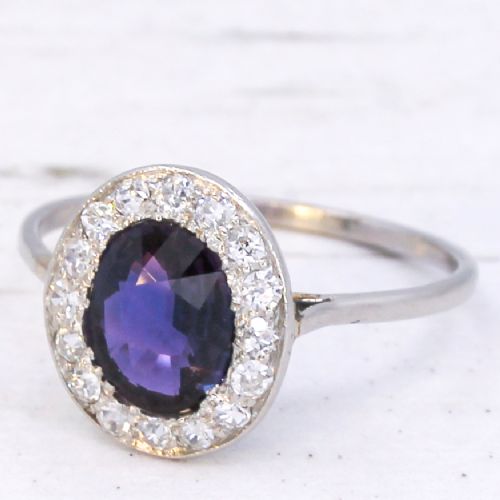
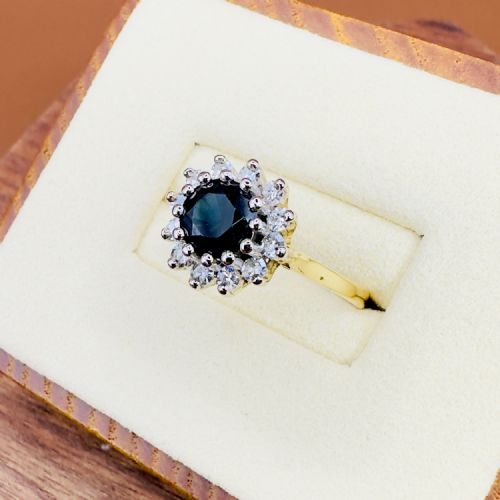
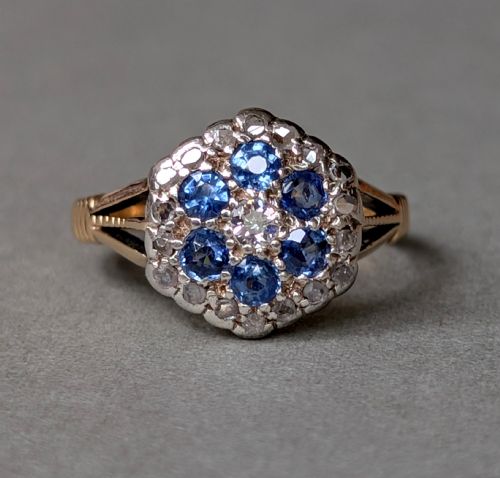
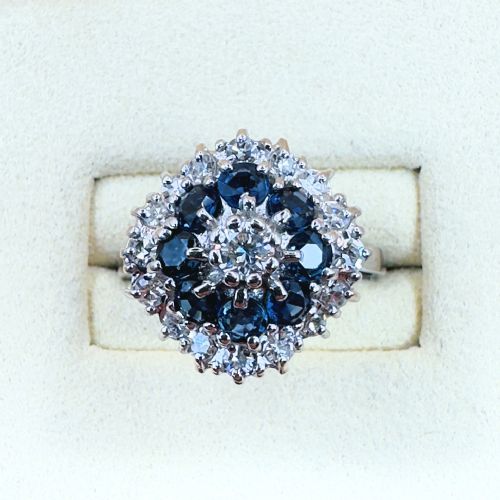
An edwardian sapphire engagement ring is typically found in cluster, daisy or halo configurations set alongside old cut diamonds. These pieces frequently span the Edwardian period, 1900s, 1910s and adjacent Art Deco and Victorian eras.
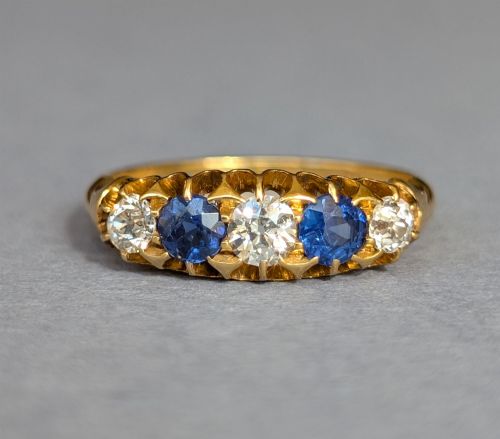
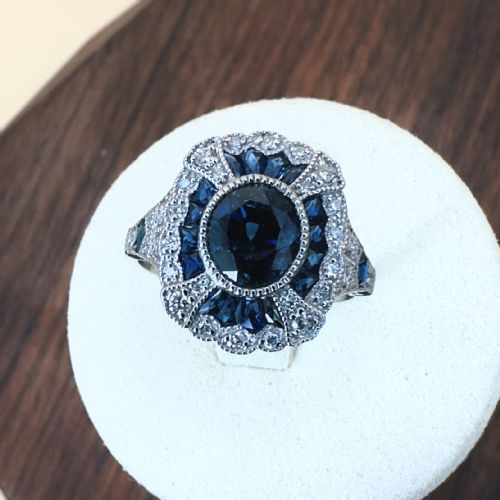
The materials recorded across these rings combine natural blue, pink or unheated sapphires with diamonds, mounted in platinum, 18ct yellow gold, white gold and silver. Cluster and target forms dominate the surviving examples on this page.
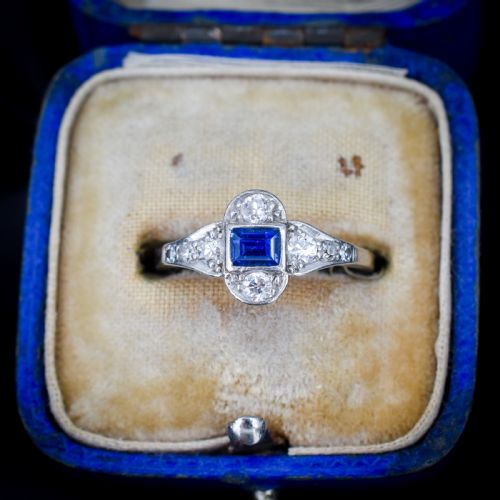
Buyers will encounter geometric designs alongside traditional floral daisy clusters and boat rings. Origins range from English workshops to French makers utilising platinum and 18ct white gold.
Materials and construction
Goldsmiths combined yellow gold, white gold, silver and platinum to mount central sapphires and surrounding old mined or old cut diamonds. Platinum became increasingly favoured for its strength in fine wirework and claw settings.
Cluster and halo designs relied on precise gem-cutting techniques, including calibré cut sapphires shaped to fit geometric Art Deco channels. Stones were hand-set into mounting metals that frequently showed combined yellow gold shanks with platinum-topped heads.
Listings span periods from 1890 through the Edwardian era to the 1950s, featuring platinum, yellow gold and white gold.
Judging quality
Quality rests in the origin and treatment of the sapphire, distinguishing unheated Burmese, Ceylon or Kashmir stones from standard commercial gems. The presence of certification for natural, untreated colour elevates a piece considerably.
The fineness of the metalwork, the symmetry of the old cut diamond cluster, and the integrity of the original settings determine the overall execution. Pierced gallery work and crisp claw or channel setting indicate superior bench craftsmanship.
The Edwardian Sapphire Engagement Ring Glossary
- Cluster ring
- A central gemstone surrounded by a ring of smaller stones, usually diamonds framing a sapphire. This layout maximises visual impact and light return.
- Old cut diamond
- A hand-faceted diamond cut before the standardisation of the modern brilliant cut in the early twentieth century. These stones typically feature smaller tables and higher crowns.
- Calibré cut
- Small gemstones cut specifically to fit a precise geometric channel or pattern within a mounting. This technique is prominent in Art Deco jewellery.
- Daisy ring
- A specific cluster arrangement where circular petal stones surround a central gem, resembling a flower. These designs are common in Edwardian and Victorian pieces.
- Navette ring
- A boat-shaped ring setting that tapers to points at either end of the finger. The elongated silhouette was popular during the Edwardian and Art Deco periods.
Edwardian Sapphire Engagement Ring: Frequently Asked Questions
How do I care for an antique ring?
Clean these rings gently using warm soapy water and a soft brush, avoiding harsh ultrasonic cleaners that might loosen old stones.
Have the claw settings and platinum mounts checked periodically by a professional jeweller to ensure the sapphires and diamonds remain secure.
Were these rings worn daily?
Original owners wore these pieces as daily engagement tokens, though the delicate platinum work and fine gold shanks benefit from mindful wear today.
Removing the ring during heavy manual tasks prevents unnecessary wear to the antique claws and delicate metal bands.
How do I identify an Edwardian ring?
Look for characteristic design elements such as platinum-topped gold settings, delicate millegrain edges, and floral daisy or garland motifs.
Construction methods from this period often combine yellow gold shanks with white metal heads designed to maximise diamond sparkle.
What is an unheated sapphire?
An unheated sapphire is a natural gemstone that has not undergone thermal enhancement to improve its colour or clarity. These untreated stones are particularly valued by collectors.
Gemmological reports often accompany unheated sapphires to confirm their natural origin and geographic provenance.