
Edwardian Sapphire Diamond Jewellery
Edwardian sapphire diamond jewellery brings together vibrant blue stones and sparkling gems in rings, bracelets, and pendants.
Edwardian Sapphire Diamond Jewellery
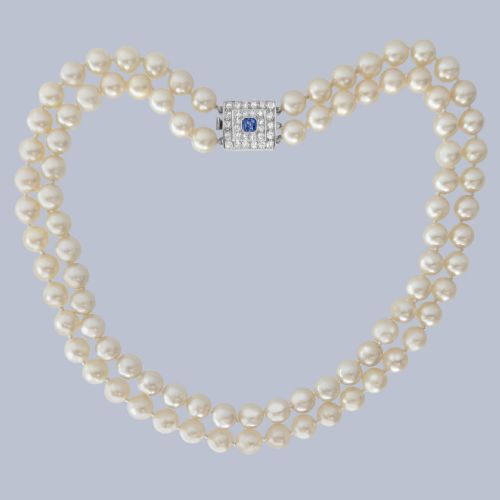
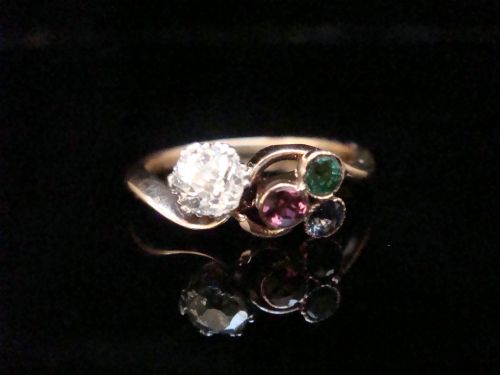
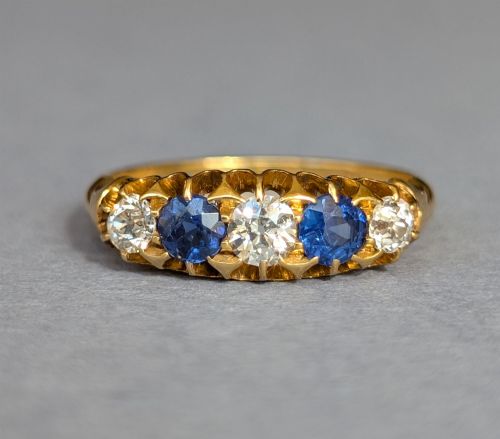
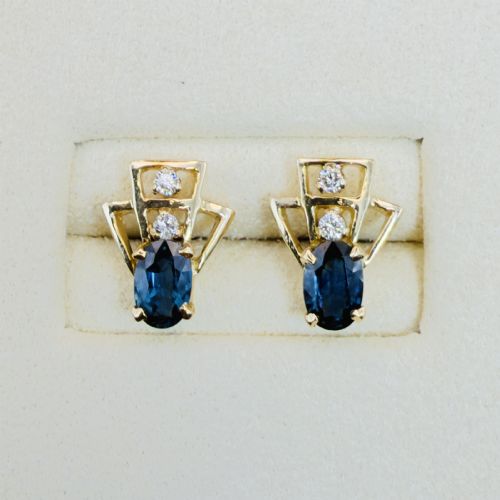
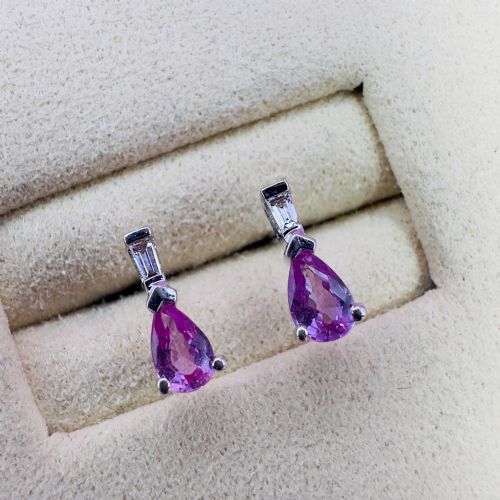
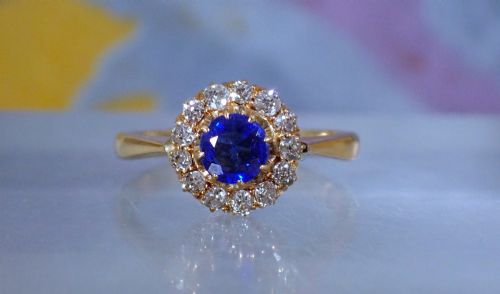
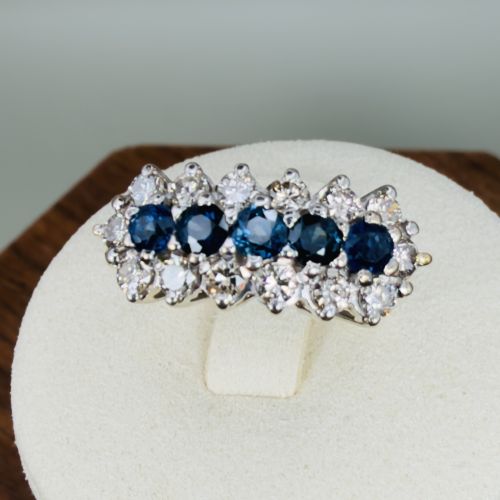
Edwardian sapphire diamond jewellery encompasses rings, bracelets, earrings, necklaces, and brooches created during the early twentieth century. These items showcase the refined, graceful aesthetic of the period, often utilising delicate settings that highlight the contrast between blue sapphires and diamonds.
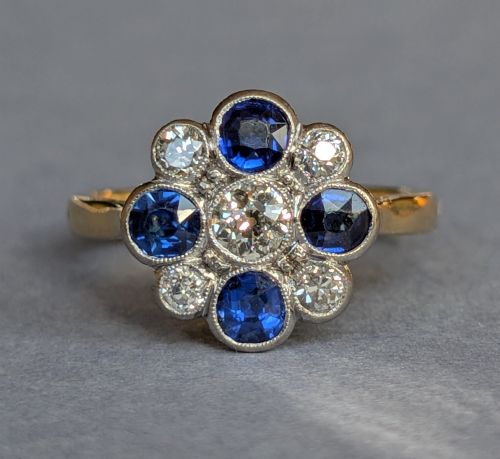
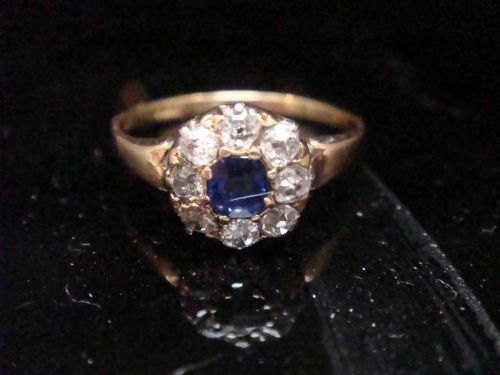
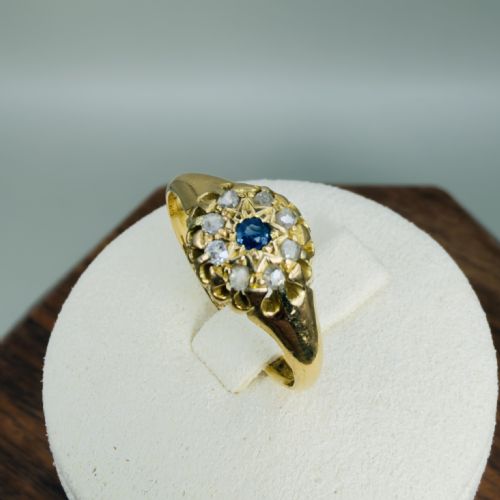
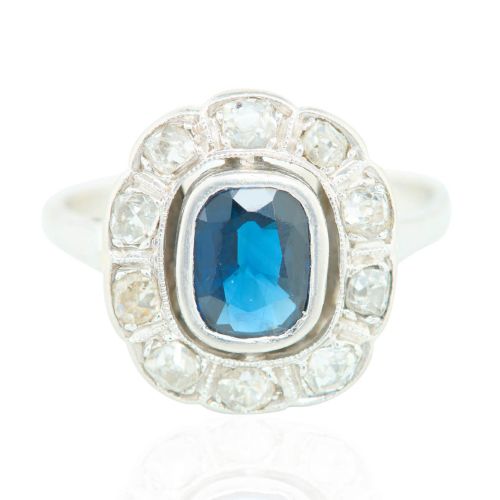
Cluster rings form a large portion of the available selection, alongside daisy rings, gypsy rings, and navette designs. Buyers frequently encounter pieces from the broader Edwardian era alongside adjacent periods such as the late Victorian era and the subsequent Art Deco movement.
How they were made
Goldsmiths and jewellers utilised platinum and 18ct gold, both yellow and white, to construct robust yet delicate mountings for gemstones. Platinum gained popularity for its strength, allowing for intricate wirework and fine claw settings that maximised light entry into the stones.
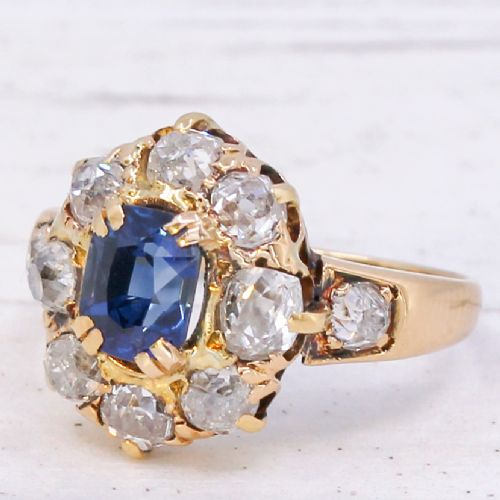
Diamonds within these pieces often display older cutting styles, including old cut and old mined cut facets, which produce a softer, broader sparkle than modern brilliant cuts. Sapphires are selected in various cuts, from oval and pear to calibre cut stones fitted tightly into geometric channels.
What varies in quality
Quality in these jewels rests upon the natural origin and treatment status of the sapphires, with unheated stones from sources like Burma or Ceylon commanding distinct attention. The cut, clarity, and carat weight of the accompanying diamonds further influence the overall refinement of each piece.
The integrity of the metalwork and the precision of the stone settings dictate the durability and visual harmony of the item. Handcrafted details, such as delicate millegrain edges and well-preserved gallery work, distinguish finer examples from standard production.
The Edwardian Sapphire Diamond Jewellery Glossary
- Old cut
- A diamond cutting style characterised by a high crown, small table, and deep pavilion, designed to catch candlelight. These stones display broader, softer flashes of light compared to modern brilliant cuts.
- Cluster ring
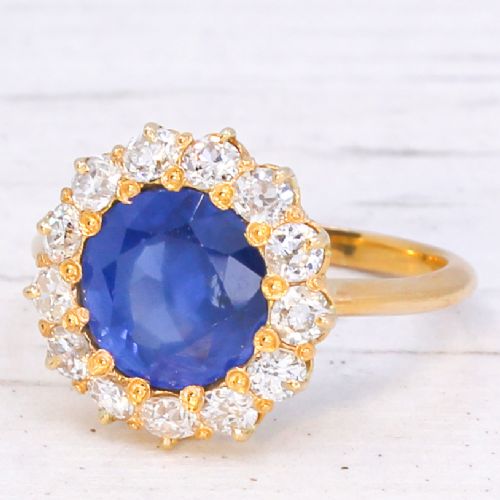
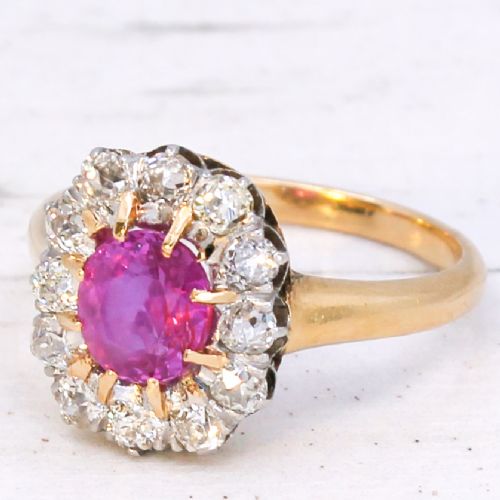
- A ring featuring a central gemstone surrounded by a border of smaller stones, typically diamonds encircling a sapphire. This layout maximises visual impact and perceived size.
- Calibre cut
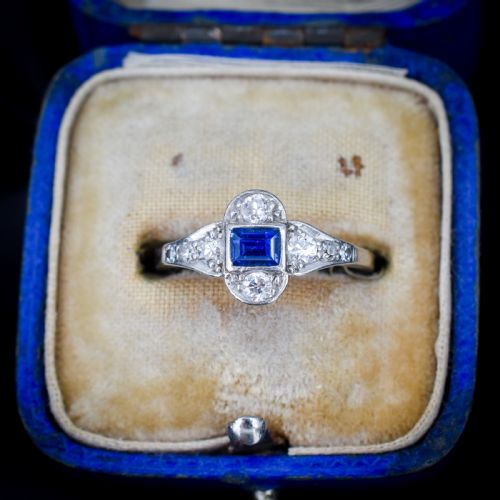
- Gemstones shaped and cut specifically to fit tightly together in geometric rows or patterns without visible metal separations. This technique appears frequently in Art Deco designs.
- Gypsy ring
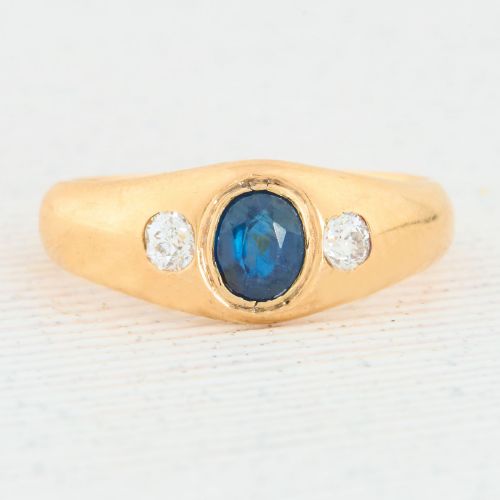
- A style where the stones are flush-set directly into the thick metal band rather than held by prominent claws. This creates a smooth, rounded profile across the finger.
- Navette
- A boat-shaped or marquise-like design that tapers to sharp points at either end. This elongated silhouette sits flat along the finger in rings and pendants.
- Millegrain
- A decorative technique involving a row of tiny metal beads along the edges of a setting. It adds a soft, textured border to platinum and gold mounts.
Edwardian Sapphire Diamond Jewellery: Frequently Asked Questions
How do I care for antique gemstone jewellery?
Clean these pieces gently using warm water, mild soap, and a soft brush to remove everyday oils and dust from beneath the settings.
Avoid harsh chemical cleaners and ultrasonic baths, particularly with treated or unheated stones, and store each item separately to prevent scratching.
What defines Edwardian style in jewellery?
Edwardian design relies on lightweight platinum and gold frameworks that emulate lace, ribbons, and floral garlands. Master jewellers favoured airy, delicate structures that allowed maximum light to pass through the diamonds and sapphires.
This aesthetic contrasts with the heavier, more solid constructions typical of mid-Victorian pieces.
Are unheated sapphires more desirable?
Unheated sapphires possess natural clarity and colour that have not been altered by thermal enhancement in a laboratory. Collectors and buyers prize these stones for their untouched geological origin and rarity in the marketplace.
Certification from gemological laboratories often accompanies these specific pieces to confirm their untreated status.
Can I wear an antique cluster ring daily?
Many buyers wear these cluster and daisy rings every day, provided the settings receive regular checks by a professional jeweller. Platinum and 18ct gold offer sufficient durability for daily wear when treated with reasonable care.
Removing rings during heavy manual work or sports prevents unnecessary strain on the claws and band.