
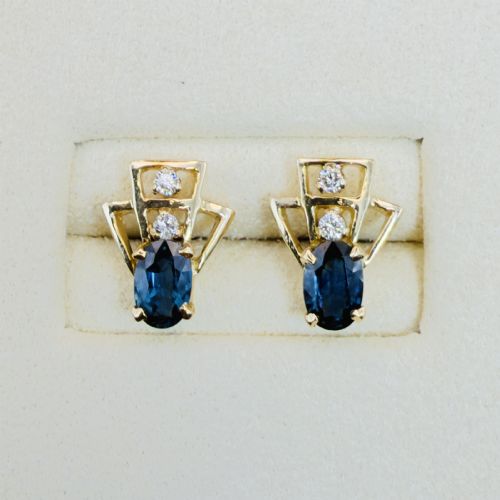
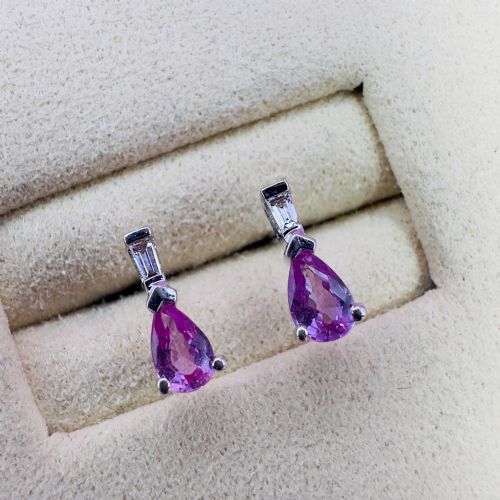


Gold Diamond Studs
Gold diamond studs span periods from Victorian to Mid-Century, offering enduring elegance in settings of white, yellow, and rose gold.
Gold Diamond Studs
When buyers search for gold diamond studs, they encounter a range of forms from simple solitaire earrings to intricate cluster designs incorporating gemstones like sapphires, emeralds, and pearls. The pieces available span eras from the late nineteenth century through the Edwardian, Art Deco, and Mid-Century periods.
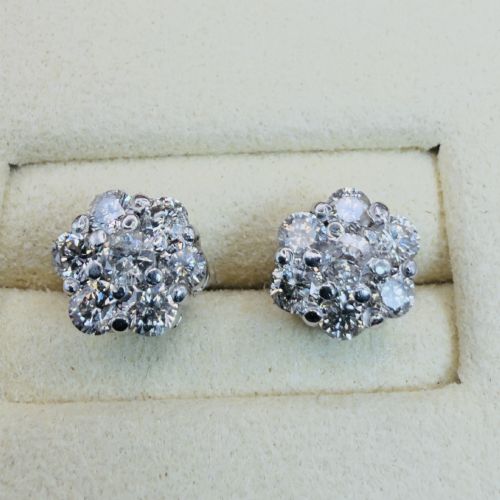
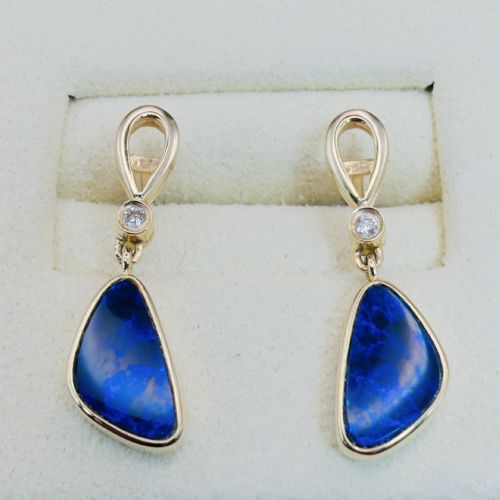
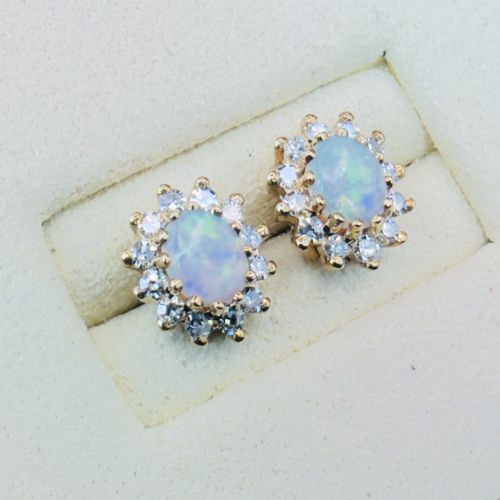
Cluster earrings featuring a central diamond or coloured stone surrounded by smaller gems appear frequently in white and yellow gold settings. Simpler screw-back and solitaire stud configurations also feature alongside drop variants designed to sit close to the earlobe.
How they were made
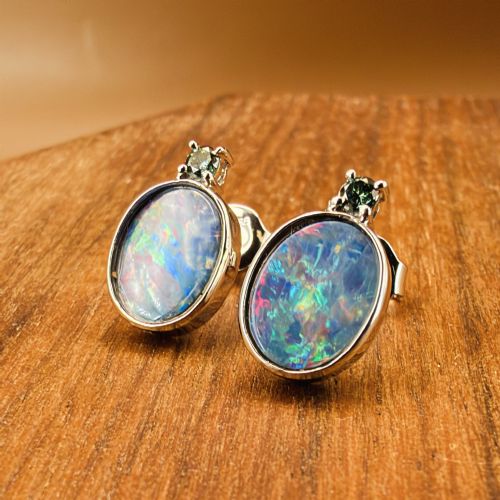
Goldsmiths utilised 9ct, 14ct, and 18ct white, yellow, and rose gold, often combining platinum with gold or silver during the Edwardian and Art Deco decades to enhance stone settings. Gemstones including brilliant-cut, old-cut, and rose-cut diamonds were secured using claw settings or clustered around central aquamarines, opals, and rubies.
Construction techniques evolved from nineteenth-century silver-topped gold cluster work to mid-century screw-back and clip-on mechanisms. Metalworking methods prioritised secure prong placement and detailed gallery wirework to support varied stone cuts such as marquis, pear, and oval.
Some past pieces served double duty as shirt studs before finding a new life in modern jewellery boxes.
What varies in quality
The standard of craftsmanship shows in the precision of the stone setting and the symmetry of the metalwork, particularly in multi-stone cluster designs. Heavier gauge gold and platinum mounts provide greater durability and structural integrity compared to lighter or worn settings.
The clarity and cut of the diamonds, alongside the matching of coloured stones like emeralds, sapphires, and opals, largely determine the distinction between average and exceptional pieces. Period authenticity, such as intact original screw backs or secure clip mechanisms, also influences the character of the jewellery.
Ilias Lalaounis
The Gold Diamond Studs Glossary
- Solitaire
- A single gemstone set on its own in a mounting. This term commonly applies to single-stone diamond stud earrings.
- Cluster
- An arrangement of smaller gemstones clustered closely around a larger central stone. This layout often forms a floral or geometric pattern on the earlobe.
- Old-cut
- A diamond cut style predating modern brilliant cuts, characterised by a smaller table and a higher crown. These stones exhibit a softer, candlelit sparkle.
- Screw back
- A threaded earring post paired with a matching backing nut that screws down securely onto the earlobe. This mechanism provides added security during wear.
- Platinum
- A dense, durable white metal frequently utilised in Edwardian and Art Deco mountings to hold small pavé-set diamonds securely.
Gold Diamond Studs: Frequently Asked Questions
How do I care for antique gold diamond studs?
Clean these earrings gently using warm soapy water and a soft brush to remove everyday oils from the metal and stones. Avoid harsh chemical cleaners that might affect softer surrounding gems like opals or pearls.
Store each pair separately in a lined box to prevent the diamonds from scratching softer gold settings or adjacent pieces in your collection.
What is the difference between screw-back and push-back studs?
Screw-back fasteners utilise a threaded post and a twisting backing nut, requiring the wearer to wind the backing down to the earlobe. This design offers enhanced security against accidental loss compared to standard friction backs.
Push-back friction findings rely on tension to hold the earring in place, which became more common in later mid-century manufacturing. Both styles appear across the historical periods represented in these listings.
How can I tell an Art Deco stud from an Edwardian one?
Edwardian pieces typically showcase delicate platinum-on-gold work with floral motifs, millegrain edges, and flowing lines. The overall aesthetic leans towards lightness and lace-like openwork.
Art Deco examples favour geometric symmetry, sharp angles, and stylised shapes, often pairing diamonds with contrasting calibrated sapphires or emeralds. Platinum mountings remain common across both eras to highlight white diamond sparkle.
Can I wear vintage cluster studs every day?
Sturdy eighteenth and nineteenth-century gold and platinum settings handle regular wear well, provided the prongs holding the stones remain thick and secure. It is sensible to have a jeweller inspect older claw settings periodically.
Softer centre stones like opals or pearls require more careful handling during daily wear than hard diamonds or sapphires. Removing the earrings before swimming or heavy physical activity protects delicate antique mountings.