


Gold Geometric Earrings
Gold geometric earrings are striking historic jewels defined by clean lines and balanced forms, offering collectors a tangible piece of past design movements.
Gold Geometric Earrings
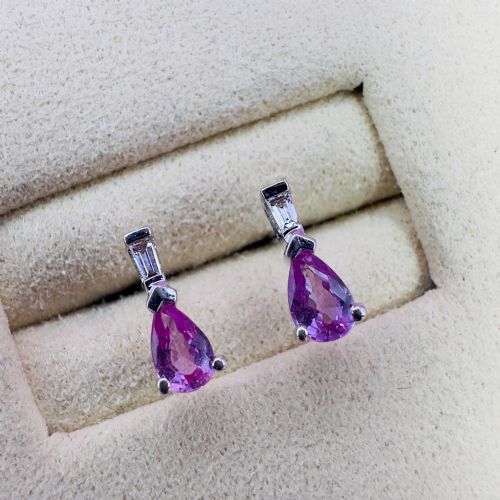
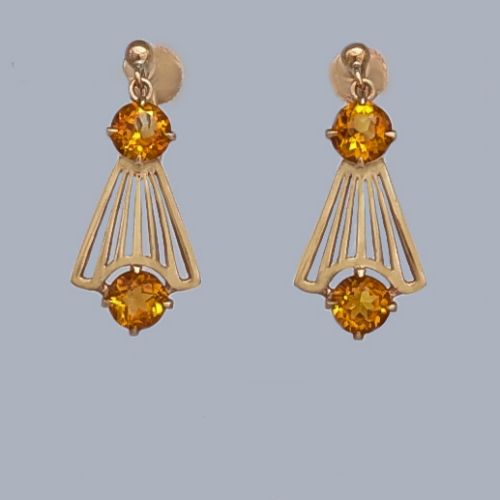
Gold geometric earrings encompass a diverse array of historical periods, ranging from Victorian cross wheel designs to structured Art Deco creations. Buyers searching for gold geometric earrings will frequently encounter drop earrings, studs, and dangle styles shaped by square, pear, and trapezoid forms.
Materials span 9ct yellow gold, 18ct white gold, and platinum, paired with stones such as diamonds, pink sapphires, aquamarines, and moonstones. Buyers find both delicate studs and articulated night and day drop configurations.
Materials and Construction
Craftsmen utilised various gold standards, predominantly 9ct yellow gold and 18ct white gold, sometimes combined with silver settings to enhance stone brilliance. Metalwork ranges from simple square frames to intricate articulated drop structures.
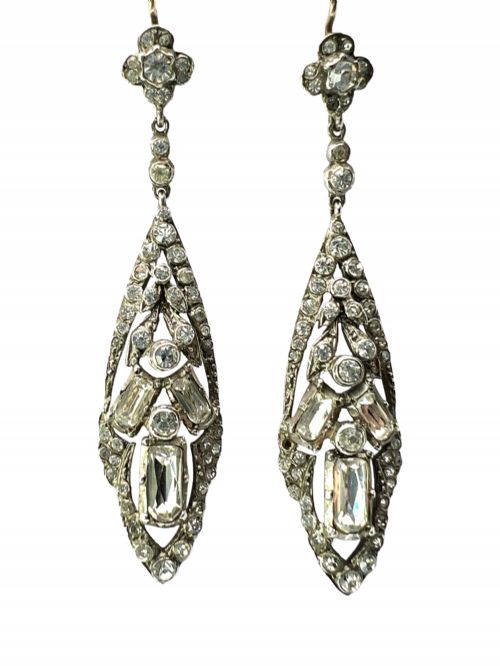
Gemstones are shaped into precise geometric cuts including baguettes, trapezoids, and pear cuts. Artisans integrated diamonds, natural pearls, paste, and rock crystal into secure metal settings.
Some night and day drop earrings let you remove the lower section, transforming an evening statement piece into a daytime stud.
Assessing Craftsmanship
Quality rests in the precision of the geometric stone cuts and the structural integrity of the metal settings. Articulated drops require meticulous hinge work to move fluidly without strain on the gold links.
Superior examples combine multiple precious materials, such as platinum and 18ct white gold, with well-matched diamonds and coloured gems like pink sapphires or aquamarines. The clarity of stones and the crispness of period styling distinguish the finer pieces.
The Gold Geometric Earrings Glossary
- Art Deco
- A design style from the 1920s and 1930s characterised by symmetry, geometric precision, and stylised motifs. It appears frequently in drop and stud configurations.
- Drop Earrings
- Earrings that hang below the earlobe, often featuring articulated sections that swing with movement. They range from simple suspended stones to elaborate multi-tiered designs.
- Baguette Cut
- A rectangular gemstone cut with step facets, popular in structured period jewellery for linear symmetry. This cut provides clean, sharp edges suited to geometric layouts.
- Paste
- Hand-cut glass or lead crystal used in antique jewellery to imitate gemstones. It offers high brilliance within period metal settings.
- Articulated
- Designed with movable joints between sections. This technique allows drop earrings to flex and catch the light from multiple angles.
Gold Geometric Earrings: Frequently Asked Questions
How do I identify Art Deco earrings?
Art Deco earrings typically feature strong geometric shapes, symmetrical layouts, and materials like 18ct white gold paired with diamonds. They often incorporate linear stone cuts such as baguettes and trapezoids.
Look for crisp angles and structured drops characteristic of the 1920s and 1930s design ethos.
What is the difference between stud and drop earrings?
Stud earrings sit directly on the earlobe without hanging down, often highlighting a single central stone or geometric frame. Drop earrings extend below the lobe, sometimes utilising articulated sections for movement.
Both styles appear across the Victorian, Edwardian, and mid-century periods.
Are these earrings suitable for daily wear?
Many sturdy gold and gemstone pieces accommodate regular use, particularly solid gold studs or robust square-framed designs. Antique drop earrings with delicate articulated links require more mindful handling to preserve their historic mechanics.
Consider the presence of softer materials like pearls or paste when selecting pieces for frequent wear.
What gold types are used in these pieces?
The inventory incorporates 9ct yellow gold, 18ct white gold, standard gold, and platinum settings. Silver is also combined with gold in specific antique pieces to mount stones securely.
Colour variations range from warm yellow gold to bright white precious metals.