


Sapphire Cluster Earrings
These sapphire cluster earrings bring together centuries of fine gemstone work, offering an immediate touch of period elegance to any collection.
Sapphire Cluster Earrings
Sapphire cluster earrings group central gemstones with surrounding stones to form compact geometric or floral arrangements. This selection ranges from Edwardian and Art Deco designs to mid twentieth century styles.
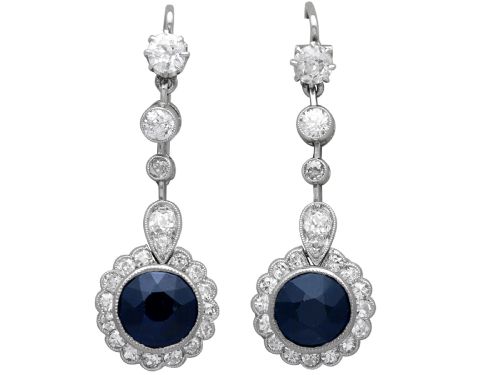
The most frequent version encountered on this page involves a central sapphire encircled by diamonds, set in gold or white gold. Drop earrings and stud formats appear regularly across the inventory.
Origins trace through the 1910s, 1930s, 1950s, and 1960s, showing a steady evolution in cluster settings. Buyers encounter both yellow and white metal mountings paired with diverse sapphire colour variations.
Materials and Technique
Metals span nine carat and eighteen carat gold, alongside platinum and silver. White gold and yellow gold provide the structural foundation for mounting central sapphires and accent diamonds.
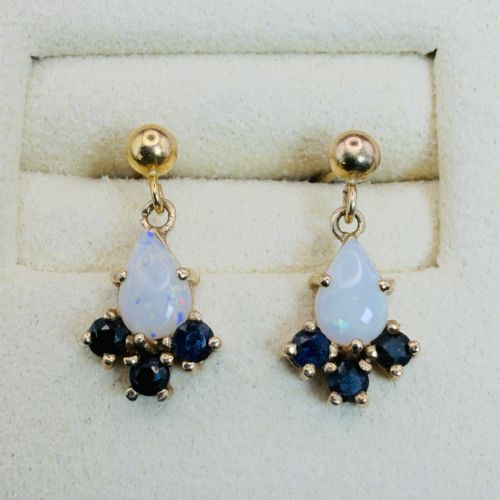
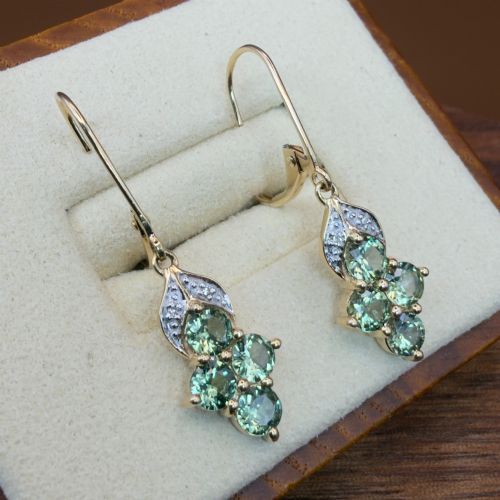
Gemstone selection pairs blue, teal, pink, padparadscha, and cornflower sapphires with old cut, rose cut, or modern diamonds. Peridot, garnet, pearl, and emerald also appear alongside the primary stones in specific multi gem configurations.
Settings utilise claw, bezel, and cluster arrangements designed to secure multi stone compositions. Hinge backs, screw backs, and post backs provide the mechanical fastening methods for these drops and studs.
Listings feature sapphire cluster earrings from the Edwardian era, 1930, 1950, and 1960 in nine carat and eighteen carat gold.
Distinctions in Quality
Quality rests upon the visual harmony of the stone arrangement and the saturation of the sapphire. Superior examples exhibit vibrant blue or cornflower hues matched with well proportioned diamond halos.
The precision of the metalwork defines the construction standard. Fine examples display delicate, even settings that securely hold each stone without overwhelming the central design.
The Sapphire Cluster Earrings Glossary
- Cluster
- A setting style where a central gemstone is surrounded by a ring of smaller stones. This arrangement maximises visual impact and light reflection.
- Old Cut Diamond
- A vintage diamond cutting style predating modern brilliant cuts. These stones feature smaller tables and higher crowns.
- Hinge Back
- A mechanical earring fastening that uses a hinged arm to secure the piece to the earlobe. This mechanism offers reliability for drop designs.
- Rose Cut Diamond
- A historic diamond cut with a flat base and a domed crown featuring triangular facets. It resembles an unopened rosebud.
Sapphire Cluster Earrings: Frequently Asked Questions
What periods do these earrings represent?
The pieces span several distinct eras, including the Edwardian period, the Art Deco years of the 1930s, and the mid twentieth century eras of the 1950s and 1960s.
Design characteristics shift across these decades, moving from ornate Edwardian detail to geometric Art Deco targets and floral mid century studs.
How are different sapphire colours categorised?
Sapphires in these clusters appear in standard blue, cornflower blue, teal green, pink, and padparadscha varieties. Each colour grade reflects different mineral inclusions within the stone.
Collectors look for specific saturation levels, particularly the prized cornflower tone and the unusual pinkish orange of padparadscha specimens.
What metal types were used for the mountings?
Mountings utilise nine carat yellow gold, eighteen carat yellow gold, eighteen carat white gold, platinum, and silver. White gold and platinum became particularly prominent during the Art Deco period.
The choice of metal often complements the hue of the central sapphire, with white metals enhancing blue stones and yellow gold warming green or pink varieties.
What fastener types do these earrings feature?
Fasteners include standard post backs, screw backs, and hinge backs depending on the age and weight of the earring. Drop and dangly formats often incorporate hinge or screw mechanisms for security.
Stud variations rely primarily on traditional posts to keep the cluster close to the earlobe.