
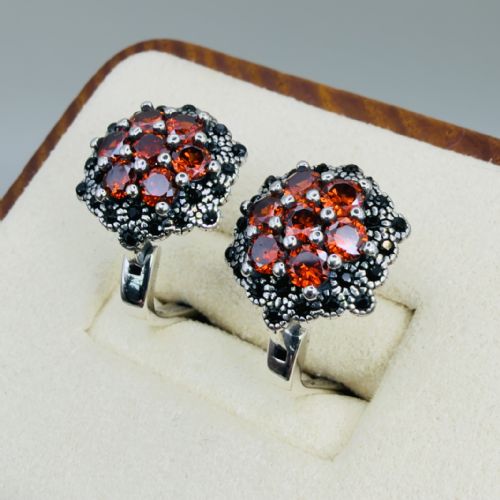


Gemstone Cluster Drops
Gemstone cluster drops bring together stones and precious metal in hanging forms designed to catch the light.
Gemstone Cluster Drops
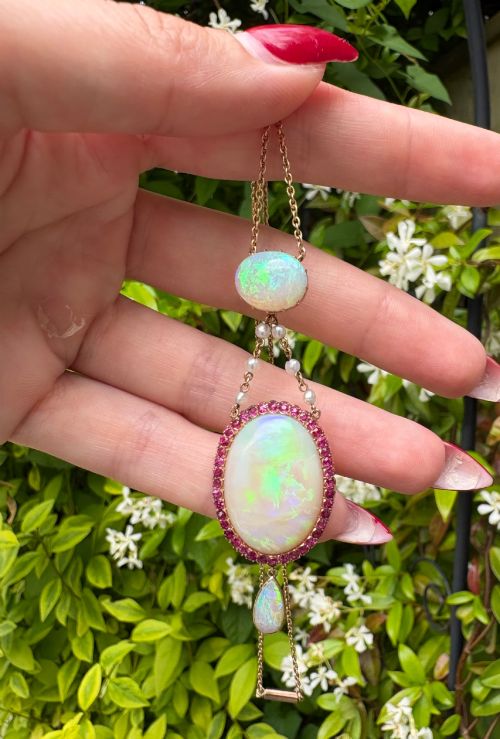
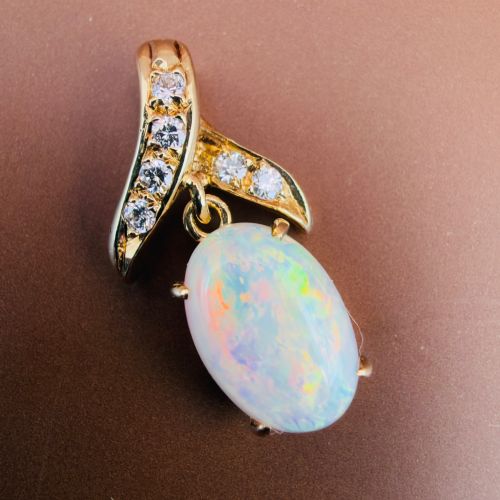
Gemstone cluster drops encompass pendant necklaces, drop earrings, and fringe necklaces built around central gemstone groupings. These pieces span the eighteenth century, the Victorian era, the Edwardian period, and the mid-twentieth century.
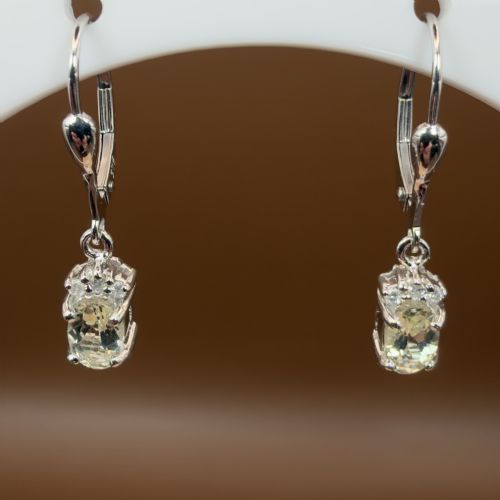
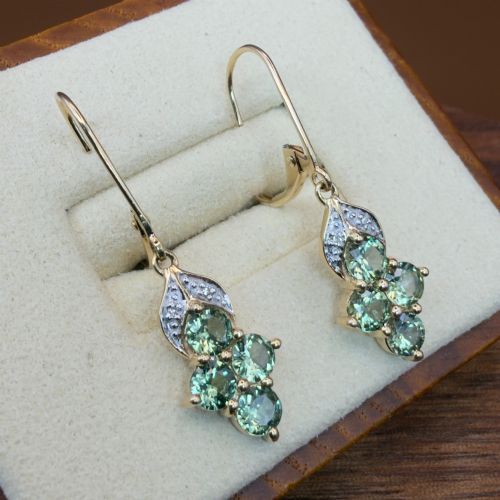
Earrings and pendants dominate the selection, utilising hinged backs, drop studs, and articulated fittings to create movement. Central stones are surrounded by secondary gems in tight floral or geometric formations.
The most frequent examples on this page date from the mid-twentieth century in nine-carat gold, alongside Victorian pieces featuring garnets and seed pearls.
How they were made
Goldsmiths set diamonds, sapphires, garnets, amethysts, and opals into gold, rose gold, white gold, silver, and platinum settings. Metalwork techniques combine cast or fabricated mounts with precise claw and bezel settings to secure the stones.
Earlier pieces incorporate silver-topped gold or sterling silver settings to enhance the brilliance of diamonds and coloured gems, while mid-century examples rely primarily on nine-carat and fourteen-carat yellow and white gold.
Listings feature nine-carat gold, eighteen-carat rose gold, sterling silver, and platinum paired with diamonds, garnets, peridots, and opals.
What varies in quality
Quality rests on the selection and matching of the stones, particularly the depth of colour in sapphires, garnets, tourmalines, and emeralds. Uniformity in size and saturation across the cluster distinguishes finer work.
The precision of the metalwork and the integrity of the hinge or suspension fittings dictate structural longevity. Heavier gauge gold and secure claw work separate standard commercial output from superior craftsmanship.
Dorrie Nossiter
The Gemstone Cluster Drops Glossary
- Cluster
- A setting where a central gemstone is encircled by a tight group of smaller stones. This arrangement maximises surface brilliance and colour impact.
- Drop earring
- An earring that extends below the earlobe and remains relatively stationary. They often utilise a post, wire, or hinge back fastening.
- Seed pearl
- A very small, naturally occurring pearl used extensively in Victorian jewellery. They are typically half-drilled and glued or pegged onto a gold backing.
- Hinge back
- A type of earring closure featuring a hinged arm that snaps securely behind the earlobe. This mechanism provides both safety and comfort for heavier drop designs.
Gemstone Cluster Drops: Frequently Asked Questions
How do I care for antique gemstone cluster drops?
Clean these pieces gently using a soft brush and warm soapy water, avoiding harsh ultrasonic cleaners that can dislodge seed pearls or softer stones like opal.
Store them individually in lined boxes to prevent softer gemstones from scratching against diamonds or harder metals.
What periods do these drop pieces come from?
The selection ranges from eighteenth-century items through Victorian, Edwardian, and Arts and Crafts eras up to mid-twentieth-century designs from the nineteen-fifties and sixties.
Mid-century items often utilise nine-carat gold and vibrant coloured sapphires, whereas Victorian examples frequently showcase Bohemian garnets and seed pearls.
Are these drops suitable for daily wear?
Solid gold constructions and secure hinge backs make many mid-century and later pieces robust enough for regular rotation.
Older Victorian or Edwardian pieces containing seed pearls or soft cabochon stones require more mindful handling to preserve their delicate structures.
How do I distinguish Victorian from mid-century clusters?
Victorian drops often incorporate closed-back foils, Bohemian garnets, rose-cut diamonds, and natural seed pearls set in yellow gold or silver-topped gold.
Mid-century pieces typically display brighter nine-carat yellow or white gold, open-backed claw settings, and faceted emeralds, amethysts, or tourmalines.