
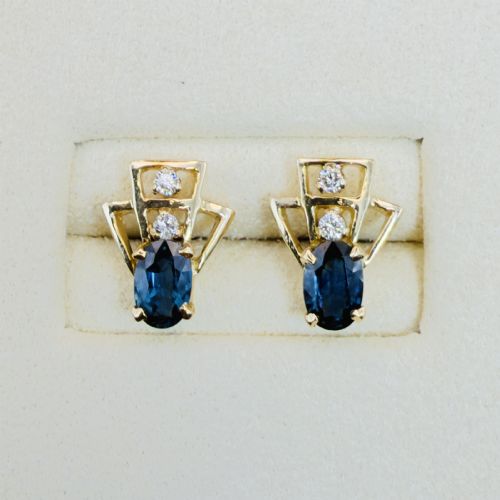
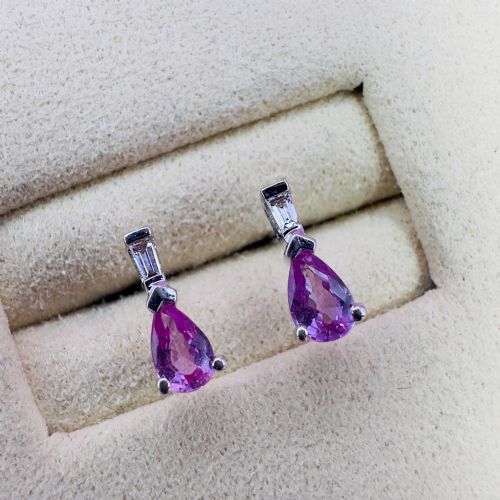


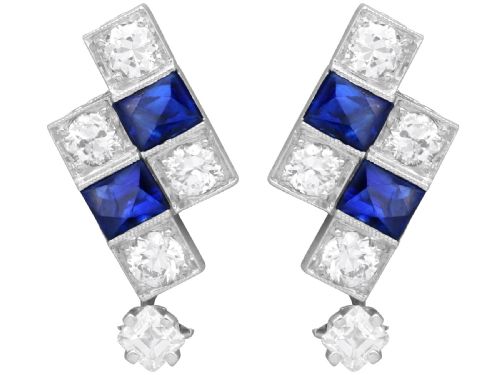


Sapphire Diamond Stud Earrings
Sapphire diamond stud earrings offer an enduring combination of coloured gemstones and diamonds set in precious metals for daily wear.
Sapphire Diamond Stud Earrings
Sapphire diamond stud earrings combine central gemstones with surrounding or accompanying diamonds, sitting directly on the earlobe for everyday elegance. These pieces appear across multiple eras, including Edwardian, Art Deco, Mid-Century, and Late 20th Century designs. Buyers encounter solitary stones alongside intricate cluster configurations that frame the central sapphire.
Materials and construction
Goldsmiths utilise 18ct white gold, yellow gold, and platinum as the primary foundations for these earrings. Gemstones are secured using precise claw settings or cluster arrangements that maximise light entry through the stones. The integration of diamonds alongside sapphires requires careful hand-setting to ensure each small stone aligns evenly within the metal framework.
Cutting techniques vary from early oval and pear shapes to specialised geometric cuts like trapezoid and marquis facets. Basaltic sapphires and fancy coloured varieties such as pink and padparadscha are selected for their distinct saturation. Each metal mount reflects the prevailing metallurgical standards of its specific decade of production.
Some pairs sneak in unconventional trapezoid diamonds that look like tiny, sparkling spaceships guarding the central sapphire.
Evaluating quality and craftsmanship
Quality rests upon the depth of colour in the sapphire and the clarity and cut of the accompanying diamonds. Superior examples display even colour saturation across the main stone without dull inclusions, paired with crisp facet symmetry in the surrounding diamonds. The weight and thickness of the metal mount also dictate the overall structural integrity of the pair.
The precision of the setting work separates standard production from finer examples, particularly in multi-stone cluster designs. Matching the tone and brilliance of pair stones demonstrates intentional curation by the original maker. Period authenticity in the mounting style further influences the standing of each piece.
The Sapphire Diamond Stud Earrings Glossary
- Basaltic sapphire
- Sapphires originating from alkali basalt geological sources, often displaying deep, rich blue tones. They frequently feature in early twentieth-century cluster earrings.
- Cluster setting
- An arrangement where a central gemstone is surrounded by a border of smaller stones, typically diamonds. This style maximises overall visual presence on the earlobe.
- Trapezoid cut
- A four-sided step cut with non-parallel side edges, commonly utilised for accent stones in geometric period jewellery. It complements linear metalwork.
- Marquis cut
- A boat-shaped gemstone cut featuring pointed ends and curved sides, designed to maximise carat weight appearance and elongate the stone.
Sapphire Diamond Stud Earrings: Frequently Asked Questions
How do I wear them daily?
These earrings sit close to the earlobe, making them practical for everyday rotation without catching on clothing. Their secure post and fastening design keeps them firmly in place during regular activity.
Pairing them with other jewellery is straightforward due to the compact nature of stud mounts. Simply match the gold or platinum tone to your existing pieces for a cohesive look.
What periods do these earrings span?
The available pieces stretch from Edwardian and Art Deco eras through the mid-century decades and into late twentieth-century designs. Each period brings distinct metal choices and gemstone cuts to the overall selection.
Early pieces often feature platinum and intricate white gold clusters, whilst later decades incorporate diverse gold tones and varied sapphire hues.
Are pink sapphires authentic?
Pink sapphires are natural corundum varieties that occur in shades ranging from pale rose to deep magenta. They appear alongside traditional blue stones in various vintage settings.
These fancy sapphires offer an alternative aesthetic whilst maintaining the same durability as standard blue sapphire varieties.
How are different cuts distinguished?
Gemstone cuts are identified by their geometric facet arrangement and silhouette outline, such as oval, pear, marquis, or trapezoid. Oval and pear cuts focus on traditional curved symmetry, whilst trapezoid cuts offer sharp, linear step-cut facets.
Examining the outline and facet patterns under magnification reveals the specific cutting style employed by the lapidary.