


White Gold Cluster Earrings
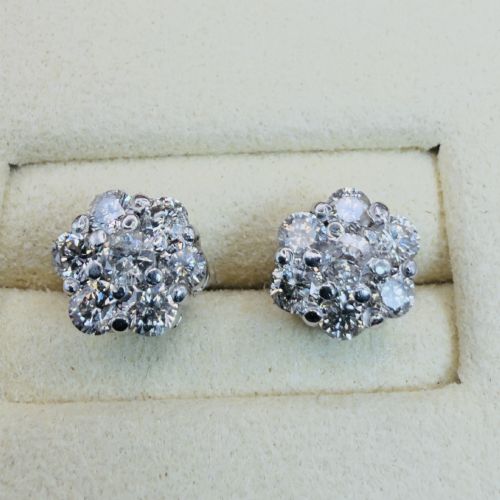
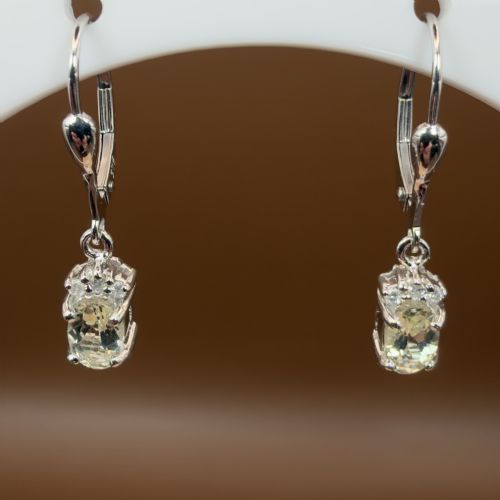
White gold cluster earrings bring together central gemstones framed by diamonds in bright metal settings that span from Edwardian designs to mid-century styles.
White Gold Cluster Earrings
When searching for white gold cluster earrings, buyers encounter focused arrangements where a central stone sits surrounded by smaller gems. These pieces appear frequently in studs, drops, and clip-on formats dating from Victorian and Edwardian times through the mid-century and retro periods.
The materials span from 9ct and 18ct white gold to platinum, often supporting diamonds paired with sapphires, emeralds, pearls, and rubies. Common configurations include floral daisy designs, geometric Art Deco patterns, and simple circular clusters meant to sit close to the lobe or dangle slightly.
Originating across Britain, France, and Austria, these items reflect changing jewellery conventions from the early twentieth century into the 1960s. Mid-century and vintage examples dominate the selection, offering screw-back, hinge-back, and post fastenings.
Materials and Construction Techniques
Goldsmiths utilised 18ct white gold, 9ct white gold, and platinum as the primary foundations for securing cluster arrangements. These durable metals allowed artisans to create delicate claws and bezels that held complex multi-stone layouts without dominating the gems.
Gemstone selection paired brilliant, old-cut, and rose-cut diamonds with coloured centre stones such as aquamarines, spinels, and opals. Individual stones were set closely together to maximise light reflection across the face of each cluster.
Materials span platinum alongside 9ct and 18ct white gold, paired with diamonds, sapphires, emeralds, pearls, and aquamarines.
Distinctions in Quality and Craftsmanship
Quality rests on the precise matching and setting of the stones within the cluster, where uniform colour and cut elevate the piece. Superior examples display secure claw work and balanced proportions between the central gem and its surrounding frame.
The integrity of the white gold or platinum mountings and the reliability of original fastenings, such as screw backs or clips, distinguish finer items. Heavier gold weight and well-preserved geometric or floral detailing indicate higher manufacturing standards.
The White Gold Cluster Earrings Glossary
- Cluster
- A jewellery setting where a central gemstone is encircled by a border of smaller stones, typically diamonds. This arrangement maximises overall visual presence.
- White gold
- An alloy of gold combined with white metals such as palladium, silver, or nickel, often plated with rhodium for a bright finish. It serves as a durable mounting for diamond jewellery.
- Old-cut diamond
- A hand-cut diamond shape popular in older periods, featuring a smaller table, higher crown, and open culet. These stones catch candlelight differently than modern brilliant cuts.
- Screw back
- A type of earring fastening featuring a threaded post and a nut that screws down against the earlobe. This mechanism provides secure adjustment for non-pierced or pierced ears.
- Dormeuses
- French sleeping earrings designed with secure clasps for comfortable wear day and night. They often feature small diamond or gemstone clusters.
White Gold Cluster Earrings: Frequently Asked Questions
Are these earrings suitable for daily wear?
Most pairs set in 18ct white gold or platinum withstand regular use when handled with standard care for vintage jewellery.
Items featuring softer centre stones or delicate screw-back mechanisms benefit from occasional checks by a specialist to ensure stone security.
How do I identify the period of a cluster earring?
Stylistic clues such as geometric Art Deco lines, Edwardian openwork, or mid-century daisy motifs point toward specific decades of manufacture.
Examining the type of gold alloy markings and stone cuts further helps narrow down the era of production.
Do these earrings require pierced ears?
Many vintage and mid-century examples utilise clip-on or screw-back fastenings designed specifically for non-pierced lobes.
Post and hinge-back styles are also common among the pieces found in these selections.
What gemstones are most common in these clusters?
Diamonds frequently form the outer frame or the entire cluster, often paired with sapphires, emeralds, pearls, or aquamarines.
Alternative stones like spinels, zircons, and opals also appear in pieces from the mid-century eras.